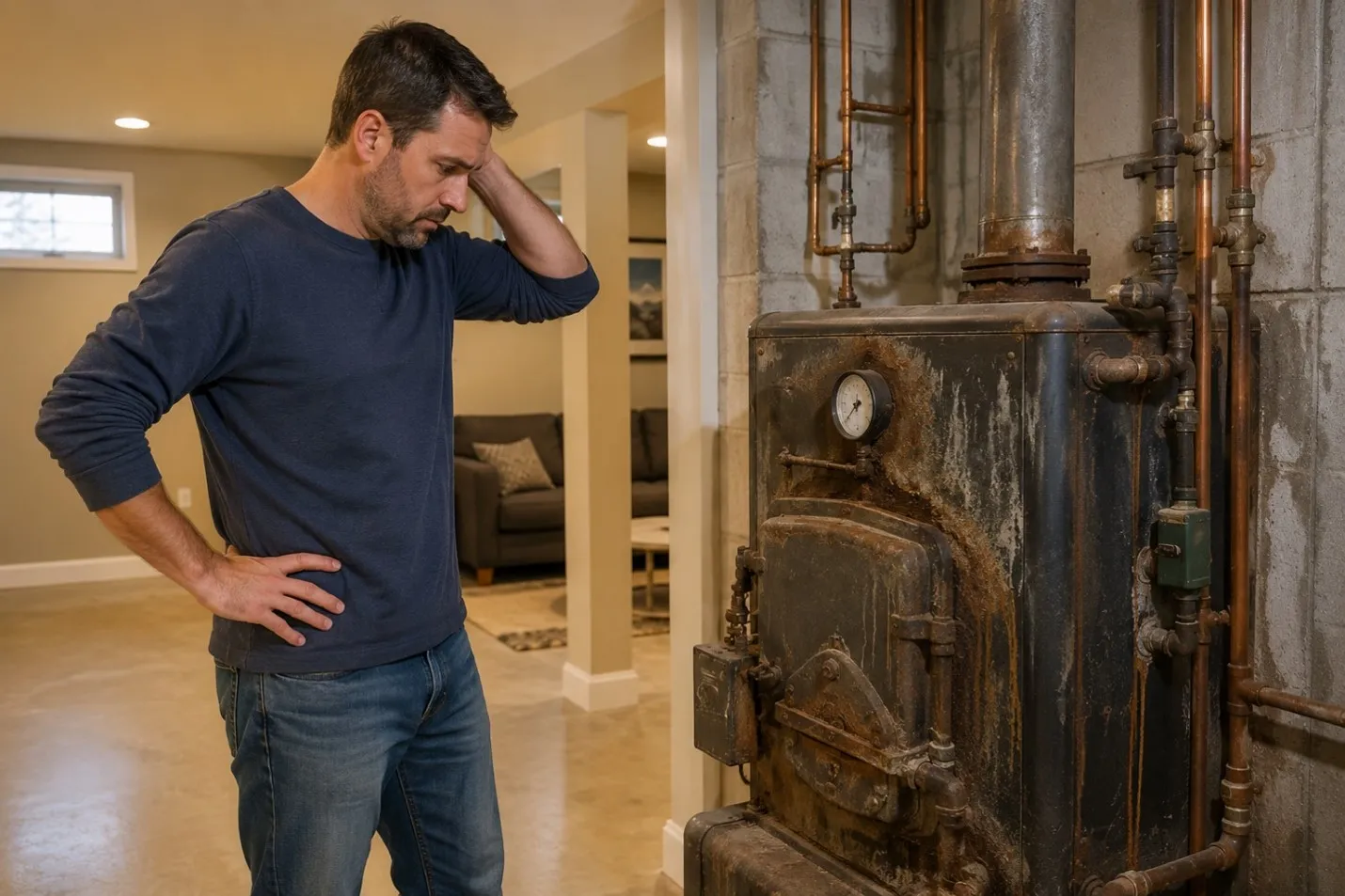

If your Denver boiler is over 15 years old, breaking down more than once a year, or pushing your energy bills up for no clear reason, it's probably time to replace it. A boiler repair makes sense when the fix costs under $600 and the system is less than 10 years old. When in doubt, get a licensed tech to assess it before spending money on either.
Your boiler runs quietly in the background all winter. Most homeowners don't think about it until something goes wrong.
But by the time your boiler stops working, you're already in trouble. Denver temperatures can drop to single digits overnight. A boiler failure in January isn't just inconvenient. It's a real problem.
Knowing the warning signs early gives you options. You can plan a repair or replacement on your schedule, not in a panic at midnight. This article walks you through exactly what to watch for.
How Long Should a Boiler Last in Colorado?
Most boilers last 20 to 30 years. Cast iron units can go even longer, sometimes 35 years or more, with regular servicing.
High-efficiency condensing boilers tend to have a shorter life span, usually 15 to 25 years. They have more parts and more complexity. That means more to maintain and more to fail over time.
Denver's water is harder than average. Mineral buildup inside heat exchangers is a common reason Colorado boilers age faster than expected. Annual descaling during a maintenance visit can add years to any system.
What Are the Warning Signs That Your Boiler Needs Attention?
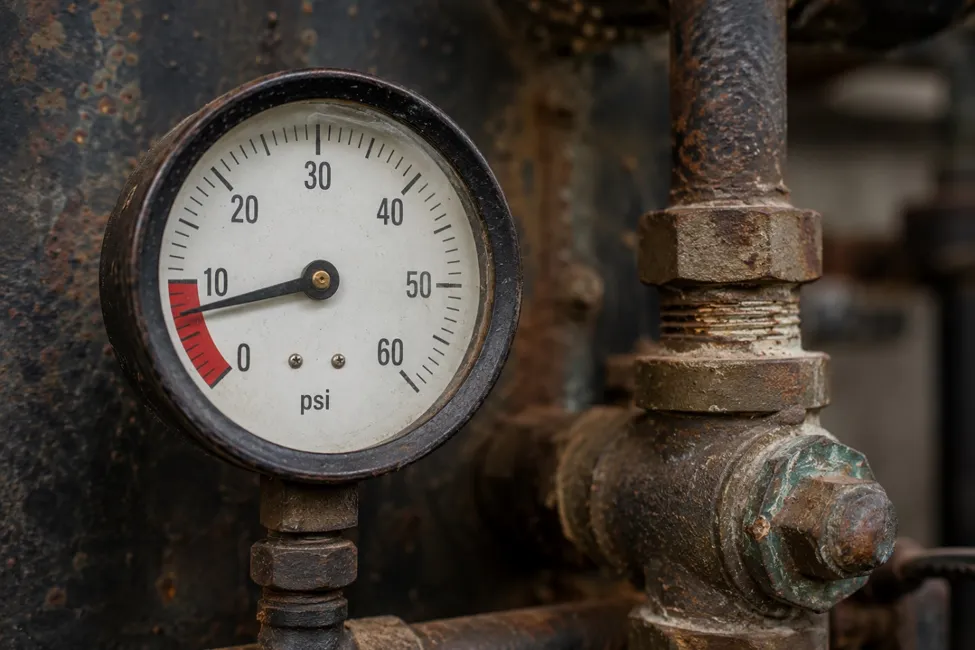
Boilers usually give you a heads-up before they fail. These are the signs worth taking seriously.
Signs That Call for a Repair Visit
- Banging, whistling, or gurgling noises that weren't there before
- Rooms that used to heat evenly are now cold in spots
- The pilot light goes out repeatedly or won't stay lit
- Water pooling around the unit or dripping from pipes
- The pressure gauge is consistently too low and resets often
Most of these problems have a straightforward fix. A thermocouple swap, a pressure valve replacement, or a system flush can sort them out for a few hundred dollars.
Signs That Point Toward Replacement
- The system is 15 years old or older and repairs are getting more frequent
- Your heating bills are creeping up even though usage hasn't changed
- A technician has flagged a cracked heat exchanger
- You smell sulfur or notice carbon monoxide detector alerts near the boiler
- The repair quote is more than half the cost of a new unit
A cracked heat exchanger or a carbon monoxide leak doesn't get repaired. It gets replaced. Those are safety issues, not mechanical inconveniences.
How Do You Decide Between Boiler Repair and Replacement?
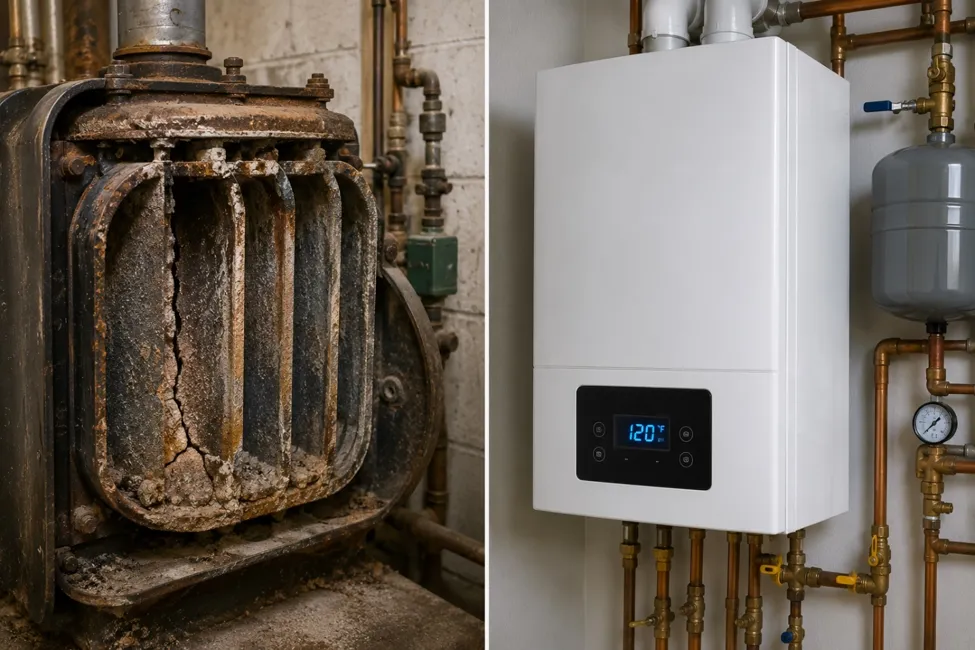
The simplest rule is the 50% threshold. If the repair costs more than half the price of a new boiler, replace it. You'll spend the same money and come out with a system that lasts another 20 years.
Age matters just as much as cost. A 12-year-old boiler that needs a $400 pump replacement is worth fixing. A 22-year-old boiler that needs a $400 pump replacement might fail at something else six months later.
Repair vs. Replace at a Glance
| Situation | Repair | Replace |
| System under 10 years old | Yes, good investment | Not yet |
| Repair under $600 | Yes, go ahead | Not needed |
| System 15+ years old | Maybe, get a quote | Start planning |
| Breaks down 2+ times yearly | No | Yes |
| Bills rising with no cause | No | Yes |
| Cracked heat exchanger or CO leak | No | Yes, urgently |
What Does a New Boiler Installation Cost in Denver?
A new boiler install in Denver runs $3,500 to $8,000 on average. The range is wide because it depends on the system type, your home's layout, and whether any piping changes are needed.
High-efficiency condensing boilers sit at the higher end of that range. But they qualify for rebates. Xcel Energy offered up to $1,000 back for units rated 95% AFUE or higher in 2026. Combo space and water heating units could qualify for up to $1,500.
For a full breakdown of what's involved in the process, including permits, sizing, and the difference between boiler types, this guide on boiler installation and repair service in Denver covers everything you need to know before calling a tech.
How Can You Make Your Boiler Last Longer?
Annual servicing is the single best thing you can do. A licensed tech will check the pressure, bleed the radiators, test safety valves, and look for early-stage corrosion before it becomes a real problem.
Between visits, there are a few easy habits that help. Set your thermostat consistently rather than cranking it up and down. Keep the area around the boiler clear for ventilation. And listen. Boilers are quiet systems. A new noise is almost always worth a call.
Denver's mineral-rich water deserves a mention here too. Scaling inside the heat exchanger reduces efficiency over time. Some techs recommend a water softener or annual inhibitor flush for homes in hard-water areas of Colorado.
Frequently Asked Questions
How much does boiler repair cost in Denver?
Boiler repair in Denver typically costs $150 to $700. A call-out fee of $75 to $200 usually applies and goes toward the total bill. More complex jobs like circulating pump replacements can run $300 to $1,100.
Is it worth repairing a boiler that's 20 years old?
In most cases, no. A 20-year-old boiler is near the end of its expected life. Even a successful repair doesn't fix the underlying wear on other components. A new high-efficiency unit will pay for itself faster than you'd expect through lower energy bills and rebate savings.
How long does boiler installation take?
Most residential boiler installations take one to two days. Jobs that require piping changes or significant ductwork modifications may need an extra day. Your installer should give you a firm timeline before work starts.
Can I stay in my home during a boiler installation?
Yes, in most cases. The home will be without heat during the installation, which typically takes one full day. In Colorado winters, some homeowners use a portable heater as a backup. Ask your tech what to expect beforehand.
What type of boiler is best for a Denver home?
High-efficiency condensing boilers are the most popular choice for Denver Metro homes right now. They run at 90 to 98% AFUE, qualify for current rebates, and work well with both radiators and radiant floor systems.
The Bottom Line
Boilers are reliable systems. Most of the time, a single repair is all you need. But age and repeated breakdowns change that math quickly.
If your boiler is under 10 years old and the repair is under $600, fix it. If it's older than 15 and you've already had two service calls this year, start getting installation quotes.
Either way, acting before a full failure gives you the best outcome. You get to choose the timing, the product, and the price instead of making a rushed decision in the cold.




























Sign in to leave a comment.