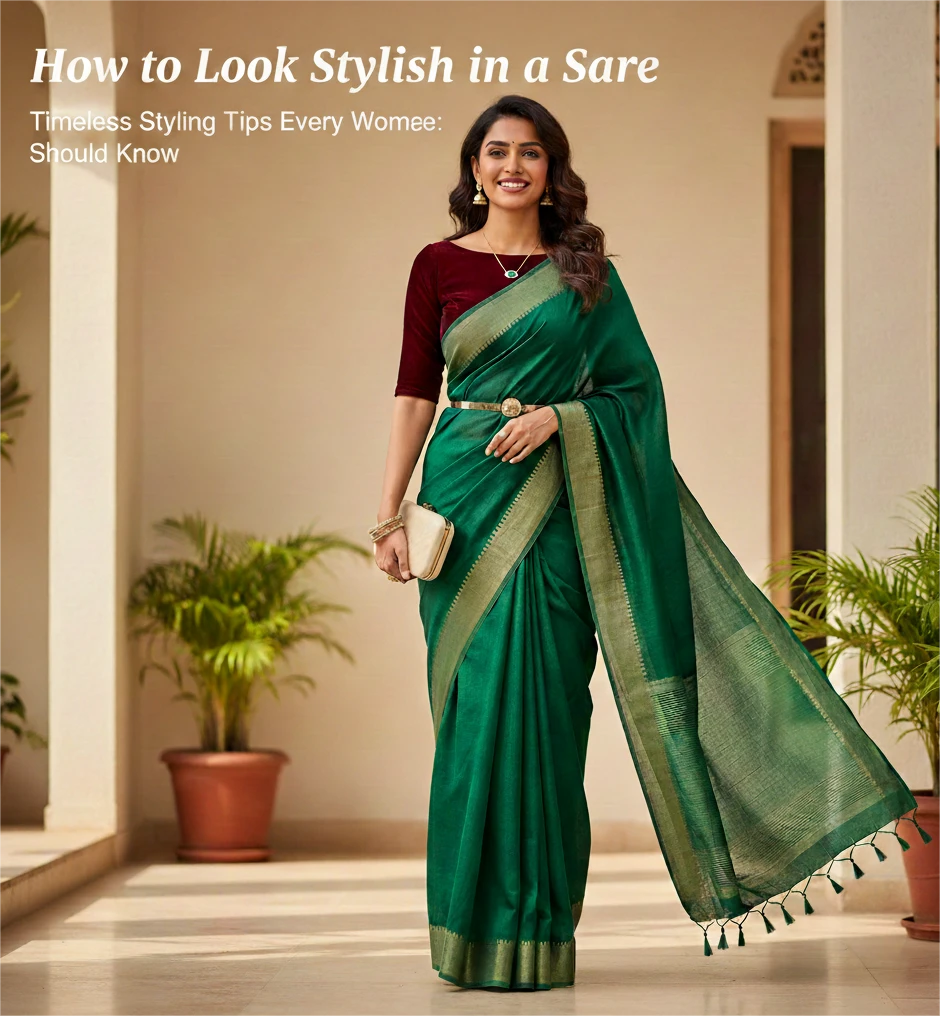
The saree is one of the most graceful garments ever created. It has survived centuries of changing fashion, lifestyles, and generations and still feels relevant today. Yet, many women often ask the same question: How do I look stylish in a saree without overdoing it or losing its traditional charm?
From my experience as a fashion designer working closely with sarees for over four years, I’ve learned one important truth: looking stylish in a saree has very little to do with trends and everything to do with understanding fit, fabric, and balance.
This article is not about selling an idea of fashion. It’s about helping you wear a saree with clarity and confidence whether you’re dressing for a wedding, a formal event, or a simple day out.
Style Starts With Understanding Your Body Type
One of the most overlooked saree styling tips is body awareness. A saree doesn’t need to change your body, it needs to work with it.
Every body type can look elegant in a saree when styling decisions are intentional.
- Petite frames benefit from lightweight fabrics like chiffon, crepe, or soft silk. Slim borders and neat pleats help maintain proportion.
- Curvier body types often look best in structured fabrics like silk blends, cotton silks, or linen. A well-fitted blouse and defined pleats create a balanced silhouette.
- Tall women can experiment with bold prints, wider borders, and heavier pallus without overwhelming their frame.
- Slim frames gain volume through textured fabrics, layered drapes, or sarees with subtle detailing.
In my design work, I’ve seen that when women stop comparing their bodies to others and instead dress for their own proportions, the saree naturally looks more stylish.
Choosing the Right Fabric Makes Styling Effortless
Fabric plays a major role in how a saree falls, moves, and feels. Even the most beautiful saree can look unflattering if the fabric doesn’t suit the occasion or body type.
Here’s a practical way to think about saree fabrics:
- Silk sarees offer structure and richness. They are ideal for festive and formal occasions where elegance matters.
- Cotton sarees are breathable, crisp, and timeless perfect for daily wear or professional settings.
- Chiffon and georgette sarees drape fluidly and create a modern, lightweight look.
- Linen and organza sarees strike a balance between minimalism and sophistication.
If you’re curious about how traditional fabrics evolved across regions, this overview of traditional Indian saree fabrics explains it well:
https://en.wikipedia.org/wiki/Sari
Understanding fabric is one of the simplest ways to learn how to wear a saree stylishly without relying on trends.
Draping: The Real Foundation of a Stylish Saree Look
No matter how expensive or simple a saree is, poor draping can instantly ruin the look.
In my experience, most styling issues come down to a few small draping mistakes.
- Pleats should be even, aligned, and securely pinned
- The length should lightly skim the floor neither dragging nor floating
- The pallu should complement your height and body structure
A neatly draped saree looks confident. An untidy one looks uncomfortable.
If you enjoy exploring traditional methods, learning about classic saree draping styles can give deeper insight into how drapes evolved across India:
https://www.britannica.com/topic/sari
Once draping becomes intuitive, half the styling work is already done.
Blouse Design: Where Style Quietly Speaks
A saree blouse doesn’t need to be loud to be impactful. In fact, the most stylish saree looks often come from well-fitted, thoughtfully designed blouses.
Some key principles I always follow:
- Prioritize fit over fashion trends
- Choose necklines that complement your face shape
- Balance blouse design with saree fabric
- Keep sleeves proportional to your body type
Poor tailoring is one of the most common styling issues I notice. Even a simple blouse, when tailored perfectly, can elevate the entire saree look.
If there’s one place worth investing effort, it’s the blouse.
Color, Prints, and Borders: Creating Visual Balance
Color selection is not about choosing what’s trending, it's about harmony.
- Soft shades work beautifully for daytime or minimal looks
- Deep tones add drama for evening and festive wear
- Borders can lengthen or shorten the appearance of your frame
- Prints should align with the scale of your body
Understanding color theory in fashion helps explain why some combinations feel naturally pleasing: https://www.vogue.in/fashion/content/fashion-colour-theory-guide
When colors, prints, and borders work together, the saree looks intentional, not overwhelming.
Accessories That Enhance, Not Compete
One of the biggest myths in saree styling is that more accessories equal more style.
In reality, accessories should support the saree, not distract from it.
- Heavy silk sarees pair well with minimal jewellery
- Soft sarees can handle slightly bolder accessories
- Footwear should support the drape length
- Clutches and handbags should be proportionate, not oversized
As a designer, I always advise women to remove one accessory before stepping out. That small edit often makes the look feel refined.
Hair and Makeup Should Complement the Saree
Saree styling doesn’t stop at the drape. Hair and makeup play a subtle but important role.
- Structured sarees look elegant with neat buns or sleek hairstyles
- Flowing fabrics pair well with soft waves or loose styles
- Makeup should balance the saree not overpower it
The goal is cohesion. When everything works together, the saree doesn’t wear you, you wear the saree.
Common Saree Styling Mistakes to Avoid
Over the years, I’ve noticed the same mistakes repeating across all age groups.
- Wearing the wrong petticoat color or fabric
- Ignoring blouse fit
- Over-accessorizing
- Choosing fabric without considering the occasion
- Forcing trends that don’t suit personal comfort
Avoiding these mistakes instantly improves how stylish a saree looks.
Modern Ways to Look Stylish in a Saree (Without Losing Tradition)
Modern saree styling doesn’t mean abandoning tradition, it means adapting thoughtfully.
Some contemporary approaches that work well:
- Pairing plain sarees with statement blouses
- Using belts subtly to define the waist
- Layering with jackets or shawls
- Styling traditional sarees with modern hair and makeup
The key is restraint. When modern elements are used thoughtfully, the saree feels fresh yet respectful.
Final Thoughts
If there’s one thing I’ve learned through years of working with sarees, it’s this:
A saree looks most stylish when the woman wearing it feels comfortable and confident.
You don’t need expensive fabrics, complicated drapes, or heavy embellishments. You need understanding, balance, and authenticity.
When you dress with intention and not comparison the saree naturally becomes stylish.
Sign in to leave a comment.