
One of the biggest selling points of artificial grass is low maintenance — and it genuinely delivers on that promise. But "low maintenance" does not mean "zero maintenance." A little regular care keeps an artificial lawn looking its best and extends its lifespan significantly. For London homeowners especially, where gardens deal with heavy leaf fall, urban dust, and year-round use, knowing what to do and when makes a real difference.
Here is a practical, season-by-season guide to maintaining artificial grass in London.
The Core Maintenance Tasks
Before getting into seasonal specifics, these are the three fundamental maintenance tasks that apply year-round:
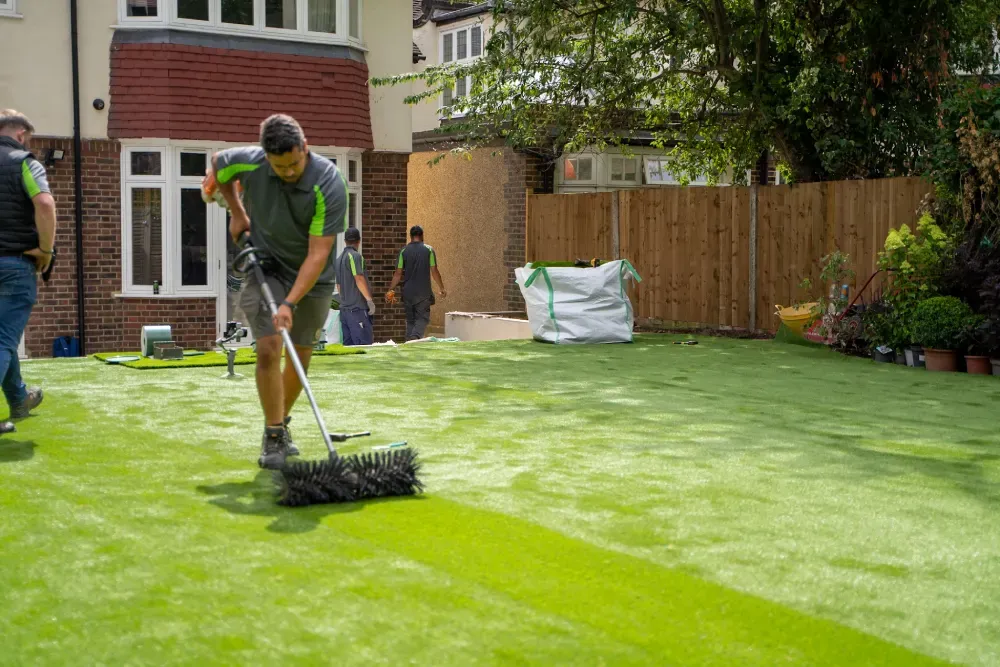
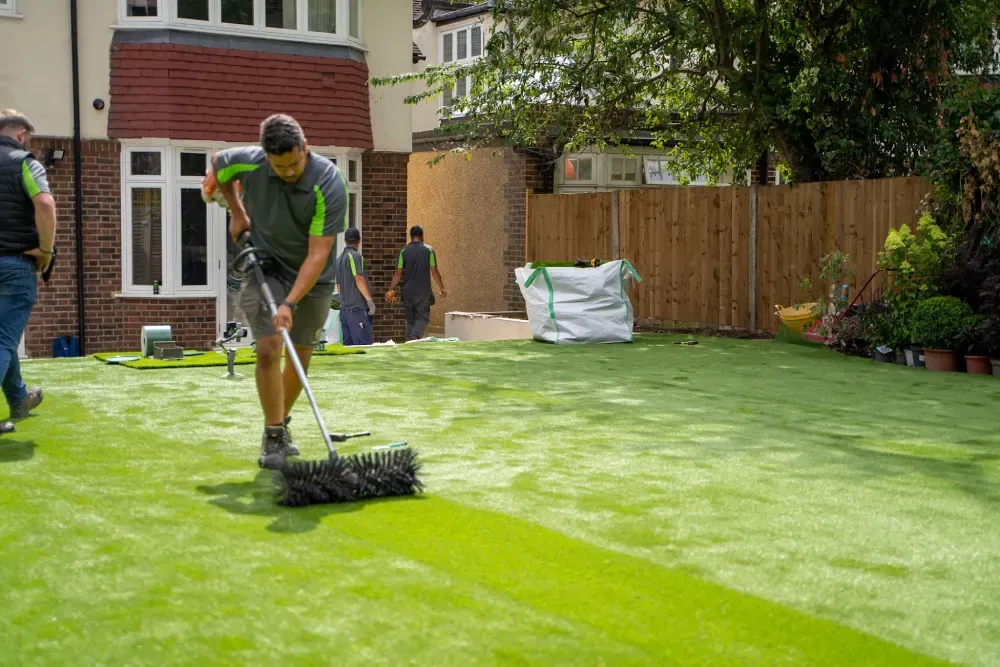
Brushing: Artificial grass fibres benefit from regular brushing against the grain of the pile to keep them standing upright. A stiff-bristled brush or a specialist artificial grass rake works well. In a moderately used London garden, brushing once every three to four weeks is usually sufficient; in high-traffic areas or dog gardens, fortnightly is better.
Rinsing: A regular rinse with a garden hose removes dust, pollen, and surface debris and keeps the lawn smelling fresh. In London, where urban dust settles on everything, a monthly rinse makes a noticeable difference to how the surface looks and feels.
Debris removal: Leaves, twigs, and other organic material should be removed promptly rather than left to decompose on the surface. Decomposing organic matter retains moisture and can promote moss or algae growth, particularly in shaded London gardens. A leaf blower, a plastic rake, or even a simple brush handles this quickly.
Spring Maintenance (March to May)
Spring is the ideal time for a thorough annual inspection and clean of your artificial grass.
- Give the entire lawn a deep rinse to wash away winter grime, salt residue from road gritting (particularly relevant for front gardens near pavements), and any compacted dust.
- Brush the full lawn thoroughly to lift fibres that have been flattened by winter foot traffic or furniture standing in place.
- Check the perimeter edging for any lifting or loosening — freeze-thaw cycles over winter can sometimes work edging slightly loose. Address any issues before the main use season begins.
- Inspect the surface for any signs of moss or algae, which can develop in shaded spots over the damp winter months. A diluted artificial grass-specific cleaner addresses this quickly.
- Clear any moss or algae from gaps in surrounding paving or edging, as spores can spread onto the grass surface from neighbouring hard surfaces.
Spring is also a good time to top up infill if it has displaced over the winter. Even well-installed infill can migrate slightly over months of use.
Summer Maintenance (June to August)
Summer is the peak use season for most London gardens, and maintenance during this period is primarily about keeping pace with use.
- Increase brushing frequency if the garden is being used heavily — barbecues, children playing, and frequent outdoor dining all flatten the pile faster than light use.
- Rinse more frequently during dry, dusty periods. London summers can leave a fine film of dust and pollen on any outdoor surface; a quick rinse restores the appearance and freshness of the grass.
- Be aware that artificial grass in direct sunlight gets warmer than natural grass. This is normal and not a maintenance concern, but worth knowing if you have children or pets using the garden in very hot weather.
- Clear any barbecue ash, food residue, or spilled drinks promptly. Most spills are easily dealt with using warm water; stubborn stains respond to a small amount of washing-up liquid.
One summer-specific note for London dog owners: if your garden sees heavy dog use in dry conditions, a more frequent rinse schedule helps prevent any ammonia build-up from urine.
Autumn Maintenance (September to November)
Autumn is the most demanding season for artificial grass maintenance in London, primarily because of leaf fall.
- Clear fallen leaves regularly — ideally weekly during peak leaf fall. Leaves left to mat on an artificial surface retain moisture, decompose, and can stain light-coloured grass fibres if left long enough.
- A leaf blower is the most efficient tool for this; a plastic or rubber-tined rake works well for larger deposits without risking damage to the grass fibres.
- Check drainage points are clear of leaves and debris to ensure the lawn continues to drain freely during autumn rain.
- Give the lawn a thorough brush and rinse before the onset of winter to go into the colder months with the fibres in good condition.
Winter Maintenance (December to February)
Winter demands the least active maintenance but has some specific considerations:
- Frost and snow do not damage artificial grass. You can walk on it normally in cold conditions, though it may be slippery when frozen — the same precautions you would take on any hard surface apply.
- Avoid scraping ice or compacted snow with metal tools, which can damage the grass fibres. A soft brush or a plastic shovel moves snow without risk.
- Salt and grit used on paths and driveways can transfer onto adjacent artificial grass. Rinse these areas after gritting to prevent residue building up in the fibres.
- Keep furniture and heavy items from sitting in the same spot all winter — sustained pressure in one location can flatten fibres that are harder to revive in cold weather.
Dealing With Specific Issues
Weeds appearing at the edges: Weeds occasionally appear at the perimeter of an artificial lawn where the membrane does not cover, or where organic matter has accumulated. Remove them promptly before roots establish.
Matted fibres in heavy-use areas: Areas where feet land regularly — near doors and pathways — can develop flattened fibres over time. A thorough brush lifts most of this; persistent flattening may benefit from a warm water rinse followed by brushing.
Algae or moss in shaded areas: Common in north-facing London gardens with limited sunlight. An artificial grass biocide or a diluted white vinegar solution addresses this; follow up with rinsing and brushing.
Professional Maintenance
Most London homeowners handle day-to-day artificial grass maintenance themselves without difficulty. For a more thorough annual clean — particularly for lawns with heavy dog use, significant leaf fall, or persistent algae in shaded spots — a professional service can deep-clean the surface, redistribute infill, and address any edge or drainage issues. Experienced artificial grass maintenance specialists in London can assess the condition of an installation and recommend any remedial work before small issues become larger ones.
Final Thoughts
Artificial grass maintenance in London is genuinely straightforward compared to the demands of a natural lawn. The key is keeping on top of the basics — brush, rinse, and clear debris regularly — and addressing any issues promptly before they develop. A lawn that receives a little regular attention will look as good in year twelve as it did in year one.



























Sign in to leave a comment.