

In today's competitive digital landscape, running a marketing campaign isn’t enough—you need to measure its success to ensure you're achieving your business goals. Whether you're focused on increasing brand awareness, generating leads, or boosting sales, tracking the right metrics is essential.
At Folio Manager, we understand the importance of data-driven decisions in digital marketing. This guide will walk you through the key performance indicators (KPIs), tools, and strategies to measure the success of your digital marketing campaigns effectively.
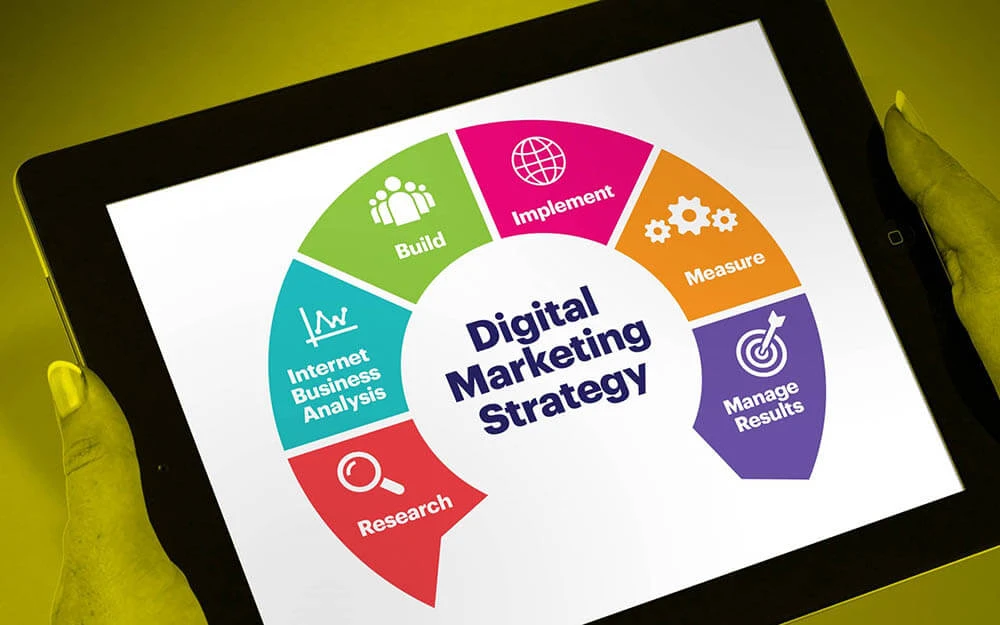
1. Define Clear Goals and Objectives
Before measuring success, you need to establish clear, SMART (Specific, Measurable, Achievable, Relevant, Time-bound) goals.
Common Digital Marketing Goals:
- Increase website traffic (e.g., grow visitors by 30% in 3 months)
- Generate more leads (e.g., capture 500 new leads per month)
- Improve conversion rates (e.g., boost landing page conversion from 5% to 8%)
- Enhance social media engagement (e.g., grow Instagram followers by 10,000 in 6 months)
- Boost sales and revenue (e.g., increase monthly online sales by 20%)
Once your objectives are set, you can track the right metrics to measure success.
2. Track Key Performance Indicators (KPIs)
Each digital marketing channel requires different KPIs to evaluate performance. Below are essential KPIs categorized by marketing channel:
Website Performance Metrics
📌 Traffic Sources – Analyze where your visitors come from (organic, paid, social, referral).
📌 Bounce Rate – Measures the percentage of users who leave your site without taking action.
📌 Average Session Duration – Indicates how long visitors stay on your website.
📌 Page Views Per Session – Shows how many pages a user visits in one session.
SEO Metrics
📌 Organic Traffic – Measures visitors coming from search engines.
📌 Keyword Rankings – Tracks where your website ranks for targeted keywords.
📌 Domain Authority (DA) – Evaluates your website’s credibility in search engines.
📌 Click-Through Rate (CTR) – The percentage of users clicking on your search results.
Social Media Metrics
📌 Engagement Rate – Measures likes, comments, shares, and clicks.
📌 Follower Growth – Tracks audience growth over time.
📌 Social Referral Traffic – Shows how much website traffic comes from social media.
Email Marketing Metrics
📌 Open Rate – The percentage of recipients who open your emails.
📌 Click-Through Rate (CTR) – The percentage of email recipients clicking on links.
📌 Conversion Rate – Measures how many email recipients complete a desired action.
📌 Unsubscribe Rate – The percentage of people opting out of your emails.
PPC (Pay-Per-Click) Advertising Metrics
📌 Cost Per Click (CPC) – The amount spent per ad click.
📌 Click-Through Rate (CTR) – The percentage of users clicking on your ad.
📌 Return on Ad Spend (ROAS) – Revenue generated per dollar spent on ads.
📌 Conversion Rate – The percentage of users taking action after clicking an ad.
Tracking these KPIs helps brands like Folio Manager assess digital marketing performance and optimize strategies accordingly.
3. Use Analytics Tools to Measure Campaign Performance
The right tools make campaign tracking easier and more effective. Here are some top analytics platforms:
Google Analytics
- Tracks website traffic, user behavior, and conversion goals.
- Provides insights into audience demographics and traffic sources.
Google Search Console
- Monitors website performance in search engines.
- Tracks keyword rankings and indexing issues.
Social Media Insights (Facebook, Instagram, LinkedIn, Twitter, etc.)
- Measures engagement, reach, and audience growth.
- Tracks performance of paid and organic posts.
SEMrush & Ahrefs
- Analyzes SEO performance and keyword rankings.
- Tracks backlinks and competitor SEO strategies.
Folio Manager’s Marketing Dashboard
- Provides real-time analytics for multiple marketing channels.
- Helps businesses track KPIs in one unified platform.
Using a combination of these tools, you can effectively monitor and analyze your digital marketing campaigns.
4. Analyze ROI (Return on Investment)
A successful marketing campaign should deliver a strong Return on Investment (ROI).
How to Calculate ROI:
ROI=Revenue−MarketingCostsMarketingCosts×100ROI = \frac{{Revenue - Marketing Costs}}{Marketing Costs} \times 100ROI=MarketingCostsRevenue−MarketingCosts×100
Example Calculation:
If you spent $2,000 on a Facebook ad campaign and generated $8,000 in sales:
ROI=8,000−2,0002,000×100=300%ROI = \frac{{8,000 - 2,000}}{2,000} \times 100 = 300\%ROI=2,0008,000−2,000×100=300%
This means your campaign generated 3 times the amount you invested.
Monitoring ROI ensures that every marketing dollar is spent wisely, a core focus of Folio Manager’s digital marketing strategies.
5. Track Customer Acquisition Cost (CAC)
Customer Acquisition Cost (CAC) helps determine how much it costs to acquire a new customer.
Formula for CAC:
CAC=TotalMarketingSpendTotalNewCustomersAcquiredCAC = \frac{Total Marketing Spend}{Total New Customers Acquired}CAC=TotalNewCustomersAcquiredTotalMarketingSpend
A lower CAC indicates a more cost-effective marketing strategy. Comparing CAC with Customer Lifetime Value (CLV) ensures long-term profitability.
6. Conduct A/B Testing for Optimization
A/B testing (split testing) compares two versions of a marketing asset (emails, landing pages, ads) to see which performs better.
Elements to Test:
- Headlines & CTA buttons
- Ad creatives & copy
- Landing page layouts
- Email subject lines
Using A/B testing, Folio Manager optimizes campaigns for maximum efficiency.
7. Monitor Customer Feedback and Sentiment Analysis
Beyond numbers, qualitative data such as customer feedback helps measure campaign success.
Ways to Collect Customer Feedback:
- Surveys & Polls – Directly ask customers about their experience.
- Online Reviews & Testimonials – Monitor ratings and customer comments.
- Social Listening – Track brand mentions and sentiment on social media.
Tools like Brandwatch and Hootsuite Insights help businesses analyze customer sentiment and improve marketing efforts.
8. Adjust and Improve Based on Insights
Continuous improvement is key to long-term digital marketing success. Once you gather insights from KPIs and analytics, refine your strategy.
Optimization Strategies:
✅ Allocate budget to high-performing channels
✅ Improve underperforming campaigns
✅ Refine audience targeting
✅ Experiment with new marketing tactics
At Folio Manager, we continuously optimize campaigns to ensure brands achieve the best possible results.
Conclusion
Measuring the success of your digital marketing campaigns is crucial for business growth. By tracking KPIs, ROI, CAC, and customer feedback, you can refine strategies and drive better results.
With advanced analytics tools and data-driven decision-making, Folio Manager helps brands maximize marketing success. Stay proactive, adapt based on insights, and continuously improve your campaigns for long-term success!




























Sign in to leave a comment.