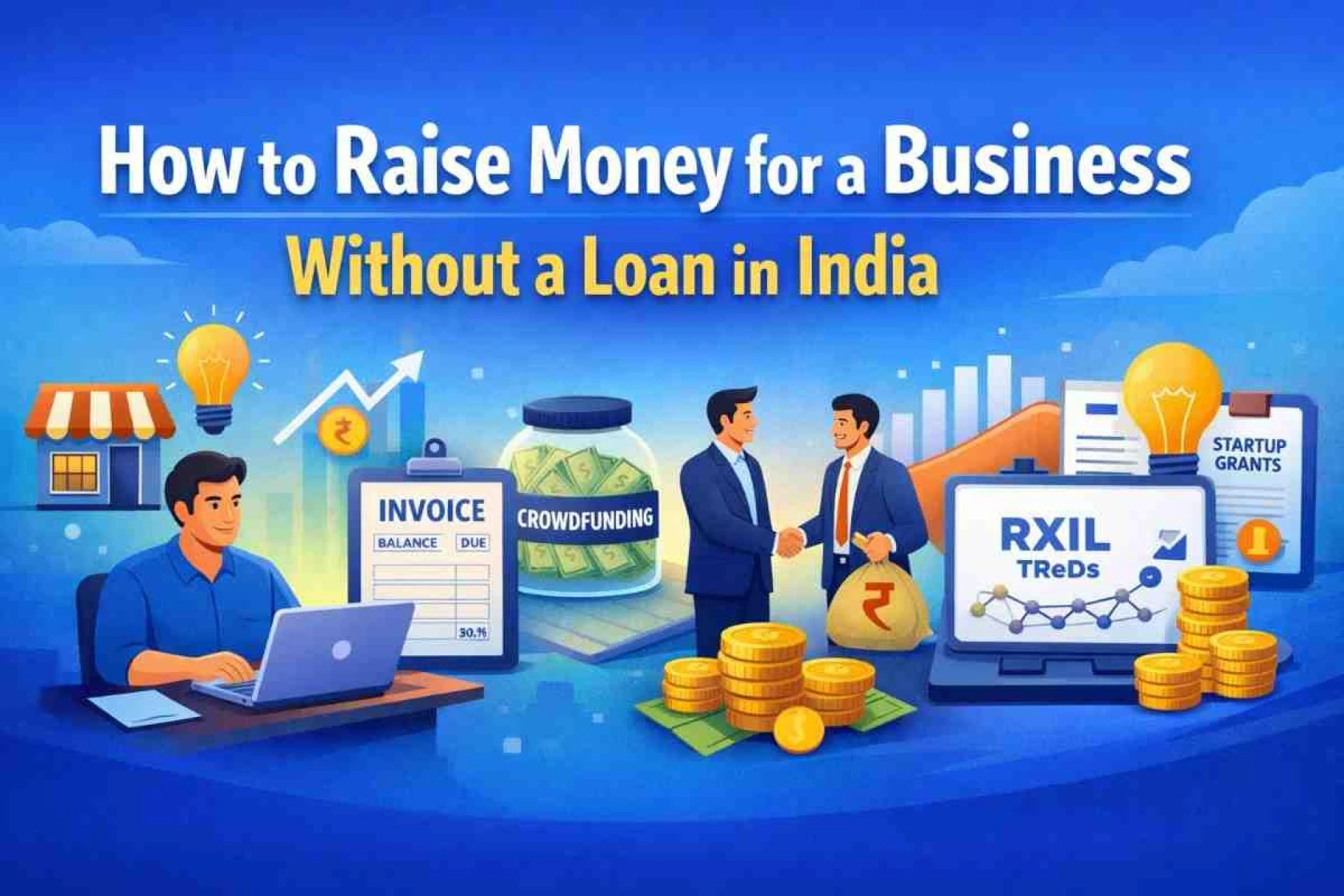

Raising money is one of the biggest challenges for any entrepreneur or business owner. In India, many businesses hesitate to take traditional loans because of high interest rates, rigid repayment schedules, collateral requirements, and long approval processes. This is why more founders today are actively searching for how to raise money for a business without a loan.
The good news is that loans are not the only way to fund a business. There are several smart, practical, and legally sound alternatives that allow businesses to raise money without borrowing from banks. These options are especially useful for startups, MSMEs, and growing companies that want to maintain healthy cash flow and avoid unnecessary debt.
This guide explains the best ways to raise money for a business without a loan in India, along with real-world use cases and guidance on choosing the right option.
What Does “Raising Money Without a Loan” Actually Mean?
Before exploring the options, it is important to clarify what non-loan funding really means.
- Loan-based funding involves borrowing money that must be repaid with interest.
- Equity-based funding means giving away a share of business ownership in exchange for capital.
- Non-loan, non-debt funding focuses on unlocking existing value, future revenue, or external support without repayment pressure.
Most businesses benefit from a combination of these methods at different growth stages. The key is choosing the right one at the right time.
1. Bootstrapping and Self-Funding
Bootstrapping is one of the most common ways to raise money without taking a loan. It involves using personal savings, reinvesting profits, or selling unused assets to fund the business.
Why bootstrapping works
- Full control over business decisions
- No interest or repayment pressure
- Builds financial discipline
Limitations
- Slower growth
- Personal financial risk
Bootstrapping works best in the early stages or for service-based businesses with low initial costs.
2. Crowdfunding: Raising Money from the Public
Crowdfunding allows businesses to raise small amounts of money from a large number of people using online platforms. In India, crowdfunding is gaining popularity for startups, creative projects, and D2C brands.
Types of crowdfunding
- Reward-based crowdfunding – supporters receive early access or rewards
- Equity crowdfunding – investors receive company shares
Benefits
- No loan repayment
- Market validation
- Early customer base
A well-planned campaign with a strong story, visuals, and marketing strategy can generate both funds and brand awareness.
3. Angel Investors and Strategic Equity Partners
Angel investors are individuals who invest their personal funds in early-stage businesses in exchange for equity. This option is suitable for startups with high growth potential.
Key advantages
- No monthly repayment
- Mentorship and industry connections
- Long-term capital support
Things to consider
- Partial loss of ownership
- Investor expectations on growth and returns
Choosing the right investor is crucial, as they often play an active role in business decisions.
4. Invoice / Bill Discounting via RXIL TReDS Platforms
One of the most practical yet often overlooked ways to raise money without a loan is invoice or bill discounting. This method is particularly useful for MSMEs dealing with delayed payments from large buyers.
What is invoice discounting?
Invoice discounting allows businesses to receive early payment against their approved invoices instead of waiting for long payment cycles.
How it helps
- Improves cash flow
- No additional debt on balance sheet
- Faster access to working capital
Role of the RXIL
RXIL operates as a government-backed, RBI-regulated Trade Receivables Discounting System (TReDS). It enables MSMEs to raise funds by discounting invoices raised on large corporates and government buyers.
Key benefits of RXIL TReDS:
- Digital and transparent process
- Competitive bidding by multiple financiers
- Faster payments without taking a loan
- No collateral required beyond the invoice
For businesses facing cash flow gaps due to delayed payments, invoice discounting through TReDS platforms is one of the smartest non-loan funding solutions available in India today.
5. Product Pre-Sales and Advance Payments
Pre-selling products or services before full-scale launch is another effective way to raise money without a loan. Many businesses use this method to fund production or development costs.
Why pre-selling works
- Immediate cash flow
- Reduced inventory risk
- Strong demand validation
This method works well for consumer products, SaaS tools, online courses, and customised services.
6. Government Grants and Startup Schemes in India
Grants are one of the best ways to raise money without a loan or equity dilution. In India, several government-backed schemes support startups and MSMEs.
Common benefits
- No repayment required
- Credibility and recognition
- Access to mentorship and training
Challenges
- Strict eligibility criteria
- Competitive selection process
Businesses should carefully match their industry and stage with suitable schemes before applying.
7. Strategic Partnerships and Revenue-Sharing Models
Strategic partnerships allow businesses to collaborate with other companies for shared growth. In some cases, partners provide funding in exchange for revenue sharing, distribution rights, or service access.
Advantages
- Shared risk
- Access to expertise and networks
- Faster market expansion
This approach is particularly effective in manufacturing, technology, and distribution-driven businesses.
8. Business Incubators, Accelerators, and Startup Competitions
Incubators and accelerators support early-stage businesses with funding, mentorship, and infrastructure. Many also offer seed capital without immediate repayment obligations.
Additional benefits
- Investor exposure
- Industry guidance
- Brand credibility
Winning startup competitions can also provide prize money, media visibility, and strategic connections.
9. Friends and Family Contributions
Many businesses raise their initial capital through friends and family. While this method is simple, it should be handled professionally.
Best practices
- Clear written agreements
- Transparent communication
- Defined expectations
Maintaining trust is essential when mixing personal relationships with business finances.
How to Choose the Right Funding Option
The right funding method depends on:
- Business stage (startup, growth, expansion)
- Cash flow requirements
- Willingness to share ownership
- Speed of funding needed
For example:
- Early-stage startups may prefer bootstrapping or angel investment
- MSMEs with invoices may benefit most from invoice discounting
- Product-based businesses can explore pre-sales or crowdfunding
Common Mistakes to Avoid
- Treating equity funding as “free money”
- Ignoring cash flow-focused solutions
- Mixing loan-based options with non-loan strategies
- Not planning for long-term sustainability
Avoiding these mistakes helps businesses raise funds responsibly and grow steadily.
Conclusion
Raising money for a business without a loan is not only possible but often smarter. From bootstrapping and crowdfunding to equity funding and invoice discounting, businesses today have multiple options that do not involve traditional borrowing.
For Indian MSMEs and startups, solutions like invoice discounting through regulated TReDS platforms offer a powerful way to unlock working capital without increasing debt. The key lies in understanding your business needs, evaluating available options, and choosing a funding strategy that supports long-term growth.
With the right approach, businesses can raise money, maintain financial stability, and grow without the burden of loans.






























Sign in to leave a comment.