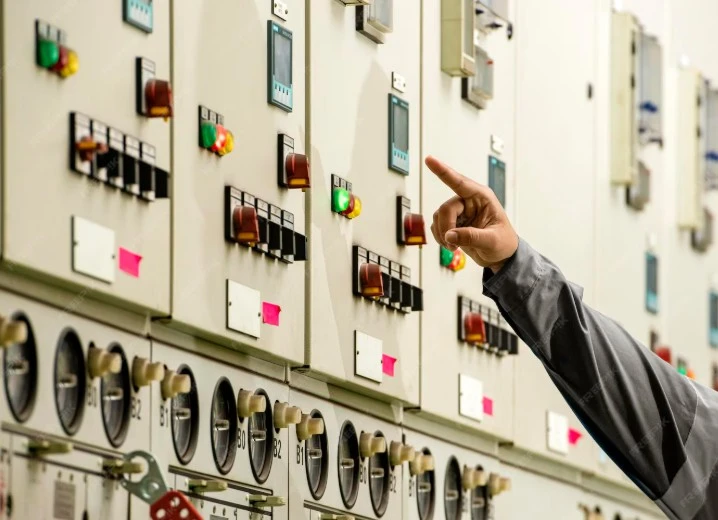

The Molded Case Circuit Breaker (MCCB) serves as the principal protector in a modern electrical system, shielding all downstream equipment from damaging overloads and short circuits. Because the choice of breaker has a direct bearing on equipment longevity and system-wide reliability, this guide provides the criteria for a professional selection.
Core Electrical Parameters
Your selection process must begin by matching the MCCB to the fundamental electrical characteristics of the system. Correctly specifying these core ratings is the first step toward a safe and reliable installation.
Ampere Frame and Trip Rating
While the ampere frame sets the breaker's physical limits, you must calibrate the adjustable trip rating to the circuit's exact needs. This single setting is critical; it must protect the conductor from overheating under load. An incorrect calibration will inevitably cause either cable damage or disruptive nuisance trips.
Breaking Capacity (kA)
A breaker's breaking capacity (kA) is its ability to survive a worst-case scenario, defining the maximum fault current the MCCB can interrupt without failing. For a safe installation, this rating needs to exceed the prospective short circuit current (PSCC) calculated for that specific point in the system. The PSCC is determined by factors like the utility transformer’s size and the impedance of the connecting cables. You should also consider both the ultimate (Icu) and service (Ics) breaking capacities, as the Ics rating indicates the breaker’s ability to function after clearing a major fault.
Trip Unit Technology and Protection
The trip unit is the intelligence of the Molded Case Circuit Breaker, dictating its response to electrical faults. Modern electronic trip units provide superior precision and customisation compared to older thermal-magnetic models.
Thermal-Magnetic vs. Electronic Trip Units
While thermal-magnetic trip units offer proven, cost-effective protection for standard applications, modern electronic trip units provide far greater precision. Their adjustable settings for long-time, short-time, and instantaneous overcurrents allow for fine-tuned system coordination. This selectivity protects sensitive equipment and contributes to greater industrial energy efficiency by preventing unnecessary, widespread trips during an isolated fault event.
Advanced Protective Functions
Look for modern electronic MCCBs that integrate earth fault and neutral protection, which are vital in certain earthing systems. These advanced functions provide a higher degree of safety in complex installations, protecting both personnel and equipment from subtle faults. The most advanced units will also have communication capabilities for integration into site-wide energy management systems.
Sourcing and Installation Considerations
The physical characteristics of the MCCB and the reliability of its source are as important as its electrical ratings, ensuring proper integration and long-term performance.
Physical Size and Mounting
The physical dimensions of the MCCB must fit the available space within your panelboard or switchgear. You should also verify the mounting style. A fixed mounting is standard, but plug-in or draw-out versions allow for much faster replacement, minimising downtime for critical circuits. You must confirm compatibility with your electrical assembly from the start to prevent expensive installation delays.
Ensuring Quality and Compliance
In a crowded market, the quality of your installation is ultimately defined by your choice of manufacturers & suppliers. A credible partner demonstrates their value by providing full technical documentation, guaranteeing their products meet international standards like IEC 60947-2, and offering meaningful post-sales support. Sourcing your protective devices from these proven manufacturers is the most direct path to achieving long-term system reliability.
Conclusion
A successful MCCB selection is always based on a careful evaluation of your system's technical requirements. A safer, more efficient electrical environment is the result of correctly specified ratings, the right trip unit technology, and a partnership with reliable suppliers. Expert manufacturers & suppliers like Lauritz Knudsen Electrical & Automation provide a comprehensive range of high-quality circuit breakers, including their DZ, DY, and DN series, giving you the ability to select a device engineered for your exact protection needs.






























Sign in to leave a comment.