
If you are thinking about selling online, Amazon is a great way to start your business. With millions of customers worldwide, this world’s largest marketplace provides incredible sales opportunities.
However, if you\'re new to Amazon selling, it can be challenging to figure out where to start and how to avoid sad mistakes and losing money.
This guide will help you get started, understand the basics of Amazon selling, and explain in simple words how it all works.
Intro
Who is this guide for?
This guide can be useful for anyone who wants to sell on Amazon. Sections dedicated to product sourcing are targeted at online arbitrage, wholesale, sellers, and dropshippers, while retail arbitrage and private label sellers can also find them useful.
What does this guide cover?
If you wonder how to sell on Amazon, this guide will help you get started, understand the basics of Amazon selling, and explain in simple words how it all works from A to Z.
What to Know Before You Start Selling on Amazon?
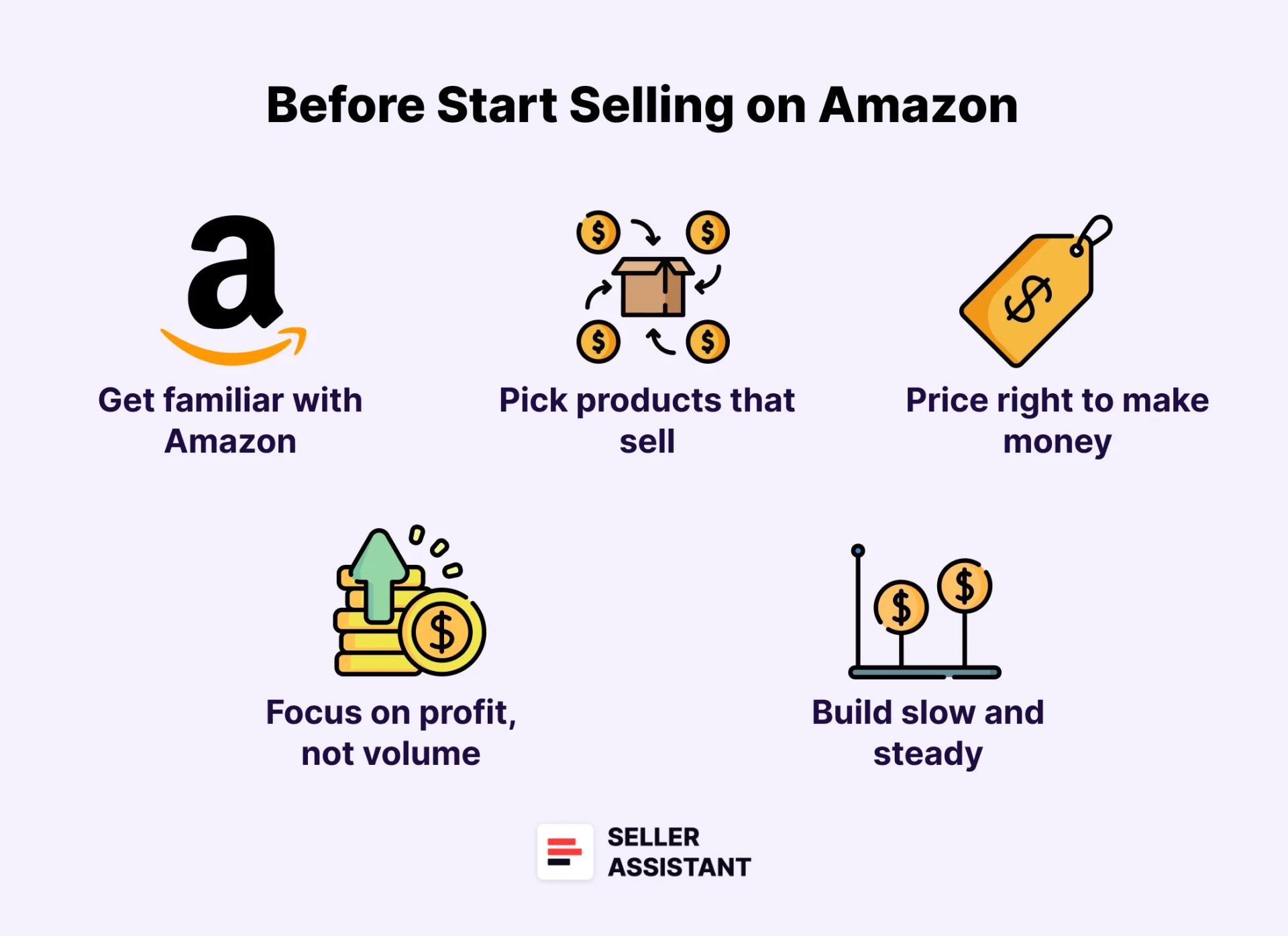
Before you start selling, briefly glance at a few key things to remember about Amazon sales. That is important to better understand what you should expect from Amazon sales.
Get familiar with Amazon
Take some time to learn the basics of selling on Amazon, like how to list products and get them shipped to customers. This will help you avoid any bumps in the road.
Pick products that sell
Don\'t just sell anything! Look for items that people want to buy and that don\'t have a ton of other sellers offering them already.
Price right to make money
Before you offer anything to customers, figure out all the Amazon fees involved (like a selling fee) so you can price your products high enough to make a profit after everything is paid for.
Focus on profit, not volume
Focus on making money on each sale, not just selling a bunch of stuff for super cheap. Remember, you\'re running a business and your target is to make money.
Build slow and steady
Growing a successful Amazon business takes time and effort. Don\'t get discouraged if you don\'t see results overnight. Keep putting in the work, and it can be a really rewarding experience.
Related: Amazon Glossary for Sellers
How Does Selling on Amazon Work?
Understanding how Amazon sales work comes down to answering 10 key questions. Here you will find short answers, while below we will discuss each of them in detail.
1. What do I need to start on Amazon?
To start selling, you must register yourself as a seller. To do that, you must choose a selling plan and create an Amazon seller account, called Seller Central account.
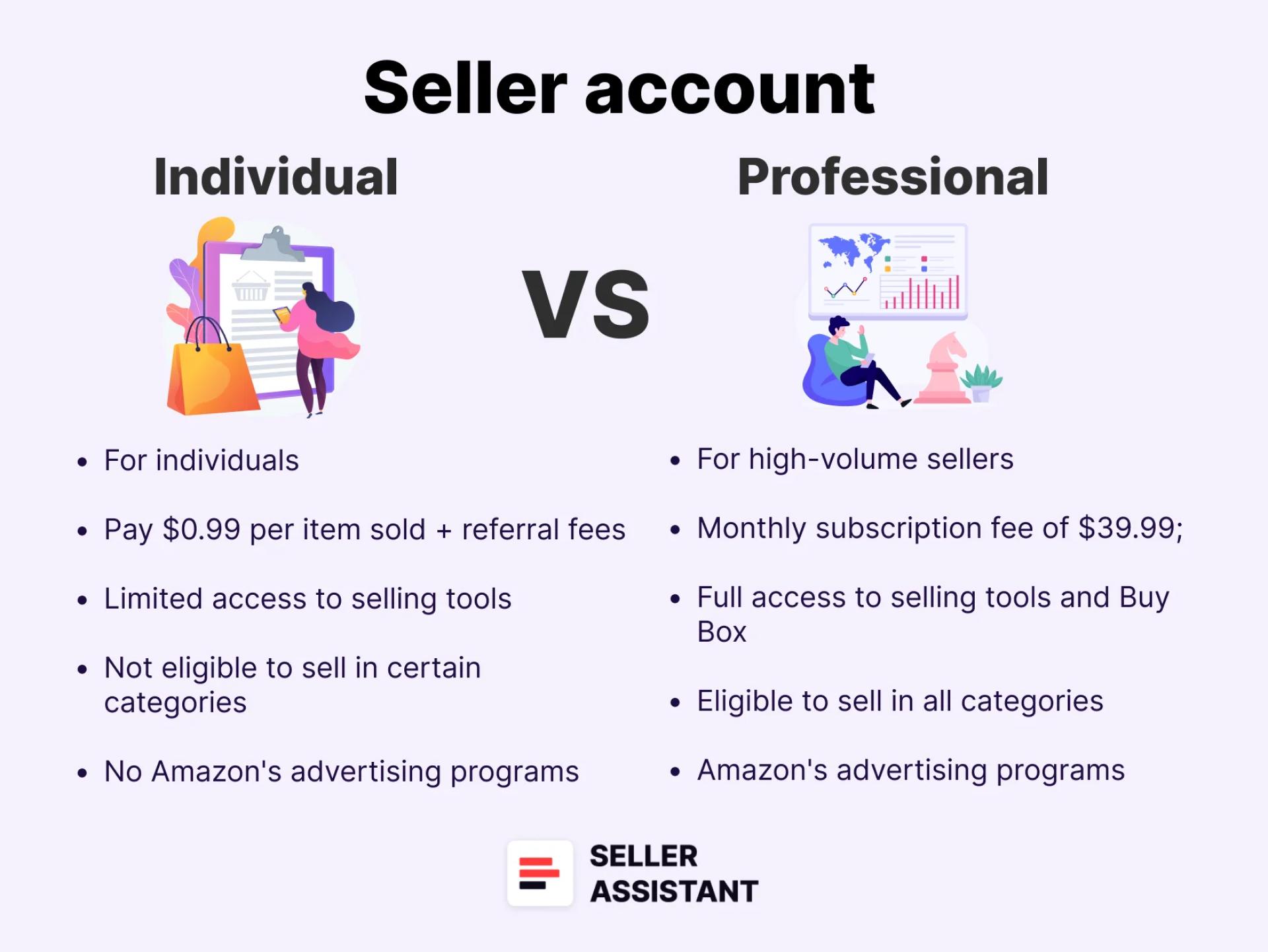
Individual plans are for casual sellers who sell a limited number of products, while Professional plans cater to sellers with many products for a monthly subscription fee.
Related: How to Create an Amazon Seller Central Account?
Creating an account in Amazon Seller Central step-by-step
2. How will I sell?
On Amazon, sellers most frequently use 5 selling strategies called business models: online arbitrage, retail arbitrage, wholesale, dropshipping, and private label. All of them are reselling models, which means you get a product for a lower price at any retailer and resell it for profit. You can also sell products you created by your own hands, like handmade items, custom designs for t-shirts or mugs, or books you wrote.
3. What will I sell?
The next thing you need to do is pick the products you are going to sell. Amazon sellers call this process product research.
Typically, you will look for a product with good market demand (popular with Amazon customers) and low competition (to be able to sell it for the price you planned). Also, it should not have any problems (be restricted or have other flags).
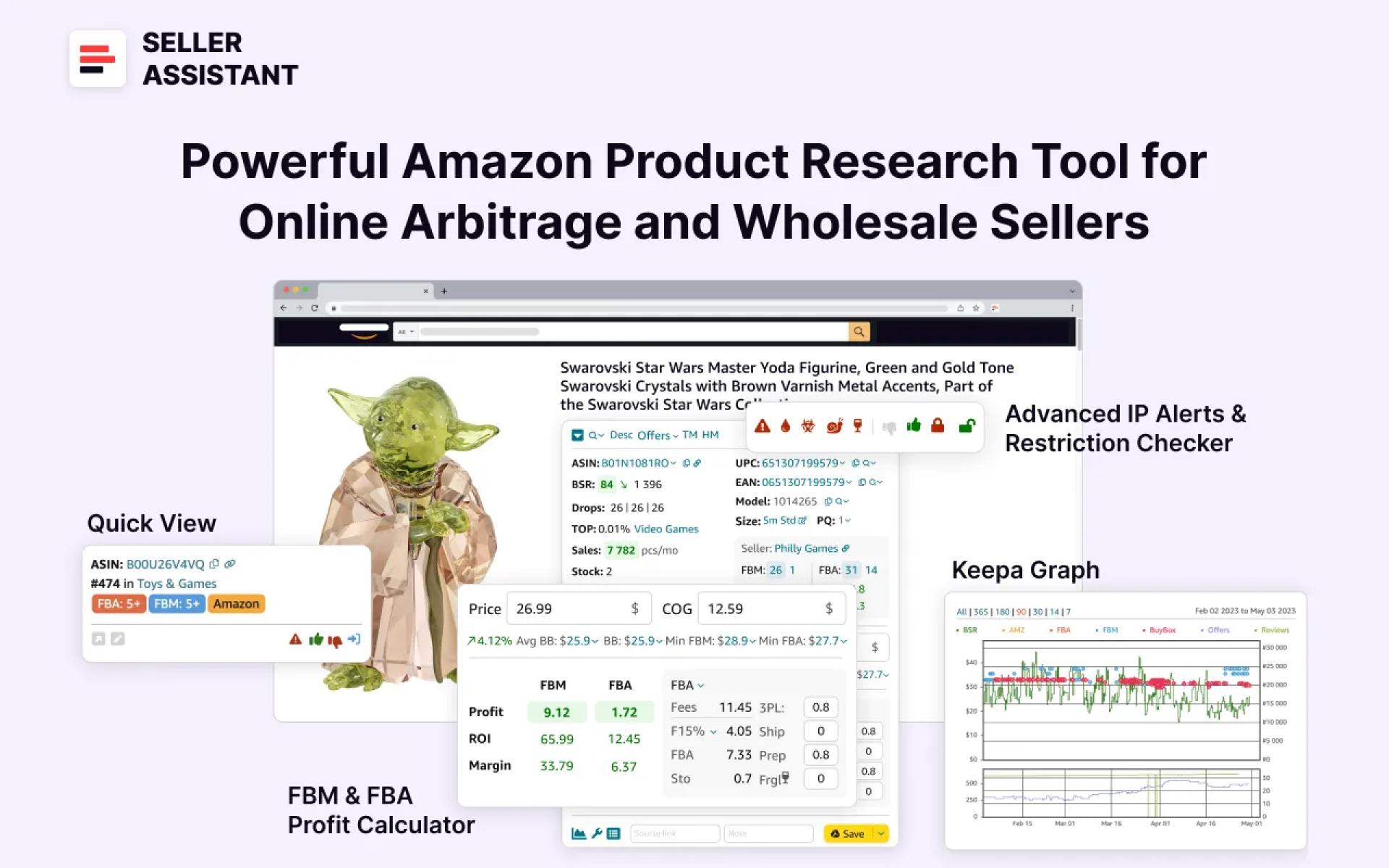
Most sellers use product sourcing tools to find products for Amazon. One of the most popular product sourcing tools is Seller Assistant.
4. Where do I get a product?
After you ensure the product will sell, you must check it will generate good profit. You must find a product supplier who offers a price substantially lower than it sells on Amazon.
At the same time, a supplier must be reliable, offer good quality products, and have dependable lead times. Depending on the business model, you will use different types of suppliers.
5. How many products should I buy?
In all business models except dropshipping you need to buy your products first to resell them on Amazon. In such a case, you must decide how many products you need. That is called inventory management.
You can get guidance on how many units of a product you can sell from the estimated sales number in Seller Assistant. The general advice is not to buy too many products (inventory) at the start.
6. How to add my product to Amazon?
When you have a product ready to sell, you must add your offer to Amazon. The Amazon product page is called product listing, while the process is to list a product. That is a place where all buyers get when they look for a product they want to buy on Amazon.
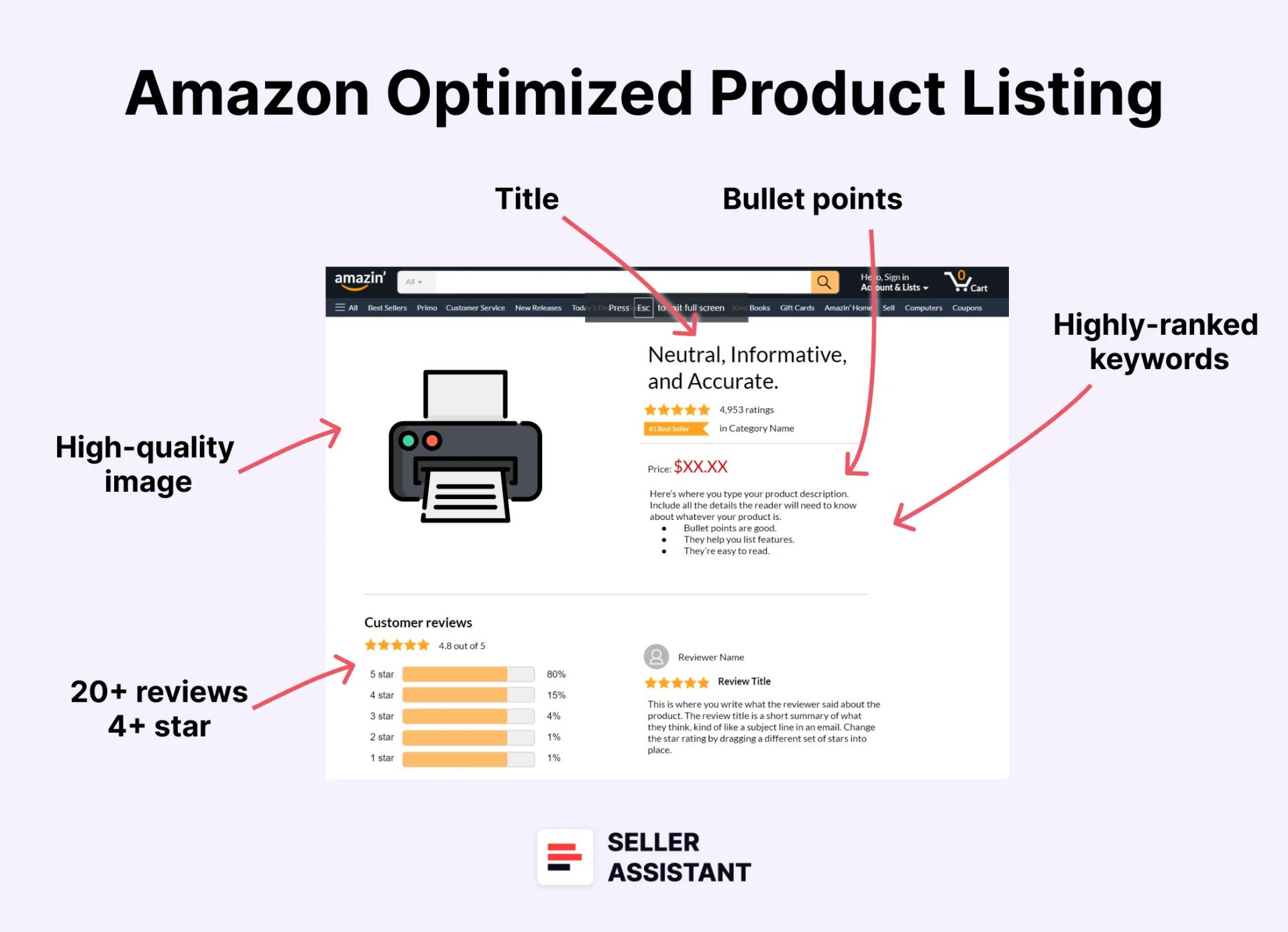
You can either add your offer to an existing Amazon listing (if it already exists) or create a new listing (if a product doesn’t exist on Amazon).
Don’t create a new listing if your product already exists on Amazon. Unlike other e-commerce platforms, Amazon doesn’t allow multiple listings of the same product. You must add all offers of the same product to one listing.
7. How to ship the order to the customer?
When you list a product, Amazon will ask you how you are going to ship it to the customer. That is called the fulfillment method.
You can fulfill orders yourself (with Fulfillment by Amazon, FBM) or use Amazon\'s Fulfillment by Amazon (FBA) service, where they handle storage, picking, packing, shipping, and customer service for a fee.
FBA is a convenient service, but you must carefully account for all related fees so that they don’t eat into your profit margins. You should also remember, that with FBA you must still package the product in line with Amazon’s requirements and send it to Amazon’s warehouse (fulfillment center).
8. How to price a product?
Pricing competitively is key because Amazon chooses what offers it shows on the listing mainly based on the price (that is called a Featured Offer, or Buy Box).
Research what similar products are selling for and factor in all your costs (including Amazon fees) to ensure you make a profit on each sale. Use Seller Assistant’s FBM&FBA Profit Calculator.
9. How to know my product was sold?
If you use Amazon FBA, they take care of shipping orders (buyer’s purchases) to the customers. You don’t need to know exactly when you receive each order because you don’t have to send it to the customer.
However, if you are an FBA seller and ship orders yourself, you must know it immediately to timely process and ship it out. You can get this information in your Seller Central and the Amazon Seller App.
10. How will I get money for the products I sell?
Amazon takes money from the customers and then pays you what you’ve earned. They will deposit your earnings from sales into your seller account, minus any applicable fees. You can then transfer these funds to your bank account.
Related: How to Sell on Amazon Without Inventory?
Selling on Amazon: Beginner’s Guide
If you are interested in getting a detailed overview of how selling on Amazon works in detail, here’s what new sellers on Amazon must consider.
How to Create an Amazon Seller Central Account?
Creating an account in Amazon Seller Central step-by-step
Step 1. Prepare your business and personal details
What you need to register a Seller Central account:
- valid government ID or passport;
- bank account or credit card statement;
- valid credit or debit card;
- mobile phone.
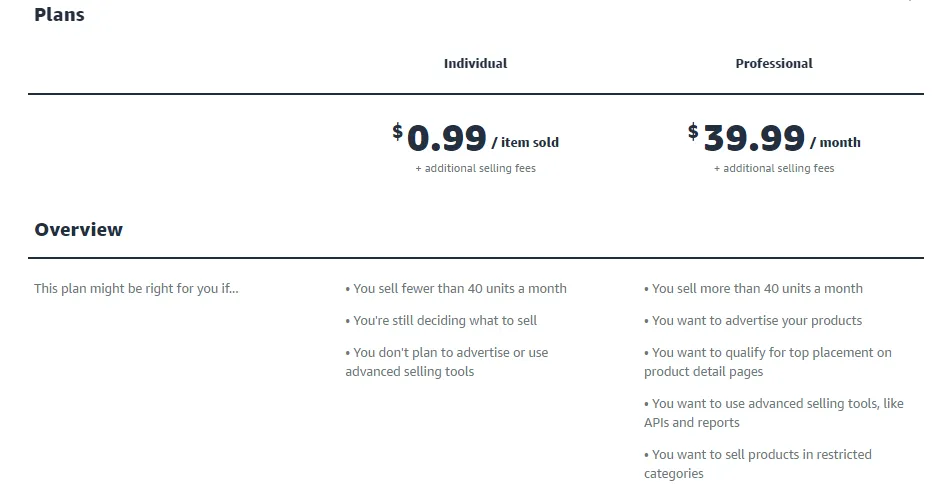
Step 2. Choose an Individual or Professional selling plan
- Select an Individual plan if you want to sell single products occasionally. You will be charged $0.99 for every product you sell. This plan will work for you if you plan to sell less than 40 products monthly.
- A Professional plan is a great option if you sell many products (more than 40 products each month). In that case, it will save you money on each sale. With a Professional plan, you’ll pay $39.99 per month. In addition, the Professional plan gives you access to many sales and reporting tools. You can qualify for the Buy Box, enroll in different seller programs, and more.
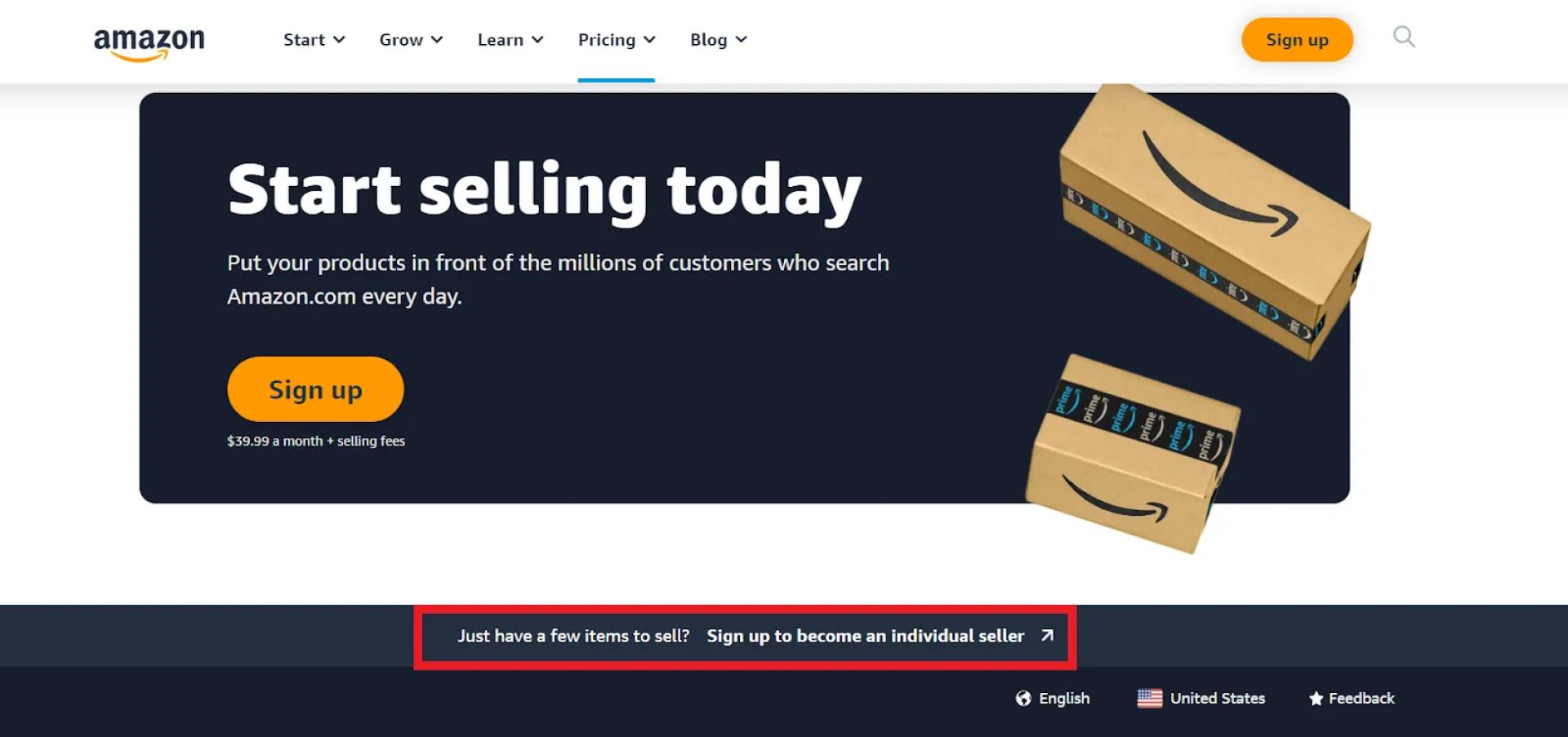
Step 3. Open the ‘Start selling with Amazon’ sign-in page.some text
- If you want to register for a Professional plan, click the Sign-up button.
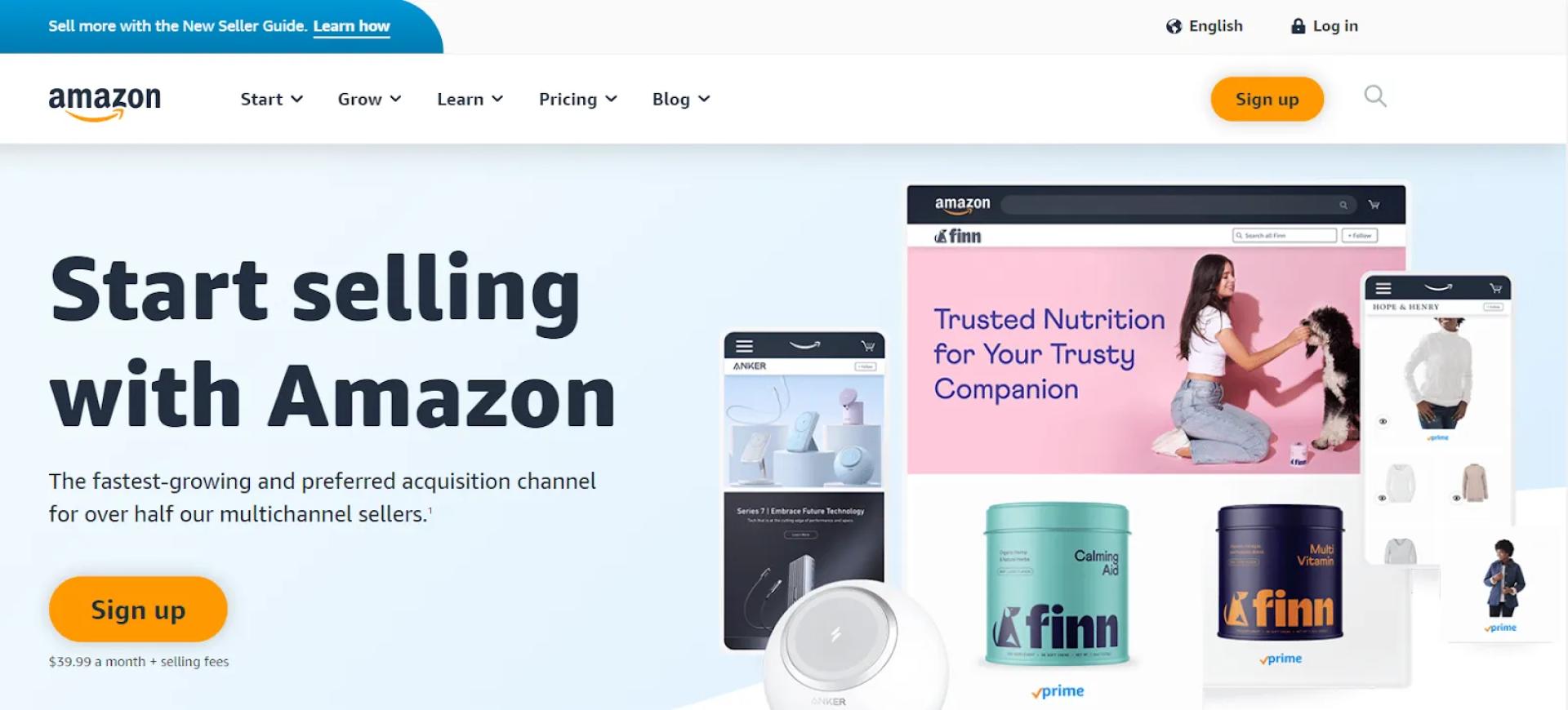
- If you want to register for an Individual plan, scroll down the page and click “Sign up to become an individual seller.”
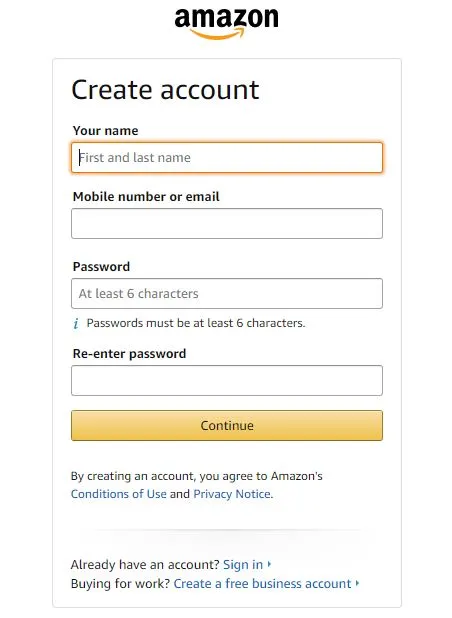
Step 4. Enter your e-mail address and password
When you enter your e-mail address and password. Amazon will send the verification code (OTP) to your e-mail. Type it in the “Enter OTP” field.
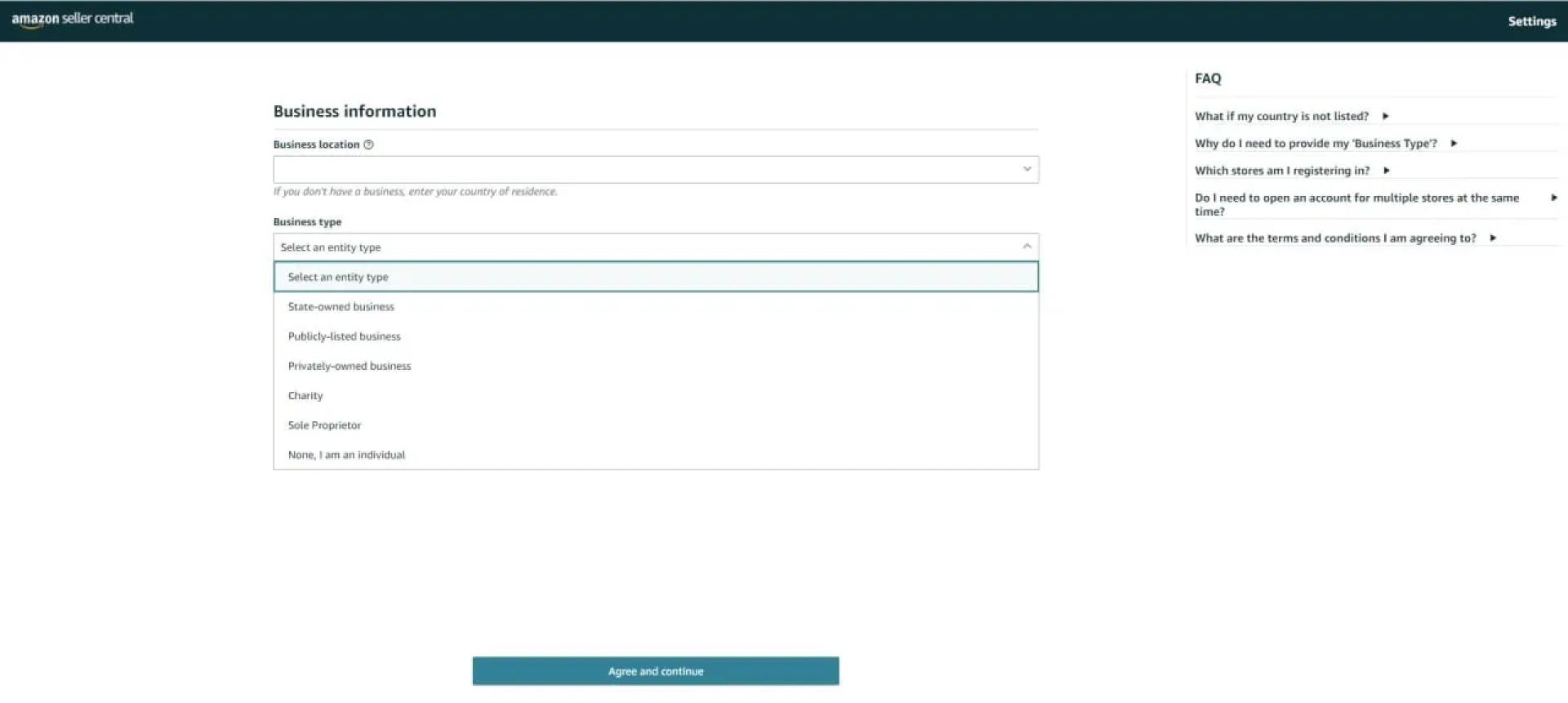
Step 5. Add your business location and business typesome text
- Enter the country where your business is registered or the country where you live.
- Choose your business type from the drop-down; if you are not a business owner, select “None, I am an individual.”
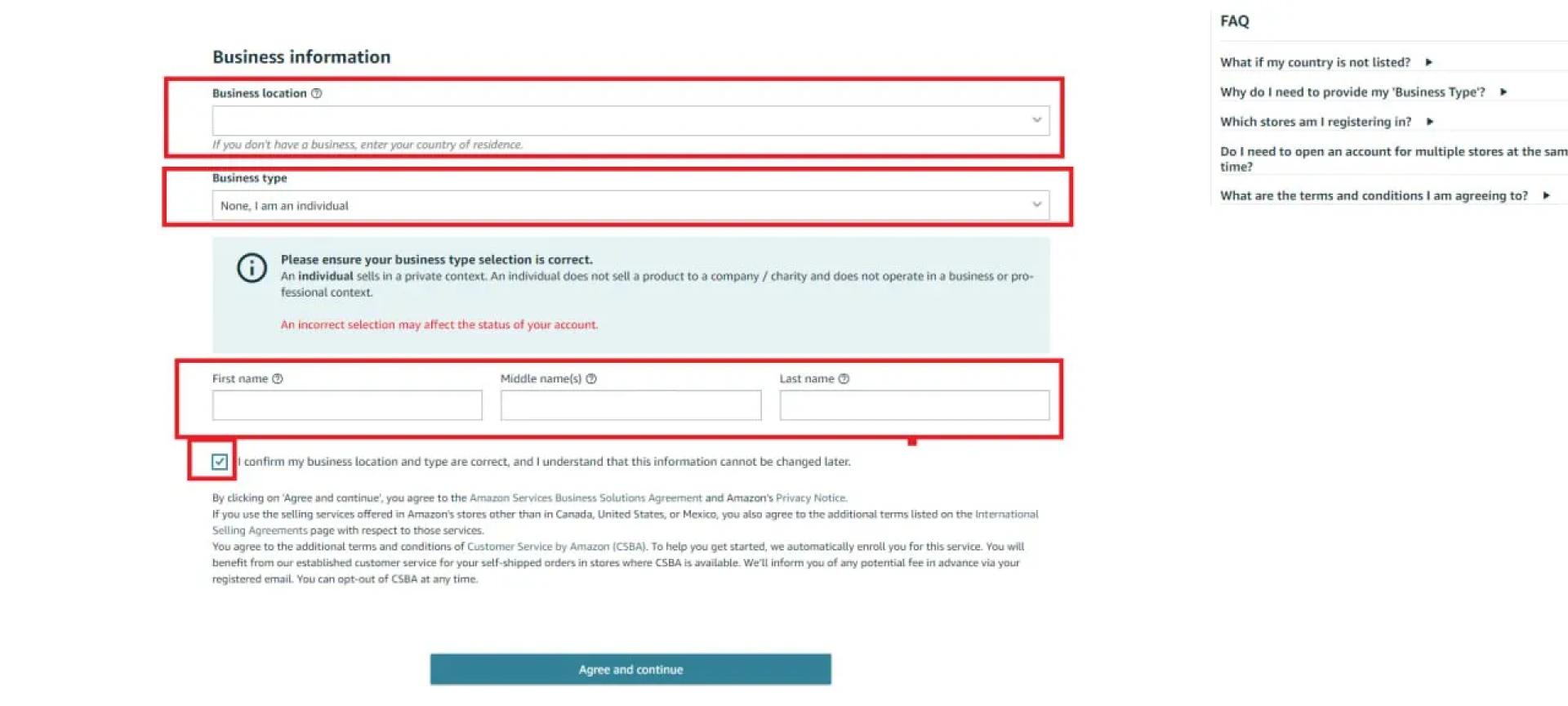
Step 6. Enter your personal and business details
Add your first, middle, and last name, and tick the box “I confirm my business location and type is correct…”
Step 7. Fill in and verify the primary contact person information
Add your country of residence and birth, the address where you live, date of birth, and mobile number, where Amazon will send an SMS with a one-time verification pin. Click the “Send SMS” button, receive the one-time verification pin, and enter it in the pop-up window.
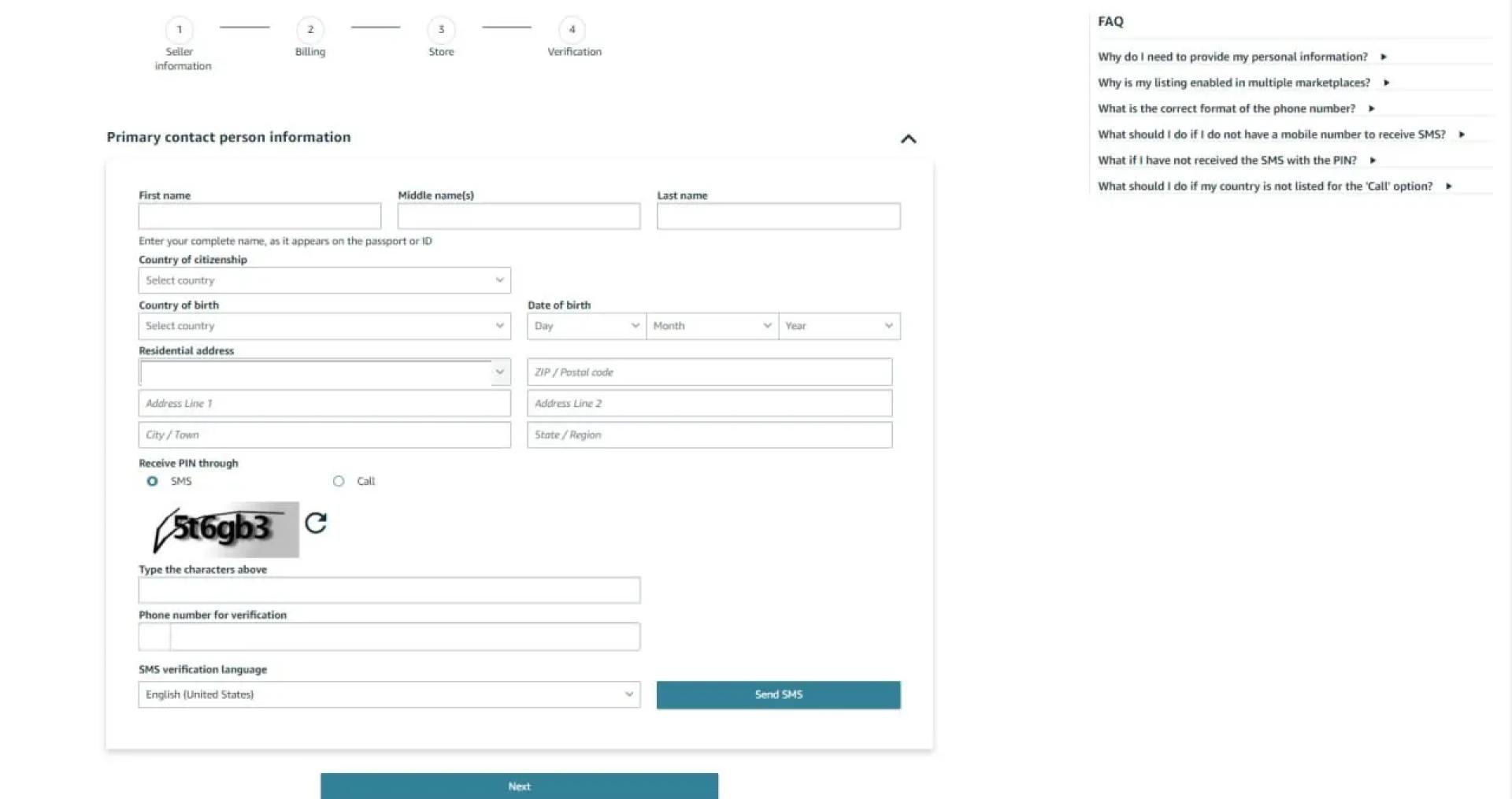
Step 8. Enter your payment method
Add your credit card number, expiration date, and cardholder name.
Step 9. Submit your Amazon store’s namesome text
- Choose any name of your Amazon store that doesn’t exist on Amazon (you can change it later if necessary).
- Confirm that you have the Universal Product Codes (UPCs) for your products. If don’t know, click “Yes” because the majority of the products have these codes.
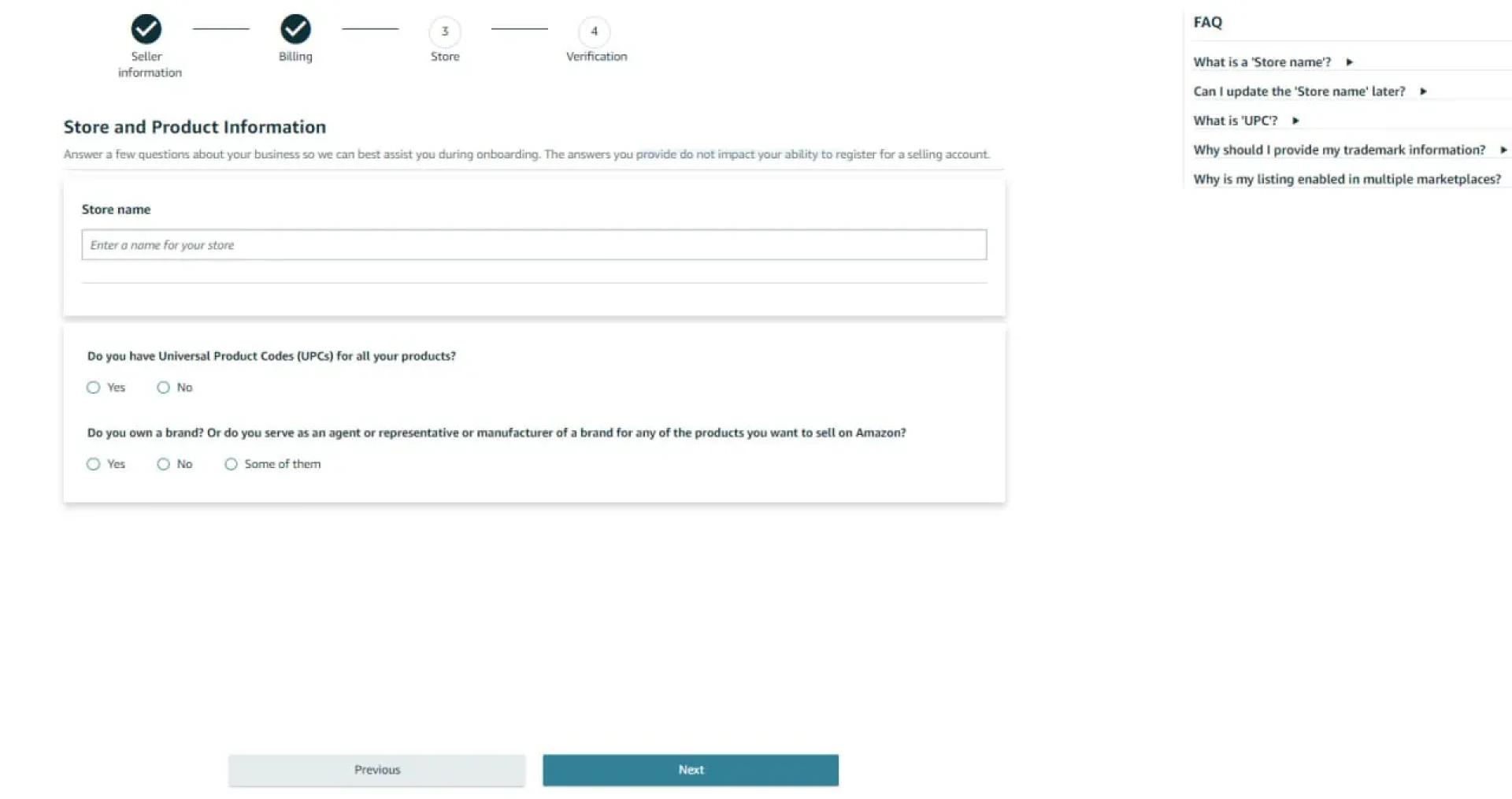
Step 10. Verify your identity
- Upload images of your passport or driving license, and a bank or credit card statement.
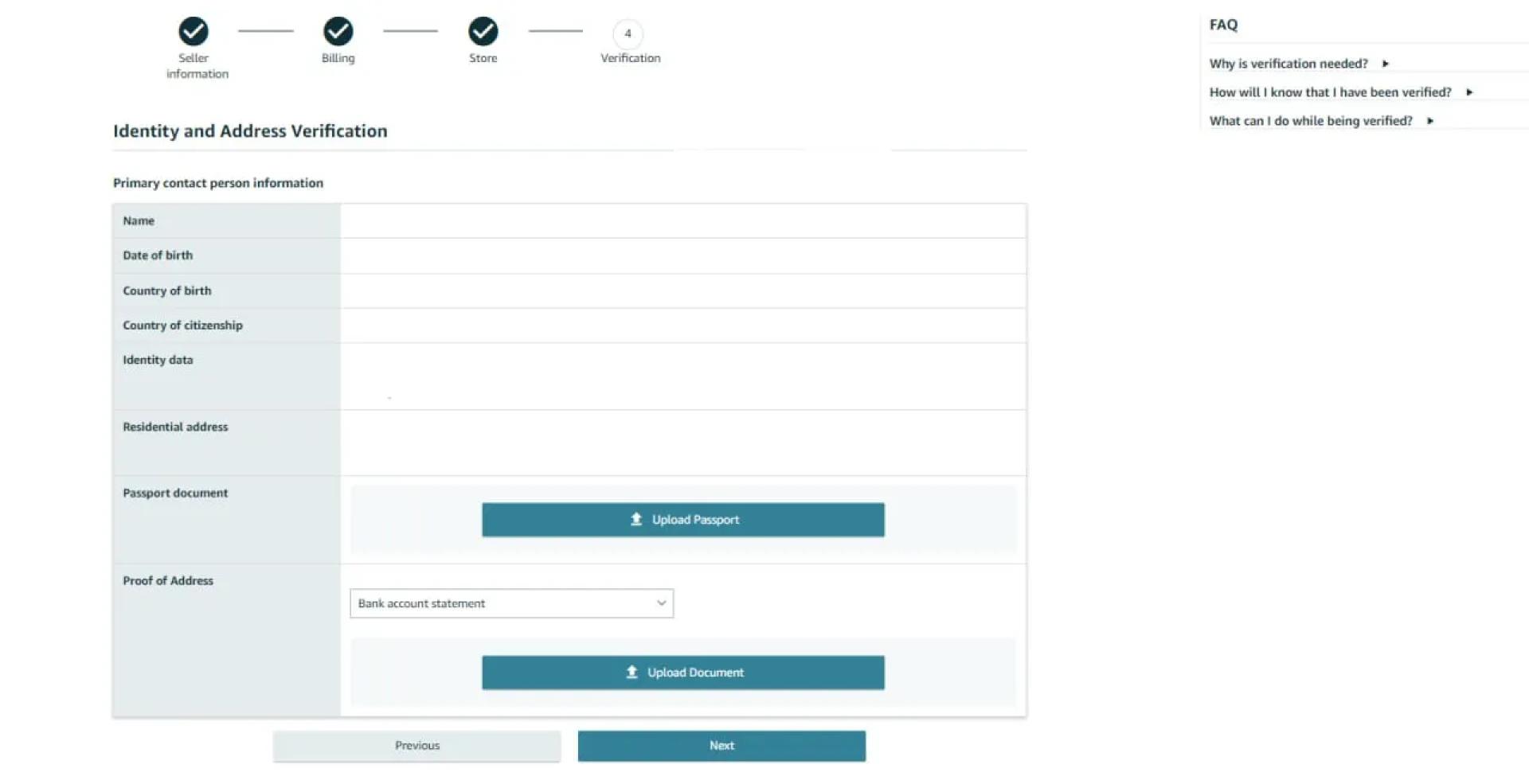
- Schedule a video call with an Amazon associate to complete the verification and confirm the data you entered.
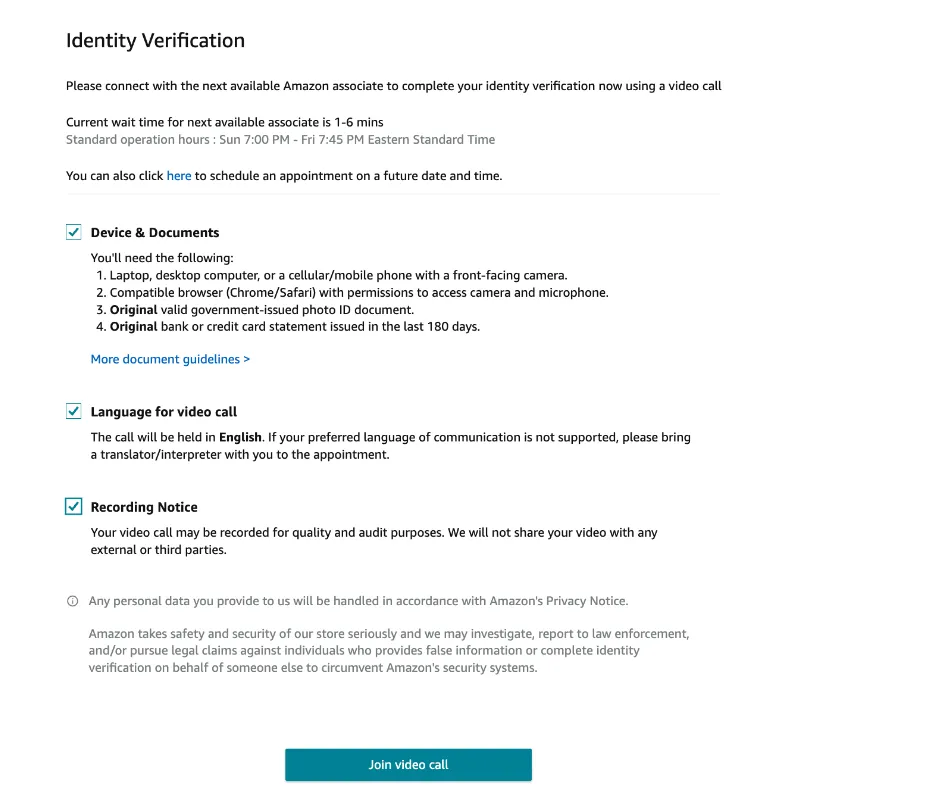
Step 11. Wait until Amazon approves your account.
Related: How to Create an Amazon Seller Central Account
How to Sell on Amazon as an Individual Seller - Complete Guide
What Are Different Amazon Business Models?
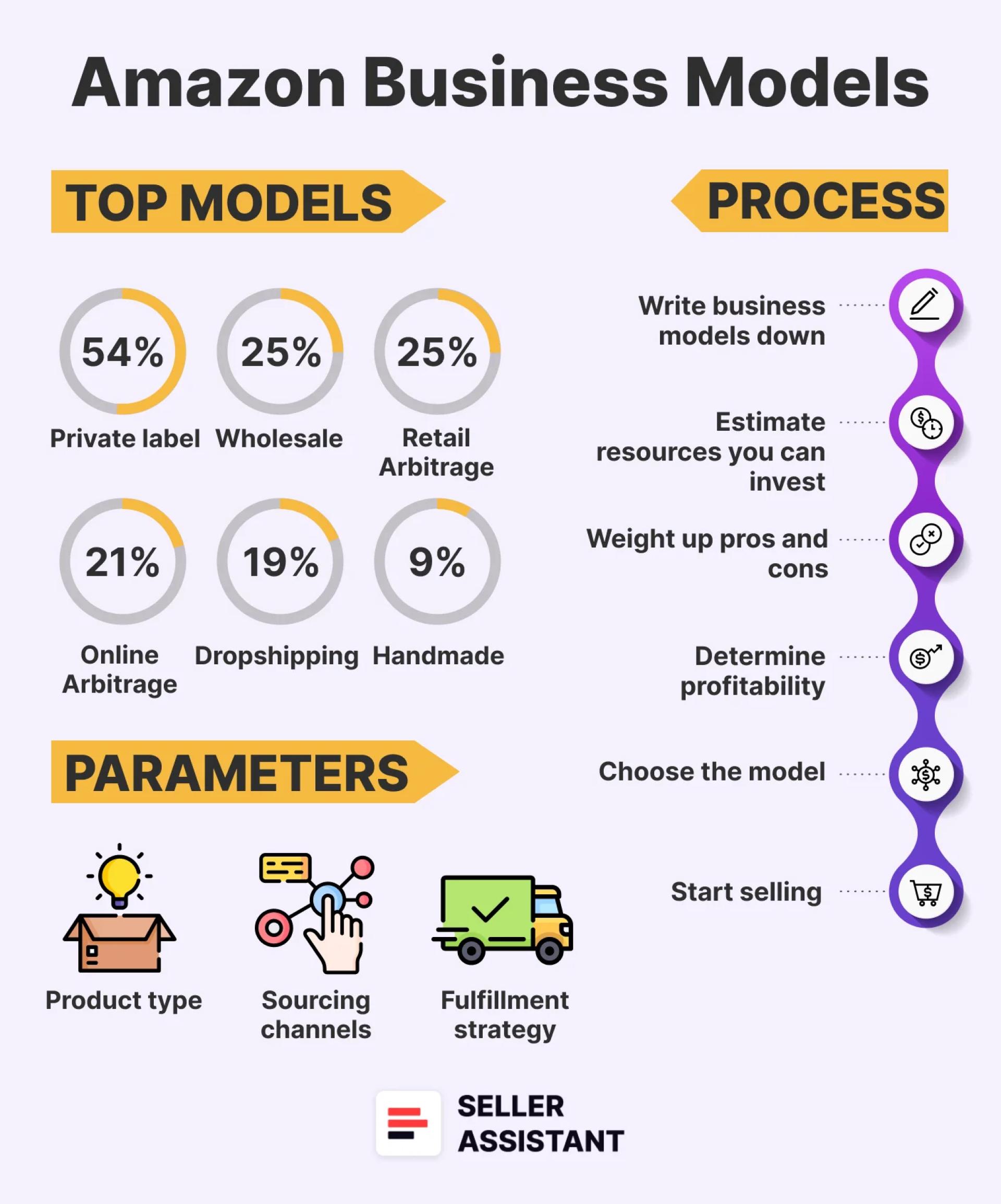
Amazon business model is the way you sell products. It defines the kind of product you sell, how and where you get it (sourcing), and the method you deliver the order to the customer (fulfillment).
The five popular Amazon business models include online arbitrage, wholesale, dropshipping, retail arbitrage, and private label.
Online arbitrage
Amazon online arbitrage (OA) is a business model of buying cheaper-priced products from one online retailer and reselling them for profit on another marketplace — Amazon.
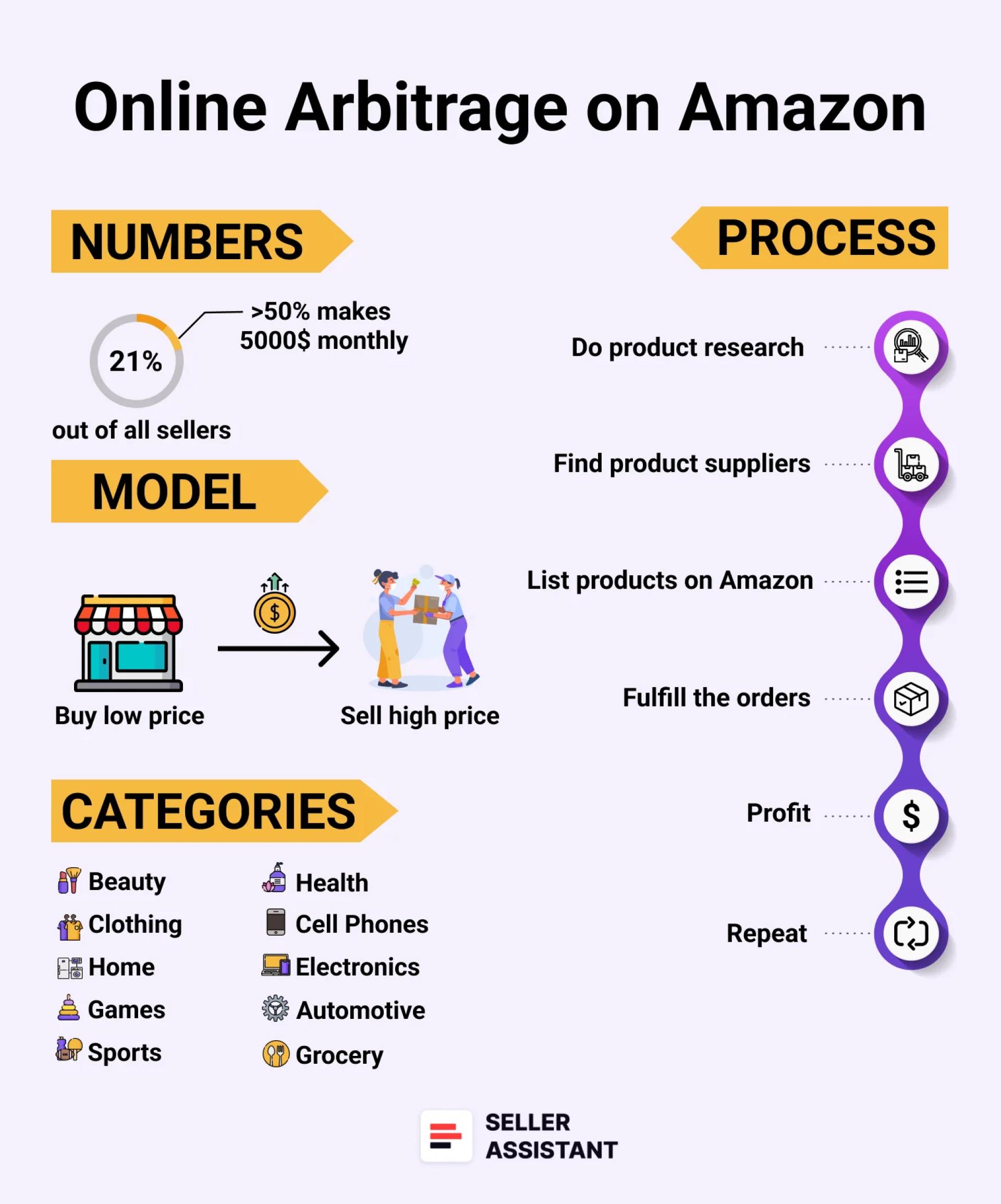
How does online arbitrage work?
The main target of online arbitrage sellers is to find profitable deals. That means, finding a product on the online retailer, discounter, or other store to resell on Amazon with essential profit.
3 key things to know about online arbitrage
Winning product is key
The most important step in online arbitrage is to find the right product to sell. You must choose a popular product that is not sold by many sellers. It must not have issues like restrictions and other alerts and should bring the profit you want.
Product research takes time
Choosing a product for Amazon is called product research. This task is challenging and can take time and effort, but it\'s essential to do it right to avoid costly mistakes. You can use Amazon seller tools like Seller Assistant to simplify product research.
Check products for restrictions and flags
Before selling products, you must always check them for restrictions (you need Amazon’s approval to sell them), and other flags (fragile, meltable, oversize products, etc.). That is because all that may mean either extra hassle or costs. Seller Assistant helps detect these product issues.
What does it cost to start online arbitrage?
Online arbitrage is low-cost to start, the main cost is buying products. You can start this business with as little as $500.
Related: Amazon Online Arbitrage: How to Make Money
Online Arbitrage for Beginners
10 Reasons Why People Fail With Amazon FBA Online Arbitrage
Wholesale
Wholesale is a business model of purchasing products in bulk at a discounted price from a manufacturer, supplier, or distributor and then reselling them to Amazon customers for a profit. The profit comes from selling the products at a higher retail price than the wholesale price.
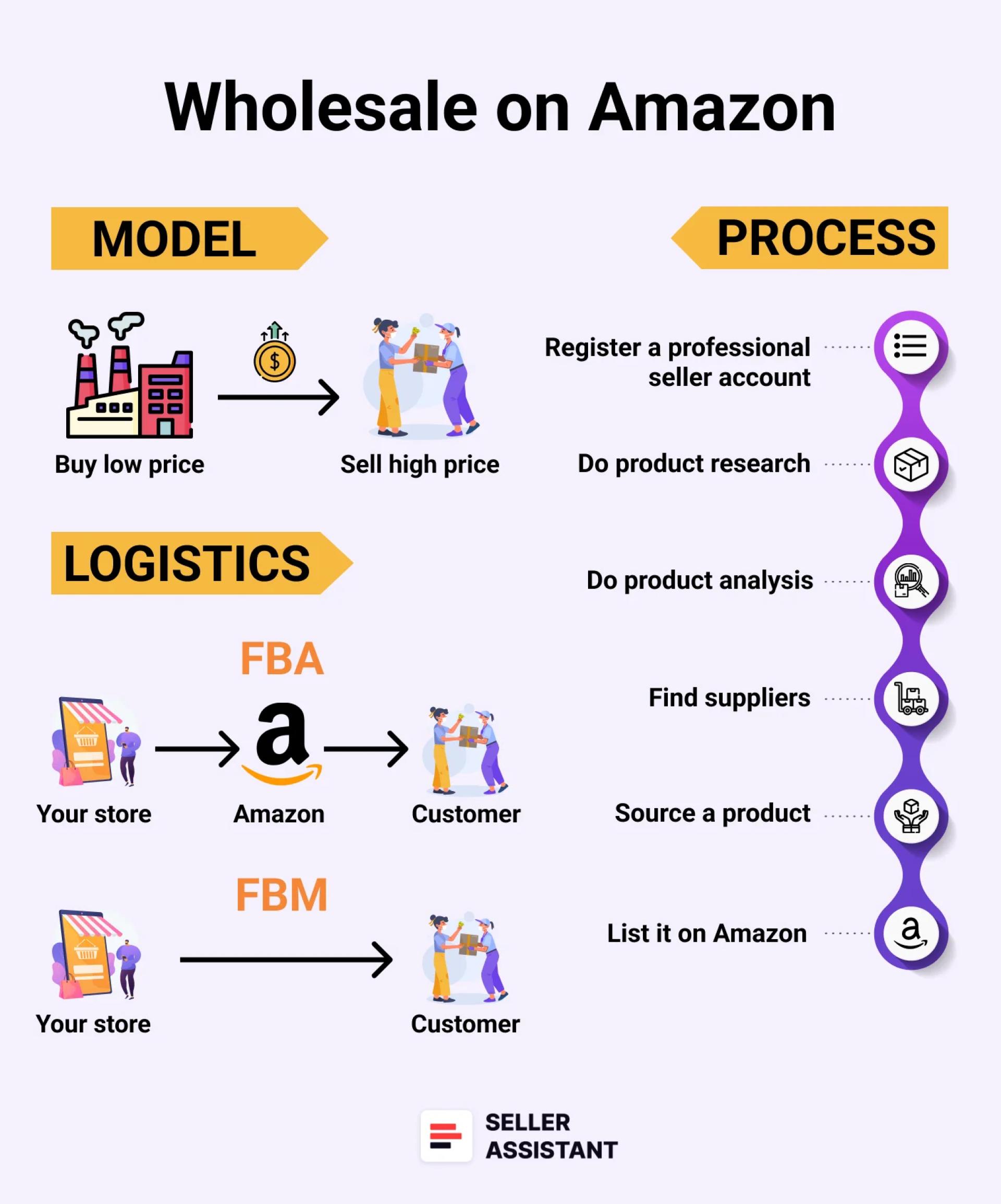
How does wholesale work?
Wholesale differs from other business models by selling products in large quantities. The main target of wholesale sellers is to obtain the lowest possible prices for popular products and the best purchase conditions. That is because they resell these products on Amazon and aim to get maximum profit from each product. To do so, wholesale sellers must contact the brand, manufacturer, or big distributor to get the best prices.
3 key things to know about wholesale
Wholesale is different from other business models, and there are several crucial things to keep in mind when selling with it.
High profits are generated by big investment
Wholesale is one of the most profitable business models but requires essential upfront investment because you must buy many products. Wholesale sellers get low prices directly from brands and can get a good profit on each product. Multiplied by the large number of purchased products they generate thousands of dollars when sold.
Finding wholesale suppliers is a challenge
Popular brands often have an established sales distribution network. That makes it challenging to convince them to sell to one more seller – you. Persuading a brand to work with you requires building a relationship and demonstrating how your business can benefit theirs.
Product research helps avoid risks
Wholesale sellers buy products in bulk and must invest significant upfront costs. Therefore, it\'s essential to ensure that the products you buy are profitable and won\'t create issues when selling them, such as intellectual property complaints, restrictions, or product flags, which can lead to financial losses. Wholesale sellers avoid risks with product-sourcing tools like Seller Assistant.
What does it cost to start wholesale?
Starting wholesale is costly. Initial investment can be as high as $2000 and up.
Related: Amazon Wholesale: All You Need To Know
How To Negotiate Prices With Amazon FBA Wholesale Suppliers
Online Arbitrage vs Wholesale on Amazon. What is the difference?
How to Find Amazon FBA Wholesale Suppliers
Dropshipping
Amazon dropshipping is a business model where a seller lists products on Amazon without physically holding the inventory. The dropshipper lists the product on Amazon, receives an order from the buyer, and then requests the supplier to ship it directly to the consumer.
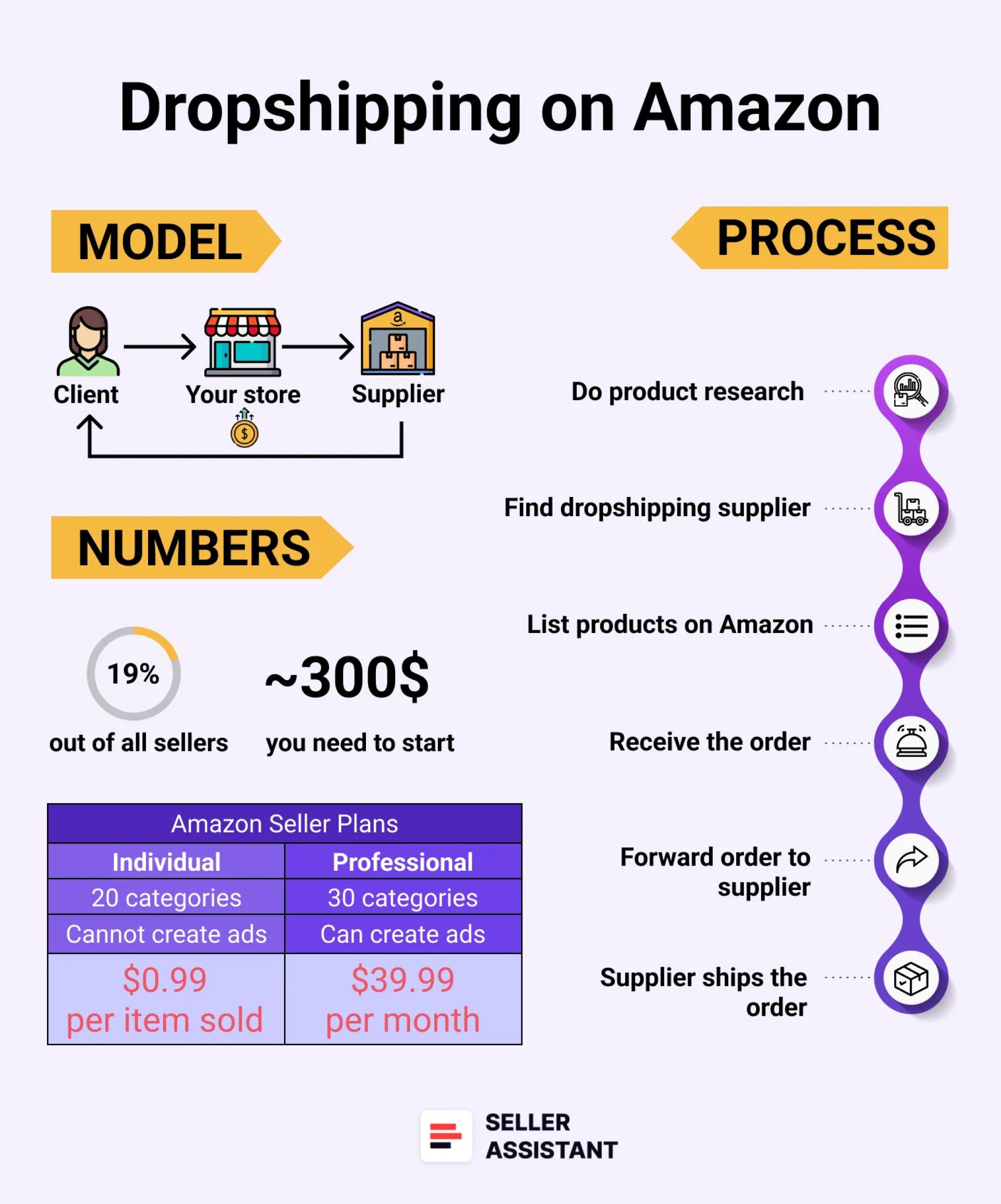
How does dropshipping work?
With dropshipping, the seller selects a profitable Amazon product and finds a supplier that agrees to ship it directly to the customer. The seller then lists the product on Amazon and notifies the supplier when a customer places an order. The supplier ships the product directly to the customer, and the seller acts as a middleman between the supplier and the customer.
The profit is generated by the difference between the supplier\'s lower price and the seller\'s higher price.
3 key things to know about dropshipping
Amazon dropshipping policy
Amazon has specific requirements for dropshippers. Dropshippers must identify themselves as sellers of record and issue all product-related documents in their name. Additionally, dropshippers must remove all third-party retailer signs from the product and packaging. That can be challenging because they don’t see the inventory and have to rely on the supplier to do that.
IP complaints are a challenge
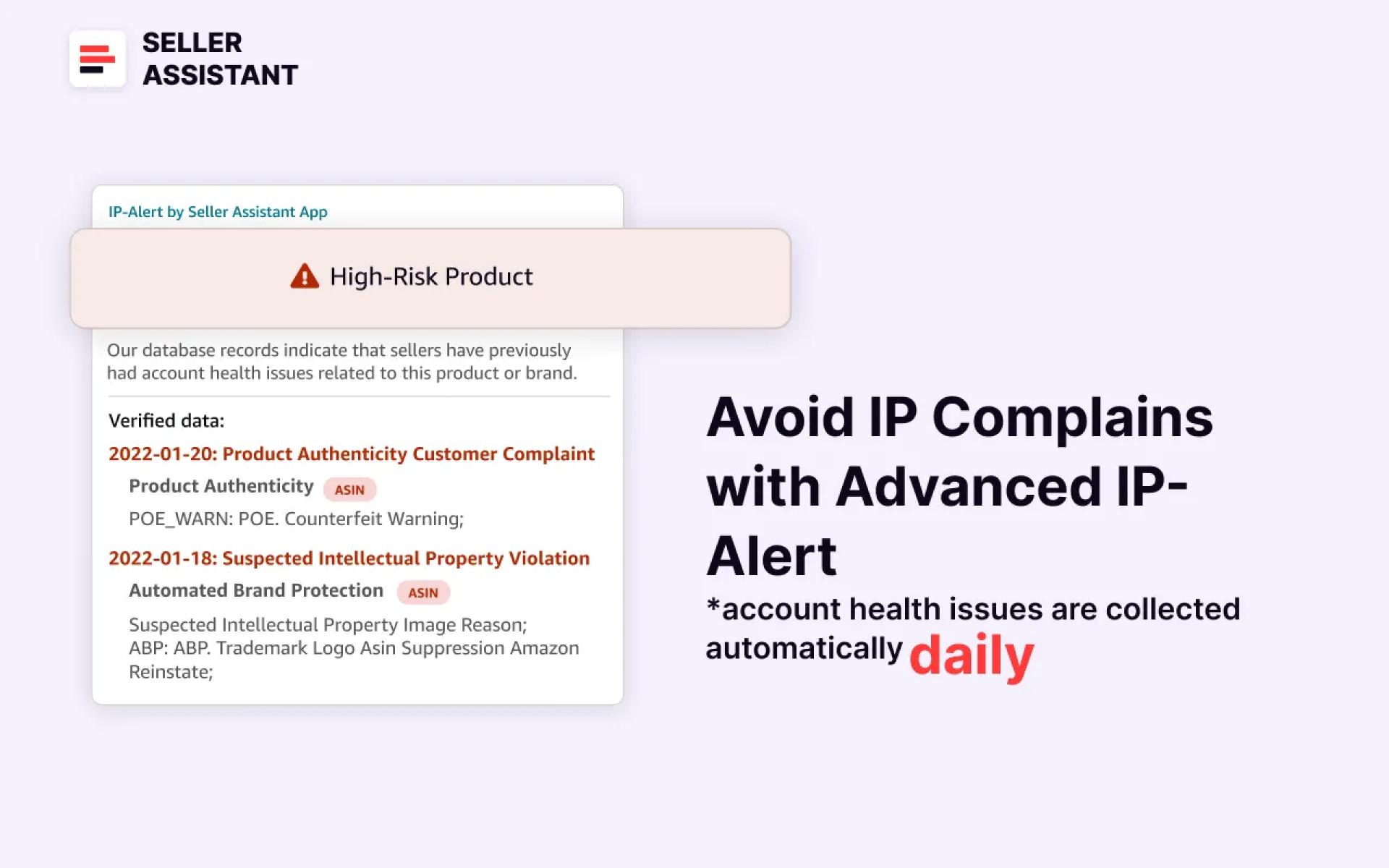
As a dropshipper, you often resell other brands’ products. However, some brands have policies against reselling their products, and they may file intellectual property complaints to Amazon. That may result in listing or account suspension and money loss. To avoid this issue, sellers can use Seller Assistant\'s IP Alert feature, which alerts them about such products.
Choose a supplier with care
Because dropshippers don’t deal with the inventory, they have little control over the product quality and shipping times. To reduce these risks of dropshipping, you must choose a reliable supplier that will ship your products on time and in saleable condition.
What does it cost to start dropshipping?
This model is the least expensive to start. You don’t need to invest in inventory upfront. Your only costs are Amazon fees and product-sourcing software.
Related: Online Arbitrage vs Dropshipping: Which Business Model Is Best For You?
New Dropshipping Strategy That Complies With Amazon’s Policy
Retail arbitrage
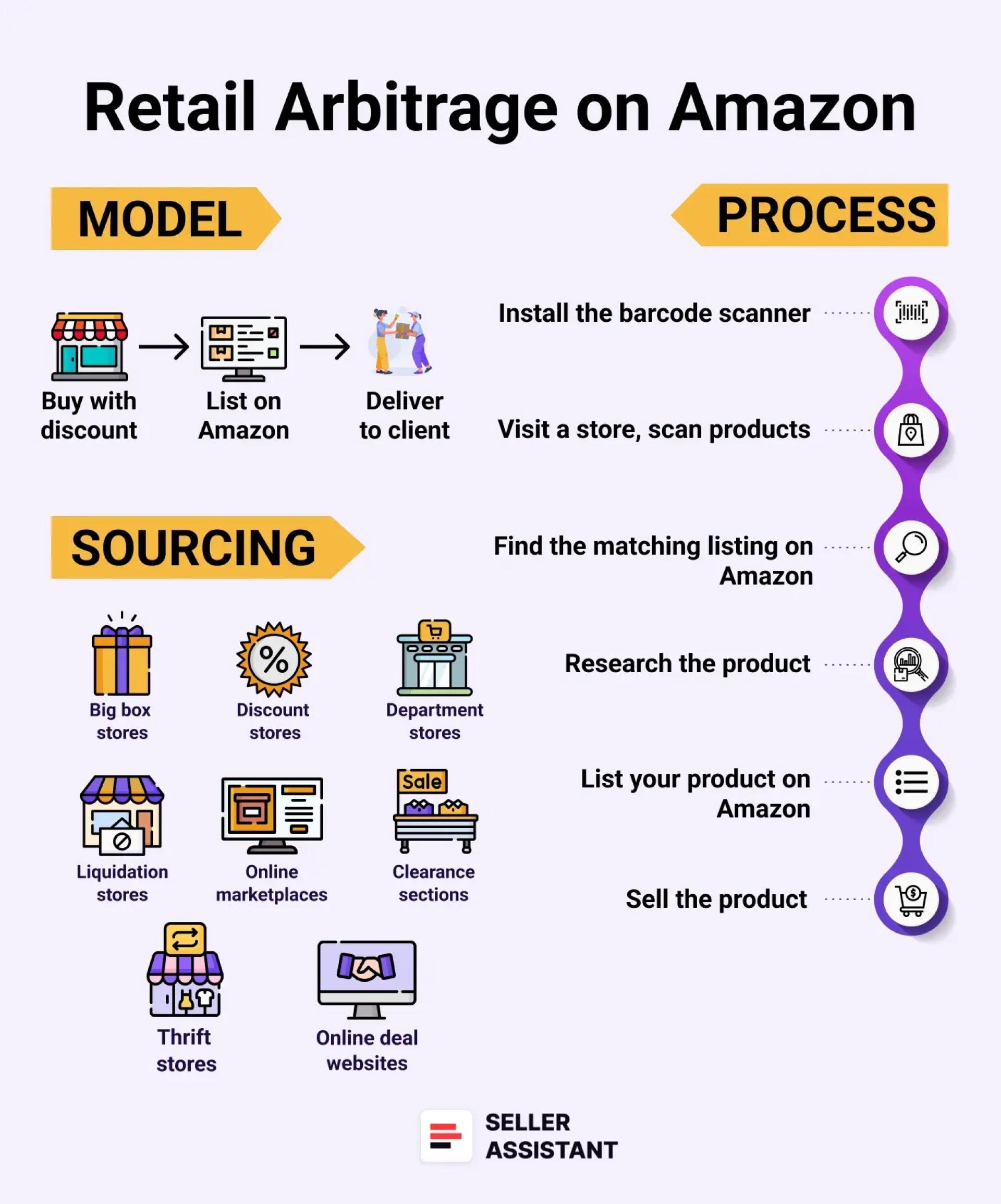
Amazon retail arbitrage is a business model where sellers buy products from brick-and-mortar stores retail stores at a discount and resell them on Amazon for a profit. This model is great for sellers who like shopping and visiting stores. However, it is a very time-consuming business because you must roam the stores physically.
How does retail arbitrage work?
Amazon retail arbitrage seller’s target is to find in offline retail stores the products that are priced lower than on Amazon. To do so, they visit stores that offer products at low prices. That could be stores having sales or clearance, liquidation stores, and promotional or discounted offers. When they find such products and make sure they are profitable, buy them and list them on Amazon.
3 key things to know about retail arbitrage
You must research products in-store
With retail arbitrage, you must use a barcode scanner to scan product codes with a mobile app in-store to match them with Amazon products. That is necessary for the app to show you which listing corresponds to your product on Amazon. The app will show product profitability and other data, and you must decide on the spot if you should buy a product you find in a retail store. You must do it quickly because you must instantly buy the products (the next day, the discount may be gone).
Time-consuming model
It takes much time to physically travel from one store to another to find profitable deals and choose the products. You must scan their barcodes and check products one by one on the go.
You must replenish inventory physically
With retail arbitrage, you must go to the physical store to get more inventory when you need to restock it. That can require additional time, effort, and mileage.
What does it cost to start retail arbitrage?
To start retail arbitrage on Amazon, you don’t need much money. You pay Amazon fees and buy cheaper-priced products to sell on Amazon. The startup cost can be around $500.
Related: Online Arbitrage vs Retail Arbitrage on Amazon
Private Label
Private label (PL) is a business model where sellers create and sell products under their own brand instead of reselling existing brands. These products are typically manufactured by a third-party manufacturer but customized, packaged, and marketed by the seller to establish their brand identity on Amazon.
How does private label work?
With private label differs from other models by creating your own brand. You can either manufacture the products yourself or hire a company to make them for you. You must identify profitable product opportunities through extensive market research, find reliable manufacturers, and develop your brand including a name, logo, and packaging design.
Related: Amazon Private Label vs Online Arbitrage – What is the difference?
3 key things to know about private label
Private label brand is an asset
One of the advantages of the private label model is that you own both the brand and the product. This makes PL a valuable asset. If your Amazon business is successful, you can sell it, and the purchase price is often higher than with other business models.
Lower-competition model
A private label product is trademarked, and you have exclusive rights to it. Therefore, other sellers cannot sell these products, and you can be the only seller in the Buy Box.
Higher investment and risks
Compared to other models, starting a private label business takes more time and effort. You need to select a product and arrange for its manufacturing. Typically, it takes 4-6 months to launch a PL product. Because a private label brand is new to the market and has no sales history, it is difficult to predict how well it will sell. Therefore, there is a risk involved when investing money in a PL business.
What does it cost to start a private label?
Launching a private label product requires big money to produce and promote it. On average, Amazon sellers spend $2,500 or more to launch private label products.
Related: Amazon Business Models Guide 2024
Read more in the Part 2










Sign in to leave a comment.