
You just got a new job offer in Texas. Or maybe you're finally making that move to Florida. Either way, one question hits you fast — what do I do with my car?
Driving it yourself sounds simple until you actually think about it. Gas stops every few hours. Two or three nights in a hotel. Hundreds of extra miles on your odometer. And arriving exhausted before you've even started unpacking.
That's why more Americans are choosing to ship their car to another state instead of driving it cross-country. It saves time, protects your vehicle, and honestly — it's a lot less stressful than most people expect.
Here's everything you need to know before you book.
What Actually Happens When You Ship a Car?
The process is pretty straightforward once you know how it works.
You reach out to an auto transport company, share your pickup and drop-off locations, describe your vehicle, and pick a transport option. The carrier sends a driver to your location, loads your car onto a hauler, and delivers it to your destination — sometimes across the country in just a few days.
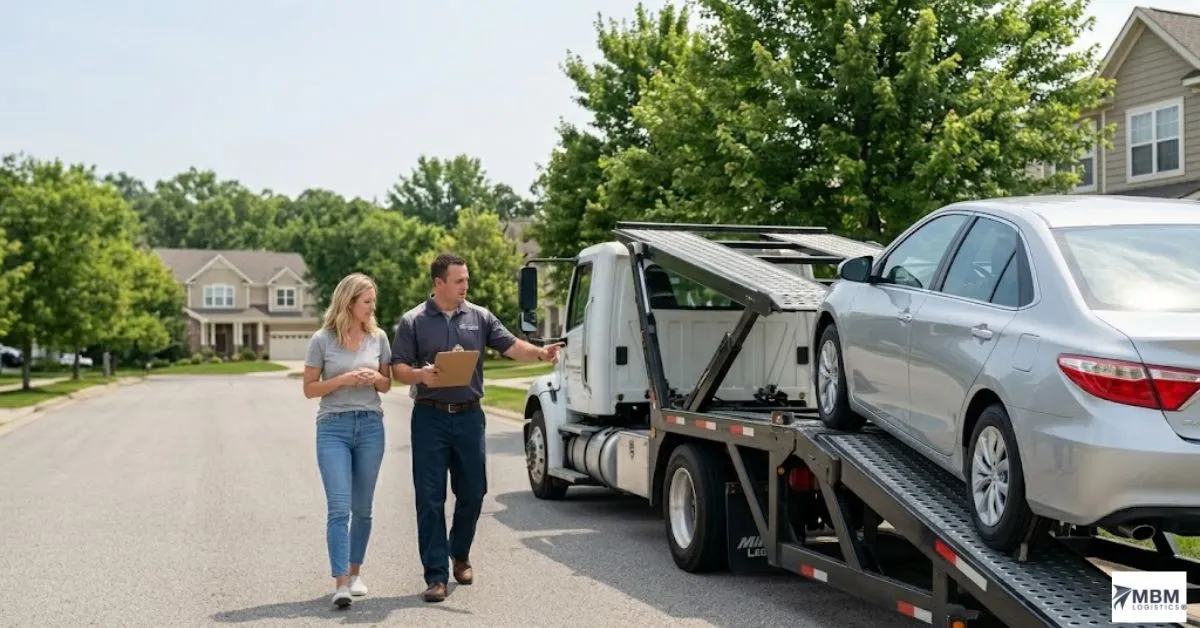
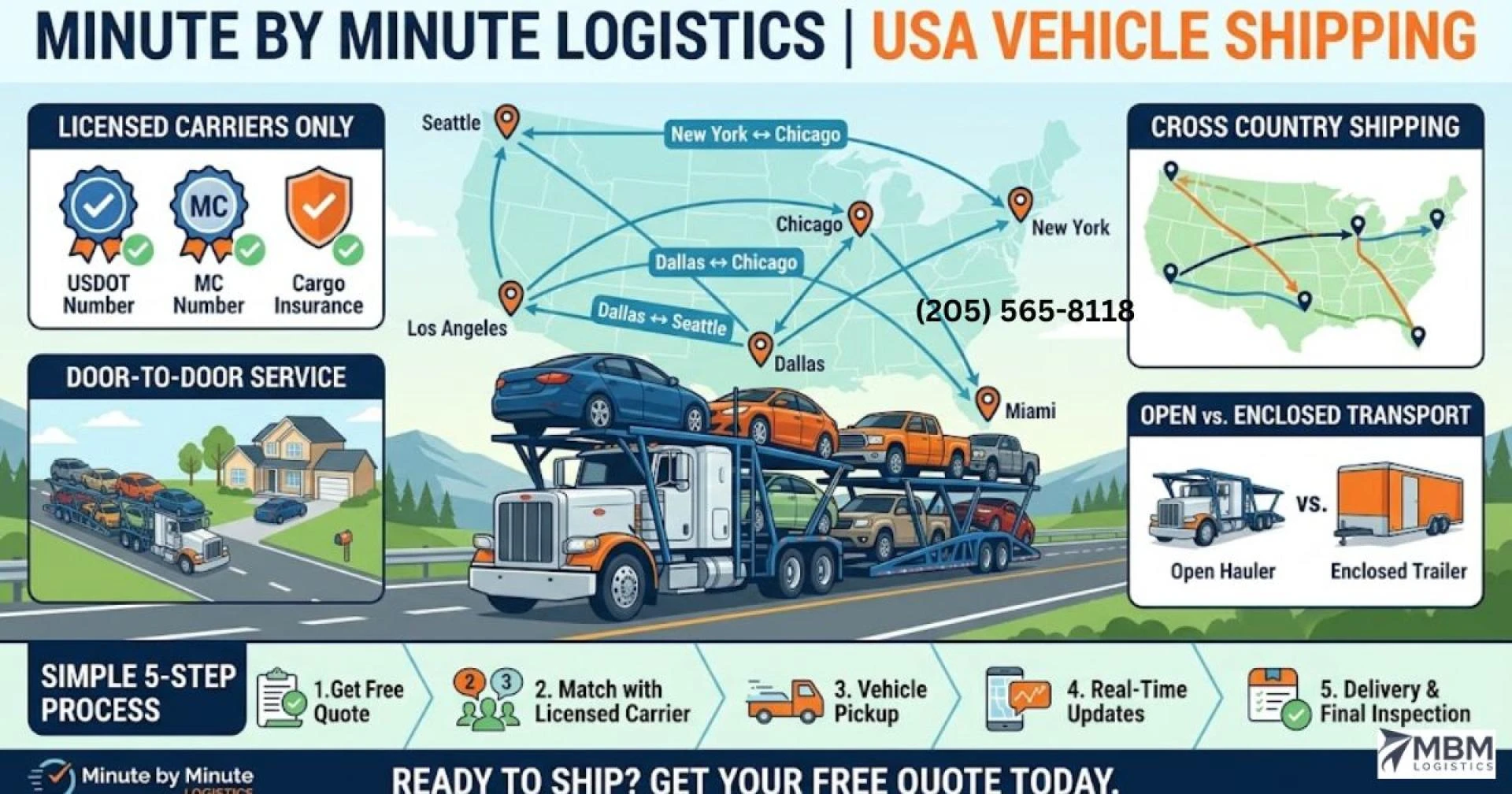
With door-to-door auto transport, you don't drop your car off anywhere. The truck comes to you and delivers directly to your new address. No terminals, no extra trips, no hassle.
Before the driver leaves with your vehicle, both of you sign a Bill of Lading — a condition report that documents the current state of your car. This protects you at delivery if anything happens in transit.
Open vs. Enclosed Transport — Which One Should You Pick?
This is the question most people get stuck on, so let's make it simple.
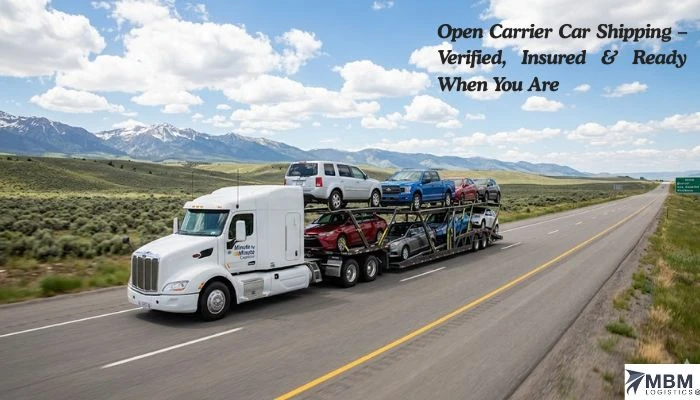
Open car transport is the standard option. Your vehicle rides on an open multi-car hauler — the same type of truck you see on highways carrying brand-new cars from factories to dealerships. It's safe, affordable, and accounts for the majority of all vehicle shipments in the US. If you drive a regular car, truck, or SUV, open transport is perfectly fine.
Enclosed auto transport means your car travels inside a fully covered trailer, shielded from weather, road debris, and dust. This option costs more — typically 30 to 50 percent higher — but it's worth it if you're shipping a luxury car, a classic, or anything with a paint job or body kit you really care about.
When in doubt: standard vehicle = open transport. High-value or sentimental vehicle = enclosed.
How Much Does It Cost to Ship a Car to Another State?
Pricing depends on a few things — distance, vehicle size, transport type, and the time of year.
Here's a realistic ballpark to set your expectations:
- Short routes (under 500 miles) — $400 to $700
- Mid-range routes (500 to 1,500 miles) — $700 to $1,100
- Long-distance or coast-to-coast — $1,000 to $1,500+
Bigger vehicles like trucks and SUVs cost a bit more to ship than compact sedans. Enclosed transport adds to the price. And if you're shipping during peak summer months or snowbird season (when half of the Northeast heads to Florida), expect higher demand and slightly higher rates.
The best way to get an accurate number? Get a Free Quote with your specific route and vehicle details. It takes two minutes and gives you a real number, not a guess.
Popular State-to-State Routes People Ship Every Year
Auto transport is incredibly common across the US. Some of the busiest routes include:
- New York → Florida — The classic snowbird route, especially from October through April
- California → Texas — One of the most in-demand relocation corridors in the country
- Illinois → Arizona — Popular with retirees heading to warmer climates
- Georgia → New Jersey — Frequently requested by military families and job relocators
- Washington → Nevada — A steady Pacific Coast to Southwest run
No matter where you're headed, experienced carriers run these corridors regularly. That means better availability, faster pickup, and often lower rates than you'd expect.
How to Prep Your Car Before the Carrier Arrives
You don't need to do much, but a few simple steps make the whole process smoother.
Clean your car inside and out before pickup. A clean vehicle makes it easy to spot and document any pre-existing scratches or dents on the condition report.
Take your own photos from every angle before the driver arrives. This is your personal record, separate from the official paperwork.
Remove personal items. Most carriers aren't insured for belongings left inside the vehicle. Leave only what's bolted down.
Keep the fuel tank around a quarter full. Enough for loading and unloading, not so much that it adds unnecessary weight.
Disable your toll transponder (E-ZPass, SunPass, etc.) so you don't get charged for tolls along the carrier's route.
How to Choose a Car Shipping Company You Can Trust
This part matters more than anything else.
- Look for a carrier that is registered with the Federal Motor Carrier Safety Administration (FMCSA) and has a valid USDOT number. This is non-negotiable — it's how you know the company is legally operating and insured.
- Check real customer reviews. Not just the star rating, but the written reviews. Look for patterns: do people mention on-time delivery? Responsive communication? Vehicles arriving in the same condition they left?
- Ask about insurance coverage before you book. A trustworthy company will send you its certificate of insurance without hesitation.
Minute by Minute Logistics checks all of these boxes — licensed, insured, and with a track record of on-time, damage-free deliveries across all 50 states.
Frequently Asked Questions
How long does it take to ship a car to another state?
Short routes under 500 miles usually take 1 to 2 days. Mid-range routes take 3 to 5 days. A full coast-to-coast shipment typically runs 6 to 9 days, depending on the route and carrier schedule.
Is my vehicle insured while it's being transported?
Yes. All federally licensed auto transport carriers are legally required to carry cargo insurance. Your vehicle is covered from the moment it's loaded until it's delivered. Always ask for the insurance certificate before booking.
Can I pack personal items inside my car during shipping?
Most carriers don't allow it, and those that do won't insure your belongings. It's best to ship personal items separately and keep the vehicle empty.
Do I need to be home for pickup and delivery?
Someone needs to be present to sign the Bill of Lading at both pickup and delivery — but it doesn't have to be you personally. An authorized friend, family member, or neighbor works just as well.
What's the cheapest way to ship a car to another state?
Choose open transport, book at least 1 to 2 weeks in advance, stay flexible with your pickup date, and avoid peak seasons. Routes between major metro areas tend to be the most competitively priced.
Ready to Move Your Car?
Shipping a car to another state is one of the smartest moves you can make during a relocation. It protects your vehicle, saves you days of driving, and lets you focus on everything else that comes with starting somewhere new.
Get a Free Quote and see how easy it is to get your car where it needs to go — safely, on time, and without the stress.





















Sign in to leave a comment.