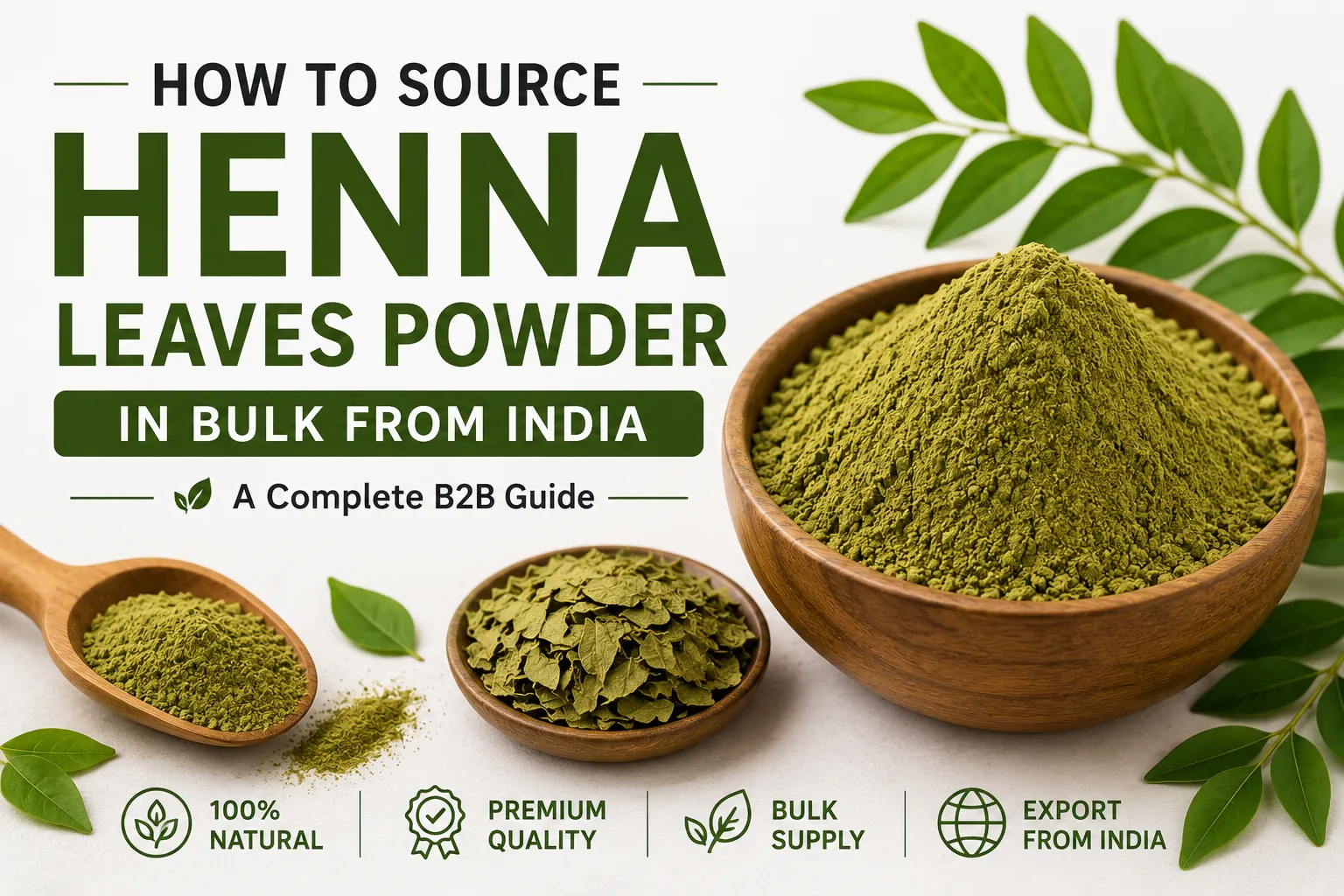

The global demand for natural and plant-based ingredients has witnessed remarkable growth in recent years, especially in the cosmetic, personal care, and herbal product industries. Among these, henna leaves powder derived from Lawsonia inermis has become a highly sought-after ingredient due to its natural coloring properties and therapeutic benefits.
Businesses across the globe are increasingly turning to India as a preferred sourcing destination for henna powder. However, bulk sourcing is not as simple as placing an order. It requires a strategic approach that includes understanding product quality, evaluating suppliers, ensuring compliance, and managing logistics efficiently.
This comprehensive guide will help B2B buyers navigate the process of sourcing henna leaves powder in bulk from India, ensuring quality, consistency, and long-term business success.
Understanding Henna Leaves Powder
Henna powder is produced by drying and finely grinding the leaves of the Lawsonia inermis plant. It is widely known for its natural dyeing properties, primarily due to the presence of lawsone, an active pigment that binds with proteins in hair and skin.
Key Characteristics of High-Quality Henna Powder
- High Lawsone Content: Determines the dyeing strength and color intensity
- Freshness: Fresh crops provide better staining and color results
- Fine Texture: Smooth and finely sifted powder ensures easy application
- Natural Composition: Free from chemicals, additives, or synthetic dyes
Types of Henna Powder
- Body Art Quality (BAQ): Premium grade used for skin application
- Hair Grade Henna: Used for hair coloring and conditioning
- Organic Henna Powder: Certified and grown without synthetic inputs
Understanding these variations is essential when selecting the right product for your business needs.
Applications of Henna Powder in B2B Industries
Henna powder is a versatile ingredient with wide-ranging applications across industries:
1. Hair Care Industry
Henna is extensively used in natural hair dyes, conditioners, and hair masks. It provides color while nourishing the hair and scalp.
2. Cosmetic Manufacturing
Many cosmetic brands incorporate henna into herbal formulations for its coloring and conditioning properties.
3. Ayurvedic & Herbal Products
Henna is used in traditional remedies for cooling, scalp care, and skin treatments.
4. Textile & Natural Dye Industry
Although less common today, henna is still used in eco-friendly textile dyeing.
5. Private Label & Retail Brands
Growing demand for organic and clean-label products has increased the use of henna powder in branded consumer goods.
Why Source Henna Powder from India
India is globally recognized as a leading producer and exporter of henna powder, offering several advantages to B2B buyers:
1. Ideal Climatic Conditions
Regions like Rajasthan and Gujarat provide optimal conditions for cultivating high-quality henna plants.
2. Large-Scale Production
India has a well-established supply chain, ensuring consistent availability of raw materials.
3. Cost-Effective Sourcing
Competitive pricing without compromising on quality makes India a preferred sourcing hub.
4. Availability of Certified Products
India offers a wide range of certified organic and export-quality henna powders.
5. Expertise in Herbal Processing
With decades of experience in Ayurveda and herbal manufacturing, Indian suppliers ensure high-quality processing standards.
Key Factors to Consider When Sourcing in Bulk
1. Quality Standards
Ensure the henna powder meets international quality benchmarks. Look for high lawsone content, fine mesh size, and natural processing methods.
2. Certifications & Compliance
Verify certifications such as USDA Organic, EU Organic, ISO, GMP, and HACCP. These ensure compliance with global standards.
3. Supplier Credibility
Choose a reliable henna powder manufacturer with proven experience in bulk supply and exports.
4. Raw Material Sourcing
Work with suppliers who have direct access to farms or trusted henna leaves suppliers to ensure traceability and quality.
5. Pricing & MOQ
Evaluate bulk pricing structures and minimum order quantities. Transparent pricing helps avoid unexpected costs.
6. Packaging & Labeling
Ensure export-grade packaging that protects the product from moisture and contamination. Custom labeling options are an added advantage.
7. Logistics & Delivery
Assess the supplier’s ability to handle international shipping, documentation, and timely delivery.
8. Production Capacity
Ensure the supplier can scale production as your business grows.
Step-by-Step Process to Source Henna Powder from India
Step 1: Define Your Requirements
Identify the type, grade, quantity, and certifications required for your business.
Step 2: Research Suppliers
Shortlist potential mehndi powder manufacturers based on experience, certifications, and market reputation.
Step 3: Request Samples
Always test product samples to evaluate quality, texture, and color performance.
Step 4: Verify Certifications
Check all compliance documents, including COA (Certificate of Analysis) and lab reports.
Step 5: Negotiate Terms
Discuss pricing, MOQ, payment terms, and delivery schedules.
Step 6: Place a Trial Order
Start with a small order to assess supplier reliability and product consistency.
Step 7: Finalize Agreement
Once satisfied, establish a long-term partnership with clear terms and conditions.
Step 8: Manage Logistics
Coordinate shipping, documentation, and customs clearance for smooth delivery.
Common Challenges in Bulk Sourcing
1. Inconsistent Quality
Variation in raw materials can lead to inconsistent product quality across batches.
2. Adulteration
Some suppliers may mix synthetic additives to enhance color.
3. Supply Chain Delays
Logistical issues can disrupt production schedules.
4. Lack of Transparency
Unclear communication and hidden costs can create challenges.
5. Compliance Issues
Failure to meet regulatory standards can lead to shipment rejections.
Top Tips to Overcome Sourcing Challenges
- Work with Certified Suppliers: Always choose suppliers with verified certifications
- Conduct Regular Quality Checks: Monitor product quality consistently
- Build Long-Term Relationships: Reliable partnerships ensure stability
- Ensure Clear Communication: Define expectations and agreements clearly
- Stay Updated on Regulations: Keep track of import/export requirements
Benefits of Bulk Sourcing Henna Powder
1. Cost Efficiency
Bulk purchasing reduces per-unit cost and improves profit margins.
2. Consistent Supply
Ensures uninterrupted production and timely delivery to customers.
3. Better Negotiation Power
Higher volumes provide leverage for better pricing and terms.
4. Scalability
Supports business growth and expansion into new markets.
5. Competitive Advantage
Reliable sourcing helps maintain product quality and brand reputation.
Why Choose Cultivator Natural Products Pvt. Ltd.
Cultivator Natural Products Pvt. Ltd. is a trusted global supplier of high-quality herbal powders, including henna.
1. Direct Farm Sourcing
We source raw materials directly from farms, ensuring traceability and quality.
2. Certified Organic Products
Our products meet international standards, including organic certifications.
3. Advanced Processing Facilities
We combine traditional knowledge with modern technology for superior quality.
4. Global Export Expertise
With decades of experience, we serve clients worldwide across various industries.
5. Customized Solutions
We offer private labeling and contract manufacturing to meet specific business needs.
6. Strong Quality Assurance
Strict quality control measures ensure consistency and reliability.
Conclusion
Sourcing henna leaves powder in bulk from India offers immense opportunities for businesses in the herbal, cosmetic, and wellness industries. However, success depends on choosing the right supplier, ensuring quality compliance, and managing the supply chain effectively.
By understanding the product, evaluating suppliers carefully, and following a structured sourcing process, businesses can achieve consistent quality and long-term growth. India remains a top destination for sourcing henna powder, thanks to its expertise, cost advantages, and strong export infrastructure.


























Sign in to leave a comment.