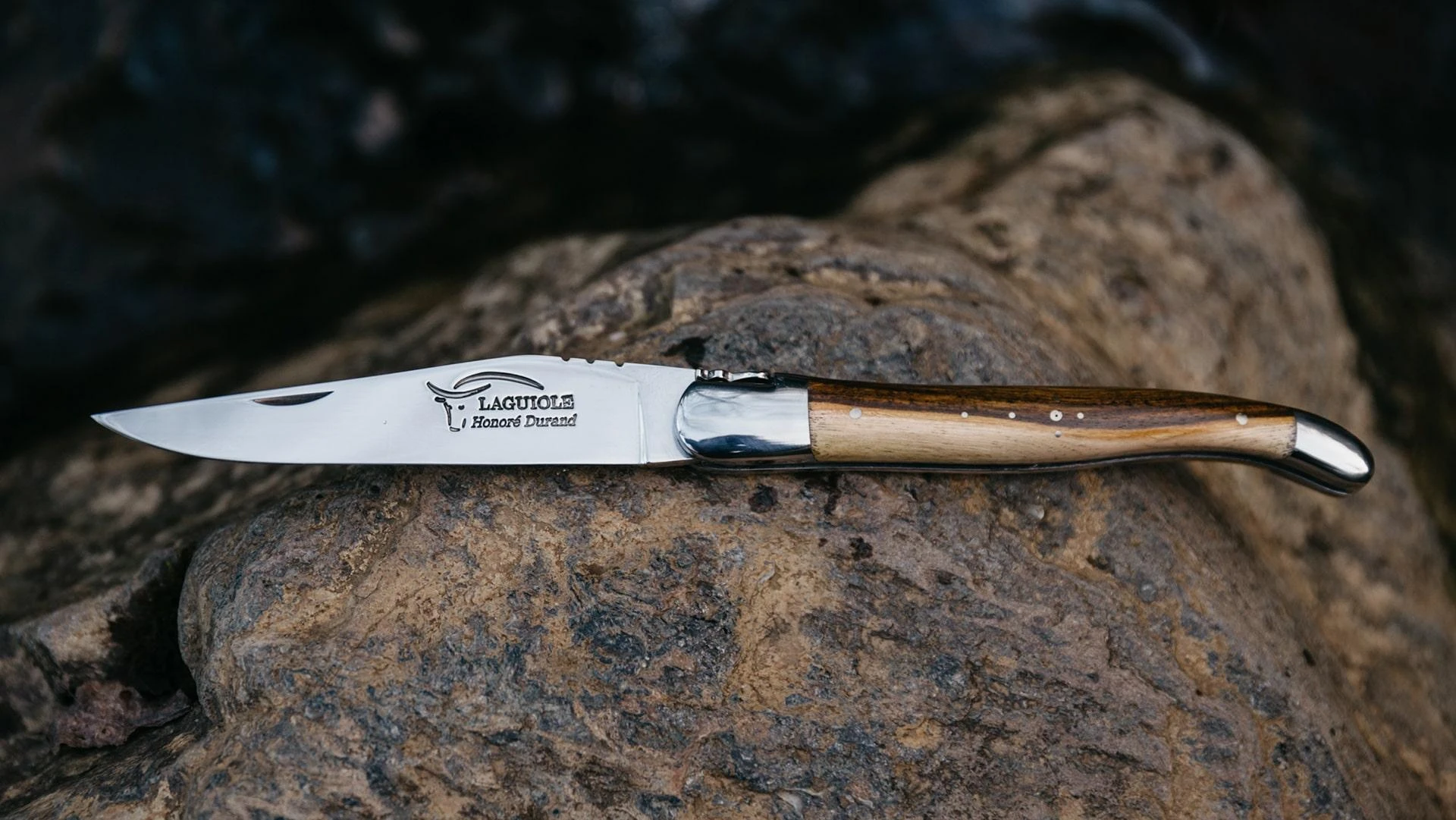

Ever found yourself wondering about the authenticity of your recently purchased Laguiole Knife? Given their popularity, these traditional French knives are often replicated leaving buyers with low-quality counterfeits.
To help you out, this article guides through a series of fool-proof tips to identify counterfeit Laguiole Knives and ensure your sharp-edged investment is worthwhile. Read on for insider insights from experts!
Key Takeaways
- Take care when buying a Laguiole knife. Spot the fake ones by checking for no bumps or "serration" on their blade edge.
- Look at the handle and design of your knife. Real Laguiole knives have fine handles made from wood or bone. They also have a welded bee symbol near the blade, not glued ones.
- Always check who you buy from! Genuine sellers can give true pieces that show top French make and quality.
- Keen eyes on price pay well too! Cheap offerings are likely to be untrue lesser versions than pricey real deal beauties like Laguiole (real ones aren\'t under $9).
What is a Laguiole Knife?
A Laguiole knife, originating from the village of Laguiole in France, embodies the epitome of traditional French design and handmade craftsmanship. These high-quality knives usually feature stainless steel blades paired with various handle materials - a testament to their fine workmanship.
Meticulously crafted, these folding knives offer more than just use; they exude an aura of prestige and heritage ingrained within each unique piece.
Overview of Laguiole Knives (https://www.laguiole-french-knives.com/en/12-laguiole-knives)
Laguiole knives are special. They come from the small village of Laguiole, in France. Since 1828, people have been making them there by hand. Each knife is a work of art and skill.
Craftsmen use top-notch materials to create these knives. Long-lasting steel shapes the blade while wood or bone forms the handle. Each knife has a unique look but all share a common French design style.
People who want quality and tradition pick Laguiole knives.
Handmade craftsmanship
Laguiole knives are not just tools, they are pieces of art. Each knife is made from start to finish by one skilled craftsman. This sets them apart and makes each piece unique. The beauty of the knife comes from its fine file work on the back of its blade.
Real Laguiole knives have steel bolsters instead of aluminum ones like fake ones do. Fake Laugiole knives don\'t match up in quality because they\'re made on fast production lines. They use cheap materials that mean they don\'t last long or hold up well under use.
High-quality craftsmanship marks a genuine Laguiole knife.
Traditional French design
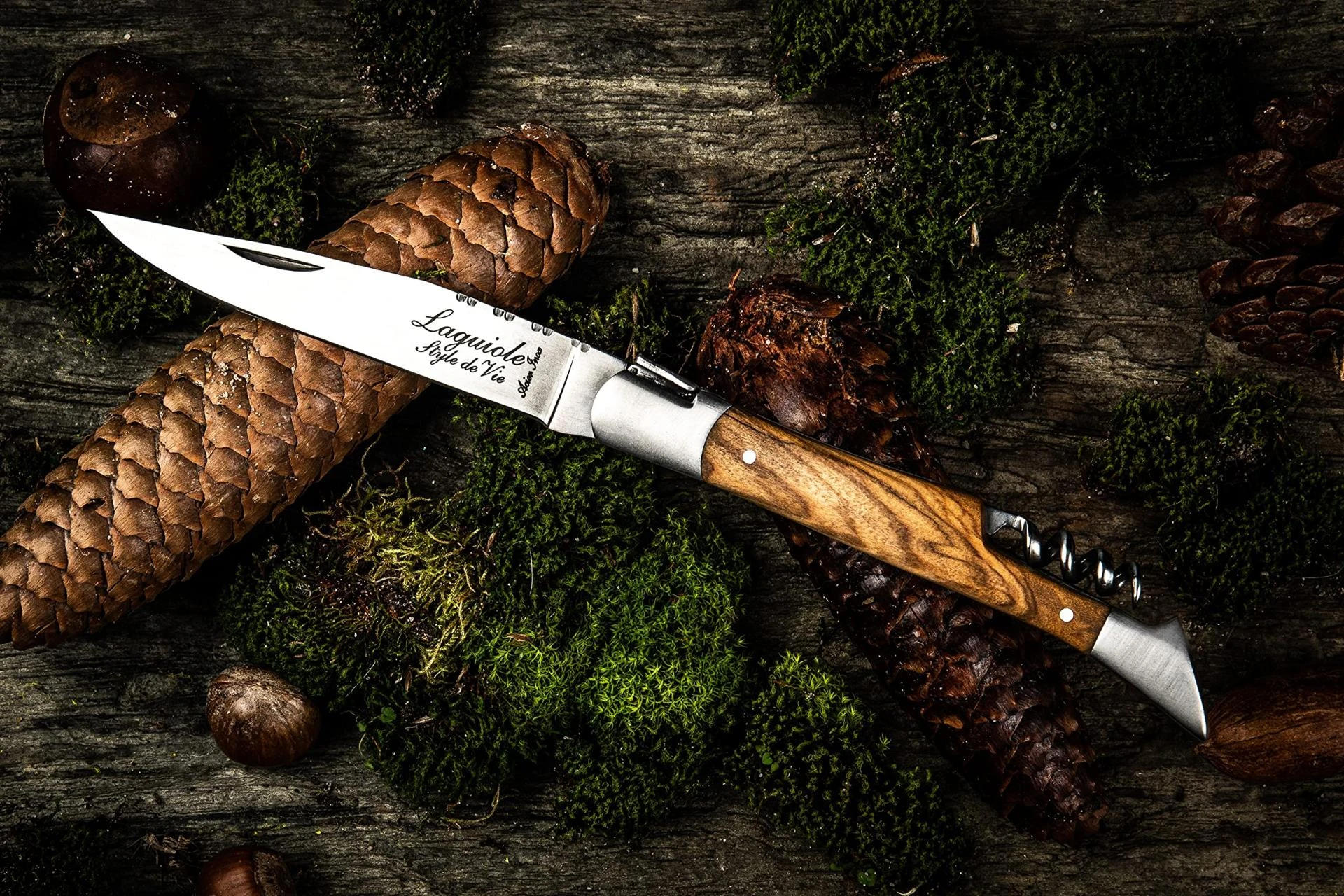
Laguiole knives show off a traditional French design. They first came out in 1829. The region of Laguiole in France is famous for these cutting tools. Many people want real Laguiole knives because they mean something special in culture and history.
High-quality materials
Real Laguiole knives use top materials. The maker, Forge de Laguiole, uses only the best stuff to craft them. They make knives from great steel and other high-grade items. They also choose different kinds of handle materials for their range of knife designs.
Using good elements sets these knives apart from fake ones. True Luguiolle cutlery has a special touch that you can sense in your hand right away!
The Quality Guarantee of Laguiole Knives
The Laguiole knives promise top quality. They are made in the small village of Laguiole in France. Each knife is crafted by hand, showing off fine craftsmanship. These foldable knives bear no serration and have a steady shape and size.
Fake Laguiole knives don\'t cut it when it comes to quality. They often use cheap wood or plastic instead of high-quality materials like stainless steel. Glued bolsters that fall off quickly also show these counterfeit goods away! So, always spot for a true-blue guarantee of real deal when buying your next Laguiole knife.
How to Identify a Counterfeit Laguiole Knife
A counterfeit Laguiole knife often displays several telltale signs such as the absence of serration, usage of low-quality materials and construction, lack of a certificate of authenticity or inaccurate brand logos.
Lack of serration
Fake Laguiole knives are smooth. They don\'t have bumps on the blade edge like real ones do. These bumps, or serrations, add to the knife\'s power when cutting tough items. If a knife claiming to be Laguiole doesn\'t have these tiny cut edges, it may not be real.
So always look for those key bumps on your blade before you buy!
Cheap materials and construction
Fake Laguiole knives are made with poor stuff. Their handles have cheap plastic or composite materials, not like the real ones. Genuine Laguiole knives should boast fine wood or bone for their handles.
Watch out for bolsters too. True Laguiole ones use a steel bee that is welded to the blade part of the knife. But fake Laguiole makers just go for low-cost aluminum here! So always be on guard when checking handle and bolster parts of your Laguiole knife.
Absence of a certificate of authenticity
A true Laguiole knife often has a certificate of authenticity. This paper says it\'s a real one. A fake Laguiole might not have this paper. Look for the cutler\'s logo and where they made it too, these can be signs that it is genuine.
Without them, you should question if it is real or not. Be careful with brands like Hailingshan or Laguiole by Hailingshan, they may not be real knives from our village of Laguiole!
Inaccurate branding or logos
Fake Laguiole knives often have wrong logos. Red flags are the bee logo and L\'Eclair 440 brand on a steak knife. True Laguiole knives do not carry this mark. It\'s important to look out for correct branding.
Another alert is fake marks such as "actiforge." Genuine Laguiole products boast of this mark to show French make. In contrast, knock-offs may use it wrongly or omit it completely.
This misused mark shows that the product isn\'t real.
Common Marketing Tactics Used by Counterfeit Manufacturers
Counterfeit makers commonly employ deceptive marketing strategies such as false authenticity claims, misleading packaging, and suspiciously low prices. Stay sharp and step into the crucial details to not fall for these scams by reading on!
False claims of authenticity
Some makers lie about their knives. They say they are real Laguiole, but they are not. This same trick is very common. The village of Laguiole does not make sure the knife has its name on it or says "true".
Some logos may look like a bee, which lies too. Real Laguiole knives never sell for $9. A good price shows quality as well in this case. Beware of these false claims to keep away from fake ones!
Misleading packaging or labeling
Fake knife makers use tricks to make buyers believe they are getting a real Laguiole knife. They place the fake knives in boxes or bags that look like the real thing. Sometimes, they even put some French words on these resources to trick buyers into thinking it\'s authentic.
They also add a "certificate of truth" with the fake knife. This false proof fools people into thinking their blade is genuine, but it is not.
Price discrepancies
Price is a big red flag when spotting fake Laguiole knives. Real ones are not cheap. If you see a knife for under $9, it\'s most likely not real. The same goes for corkscrews. A true Laguiole corkscrew costs at least $100.
Fake products hurt the reputation of real items and take away sales from them by offering lower prices. Buyers then get stuck with poor quality goods that don’t live up to their expectations.
So always keep an eye on the price!
Fool-Proof Ways to Confirm the Authenticity of a Laguiole Knife
To confirm the authenticity of a Laguiole knife, buyers should purchase from reputable sellers. It\'s crucial to verify the certification and branding details provided. Assessing the craftsmanship quality and materials used offers further clarification on its genuineness.
Seeking expert opinions or consulting established Laguiole enthusiasts also provides additional assurance of the knife\'s legitimacy.
Purchase from reputable sellers
Be careful where you buy a Laguiole knife. Trustworthy sellers are key to get the real deal. They know a lot about these knives. Buying from them means you get a true, quality piece.
Real Laguiole knives are not cheaply made or carelessly put together, but fake ones might be. Avoid those who sell poor versions of this fine tool.
Verify certification and branding
Check for a brand name or logo on the knife. Real Laguiole knives have these signs. The blade will also have special marks to show it is real. These can be linked with a paper saying it\'s real, the maker\'s sign, and where it\'s from.
Two brands that make true Laguiole knives are Forge de Laguiole and French Home Laguiole. Check if your knife has either of those names.
Examine the craftsmanship and materials
Real Laguiole knives show top workmanship. Every knife is made by hand. Look closely at the knife\'s parts. Genuine knives have a blade of high-quality steel. Bolsters are made from brass or brushed steel, not aluminum.
The handle tells a lot too. Real ones use fine woods or horns for their handles. Check the details on the knife well before buying one! Metal carvings should be neat and clear on an authentic one, not crude or blurry like on fake ones.
Seek expert opinions or consult Laguiole knife enthusiasts
People who know a lot about Laguiole knives can help you. They can touch, look at, and feel the knife. With these steps, they may tell if it is fake or not. You can find these people in shops or online groups.
Ask them to help you out before buying a knife.
Understanding the Laguiole Knife
Laguiole knives are special. They get made in Laguiole, France. Here, the best knife makers use a mix of old and new ways to craft them. Every step gets done with care.
Each knife has key parts that stand out on real ones but not so much on fakes. The blade shape is like a Yatagan, which is unique to these knives only! Another thing you\'ll notice is the bee symbol near the blade.
If you touch it, it will feel firm because they weld it onto the knife using heat from fire - this process gives strength to your genuine Laguiole knife! So if some day someone tries selling you one without all these parts – be alert! It may just be an everyday fake laguiole trying hard to fit into classic French charm and steel greatness!
Conclusion
Spotted a fake Laguiole knife? Look for a bee sign near the handle. See if it has a \'LOG\' stamp on the blade. Is it made in France? That\'s another clue! So, make sure to keep an eye out next time and know how to spot those fakes.






























Sign in to leave a comment.