
For Tribal governments and Native organizations, procurement is more than simply finding a supplier and placing an order. Every purchasing decision can affect community programs, operational budgets, employees, and the services provided to Tribal citizens.
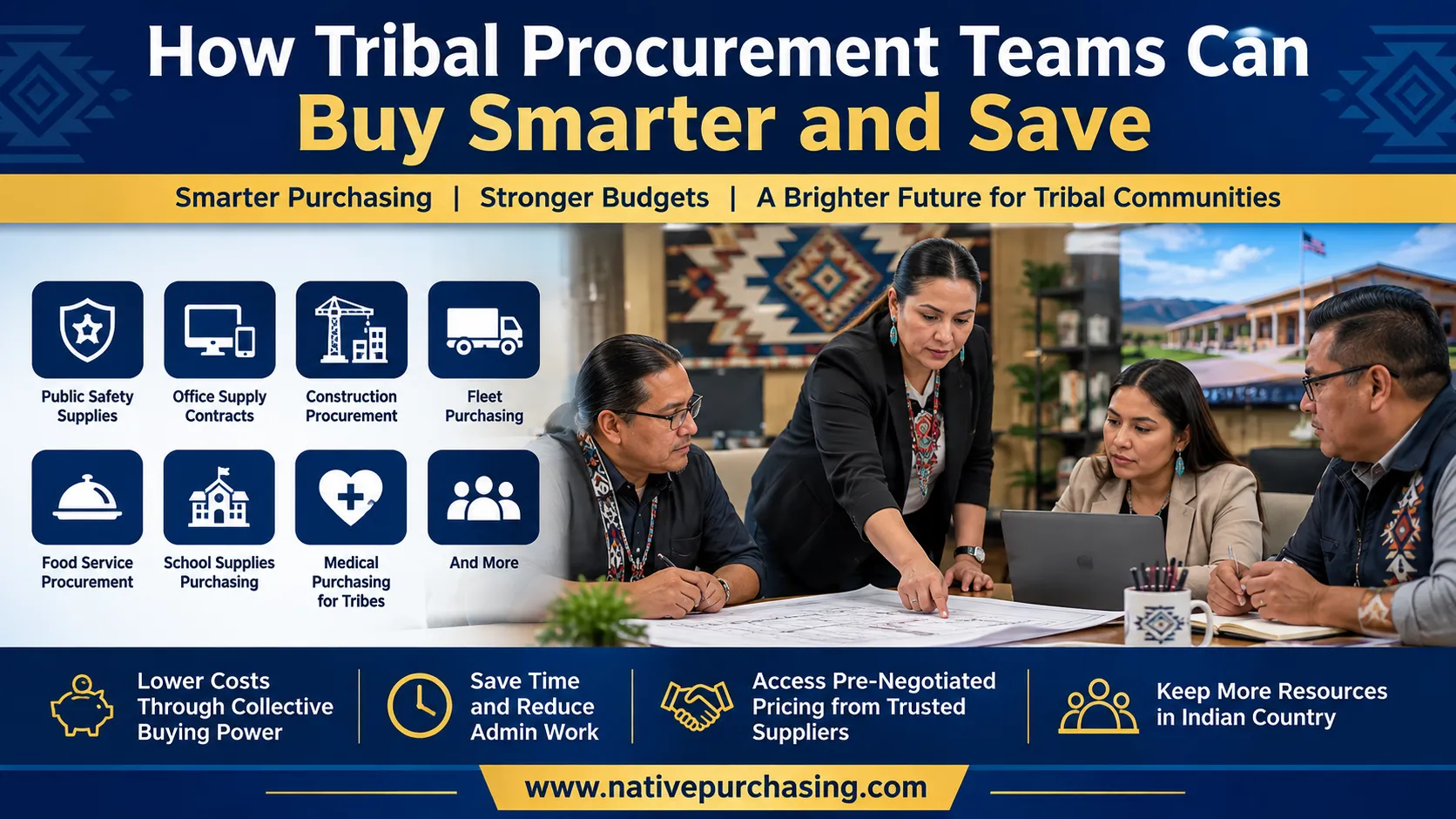
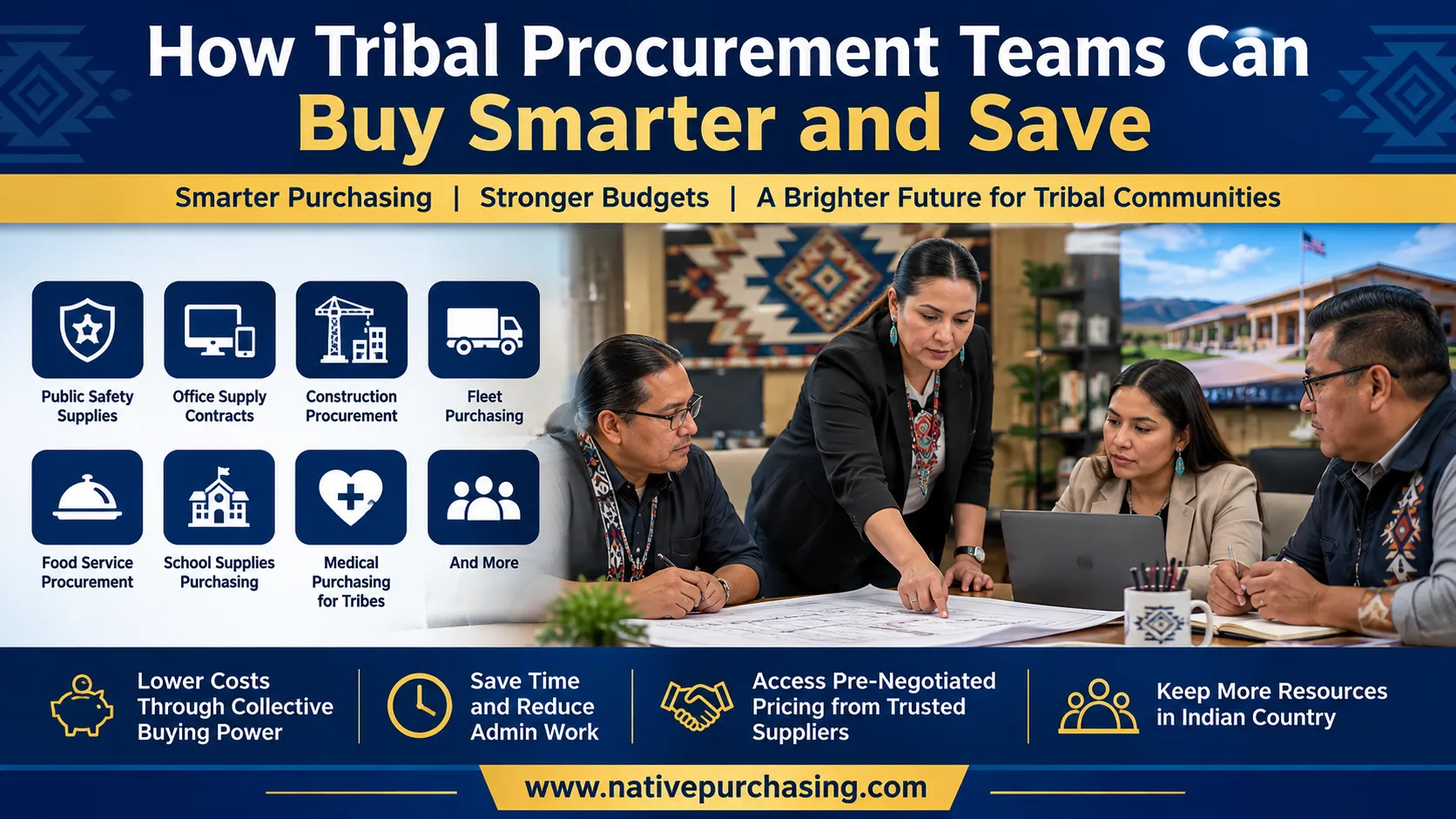
From public safety equipment and office technology to construction materials, fleet vehicles, food services, school supplies, and healthcare products, Tribal organizations manage purchasing across a wide range of categories. At the same time, procurement teams often need to balance competitive pricing, supplier reliability, purchasing policies, and limited administrative resources.
This is where a strategic approach to cooperative purchasing can make a meaningful difference.
A well-organized tribal procurement team can use collective purchasing power, negotiated supplier relationships, and streamlined procurement processes to reduce unnecessary costs while maintaining the quality and reliability their communities require.
Why Tribal Procurement Requires a Strategic Approach
Tribal organizations operate in a procurement environment with unique priorities. Budgets need to support essential community services while procurement decisions must often account for government requirements, funding restrictions, internal policies, and long-term economic goals.
Buying independently can sometimes result in missed opportunities. A department may negotiate with a supplier for one purchase without knowing that another Tribal organization has negotiated better pricing for a similar product. Smaller orders can also make it more difficult to obtain volume-based discounts.
This does not mean every Tribal organization needs to completely change how it purchases. Instead, procurement teams can look for opportunities to combine purchasing power where it makes sense.
Cooperative purchasing and group purchasing organizations can help accomplish this by bringing multiple organizations together and negotiating supplier agreements based on collective demand.
The result can be a more efficient purchasing process without requiring every Tribal organization to build extensive supplier relationships from scratch.
1. Strengthening Tribal Public Safety Purchasing
Public safety departments cannot afford unreliable equipment. Law enforcement, emergency response, fire services, and other public safety operations depend on products being available when they are needed.
Purchasing teams may need to source everything from protective equipment and uniforms to emergency supplies, communications technology, and operational equipment.
The challenge is balancing quality with cost.
Using established supplier agreements can help Tribal organizations evaluate purchasing options while taking advantage of negotiated pricing. A dedicated procurement strategy can also reduce the amount of time staff spend researching vendors for recurring purchases.
Organizations looking to improve this category can evaluate their approach to tribal public safety supplies and identify frequently purchased products that could benefit from negotiated pricing.
The goal should not simply be to find the cheapest product. Public safety purchasing requires dependable products, appropriate specifications, supplier reliability, and predictable availability.
2. Making Office and Technology Purchasing More Efficient
Office purchasing can seem like a relatively small expense until individual purchases are added together across departments.
Printers, computers, paper, furniture, software-related equipment, accessories, and other technology products can create significant annual spending. Different departments may also purchase similar products from different suppliers at different prices.
A centralized or coordinated purchasing strategy can create greater consistency.
For example, procurement teams can analyze recurring purchases and determine which products should be standardized. Standardization can make ordering easier, reduce unnecessary product variations, and potentially increase purchasing leverage.
This is particularly useful when evaluating tribal office supply contracts.
Rather than treating every office purchase as an individual transaction, Tribal organizations can develop purchasing relationships that support recurring needs across departments.
3. Improving Tribal Construction Procurement
Construction represents one of the largest procurement categories for many Tribal organizations.
Housing projects, government facilities, schools, healthcare facilities, roads, infrastructure improvements, and other development projects can require substantial amounts of materials, equipment, and related products.
Construction purchasing also introduces another challenge: price volatility.
Material costs can change, supply availability can fluctuate, and project delays can increase overall expenses. Procurement teams therefore need to consider more than the initial quoted price.
A strategic tribal construction procurement approach can help organizations evaluate supplier agreements, recurring material needs, and opportunities to secure better pricing.
For large projects, procurement teams should also consider the total cost of ownership. A lower initial price may not necessarily represent the best value if the product has shorter service life, higher maintenance requirements, or inconsistent availability.
The strongest procurement strategies combine competitive pricing with quality, reliability, and project requirements.
4. Taking a Smarter Approach to Tribal Fleet Purchasing
Vehicles are essential to many Tribal operations.
Government departments, healthcare programs, public works teams, police departments, transportation services, and other organizations may operate fleets of cars, trucks, vans, utility vehicles, and specialized equipment.
Fleet expenses go beyond the purchase price.
Fuel, maintenance, replacement parts, repairs, tires, insurance, and vehicle downtime all contribute to the total cost of operating a fleet.
That makes tribal fleet purchasing an area where procurement teams should look at long-term value rather than simply focusing on the upfront purchase.
Organizations can review their fleet regularly to determine which vehicles are approaching replacement age, which models have excessive maintenance costs, and which suppliers can provide favorable terms.
Bulk or coordinated purchasing can also create opportunities to negotiate better pricing on frequently needed fleet products and services.
5. Controlling Costs in Tribal Food Service Procurement
Food purchasing presents a different set of challenges.
Tribal schools, healthcare facilities, elder programs, community programs, hospitality operations, and other organizations may purchase significant quantities of food and related supplies.
Food prices can fluctuate because of transportation costs, seasonal availability, supply chain disruptions, and broader market conditions. At the same time, organizations cannot simply reduce quality to lower spending.
Effective tribal food service procurement focuses on balancing price, quality, consistency, and availability.
Procurement teams can start by reviewing purchasing data.
Which products are purchased most frequently? Which categories experience the largest price increases? Are multiple departments purchasing similar products independently? Are there opportunities to consolidate orders?
Answering these questions can reveal savings opportunities that may not be obvious when purchases are viewed individually.
6. Supporting Tribal Education Through Better Purchasing
Schools and education programs have diverse purchasing requirements.
Classroom materials, furniture, technology, paper products, educational equipment, maintenance supplies, and other resources all contribute to the cost of operating educational facilities.
For Tribal education programs, every dollar saved through efficient purchasing can potentially support other priorities, including classroom resources, student programs, technology, or facility improvements.
A coordinated approach to tribal school supplies purchasing can help organizations identify frequently purchased products and evaluate whether better pricing is available through negotiated supplier relationships.
Standardizing commonly purchased products can also simplify ordering and inventory management.
The objective is not to make every school purchase identical. Instead, procurement teams should identify where consistency creates value while allowing departments and educators to purchase products appropriate for their specific needs.
7. Optimizing Medical Purchasing for Tribes
Healthcare purchasing is particularly important because procurement decisions can directly affect patient care.
Tribal health clinics and healthcare organizations may purchase medical supplies, clinical equipment, pharmaceuticals, office products, facility supplies, and other essential goods.
Availability is often just as important as price.
A supplier that offers a low price but cannot reliably meet delivery requirements may create operational problems that outweigh the initial savings.
For this reason, medical purchasing for tribes should consider several factors, including product quality, supplier reliability, pricing, availability, and purchasing efficiency.
Healthcare organizations can also benefit from reviewing purchasing data regularly. Identifying frequently purchased items and consolidating demand can help procurement teams understand where their greatest purchasing leverage exists.
The Role of Collective Purchasing
One of the most effective ways to strengthen procurement is to recognize that Tribal organizations do not always have to negotiate alone.
Collective purchasing allows multiple organizations to leverage combined purchasing volume.
Instead of one organization approaching a supplier with a relatively small order, a purchasing organization can aggregate demand across participating Tribal organizations. That collective demand may create opportunities for negotiated pricing and supplier agreements.
This approach can be particularly valuable for categories with recurring purchases.
Office supplies, construction materials, fleet products, food service items, healthcare supplies, public safety equipment, and educational products are all examples of categories where purchasing occurs repeatedly.
When purchasing volume is combined, organizations may gain access to pricing structures that would be more difficult to negotiate independently.
Procurement Savings Are Not Just About Price
An important point is often overlooked when discussing procurement savings: the value of procurement extends beyond the invoice.
Staff time has a cost.
Employees may spend hours searching for suppliers, requesting quotes, comparing products, negotiating prices, processing orders, tracking deliveries, and resolving purchasing issues.
A streamlined purchasing structure can reduce some of this administrative workload.
That gives procurement teams more time to focus on strategic activities such as supplier management, budgeting, contract oversight, compliance, and long-term purchasing planning.
In other words, the goal should be to reduce the total cost of procurement, not simply the price of individual products.
Building a More Strategic Procurement Program
Tribal organizations looking to improve purchasing can start with a simple review of their current spending.
First, identify the categories that represent the largest annual expenditures.
Next, determine which products are purchased repeatedly and which departments are making similar purchases independently.
Then evaluate current suppliers and pricing. Are there existing contracts? Are volume discounts being used? Are departments receiving consistent pricing?
Finally, identify categories where cooperative purchasing could provide additional leverage.
This process does not require organizations to change everything at once. Starting with one or two high-volume categories can provide useful data and demonstrate potential savings.
Over time, successful purchasing strategies can be expanded across additional departments and categories.
Putting Collective Buying Power to Work
The future of Tribal procurement is increasingly focused on efficiency, collaboration, and economic value.
A strong procurement strategy can help Tribal organizations stretch budgets without compromising the products and services their communities depend on. By coordinating purchases, evaluating supplier relationships, using negotiated pricing, and taking advantage of collective buying power, organizations can create a more efficient purchasing environment.
For Tribal procurement teams, the opportunity is not simply to buy more cheaply. It is to purchase more strategically.
Whether the need involves public safety supplies, office technology, construction materials, fleet operations, food services, education, or healthcare, a coordinated procurement strategy can help turn routine purchasing into a strategic advantage.
Organizations such as Native Purchasing Group are designed to support this approach by connecting Tribal organizations with pre-negotiated purchasing opportunities across multiple categories.
When Tribal organizations work together, purchasing power becomes more than an individual advantage. It becomes a tool for strengthening budgets, improving operational efficiency, and keeping more resources available for the communities they serve.
Ultimately, smarter procurement is about making every purchasing dollar work harder for Indian Country.



























Sign in to leave a comment.