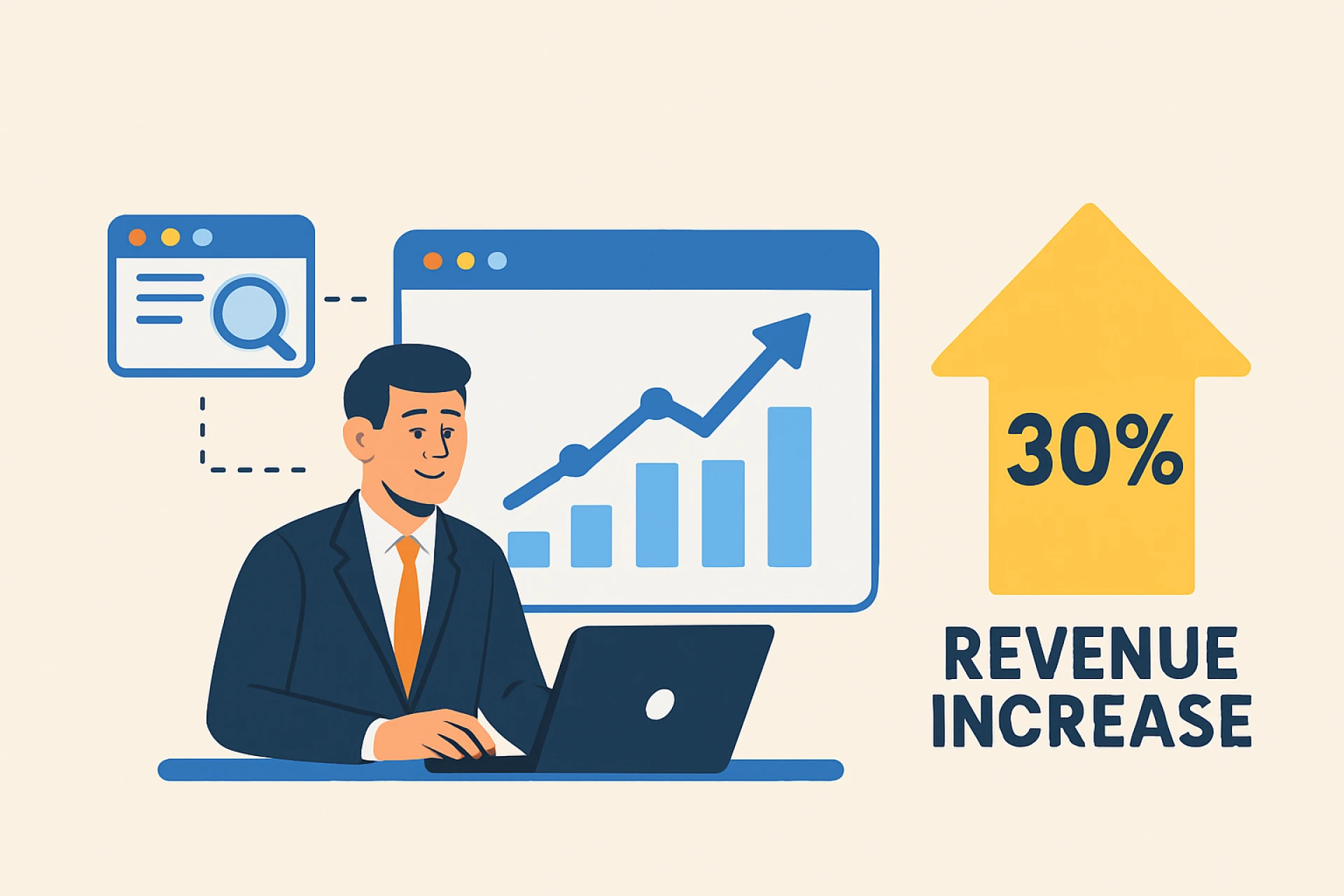

In this case study, we explore how web scraping helped a business increase its revenue by 30%. Learn how leveraging data from competitors and the market led to smarter decisions and growth.
In the competitive world of business, gaining a competitive edge is crucial to driving revenue growth. One innovative tool that many businesses are leveraging to stay ahead is web scraping. This technique allows companies to gather valuable data from websites, including competitor prices, product offerings, and market trends.
In this case study, we’ll explore how a mid-sized e-commerce company used web scraping to boost its revenue by 30%. By extracting critical insights from the market and competitors, this business made smarter decisions that directly impacted on its profitability. Let’s dive into how web scraping worked and the results it delivered.
The Business Challenge: Staying Competitive in a Crowded Market
The company we are looking at is an online retailer in the fashion industry. With a growing customer base and a large inventory, the business had to stay competitive in a crowded market. The problem? Constantly changing prices, new product launches, and unpredictable promotions made it difficult for the company to remain profitable without a data-driven strategy.
The company realized that to improve its profitability, it needed to optimize pricing strategies, adjust product offerings, and track competitor’s behavior more efficiently. Traditional methods of manually checking competitors’ websites and relying on guesswork just weren’t cutting it anymore.
They decided to implement web scraping to automate data extraction from competitor websites, industry reports, and market trends. The goal was clear: gather insights that could help them adjust their pricing and marketing strategies in real-time.
How Web Scraping Was Used: Collecting and Analyzing Key Data
The first step was to set up a web scraping system. The company partnered with a data extraction service provider to help them scrape data from various e-commerce platforms, competitor websites, and online marketplaces. The focus was on gathering information that could directly influence pricing, inventory, and marketing.
1. Price Monitoring and Competitor Analysis
One of the first things the company needed was real-time competitor pricing. The e-commerce industry is notorious for fluctuating prices, and manually checking competitors' prices was time-consuming. By using web scraping, the company automated the process of monitoring competitor prices on a daily basis.
The data extracted from competitors’ websites included:
· Product prices
· Discounts and promotions
· Shipping fees
· Product availability
This data was then analyzed to determine pricing trends, competitive pricing strategies, and pricing gaps. The company could now make more informed pricing decisions, ensuring their prices were in line with the competition, but also optimized for profitability.
2. Product Availability and Inventory Tracking
Another key element of the strategy was tracking product availability and inventory levels from competitors. Web scraping allowed the business to monitor which products were consistently out of stock and which ones were selling well. This helped them plan their own inventory management, ensuring they had high-demand products in stock while avoiding overstocking less popular items.
Additionally, web scraping was used to track new product releases and product bundles on competitors’ websites. This helped the company stay on top of the latest trends and adjust its product lineup accordingly.
3. Market Trends and Customer Sentiment
Beyond pricing and inventory, the company also wanted to understand how consumers were reacting to various product categories. They used web scraping to collect customer reviews and ratings from multiple platforms. This provided insights into what products were well-received and which ones were not. Customer sentiment analysis helped the business identify popular products and capitalize on positive trends.
By analyzing customer feedback, the company could also identify pain points that customers had with competitor products, which allowed them to improve their own product descriptions, marketing materials, and customer service strategies.
The Results: A 30% Increase in Revenue
After implementing web scraping and gathering data over the course of several months, the company saw significant improvements across multiple areas:
1. Optimized Pricing Strategy
The ability to track competitor pricing in real time allowed the company to implement dynamic pricing strategies. They could adjust prices based on demand, competitor pricing, and promotions. As a result, they were able to offer competitive prices without sacrificing their profit margins. The company also ran targeted promotions based on the pricing trends they observed, leading to higher conversion rates.
2. Improved Inventory Management
Web scraping helped the company optimize its inventory management by ensuring they always had high-demand products in stock. They were able to react quickly to competitors’ product shortages and capitalize on gaps in the market. This led to better stock turnover and reduced overstock situations, which helped reduce waste and improve profitability.
3. Smarter Marketing Decisions
With insights into market trends and customer sentiment, the company could tailor its marketing strategies more effectively. They adjusted their advertising spend to focus on the products that were most popular, ensuring they got the best return on investment. By aligning their marketing efforts with customer demand, they saw higher engagement and increased sales.
4. Increased Sales and Revenue
After six months of using web scraping to gather competitive data, the company saw a 30% increase in revenue. By offering competitive prices, staying on top of inventory levels, and using data-driven marketing, they were able to boost sales without compromising on profit margins.
The combination of better pricing, optimized inventory, and smarter marketing decisions created a synergistic effect that led to consistent growth in both revenue and customer satisfaction.
Why Web Scraping Works for E-Commerce Businesses
This case study illustrates the power of web scraping for e-commerce businesses looking to gain a competitive edge. Here are a few reasons why web scraping is so effective for e-commerce:
1. Real-Time Data
Web scraping provides access to real-time data that can be acted upon immediately. This allows businesses to adjust pricing, marketing, and inventory on the fly, keeping them competitive and agile.
2. Automates Manual Processes
By automating data extraction, e-commerce businesses can eliminate the need for manual research. This not only saves time but also reduces the potential for human error.
3. Data-Driven Decisions
Web scraping helps businesses make data-driven decisions. Whether it’s adjusting product prices or identifying the latest trends, having access to accurate and up-to-date data enables smarter, more informed choices.
Conclusion
In this case study, web scraping proved to be a game-changer for an e-commerce business looking to stay competitive in a crowded market. By leveraging data from competitors and analyzing customer sentiment, the company was able to optimize pricing, improve inventory management, and fine-tune marketing efforts. The result? A 30% increase in revenue.
For businesses looking to stay ahead of the curve, web scraping offers a powerful solution. By automating data extraction and turning that data into actionable insights, e-commerce companies can make smarter decisions and drive growth. If you’re not using web scraping yet, now’s the time to start.




























Sign in to leave a comment.