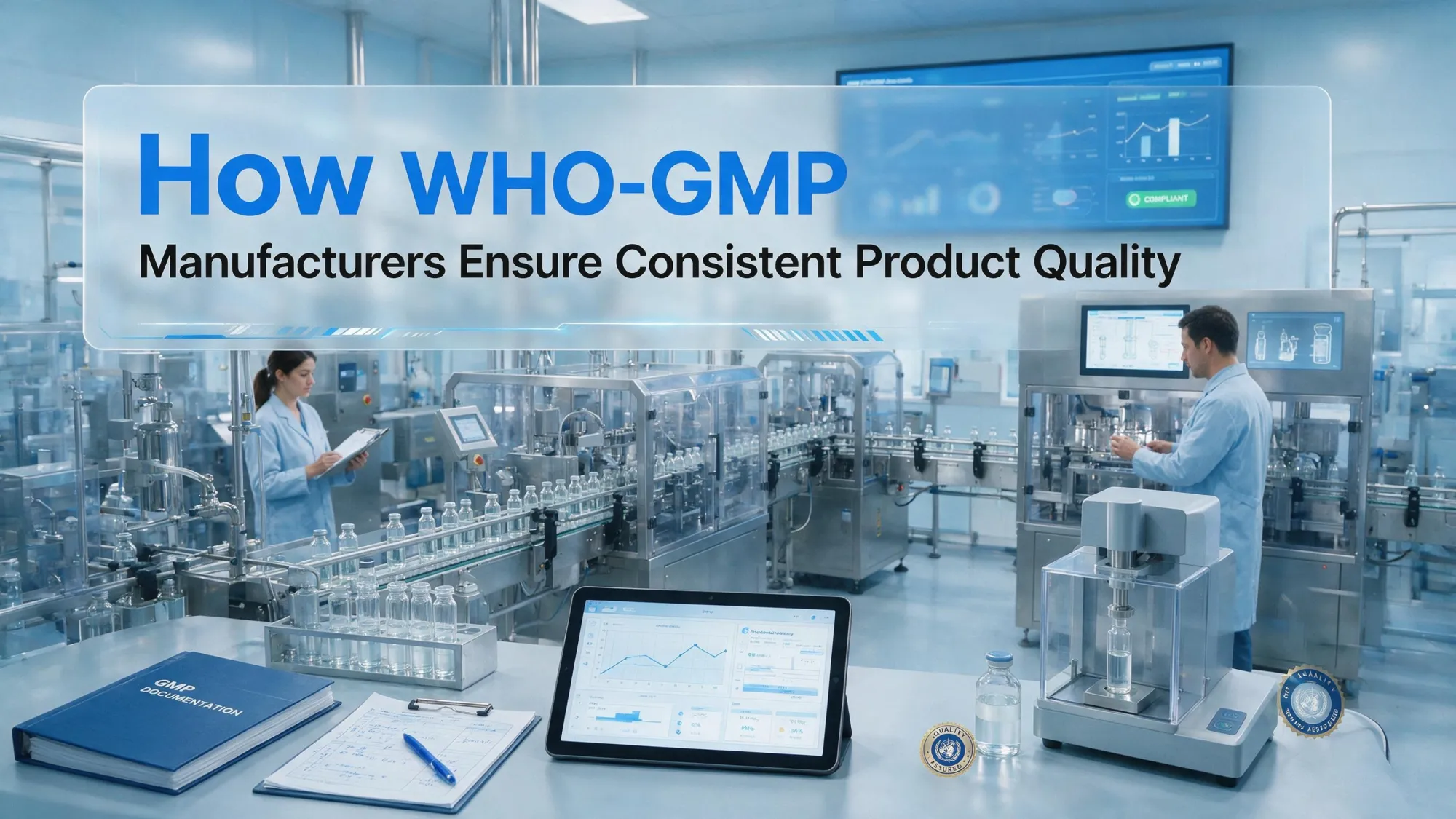

Every medicine bottle, tablet strip, or cream tube that reaches a patient represents thousands of quiet decisions made long before it ever left the factory. Behind this consistency lies a structured system that manufacturers follow to make sure every single batch performs exactly the way it is supposed to. Understanding how this actually works reveals why certified manufacturing matters so much more than most people realise.
Starting With Controlled Raw Materials
Consistency does not begin at the final packaging stage; it starts much earlier, with the raw materials used to create a product in the first place. A WHO-GMP Certified Brand in India follows strict protocols for sourcing and testing raw materials before they even enter the production line, checking for purity, potency, and contamination risks.
This early stage matters enormously, since even a slight variation in raw material quality can affect the final product's performance, regardless of how carefully the rest of the manufacturing process is handled afterwards.
Standardised Processes Remove Guesswork
Once raw materials pass initial testing, certified manufacturers rely on clearly documented, standardised processes for every stage of production. This means the exact same steps, temperatures, mixing times, and equipment settings are followed every single time a batch is produced, regardless of which shift or team happens to be working that day.
This standardisation removes the risk of human judgment causing unintended variations. Instead of relying on individual workers making slightly different decisions each time, certified facilities operate on detailed, repeatable procedures that leave little room for inconsistency to creep in.
Why Environmental Control Matters More Than People Expect
Manufacturing environments themselves need careful control too. Factors like temperature, humidity, and air quality can all influence how ingredients behave during production, particularly for sensitive formulations like creams, gels, or injectable medicines. Certified facilities maintain controlled environments specifically designed to minimise these external variables, ensuring that outside conditions do not accidentally affect product consistency.
Testing at Multiple Stages, Not Just at the End
A common misconception is that quality testing happens only once, right before a product ships out. In reality, WHO-GMP certified manufacturers test products at multiple stages throughout production, checking intermediate results along the way rather than waiting until the very end to catch potential problems.
This approach allows manufacturers to identify and correct issues early, before an entire batch moves too far along in production, saving both resources and preventing inconsistent products from reaching the market in the first place.
Documentation Creates Accountability
Every stage of production within a certified facility comes with detailed documentation, recording exactly what happened, when, and by whom. This might sound like unnecessary paperwork, but it serves a genuinely important purpose, creating a clear, traceable record that allows manufacturers to identify exactly where something went wrong if any inconsistency does eventually appear.
This documentation also plays a critical role when hospitals or large institutional buyers require Quality Assurance for Hospital Pharma Procurement from India, since these buyers often request detailed batch records and testing certificates before finalising large orders, wanting proof that consistent quality standards were genuinely followed throughout production.
Why Equipment Maintenance Plays a Bigger Role Than Expected
Manufacturing equipment itself requires regular maintenance and calibration to ensure it continues performing accurately over time. A slightly miscalibrated machine might not seem like a major issue initially, but over multiple production runs, small inaccuracies can accumulate, eventually affecting product consistency in ways that become difficult to trace back to their original cause.
Certified manufacturers maintain strict equipment maintenance schedules specifically to prevent this kind of gradual quality drift from happening unnoticed.
Training Ensures Human Consistency Too
Even with standardised processes and well-maintained equipment, human involvement still plays a role in manufacturing. This is why certified facilities invest heavily in proper staff training, ensuring every team member understands exactly how procedures should be followed, regardless of experience level or which specific shift they happen to be working.
This consistent training helps eliminate variations that might otherwise occur simply due to different staff members interpreting instructions slightly differently from one another.
Why This Entire System Builds Long-Term Trust
When all these elements work together properly- controlled raw materials, standardised processes, environmental management, multi-stage testing, thorough documentation, and consistent training- the result is a manufacturing system capable of producing genuinely reliable products, batch after batch, year after year.
This reliability becomes the real foundation of trust between manufacturers, doctors, and patients, since everyone involved can reasonably expect that today's product will perform exactly the same way as it did during their last purchase or prescription.
Final Thoughts
Consistent product quality does not happen by accident; it results from a carefully structured system that certified manufacturers follow at every single stage of production. From raw material sourcing to final testing and thorough documentation, this disciplined approach is exactly what allows WHO-GMP certified manufacturers to deliver dependable products that doctors, hospitals, and patients can genuinely trust, time and time again.


































Sign in to leave a comment.