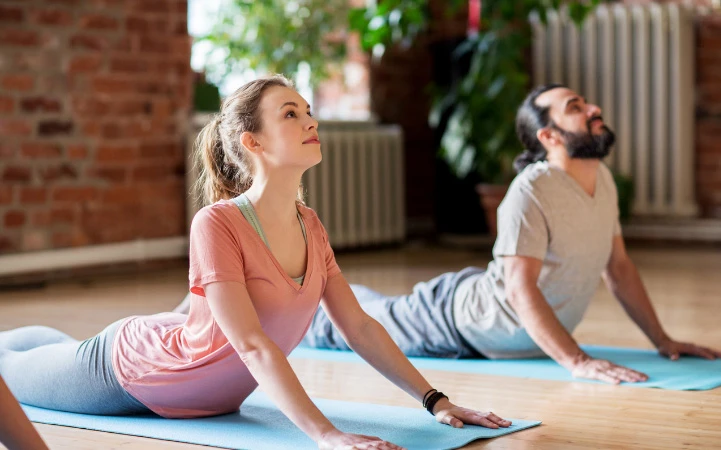

Yoga, as a whole, significantly intensifies body awareness and enhances posture. Many yoga instructors even assert that yoga may be more effective than traditional physical therapy for treating lower back pain. Even though this claim can appear severe, there is a scientific basis for it.
Numerous studies suggest that Yoga for Back Pain could be a helpful therapy that is persistent or recurrent. One study aimed to assess the efficacy of yoga and conventional treatment for chronic low back pain. It was carried out in 2011 at the University of York in Heslington, United Kingdom.
How Can Yoga Help With Back Pain?
First and foremost, yoga poses strengthen the back and abdomen muscles. Both core muscles are necessary for maintaining a straight and appropriate posture and bodily movement. Back discomfort can be considerably decreased or avoided by enhancing those muscles' strength, function, and awareness.
Second, yoga poses strengthen the muscles and stretch and relax them. Relaxing the entire body, not just the back muscles, can benefit individuals with lower back pain. For instance, by relaxing the hamstrings, the pelvis can move more freely, which eases stress and tension in the lower back.
Finally, yoga poses encourage blood circulation across the body, enabling the transportation of nutrients and the elimination of pollutants. As a result, the spinal muscles and connective tissue receive better overall nutrition.
In these simple ways, Yoga for Back Pain can give you a healthy, strong body.
Best Yoga for Back Pain
Back Pain Relief With Surya Namaskar
The Surya Namaskar is an excellent way to relieve back discomfort. Surya Namaskara for 5 to 7 minutes might be the start of your practice. The Surya Namaskara is an excellent practice for warming up that helps relieve back pain by warming up the spinal column and the limbs.
A fantastic technique to extend and strengthen muscles connected to back pain, including the hamstrings, lower back, hip flexors, and abdominal muscles, is to follow a series of steps.
Sarvangasana
Sarvangasana, also known as Salamba Sarvangasana, is a posture that gently engages the core while stretching the upper chest and body muscles. When we try to hold the stance as straight and steadily as possible, the Psoas muscle, one of our most significant postural muscles, is activated.
Hold this position for 30 to 60 seconds, using a folded blanket as support, if necessary, underneath your shoulder girdle. Roll down vertebrae by vertebrae until your spine is lying on the mat by lowering your feet to a position halfway behind your head.
Roll down after the hold; if you have any stiffness or discomfort in your lower back, exit the position earlier.
Ardha Setu Bandhasana
Ardha Setu Bandhasana is an excellent Yoga for Back Pain to tone and engage your glutes and lower back muscles. They become active as you tighten your back body to elevate yourself into the posture. Due to poor posture and way of life, the lower body and hips are a muscular region that is frequently weak and tight.
They get more energized when in this stance, which also enhances blood circulation to their tissue. This position simultaneously stretches the chest, quadriceps, psoas, and abdominal muscles gently. Hold the position for 30 to 60 seconds, at which point you should roll to one side to enter the Child's Pose.
Shashankasana
The relaxation stance known as "Child's Pose" softly extends the whole back of the spine. Ensure that hips and head both are well-rested. If necessary, put a cushion under your hips and your head on the stacking fists. Focus on breathing into your lower back and abdomen as you maintain the pose. Following a one to two-minute hold, proceed to Anahatasana.
Anahatasana
The Hart-Melting Yoga for Back Pain is a fantastic way to increase the chest's mobility and middle back openness. However, it also helps restore a healthy lumbar bend by gently stretching the muscles in the hips and the lower back. Come to this position by getting down on all fours. Put your elbows on the mat below your shoulder in an arched place.
From this position, begin straightening your arms and touching the mat with the chest and chin. Support your wardrobe with a wrapped blanket if it isn't flat on the mat. You can also rest your head on the floor if your neck feels stiff. Breathe deeply and remain here for a minute or two. After leaving the stance, spend another 30 to 45 seconds in Child's Pose.
Conclusion
Postural irregularities, which cause instability in the tissue and muscle cells, are the primary cause of most back discomfort. Postural distortions are frequently brought on by repetitive motions or established behaviors, such as prolonged sitting or slouching.
Practicing yoga for back pain can help you find a long-term solution to your problems.











Sign in to leave a comment.