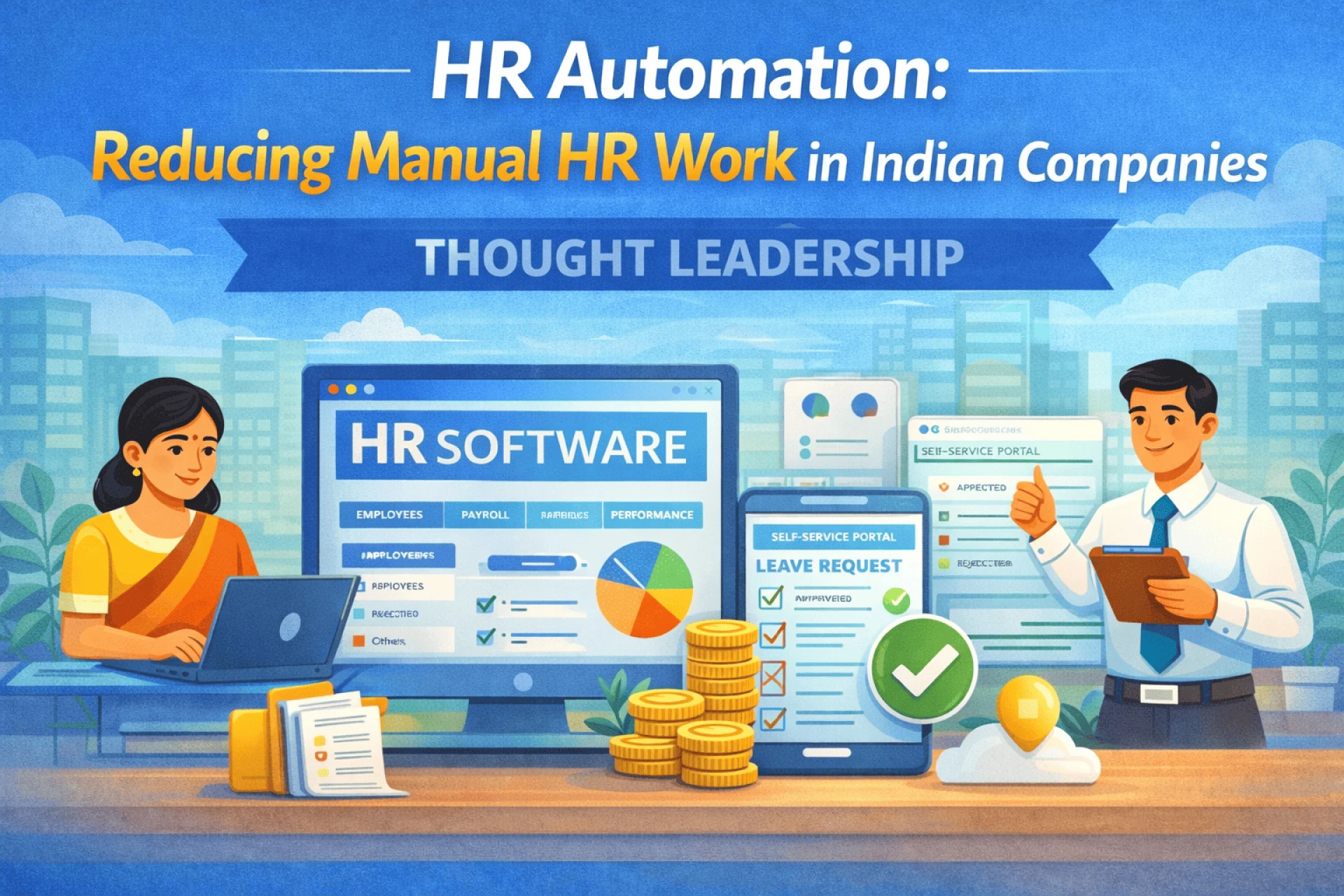

As businesses in India continue to grow, HR departments are under increasing pressure to manage complex and time-consuming tasks such as payroll, leave tracking, performance management, and compliance. Managing these processes manually can lead to inefficiencies, errors, and delays that impact the overall productivity of an organization.
To address these challenges, Indian companies are adopting HR automation software to streamline their HR processes, reduce manual work, and create a more efficient, data-driven environment.
The Problem with Manual HR Work
In many Indian companies, HR tasks are still handled manually or with the help of basic tools like spreadsheets. This leads to several key challenges:
1. Time-Consuming Processes
Manual entry of data, such as calculating employee hours, tracking leaves, and processing payroll, is incredibly time-consuming and leaves room for errors. HR teams spend valuable time on repetitive tasks rather than focusing on strategic initiatives like employee engagement and development.
2. Increased Risk of Errors
Human errors are inevitable when dealing with complex data sets and calculations. From inaccurate payroll to missed deadlines, mistakes in manual HR work can have significant consequences for both employees and the company.
3. Compliance Issues
India has a dynamic and complex set of labor laws. Staying compliant with statutory requirements such as Provident Fund (PF), Employee State Insurance (ESI), and tax regulations is vital for any business. Manual HR systems are more prone to errors, making it difficult to maintain compliance and avoid legal issues.
How HR Automation Solves These Problems
HR automation software offers a solution to the challenges posed by manual HR processes. By integrating automation into key HR tasks, companies can reduce errors, save time, and ensure compliance.
1. Streamlining HR Processes
Automated HR tools simplify the process of managing employees. Tasks like leave management, payroll, and performance tracking can all be automated, reducing administrative work for HR teams. For example, a HR software solution can automatically calculate payroll based on attendance, overtime, and tax rules, ensuring that employees are paid accurately and on time.
2. Real-Time Data and Analytics
HR automation provides real-time data on employee performance, attendance, and other HR metrics. This data-driven approach enables HR teams to make informed decisions and respond to employee needs more efficiently. HR managers can access up-to-date information on employees' leave balances, performance reviews, and payroll status, all in one place.
3. Improved Employee Experience
Automation enhances the employee experience by providing a self-service portal where employees can easily access and update their personal information, request leave, and track their performance. This reduces the need for HR teams to handle routine requests, allowing them to focus on more strategic functions.
4. Compliance and Security
With the ever-changing landscape of Indian labor laws, staying compliant is crucial for any business. HR automation software ensures that companies adhere to legal requirements by automatically calculating statutory deductions and submitting reports to the authorities. This minimizes the risk of non-compliance and associated penalties.
The Future of HR Automation in India
As businesses in India continue to evolve and scale, HR automation will become an increasingly essential tool for managing a growing workforce. The shift from manual HR work to automated solutions not only helps companies save time and reduce errors but also improves decision-making through data-driven insights.
Companies that embrace HR software will be better equipped to manage complex HR tasks efficiently and focus on building a more productive, engaged, and compliant workforce.
Conclusion
The benefits of HR automation are clear: it simplifies HR processes, reduces errors, and ensures compliance. As Indian companies grow and adapt to new challenges, integrating HR automation tools into their HR systems will be essential to staying competitive and efficient.
By implementing HR software, companies can automate routine tasks, allowing their HR teams to focus on more strategic initiatives that will help the business thrive in the future.




























Sign in to leave a comment.