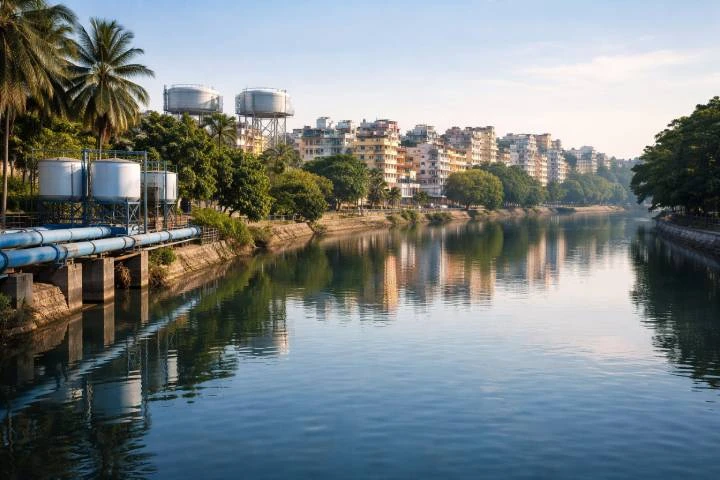

Water is fundamental to health, economic growth, and social well-being. In modern India, rapid urbanisation, industrial expansion, population growth, and climate variability have placed increasing pressure on water resources. Understanding the importance of water testing helps households, industries, and authorities ensure safety, sustainability, and long-term public health. This article outlines the key reasons why water testing has become essential in today’s India, with each reason explained clearly.
1. To Ensure Safe Drinking Water
One of the primary reasons for water testing is to confirm that water is safe for human consumption. Drinking water may contain contaminants such as bacteria, heavy metals, or excessive dissolved solids that are not visible to the naked eye. Regular testing helps identify these risks early and prevents waterborne illnesses, which remain a public health concern in many parts of India.
Ensuring potable water protects individuals and reduces strain on healthcare systems.
2. To Detect Chemical and Heavy Metal Contamination
In several regions of India, groundwater has been found to contain harmful substances such as fluoride, nitrate, arsenic, lead, or uranium. Water testing helps detect such chemical contamination before it causes long-term health effects. These contaminants often develop naturally or due to industrial discharge and agricultural runoff.
Early detection through testing allows corrective measures such as treatment or source replacement.
3. To Protect Public Health
Water quality directly affects public health outcomes. Contaminated water can lead to gastrointestinal infections, skin conditions, and chronic diseases when exposure is prolonged. Water testing enables communities and authorities to assess risks and take preventive action rather than responding only after illness occurs.
Testing therefore acts as a preventive public health tool.
4. To Support Urban and Rural Infrastructure
Modern India relies on complex water distribution systems including pipelines, storage tanks, and treatment plants. Water testing helps identify contamination introduced through aging infrastructure, leakage, or improper storage. In both urban apartments and rural supply systems, testing ensures that water remains safe from source to point of use.
This supports reliable and safe water supply networks.
5. To Assist Industrial and Commercial Use
Industries depend on water for processing, cooling, cleaning, and manufacturing. Poor water quality can damage equipment, affect product quality, and increase operational costs. Water testing helps industries understand water characteristics and apply appropriate treatment, ensuring efficiency and regulatory compliance.
Testing thus supports both productivity and sustainability.
6. To Guide Appropriate Water Treatment
Without testing, water treatment methods may be ineffective or excessive. Water testing provides data on specific contaminants present, helping users choose the right filtration or purification system. This avoids unnecessary expense and ensures that treatment targets actual water quality issues.
Accurate testing leads to informed and cost-effective solutions.
7. To Monitor Environmental Impact
Rivers, lakes, and groundwater sources are increasingly affected by urban waste, industrial discharge, and agricultural chemicals. Water testing helps monitor environmental pollution and assess the health of natural water bodies. Such monitoring supports conservation efforts and informed policy decisions.
Many institutions rely on a water testing laboratory to obtain scientifically validated data for environmental assessment and compliance.
8. To Build Awareness and Accountability
Water testing creates awareness among citizens about the quality of the water they use daily. It also promotes accountability among suppliers, industries, and local authorities responsible for water management. Transparent testing results encourage better practices and responsible water use.
Awareness leads to long-term behavioural change and sustainability.
Conclusion
In modern India, water testing is no longer optional—it is essential. From protecting public health and detecting contamination to supporting infrastructure, industry, and environmental conservation, water testing plays a vital role in daily life. Understanding its importance enables individuals, communities, and institutions to make informed decisions, prevent health risks, and ensure safe water for future generations. Regular water testing is a foundational step toward a healthier and more sustainable India.











Sign in to leave a comment.