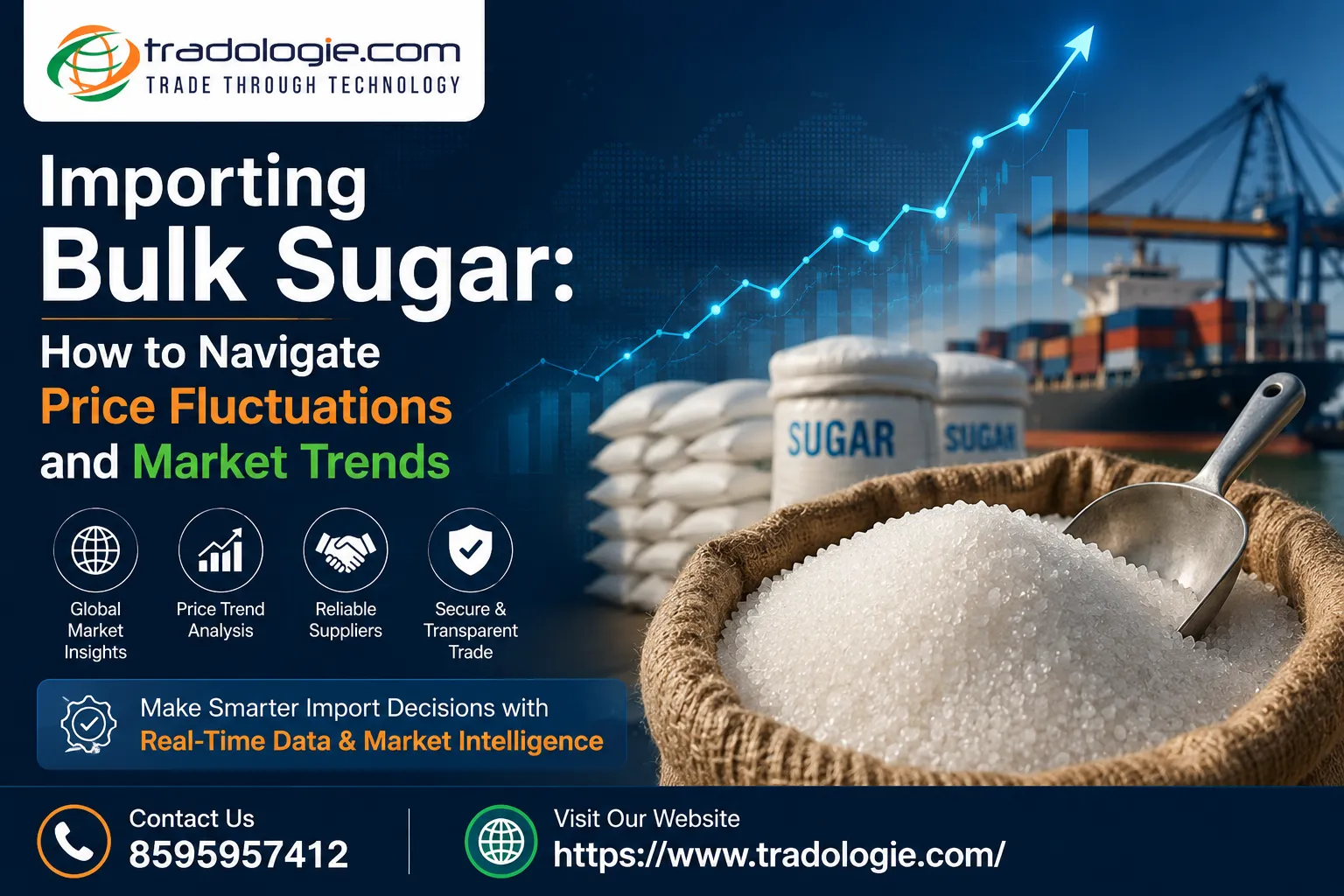

If you are planning to buy sugar in bulk in 2026, you aren’t just looking for a commodity; you are stepping onto a geopolitical battlefield. The global sugar market has moved far beyond the simple days of counting cane harvests in Brazil or tracking rainfall in Uttar Pradesh. Today, the price you pay as a sugar importer is anchored to massive global gears—the price of Brent crude, the sudden swings of the Indian Rupee, and the high-tension logistics of the Strait of Hormuz.
To win in this environment, you have to stop thinking like a mere buyer and start acting like a strategist. The old school method of simply calling a sugar supplier for a quote is officially dead. If you want to import bulk sugar without getting crushed by market volatility, you need to master the secondary forces that actually drive the numbers on your invoice.
The Energy Nexus: Why Oil is the Real Price Maker
The biggest mistake a rookie sugar importer makes is only watching the sugar charts. In reality, you should be watching the oil charts. Brazil is the undisputed heavyweight sugar supplier of the world, but they have a unique "switch" in their factories. They can choose to turn their sugarcane into sugar for your coffee, or ethanol for their cars.
When oil prices cross that $90–$100 mark, Brazilian mills stop caring about your bulk sugar order. They pivot to ethanol because it’s faster cash and higher margin. This "Ethanol Switch" is the reason why a global sugar surplus doesn't always lead to lower prices. You might see a record harvest in the news, but if crude oil is surging, that surplus will never hit the market as sugar. It will hit the market as fuel. If you are trying to buy sugar in bulk, and you see tension in oil-producing regions, you can bet your bottom dollar that your next quote is going to be significantly higher.
The Currency War: Using the Rupee and the Real to Your Advantage
Currency is the silent killer—or the secret weapon—for any bulk importer. Sugar is traded in USD, but it’s produced in local currencies. Right now, the Indian Rupee has hit record lows, weakening by nearly 4.5%. For an Indian mill looking to export bulk sugar, this is a dream scenario. Even if the global price stays flat, they earn more rupees for every dollar they bring in.
This creates a massive opening for you to import bulk sugar from India at a time when Brazilian origins might be getting more expensive due to a stronger Real. As a buyer, you need to be agile. If the Rupee is tanking, you should be shifting your focus toward Indian Tier-1 suppliers. This is how you hedge against price fluctuations—not just by timing the market, but by timing the currency.
The Logistics Trap: Freight is the New Commodity
You can find the cheapest sugar in the world, but if you can't get it to your port, that price is a hallucination. Logistics in 2026 is a nightmare of bottlenecks and rising freight costs. This is where regional proximity becomes your biggest competitive advantage.
If you are an importer in Africa or the Middle East, a sugar supplier in India is inherently more valuable than one in Brazil, even if the Brazilian FOB price is slightly lower. Why? Because shipping from India is faster, the freight is cheaper, and you avoid the current mess in the major global transit lanes. In the world of bulk trade, "Price + Freight" is the only number that matters. If you ignore the logistics and just chase the lowest sticker price, you’ll get killed by container shortages and 30-day delays that make your inventory stale before it even arrives.
Verification: How to Spot a Real Sugar Supplier
The internet is a breeding ground for fake "suppliers" who claim they can move 50,000 MT of ICUMSA 45 at a price that seems too good to be true. It usually is. When you are ready to buy sugar in bulk, your first job is to vet the person on the other end of the line.
A real sugar supplier doesn’t hide behind a flashy website. They have an audited trade history. They don't flinch when you ask for a third-party inspection from an agency like SGS. They are transparent about their milling capacity. If you are looking to import bulk sugar, you should be asking for lab tests on polarization, moisture, and granulation before a single cent leaves your account. In 2026, a verified relationship is worth more than a ten-cent discount.
Navigating the 2026 "Bull-Bear" Paradox
Right now, the market is in a weird place. On paper, there is a production surplus—roughly 189 million tonnes of production against 177 million tonnes of demand. In a normal world, that’s a "bear" market where prices should be dropping. But we aren't in a normal world. Geopolitical "noise"—like the closure of major trade routes—has constrained about 6% of the global sugar trade.
This creates a price floor. The surplus is there, but it can't move freely. As an importer, you can't wait for a price crash that might never come. You have to buy in the "dips" created by temporary logistics clearings or currency shifts. Successful bulk importing in 2026 isn't about waiting for the bottom; it’s about recognizing that the "bottom" has been raised by the cost of energy and war.
Contracting for the Long Haul
The era of one-off spot deals is fading. If you want to protect your supply chain, you need to build long-term partnerships. A reliable sugar supplier will give you priority allocation when things get tight, but only if you’ve shown them consistent business.
When you export bulk sugar or import it, your contract needs to be airtight. Clarify your Incoterms—know exactly where your responsibility starts (FOB vs. CIF). Ensure your payment terms are secured through confirmed Letters of Credit (LC). Don't leave anything to "handshake" agreements. The market is too volatile for that.
The Bottom Line
Importing bulk sugar in 2026 is a game of intelligence. You have to watch the oil, you have to watch the currency, and you have to verify every single link in your supply chain. The fluctuations aren't going away—the "new normal" is high volatility. But for the importer who knows how to read the energy and currency gears, that volatility isn't a threat; it’s an opportunity to outmaneuver the competition and secure the best margins in the market.
Building a resilient supply chain is a marathon, not a sprint. The winners are those who stop chasing the lowest quote and start building a logistical and strategic fortress around their bulk sugar trade.

























Sign in to leave a comment.