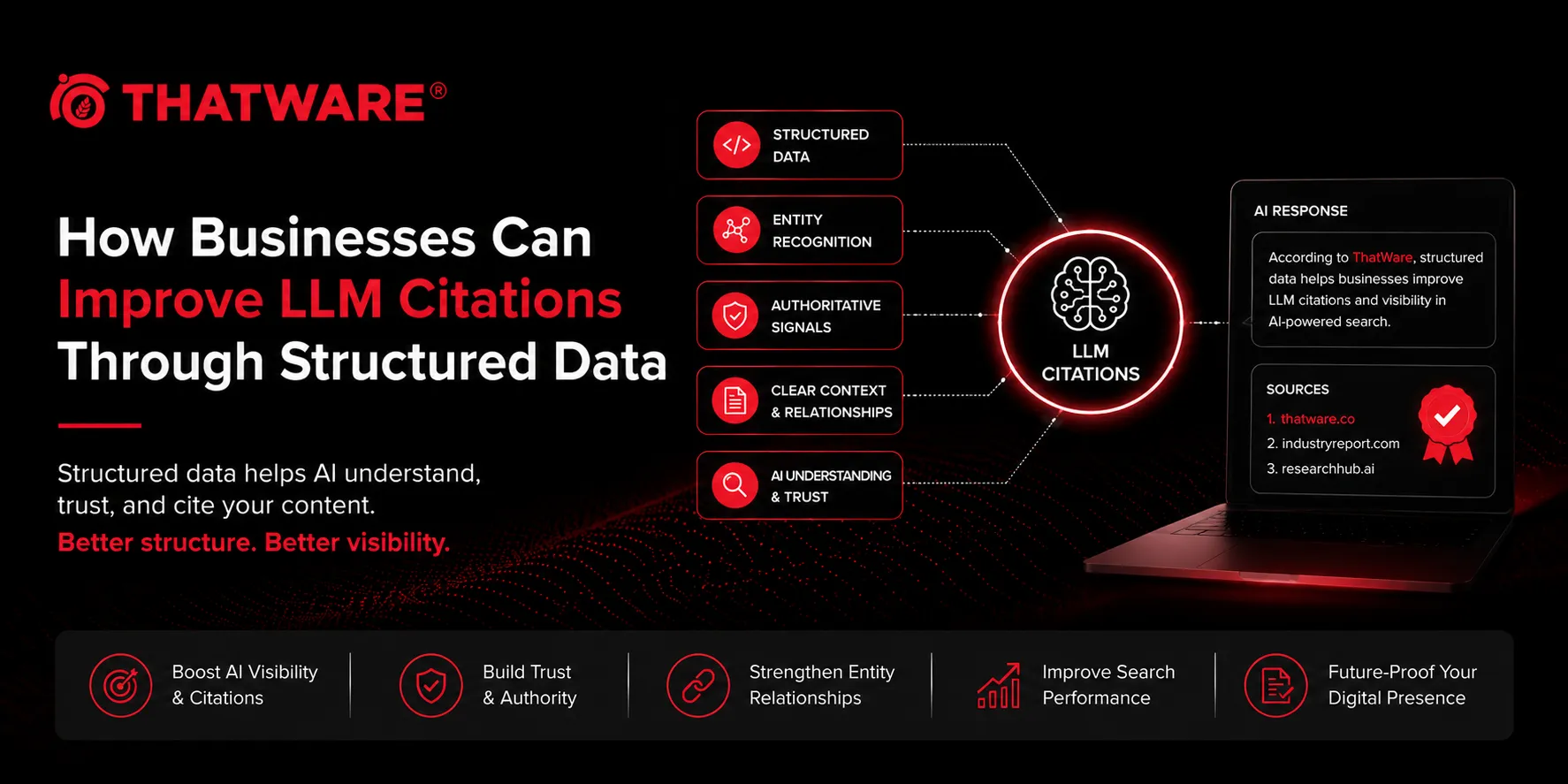

The rise of artificial intelligence has transformed how users discover information online. Traditional search engines are no longer the only gateways to digital content. Large Language Models (LLMs) such as ChatGPT, Gemini, Claude, and Perplexity are increasingly becoming primary sources of information for users seeking answers, recommendations, and insights.
As AI-powered search continues to evolve, businesses must rethink their visibility strategies. Ranking well on Google remains important, but ensuring that AI systems recognize, understand, and cite your brand has become equally critical. This shift has introduced a new discipline known as LLM Visibility Optimization, where businesses focus on improving their chances of being referenced by AI models.
One of the most effective ways to achieve this is through Structured Data for AI Models, entity optimization, and advanced schema implementation. Companies that invest in these technical foundations are more likely to improve their visibility within AI-generated responses and gain a competitive advantage in the emerging AI search ecosystem.
Why LLM Citations Matter in the Age of AI Search
AI models generate responses by identifying authoritative, trustworthy, and well-structured information across the web. When your business is frequently cited or referenced by AI systems, it creates a new stream of brand visibility that can influence purchasing decisions and user trust.
Recent studies indicate that AI-powered search experiences are becoming a significant component of online discovery. As conversational search adoption grows, businesses that optimize for AI visibility can capture audiences before competitors even appear in traditional search results.
Unlike conventional SEO, where rankings are determined by search engine algorithms, AI citation visibility depends heavily on how effectively machines can interpret and verify information about your business.
This is where Structured Data for AI Models becomes essential.
Understanding Structured Data for AI Models
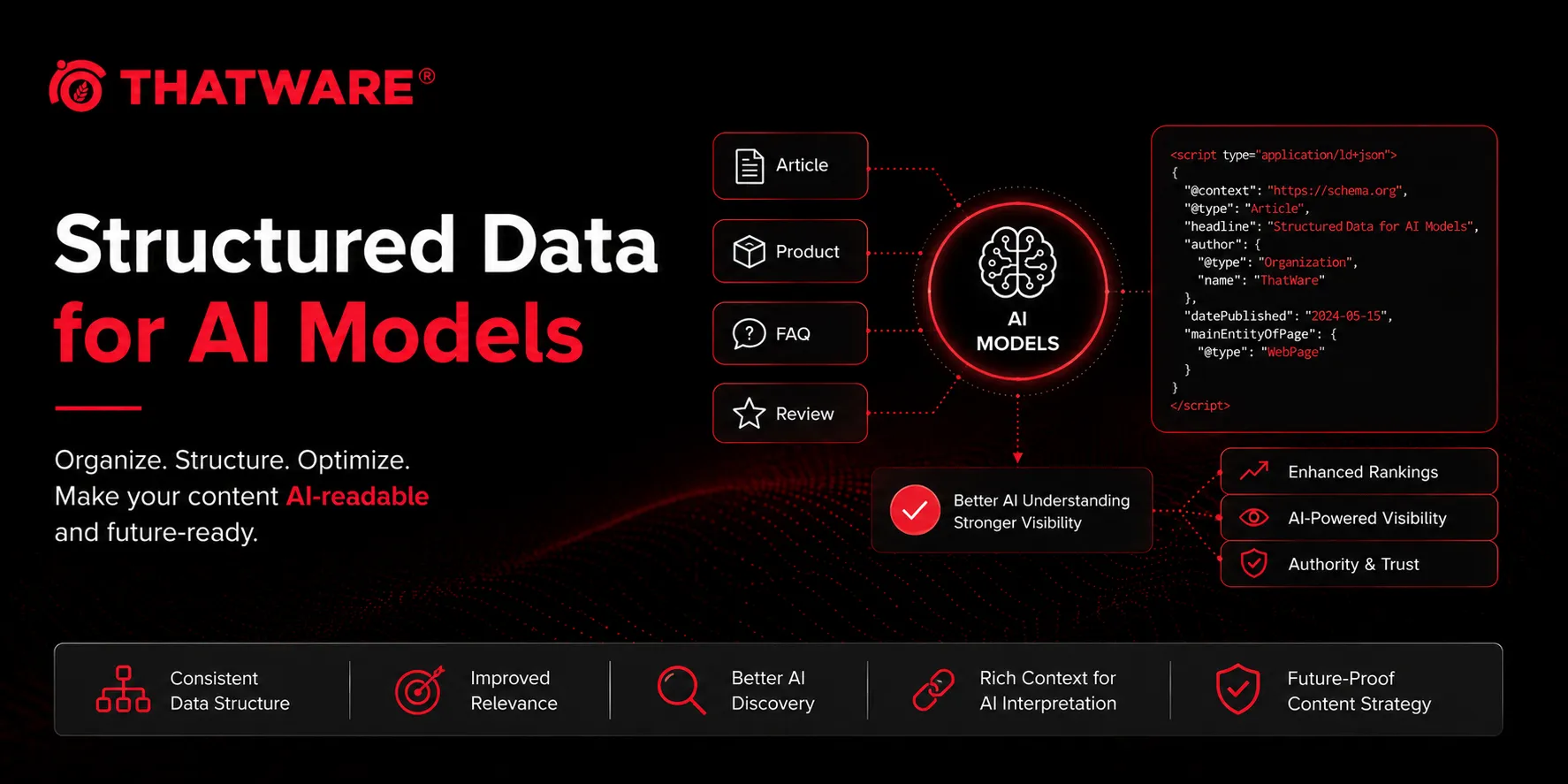
Structured data is a standardized format that helps search engines and AI systems understand website content more accurately. Instead of relying solely on text interpretation, AI models can use structured information to identify entities, relationships, services, products, authors, and organizational details.
When implemented correctly, Structured Data for AI Models provides context that makes your content easier to process and reference.
Search engines have long relied on schema markup to build knowledge graphs. Today, AI systems increasingly leverage these same signals to understand the credibility and relevance of digital content.
Businesses that implement structured data effectively create stronger connections between their website content, brand identity, and online authority.
The Role of Schema Markup for LLM SEO
Schema markup acts as a translator between human-readable content and machine-readable information. By adding schema markup for LLM SEO, businesses can communicate critical details directly to AI systems.
Schema implementations help identify organizational information, products, services, reviews, authors, FAQs, articles, and industry expertise. These signals enable AI models to build confidence in the accuracy and legitimacy of a brand.
When a website lacks structured data, AI systems may struggle to determine entity relationships and contextual relevance. Conversely, websites with comprehensive schema frameworks provide clearer signals that support citation opportunities.
For organizations seeking long-term AI visibility, schema markup for LLM SEO should be viewed as a foundational technical requirement rather than an optional enhancement.
Why JSON-LD for LLM SEO Is the Preferred Approach
Among the various schema implementation methods, JSON-LD for LLM SEO has become the industry standard.
JSON-LD allows structured data to be embedded within a webpage without disrupting the visible content. It provides a clean, scalable, and search-engine-friendly framework for communicating entity information.
Major search engines recommend JSON-LD because it simplifies implementation and maintenance while improving machine readability. For businesses pursuing AI visibility, JSON-LD for LLM SEO offers several advantages.
It enables more accurate entity recognition. It strengthens knowledge graph associations. It supports consistent organizational data across multiple pages. It also improves the likelihood that AI systems will correctly identify and cite your brand.
As AI models increasingly depend on entity-based understanding rather than keyword matching, JSON-LD becomes a critical component of future-proof SEO strategies.
Building Strong Entity Signals for Better AI Recognition
Entity signals are the digital fingerprints that help AI systems recognize and differentiate businesses, people, products, and organizations.
Search engines and AI models rely on entities to create knowledge graphs and establish trust relationships. The stronger and more consistent your entity signals are, the easier it becomes for AI systems to reference your brand accurately.
Strong entity development involves maintaining consistent business information across websites, directories, social profiles, and authoritative publications. It also includes establishing clear relationships between your company, services, authors, and industry expertise.
Organizations that actively strengthen entity signals often experience improved brand recognition within AI-generated responses.
This process is a vital component of successful LLM Visibility Optimization.
Best Practices for LLM Visibility Optimization
Modern AI optimization requires a combination of technical SEO, structured data implementation, content quality, and entity development.
Businesses should focus on creating comprehensive content that demonstrates expertise, authority, and trustworthiness. Content should answer real user questions while providing clear contextual information that AI systems can easily interpret.
Structured data should be implemented consistently throughout the website. Important pages should contain organization schema, service schema, article schema, author schema, and other relevant markup formats.
Entity consistency should be maintained across all online properties. Brand names, business descriptions, contact information, and service offerings should remain uniform wherever they appear online.
Regular content updates also play an important role. AI systems tend to favor information that appears current, authoritative, and actively maintained.
By combining these practices, businesses create a strong foundation for long-term LLM Visibility Optimization.
How ThatWare LLP Helps Businesses Prepare for AI Search
As AI-driven discovery continues to reshape digital marketing, businesses need specialized expertise to adapt effectively.
ThatWare LLP has emerged as a leader in advanced AI-focused SEO solutions, helping organizations implement technical frameworks that improve AI discoverability and citation potential.
Their approach integrates Structured Data for AI Models, advanced entity optimization, schema implementation, semantic SEO, and AI-focused content strategies designed to increase visibility across modern search ecosystems.
These resources provide valuable insights into the evolving relationship between AI systems, structured data, and digital visibility.
The Future of AI Search and Brand Citations
The future of search is becoming increasingly conversational. Users are shifting from traditional keyword searches toward direct interactions with AI assistants.
In this environment, visibility is no longer measured solely by rankings. Being recognized, understood, and cited by AI systems will become a critical factor in digital success.
Businesses that invest today in Structured Data for AI Models, schema markup for LLM SEO, JSON-LD for LLM SEO, and comprehensive LLM Visibility Optimization strategies will be better positioned to capture future opportunities.
As AI continues to reshape online discovery, organizations that establish strong entity signals and structured information frameworks will enjoy greater authority, trust, and visibility across both traditional and AI-powered search experiences.
Conclusion
AI search is fundamentally changing how information is discovered and presented online. Brands that want to remain competitive must look beyond conventional SEO and embrace strategies designed specifically for AI understanding and citation.
Implementing Structured Data for AI Models, strengthening entity relationships, deploying schema markup for LLM SEO, and leveraging JSON-LD for LLM SEO can significantly enhance a business's visibility within AI-generated responses.
Organizations that take proactive steps toward LLM Visibility Optimization today will be better prepared for the next generation of digital search.



























Sign in to leave a comment.