
A container of wedge anchors clears customs, the site engineer opens the first box, and half the batch has thread damage from a cheap zinc coating that flaked off in transit. This happens more often than any wedge anchor manufacturer wants to admit. If you're sourcing fasteners for a construction project, an export order, or a wholesale line, the difference between a supplier who ships on spec and one who ships close enough will show up on your job site, not on their invoice. That's the real cost nobody prices in until it's too late.
This guide walks through what actually matters when you're evaluating wedge anchors manufacturers in India — specs, red flags, and the questions that separate a real factory from a trading company wearing a factory's website.
Specification
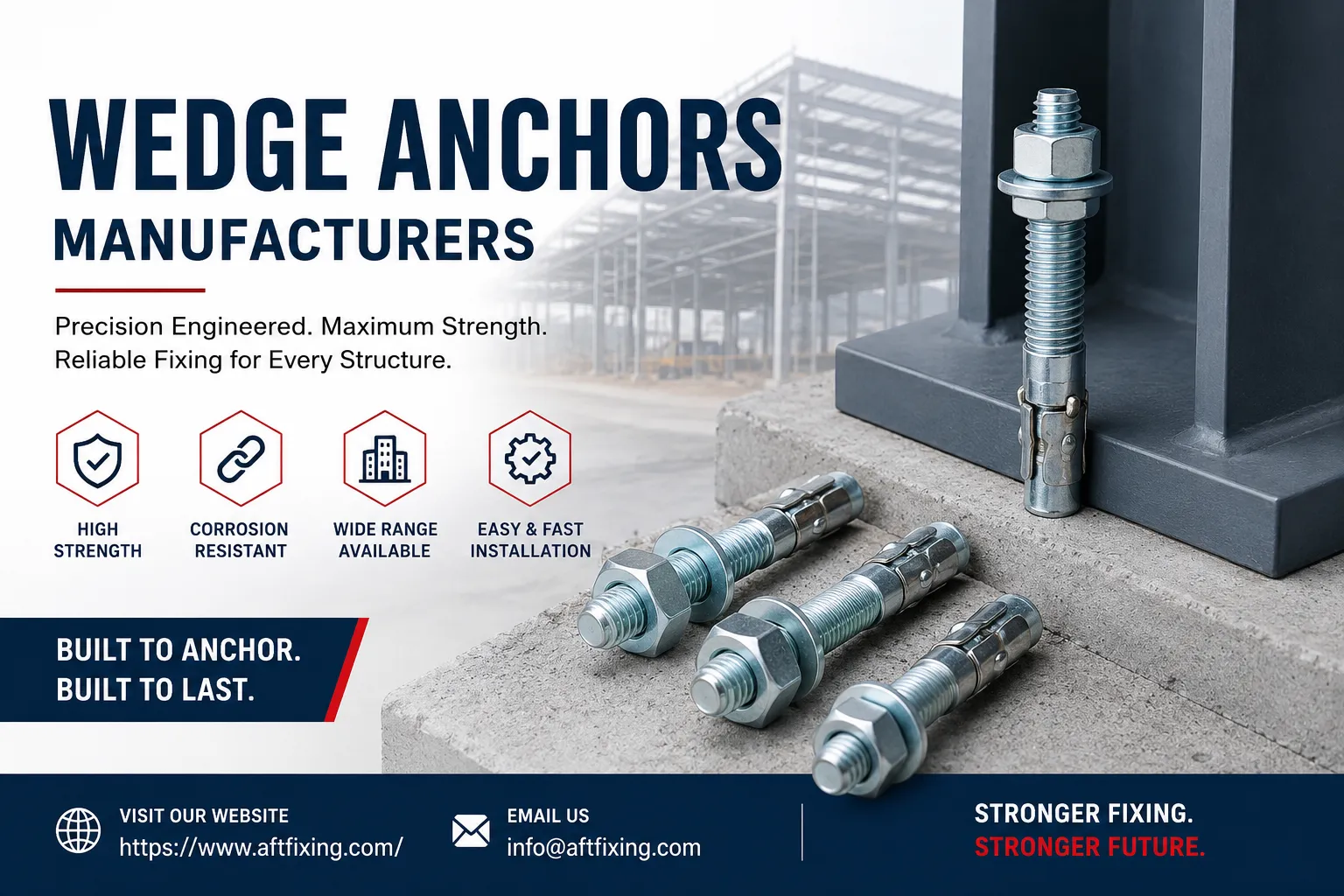
Wedge anchors work through expansion — a clip at the base spreads against the drilled hole wall as the nut is torqued, locking the anchor into concrete, block, or stone. Simple mechanism, but the tolerances matter more than most buyers assume.
Material and Grade
Carbon steel with zinc plating covers most commercial use. Stainless 304 and 316 come into play for marine, food-processing, or high-humidity environments where corrosion resistance isn't optional.
Size Range
Standard runs from M6 to M24, with lengths from 50mm to 300mm depending on embedment depth requirements.
The Detail Buyers Skip
Most buyers check diameter and length and stop there. They rarely ask about the clip material separately from the body material — and that's often where cost gets cut first, because a mismatched clip hardness fails silently under load instead of showing visible defects at inspection.
Objective — What a Bad Supplier Answer Sounds Like
1. Certification. Ask for the ISO certificate number, not just the logo on the website. A bad answer: "We're certified, don't worry about it."
2. Load Testing Data. A real supplier hands you pull-out test results by size. A bad answer: "Our anchors are strong, trust us."
3. Defect Policy. Ask what happens when 2% of a shipment fails inspection. A bad answer: "We'll handle it case by case." That's not a policy — that's a negotiation you'll lose after the container has already left port.
4. Minimum Order Flexibility. A bad answer dodges the question entirely and redirects to "let's discuss on call," because they don't actually have a fixed MOQ structure.
5. Traceability. Can they trace a batch back to a specific production run if there's a field failure? A bad answer changes the subject to price.
Benefits
Working with an established Wedge anchor manufacturer in India rather than a reseller changes your risk profile in ways that are easy to underestimate.
Direct factory sourcing removes a markup layer, which protects margin on repeat orders. It also means specification changes — a different coating, a custom length — go straight to the production floor instead of through three rounds of email with a trading intermediary.
Availability
We operate out of India, positioned to serve wedge anchor dealers in India as well as international wedge anchor wholesalers who need consistent lead times. Being centrally located in India's manufacturing corridor isn't just a convenience line for a website — it affects how fast raw steel reaches the production line and how quickly finished goods reach the nearest port.
About Us
We've been exporting fasteners since 2013, and we're ISO-certified across our production process. Right now we ship to 31 countries, which sounds tidy on a brochure but took a decade of fixing things buyers complained about.
Send us your drawing or spec sheet — diameter, length, material grade, and quantity — and we respond within 24 hours with pricing and lead time. Our standard MOQ starts at 1,000 pieces per size, though we've run smaller pilot orders for new wholesale partners testing a first shipment.
Conclusion
Sourcing Wedge anchors from India isn't complicated once you know which questions expose a weak supplier before the container ships. The suppliers worth working with will answer defect policy and traceability questions without flinching. The ones who redirect to price are telling you something, even if they don't mean to.
FAQs
1. What's the difference between wedge anchors and sleeve anchors?
Wedge anchors use a single expansion clip and work best in solid, uncracked concrete. Sleeve anchors expand along the full body and handle a wider range of base materials, including block and brick, but they generally hold less load per size.
2. Do you supply stainless steel wedge anchors for coastal projects?
Yes, we run 304 and 316 stainless lines. 316 costs more, and for genuinely high-salinity environments it's worth the difference — we've seen 304 anchors show surface pitting within two years in direct coastal exposure.
3. What's your typical MOQ for wedge anchor wholesalers?
1,000 pieces per size as a standard order. We can flex lower for a first trial order with new wholesale partners, but pricing adjusts accordingly.
4. Can wedge anchor dealers in India get samples before placing a bulk order?
Yes, though we charge for samples plus shipping. We don't do free sample runs anymore — too many requests never converted into orders, and it stopped making sense for a company our size.
5. How long does production take for a custom size?
Two to three weeks for non-standard lengths or diameters, depending on current production load. Standard sizes typically ship from existing stock within a week.





















Sign in to leave a comment.