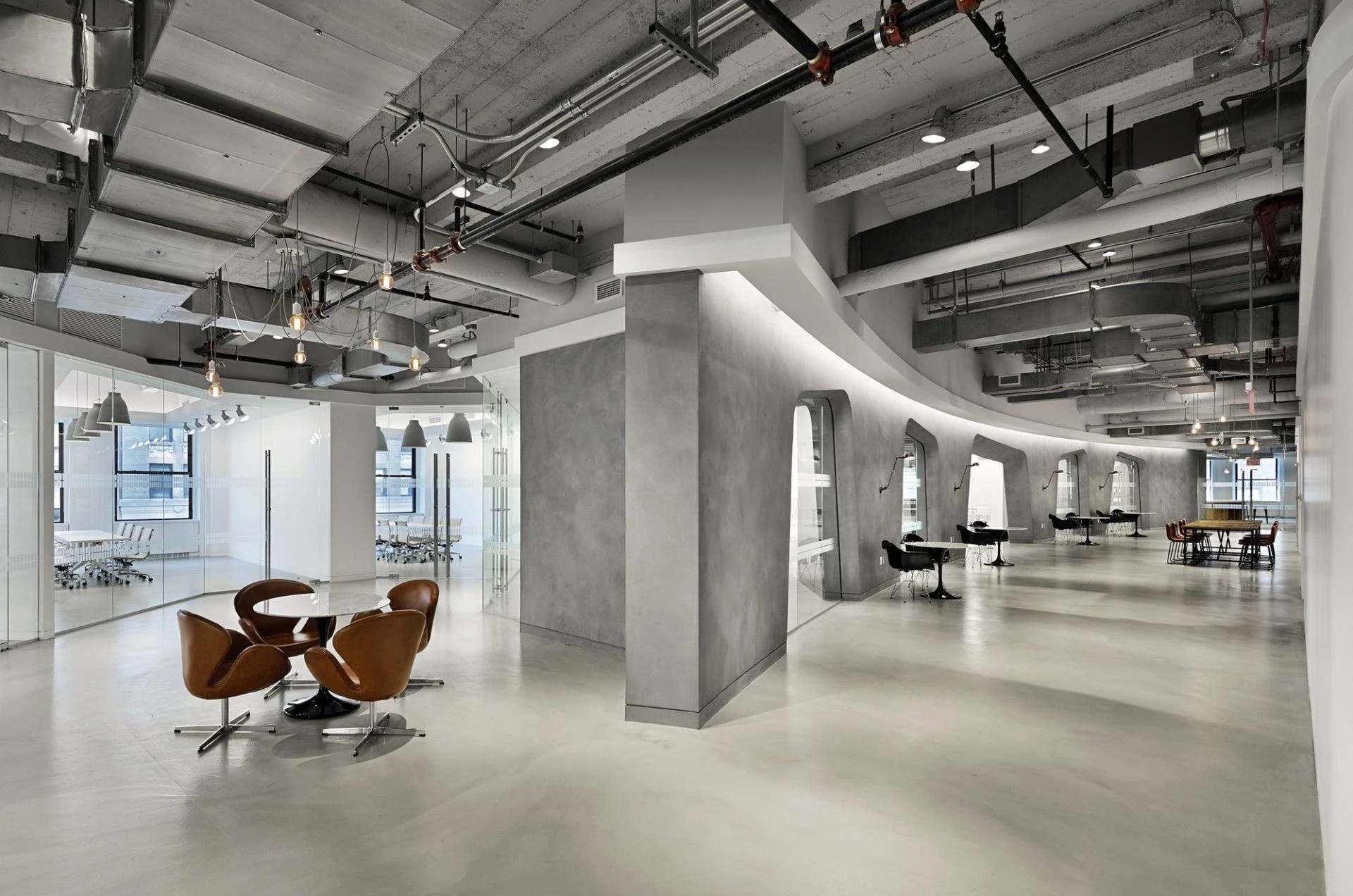

Industrial interior design is a fascinating option that lets you step into a world of powerful looks. It combines old charm with modern usefulness to make space beautiful.
In industrial interior design, flaws are celebrated with open brick walls, metal details, and recycled materials.
If you want to give your space an updated look, Luxe Interior is here to tell you everything that you need to know about industrial interior design.
What Is Industrial Interior Design?
One key aspect of industrial interior design is the use of materials with an unfinished or worn-out appearance.
Exposed structural elements like pipes, ductwork, and beams are often left on display to add visual interest. Concrete floors or polished concrete countertops contribute to the overall industrial aesthetic.
Another defining feature of this style is its love for salvaged objects and repurposed furniture pieces.
Vintage factory carts transformed into coffee tables or reclaimed wooden pallets used as shelving units are familiar sights in industrial-inspired spaces.
A color palette commonly associated with industrial interior design includes neutral shades like greys, browns, blacks, and whites.
These tones provide a backdrop for statement pieces or pops of color that can be introduced through artwork or furnishings.
Lighting plays a crucial role in enhancing the ambiance of industrial space.
Pendant lights with metal shades or Edison bulbs suspended from chains perfectly complement the textures found throughout this style.
Industrial interior design encompasses an inviting aesthetic that showcases raw materials, salvaged objects, and useful features.
By incorporating these elements into your space, you can create an interior that exudes character and charm while showing the rich history of the industry.
Highlights of Industrial Interior Design
The industrial interior design incorporates raw, harsh aspects of ancient factories and warehouses. It's all about showcasing the beauty in imperfections, from exposed brick walls to weathered wood furniture.
Here are several essential components of this dominating style.
Raw Materials
The industrial style promotes metal, concrete, and recycled wood. These materials give your area texture and authenticity without finishing.
Open Floor Plans
This style often favors open layouts with minimal division between different areas of the space. It allows a seamless flow between spaces, creating an expansive and connected feel. You can also use these designs in your Villa Interior Design.
Exposed Elements
One hallmark of industrial design is exposing architectural elements rather than concealing them behind drywall or paneling.
Neutral Color Palette
The color palette typically revolves around neutrals such as greys, browns, blacks, and whites, with occasional pops of bold colors as accents.
Vintage Furniture & Decor
The industrial interiors often feature vintage furniture or repurposed items like old factory carts or salvaged doors turned into tables.
Combining these unique finds with modern pieces creates an eclectic blend that adds personality to your space.
Lighting Fixtures
Statement lighting plays a crucial role in industrial design by adding a focal point and effectively illuminating the space.
Look for oversized pendant lights or vintage-inspired fixtures made from metal or exposed bulbs for that authentic industrial vibe.
Contrasting Textures
Mixing textures is key when it comes to achieving an industrial look - think smooth leather sofas paired with rough concrete floors or sleek metal chairs against distressed wooden tables.
By incorporating these key features into your home decor scheme, you can bring the captivating essence of industrial interior design into any space!
Whether you're starting from scratch or simply adding industrial elements to your existing decor, this style will undoubtedly create
Tips to Achieve an Industrial Interior Design
Interior design Companies in Dubai have one of the most compelling and unique design styles. Its raw and commanding aesthetic brings a sense of urban edge into any space.
If you want to achieve this captivating style, here are some key tips.
Embracing exposed materials is essential in creating an industrial look. Your area could appear rustic and real with exposed brick walls or concrete flooring. Don't be afraid to leave beams or pipes visible – they will only enhance the industrial charm.Next, incorporating vintage or repurposed furniture pieces is another way to achieve an industrial vibe. These elements will bring character and history into your space.Regarding color palette, sticking with neutral tones like greys, blacks, and browns can help create an industrial atmosphere. Consider adding pops of color sparingly through artwork or decorative accessories.Lighting also plays a crucial role in achieving an industrial look. Opt for pendant lights with exposed bulbs or vintage-inspired fixtures that mimic old factory lighting.Remember the finishing touches! Industrial-style decor often includes metal accents like iron bookcases and valuable objects like old gears.By following these guidelines, you can build a magnificent industrial interior design that reflects natural luxury by decorating with fundamental features of this style.
Conclusion
Industrial interior design is a strong and interesting style that shows off the beauty of raw and rough industrial areas. Mostly vivid hues and useful elements can create a distinctive aesthetic.
Basic elements like concrete, metal detailing, antique furniture, plain color palettes, and open floor layouts can give your place an industrial character.
Make sure to add some soft touches, like cozy fabrics or plants, to balance out the roughness and add warmth.
Sign in to leave a comment.