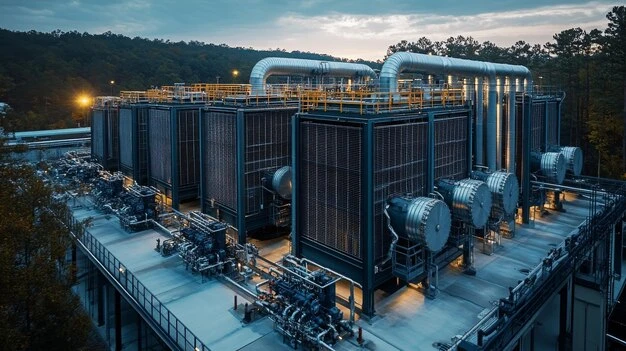

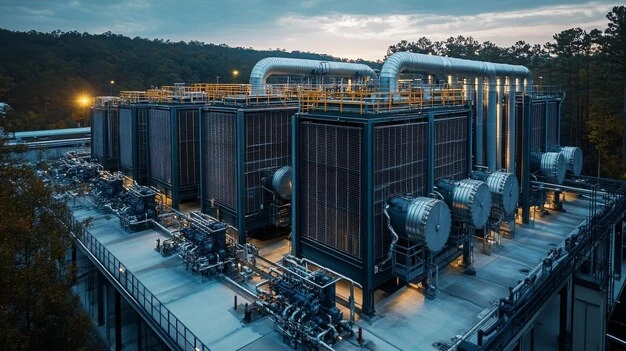
As climate change intensifies and global energy demands rise, the need for energy-efficient and environmentally sustainable cooling technologies has never been more urgent. The Heating, Ventilation, and Air Conditioning (HVAC) industry, a significant energy consumer and contributor to carbon emissions worldwide, is now undergoing a radical transformation. In response to environmental concerns and the demand for greener alternatives, groundbreaking cooling technologies are emerging that reduce both energy consumption and environmental impact, while also setting new benchmarks for operational efficiency and sustainability.
1. Magnetic Refrigeration: The Future of Cooling
Magnetic refrigeration stands at the forefront of sustainable cooling solutions. Unlike conventional refrigeration methods, which rely on harmful refrigerants that contribute to global warming, magnetic refrigeration uses magnetocaloric materials to generate cooling. When these materials are exposed to a magnetic field, they experience a temperature change, which can then be used to cool an environment.
This technology eliminates the need for hydrofluorocarbons (HFCs), one of the primary contributors to ozone layer depletion and global warming. Moreover, magnetic refrigeration systems are inherently more energy-efficient, operate with less noise, and require minimal maintenance, making them ideal for both residential and commercial applications. This breakthrough paves the way for more sustainable refrigeration and offers a glimpse into the future of cooling, where the environmental impact is significantly reduced.
2. Solar-Powered Air Conditioning Systems
With the global push for renewable energy solutions, integrating solar power into air conditioning systems is rapidly becoming a preferred choice. Solar-powered HVAC systems leverage photovoltaic (PV) technology to generate electricity from sunlight, which is then used to power air conditioning units. This not only drastically reduces reliance on fossil fuels but also significantly lowers energy costs over time.
Technological advancements in solar energy storage and thermal energy systems have made solar-powered cooling more efficient and accessible, even in regions where solar radiation is abundant. For instance, solar-powered air conditioning systems equipped with thermal energy storage can store excess energy produced during the day for use at night, thus ensuring uninterrupted cooling while optimizing energy consumption. These systems are proving to be particularly valuable in regions that experience long, hot summers, offering a clean and sustainable solution to meet energy-intensive cooling demands.
3. Evaporative Cooling: Harnessing Natural Processes
Evaporative cooling is one of the oldest yet most efficient methods for cooling in dry climates. This technology relies on the natural process of water evaporation to lower air temperature. When air passes through moistened pads or a water-saturated surface, the heat in the air causes the water to evaporate, which in turn cools the surrounding air. This process consumes significantly less energy compared to traditional refrigerant-based systems and is highly effective in regions where humidity levels are low.
Modern evaporative cooling systems have evolved with improved materials, better filtration techniques, and automated controls to enhance performance and air quality. These systems are not only energy-efficient but also environmentally friendly, as they eliminate the need for refrigerants and can operate using minimal electricity, making them a sustainable choice for homes, businesses, and even large industrial facilities in arid climates.
4. Thermal Energy Storage (TES) Systems
Thermal Energy Storage (TES) systems are rapidly gaining traction as a means to optimize energy consumption in HVAC systems. These systems store excess thermal energy during off-peak hours, often at night, and then release it when demand for cooling spikes during the day. By shifting energy consumption to off-peak periods, TES systems alleviate pressure on power grids and lower operational costs.
Advanced technologies such as ice storage and phase-change materials (PCMs) have significantly improved the efficiency and scalability of TES systems. Ice storage, for instance, involves creating ice during the night, which is then used to cool buildings during the daytime. Phase-change materials, which absorb or release heat as they change from one state to another, offer highly efficient energy storage with minimal environmental impact. With TES systems, businesses and residential buildings can take advantage of renewable energy sources, like solar or wind power, and efficiently integrate them into their cooling operations.
5. District Cooling Networks
District cooling systems represent an innovative approach to centralized cooling for multiple buildings or a large urban area. In these systems, chilled water is produced at a central plant and distributed to various buildings through a network of pipes. By centralizing cooling production, district cooling eliminates the need for individual air conditioners in each building, significantly reducing energy consumption and operational costs.
These systems often use renewable energy sources, such as geothermal or solar, to power the central plants, and advanced energy recovery techniques, such as heat recovery chillers, are utilized to minimize waste. With urbanization increasing and the demand for cooling in cities rising, district cooling offers a highly efficient, sustainable solution that reduces carbon footprints and ensures a more resilient and energy-efficient urban infrastructure.
6. AI-Driven HVAC Optimization
Artificial Intelligence (AI) is transforming the way HVAC systems operate, offering new ways to optimize energy usage, improve system performance, and enhance user comfort. AI-driven HVAC optimization leverages machine learning algorithms to analyze real-time data from sensors and equipment, identifying inefficiencies and suggesting corrective actions. This enables predictive maintenance, allowing system components to be serviced or replaced before they fail, thereby extending the lifespan of the equipment.
AI also allows for more precise control over temperature, humidity, and air quality, adjusting settings based on user preferences and external conditions. By continuously learning from system performance, AI can help HVAC systems operate at peak efficiency, reducing energy consumption, minimizing waste, and contributing to more sustainable building management practices.
7. Low-GWP Refrigerants
The HVAC industry is making significant strides in the transition to low-global warming potential (GWP) refrigerants. Traditional refrigerants, such as HFCs, have high GWPs and contribute to the acceleration of climate change. In response to international agreements like the Kigali Amendment to the Montreal Protocol, which calls for the phase-out of high-GWP refrigerants, the industry is turning to alternatives with much lower environmental impacts.
Hydrofluoroolefins (HFOs), natural refrigerants like ammonia, and carbon dioxide (CO2) are all gaining widespread adoption as they offer a far smaller environmental footprint. These refrigerants not only reduce the impact of global warming but also minimize damage to the ozone layer, contributing to a more sustainable and eco-friendly HVAC industry. As regulations become stricter and public awareness grows, the shift towards low-GWP refrigerants will continue to drive innovation in the sector.
8. Passive Cooling Strategies
While technological advancements are critical for sustainable HVAC solutions, passive cooling strategies remain an essential component of energy-efficient building design. These techniques rely on natural processes to regulate indoor temperatures, reducing the need for mechanical cooling systems. Strategies include optimizing building orientation to maximize natural ventilation, using reflective materials to reduce heat absorption, and incorporating green roofs or walls that help insulate buildings.
By strategically designing buildings to take advantage of natural cooling, such as wind or shading, and combining these passive methods with modern HVAC technologies, buildings can achieve significant reductions in energy consumption. Passive cooling is especially effective in hot climates and is often integrated with renewable energy systems to create self-sustaining, low-energy buildings.
Conclusion
The HVAC industry's transformation through innovative sustainable cooling technologies is more than just a response to climate change—it is a major opportunity to rethink how we manage energy and the environment. From the groundbreaking potential of magnetic refrigeration to the efficiency of AI-driven optimization and the promise of solar-powered cooling, these technologies are setting new standards for both environmental sustainability and operational efficiency. As stakeholders across the industry continue to adopt and invest in these cutting-edge solutions, the vision of a low-carbon, energy-efficient cooling ecosystem is becoming a reality. For businesses, policymakers, and consumers, embracing these advancements is not only an essential step towards mitigating the effects of climate change but also a powerful way to contribute to a more sustainable and resilient future for our planet.








Sign in to leave a comment.