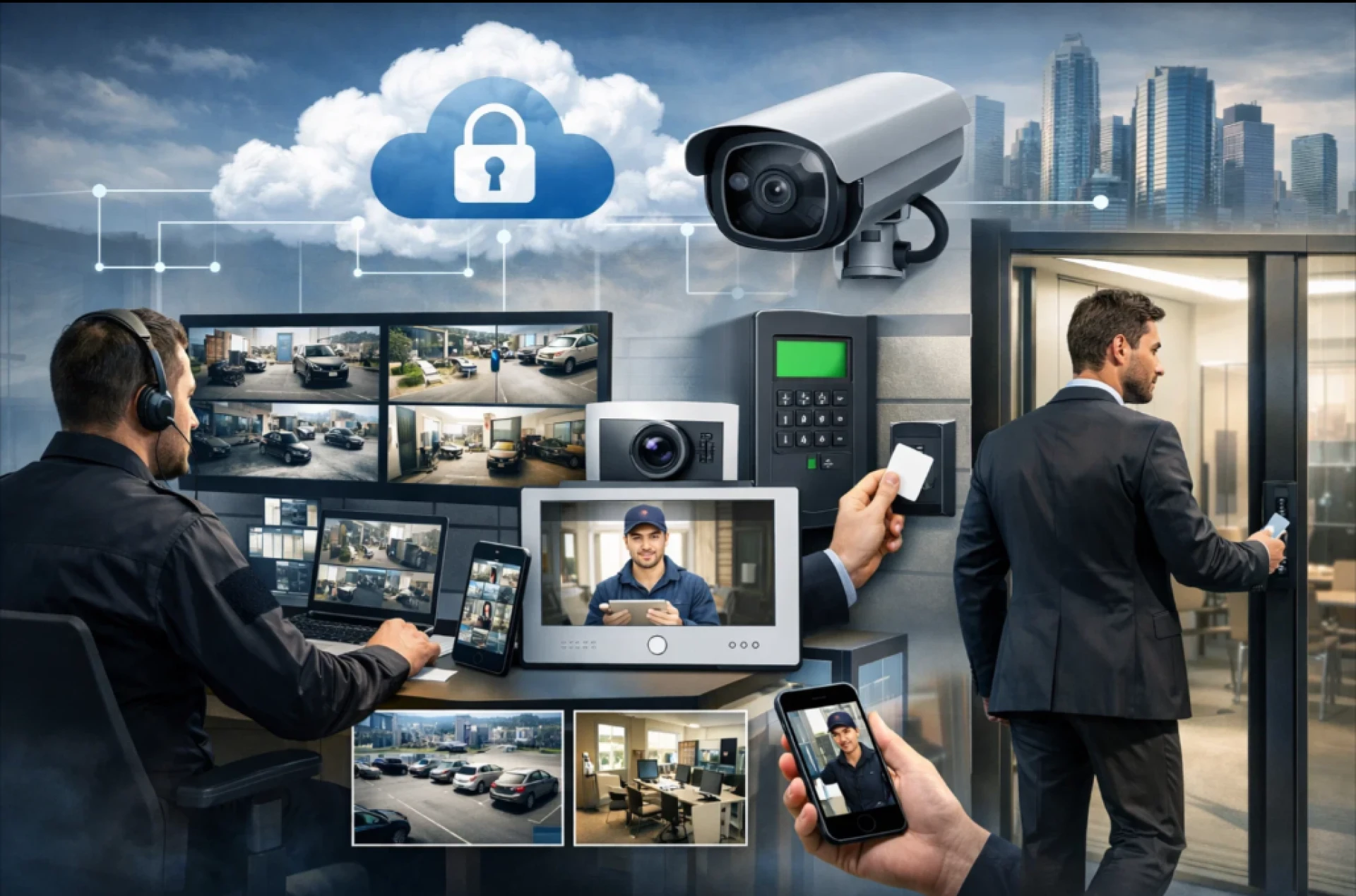

In today’s fast-paced world, security has become a top priority for businesses, hospitals, schools, and even homes. As the need for more efficient and streamlined security solutions grows, technology continues to evolve, offering smarter and more connected systems. One of the most innovative advancements in this field is the integration of cloud-based video surveillance with door control systems. This combination provides an all-encompassing security solution that not only offers real-time surveillance but also enhances access control, ensuring both safety and operational efficiency.
The integration of cloud video surveillance and door control is transforming the way organizations manage security. By centralizing security data in the cloud, businesses can access and control their systems from anywhere in the world, and they no longer need to rely on on-premises servers and costly infrastructure. In this article, we’ll explore how integrated cloud video surveillance and door control systems work, the benefits they offer, and why they are a game changer for security.
Understanding Integrated Cloud Video Surveillance and Door Control Systems
At its core, integrated cloud video surveillance and door control systems combine two distinct security technologies into one seamless, centralized platform. Let’s break down the two components:
Cloud Video Surveillance
Traditional video surveillance systems often rely on on-site servers to store and manage video feeds from cameras. These systems can be costly, and they often require significant maintenance and storage space. Cloud video surveillance, on the other hand, stores video footage in the cloud, providing businesses with a flexible, scalable, and secure method of managing their surveillance systems. Cloud-based systems allow for real-time streaming of video footage, remote access to footage archives, and automatic backups to prevent data loss.
Door Control Systems
Door control systems manage access to physical spaces within a building. These systems include hardware like card readers, keypads, biometric scanners, and electronic locks. With an integrated door control system, businesses can grant or deny access to specific areas based on predefined criteria, such as employee credentials or time-based restrictions. The integration of door control systems with cloud technology enables remote monitoring and control of doors from any device, as well as centralized reporting and auditing of access logs.
When these two systems—cloud video surveillance and door control—are integrated into one unified platform, organizations gain greater control, flexibility, and visibility over their security operations.
Benefits of Integrated Cloud Video Surveillance and Door Control Systems
1. Real-Time Monitoring and Immediate Response
One of the most significant advantages of cloud-based integrated systems is real-time monitoring. Security personnel can access video feeds from anywhere, anytime, and on any device, whether it’s a smartphone, tablet, or computer. This enables them to monitor entrances, exits, and other critical areas in real-time, ensuring they can respond immediately to any security threat or breach.
For instance, if a person tries to access a restricted area or a door is forced open, the system can trigger an alert, allowing security personnel to view the live footage and take appropriate action. This proactive approach to security reduces the risk of security breaches and ensures that security teams are always prepared.
2. Enhanced Access Control and Audit Trails
Integrating cloud-based door control systems with video surveillance provides an enhanced level of access control. With this integrated system, each entry point can be monitored both visually and electronically. If someone tries to use an unauthorized access card or biometric scan, the system can immediately lock the door and alert security staff, all while capturing video evidence of the incident.
Moreover, these systems maintain detailed access logs that record every time someone enters or exits a specific area. This not only improves security but also enables businesses to generate reports for auditing purposes. These logs can provide valuable insights into employee behavior, monitor high-traffic areas, and identify any security risks or patterns that may need addressing.
3. Scalability and Flexibility
As businesses grow, their security needs evolve. Traditional video surveillance and access control systems often require costly upgrades, installations, and maintenance. Cloud-based systems, however, offer scalability and flexibility that are difficult to achieve with on-site systems.
With integrated cloud video surveillance and door control systems, businesses can easily add new cameras, doors, or entry points to the system without significant disruptions. Adding new devices is typically as simple as plugging them into the network and configuring them through a cloud-based interface. This flexibility allows organizations to expand their security infrastructure in a cost-effective and efficient manner.
4. Cost-Effectiveness
A significant selling point of integrated cloud systems is their cost-effectiveness. Traditional security systems can be expensive to install, maintain, and upgrade. The cost of servers, storage, and software updates can add up over time, especially for large organizations with extensive security needs.
Cloud-based systems, however, eliminate the need for expensive on-site infrastructure. Video footage is stored and managed in the cloud, reducing the need for large physical storage devices and servers. Additionally, cloud providers handle software updates and system maintenance, freeing businesses from the costs and complexities associated with on-site maintenance.
5. Remote Access and Centralized Control
Remote access is a game-changer for businesses with multiple locations or organizations that operate around the clock. Security personnel can access the system from any location, allowing them to monitor and control the security system even when they’re not physically present at the facility.
Cloud-based systems also centralize all security operations in one platform. Businesses with multiple branches or facilities can manage video surveillance and access control across all locations from a single dashboard. This centralized control simplifies management and ensures consistency in security protocols across the organization.
6. Improved Data Security and Backup
Security systems generate vast amounts of data, from video footage to access logs. Storing this data on-site can be risky, especially in the event of a fire, flood, or equipment failure. Cloud-based video surveillance and door control systems, however, offer a more secure and reliable solution for data storage.
Cloud providers typically implement advanced encryption protocols and redundant storage solutions to ensure that security data is safe from cyber threats, data loss, or physical damage. Additionally, many cloud platforms offer automatic backups, ensuring that critical security footage is preserved and accessible, even in the event of a technical failure.
Use Cases for Integrated Cloud Video Surveillance and Door Control Systems
1. Corporate Offices and Enterprises
For large businesses with multiple offices, security is paramount. An integrated system allows companies to monitor entrances and exits across different locations, track employee access, and quickly respond to security breaches. Video surveillance can be linked to door control systems, ensuring only authorized personnel can enter sensitive areas, and capturing video evidence of any incidents.
2. Healthcare Facilities
Hospitals and healthcare facilities deal with sensitive information and high-risk environments. Integrated systems provide healthcare organizations with the ability to monitor patient areas, secure medication rooms, and track access to restricted zones like operating rooms or storage areas. Remote access also ensures that security staff can monitor these areas 24/7 without being on-site.
3. Educational Institutions
Schools and universities have large, diverse populations, making it crucial to manage access to buildings and monitor high-traffic areas like entrances, hallways, and classrooms. Integrated cloud systems help administrators manage security more efficiently, provide video footage for incident investigations, and ensure that only authorized personnel have access to specific areas.
The Future of Integrated Cloud Video Surveillance and Door Control Systems
As technology continues to advance, integrated cloud video surveillance and door control systems will become even more sophisticated. The adoption of artificial intelligence (AI) and machine learning algorithms will enable these systems to identify potential security threats and make automated decisions based on patterns and behaviors. AI-powered systems could analyze video footage in real-time, flagging suspicious activities, and even automatically locking doors or sending alerts without human intervention.
Furthermore, as IoT (Internet of Things) devices become more widespread, the integration of access control and video surveillance systems will expand to include a wider range of devices, creating a fully connected and smarter security environment.
Conclusion
The integration of cloud video surveillance and door control systems is undeniably a game changer for security. By combining the benefits of real-time monitoring, centralized control, enhanced access management, and cost savings, businesses, hospitals, schools, and other organizations can achieve a higher level of protection and operational efficiency. As technology continues to evolve, these systems will only become more powerful, offering even greater capabilities to protect people, property, and assets in an increasingly connected world.
Sign in to leave a comment.