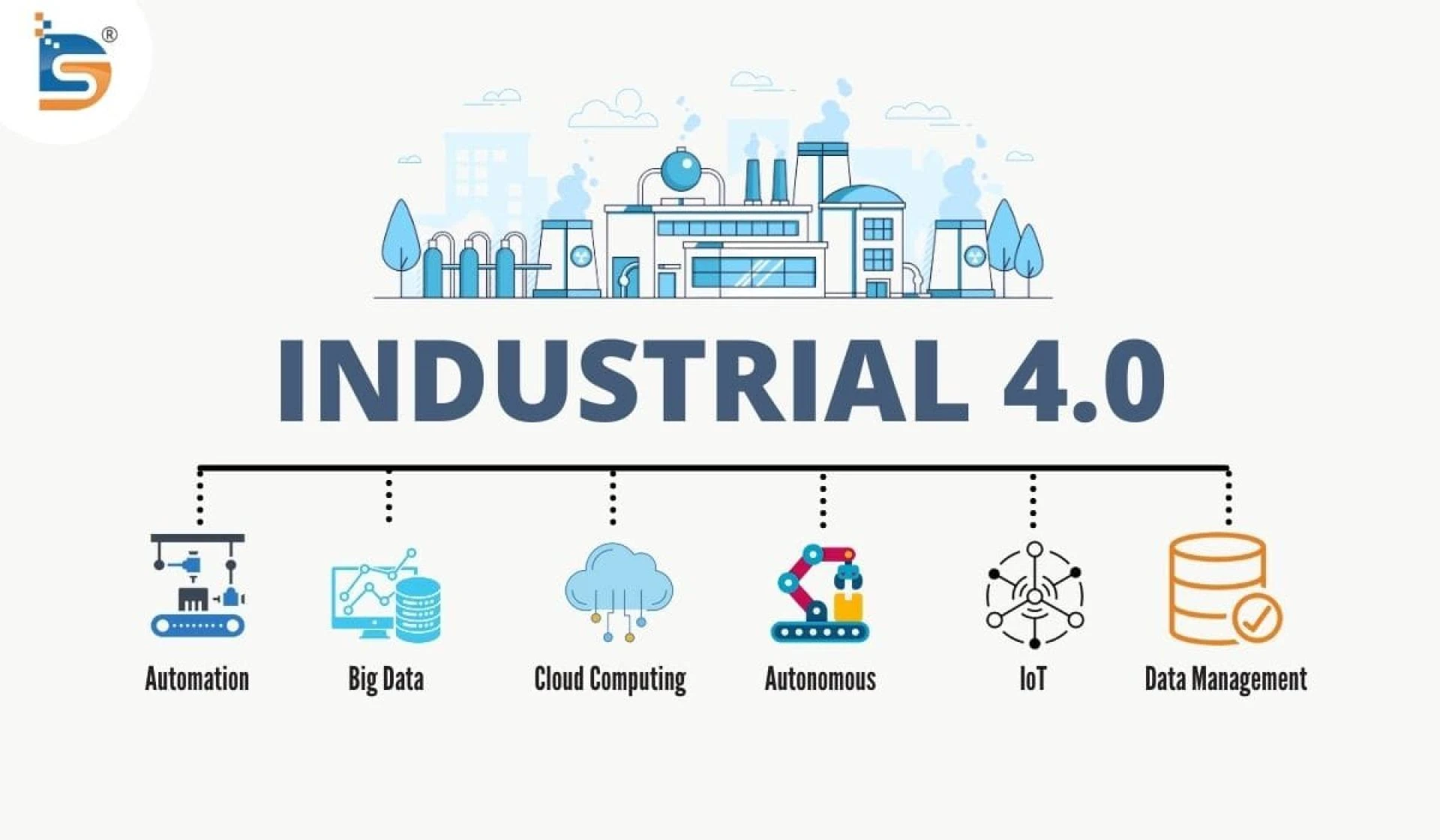

Today's industrial revolution, known as Industry 4.0, is becoming one of the most significant in human history. This has led to tremendous automation, communication, and industrial efficiency. Integrating big data and the Internet of Things (IoT) is fundamental to this revolution.
These sophisticated tools allow firms to monitor and collect data on machines and processes within their organization. This data can provide real-time operational insights to improve output and competitiveness.
This blog post will examine how Industry 4.0 is integrating big data and IoT and how this is affecting the present industrial landscape.
Industry 4.0 latest technology
1. The Internet of Things (IoT)
The Internet of Things (IoT) is the technology that provides the foundation for Industry 4.0. It enables connected devices to collect and share data, allowing remote monitoring, control, and analysis. Organizations can use this data to enable predictive maintenance, improve process visibility, and reduce energy consumption.
2. Big Data
Big Data is driving the Fourth Industrial Revolution’s ability to collect and analyze data from all of the different aspects of the manufacturing process. This helps to optimize processes and reduce costs.
3. Artificial Intelligence (AI)
Artificial intelligence (AI) and machine learning (ML) are rapidly advancing and are being utilized for a range of industrial applications, including quality assurance, predictive maintenance, product design, and supply chain optimization. AI and ML can provide deeper insights into data and help to identify trends faster than humans, allowing companies to make more informed decisions.
4. Cyber-Physical Systems (CPS)
Robots and other types of physical devices that connect to computers and interact with the physical environment are known as CPS. These are becoming increasingly pervasive in the industry today.
5. Cloud Computing
The cloud is the next evolution of technology that has changed the way businesses store and share data. It provides a secure, flexible platform for data storage, allowing businesses to access, update, and analyze data from anywhere. The cloud's scalability also allows organizations to quickly add or remove resources as needed.
Summary
Industry 4.0 is transforming the way businesses operate using modern technologies such as the Internet of Things, artificial intelligence, machine learning, and the cloud. These technologies are enabling businesses to become more efficient, cost-effective, and agile. As new technologies become available, Industry 4.0 will likely become even more advanced, providing new opportunities for businesses to grow and remain competitive.









Sign in to leave a comment.