

In 2025-2026, future pharmacists graduating out of the intern year encounter a key professional achievement:
The Intern Pharmacist Written Exam. This computer-based examination is open-book and evaluates core knowledge in the areas of pharmaceutical calculations, clinical decision-making, pharmacy law, counselling skills/knowledge of dosage forms and therapeutics/handling of therapeutic situations. Prudent planning, rather than relying on luck, will help you pass this exam and progress toward pharmacist registration.
Understanding the Exam Format and Content
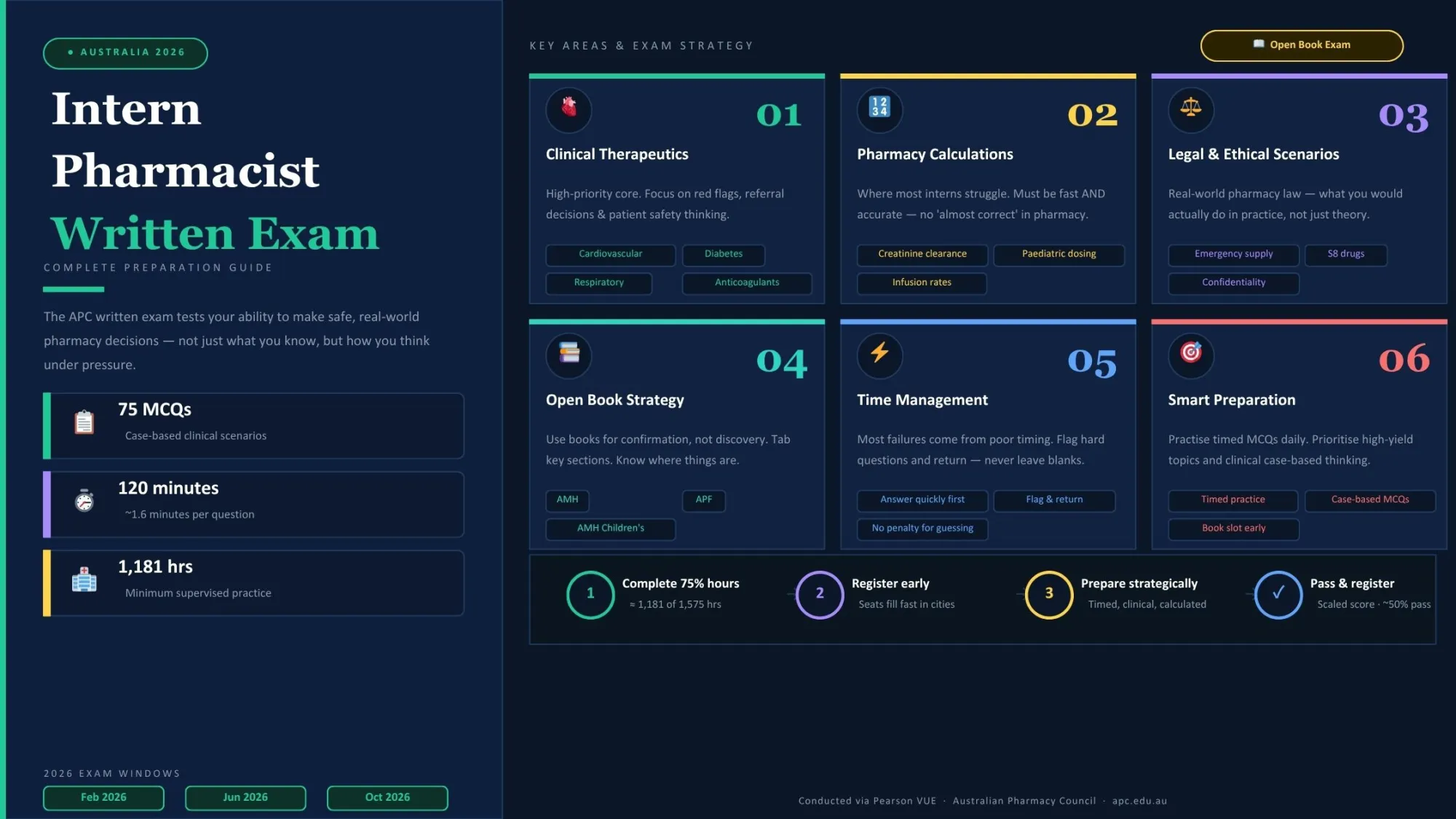
It is a two-hour exam: 75 multiple-choice questions, with around 67 scored and a handful of pilot items. I’m always amazed at the number of topics ranging from general to speciality pharmacy practice areas. These contents cover pharmaceutical calculations, patient education, dosage formulations, emergency first aid, pharmacy law and ethics and therapeutics, including chronic disease and acute management.
The candidates are required to sit the exam as a single period of time with printed/handwritten reference material such as the Australian Medicines Handbook (AMH) and Therapeutic Guidelines (TG).
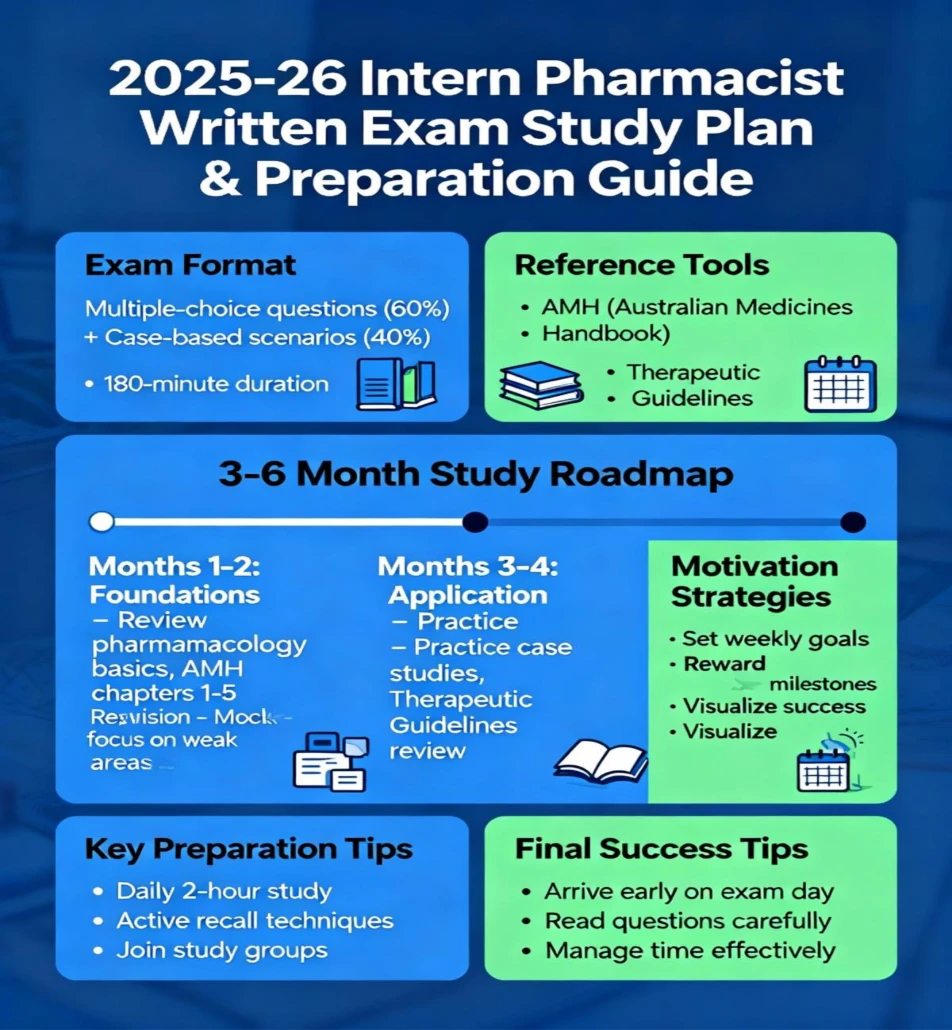
Crafting Your Study Plan: A Comprehensive 3-6 Month Roadmap
Effective preparation leads to a spread-out of 3 to 6 months, which allows you to cover all the vital points and revise them frequently.
Months 1-2: Build Strong Foundations
- Start by thoroughly covering pharmacy law, ethics and practice, professional standards, and the statutory requirements outlined in the guidelines provided by your Pharmacy Board.
- Then, dig into essential pharmacology principles — including how drugs work, drug formulations and preparations, and basic pharmacokinetics and pharmacodynamics.
- Get to know the structure of the exam and formats of questions through past official sample papers and APC guides.
- Build speed and accuracy around reference material – especially in cross-referencing drugs with AMH/Therapeutic Guidelines.
Months 3–4: Specific Clinical Training and Apply what you have learnt.
- Transition to clinical decision making, supported with case studies that simulate patient encounters and facilitating discussions.
- Focus on high-impact therapeutic areas, such as cardiovascular, respiratory, diabetes care, and emergency treatment protocols.
- Get good at navigating the AMH and Therapeutic Guidelines quickly, being able to find exactly the information that you need in minimal time.
- Participate in some study groups or learning circles to be able to engage with what you are learning and apply it.
Months 5-6: Revision and mock exams in solid doses.
- Simulate test conditions by taking timed full-length mock exams in order to build stamina and minimize your anxiety.
- Review the mock results and identify areas of weakness – revise on those topics with specific notes, Q&A with peers.
- Use spaced repetition with short notes for reference to reinforce what you have learned.
- Prepare exam strategy: Work out how to manage your time on each question and references.
Exam Tips for Success
- Reference mastery: The AMH and TG examinations are open-book. Fewer clicks to get where I need and faster information location are things all can speed up the process for you.
- Take exams under “test conditions”: time each practice session and try to restrict breaks so that you can build your stamina for the two-hour exam.
- Keep track: Mark important details in your reference books with a highlighter, tabs or even brief notes.
- Form a network: Connect with an online community, study group, or peers to exchange notes, talk about challenging questions, and stay inspired.
- Cope with stress: Use relaxation methods, including deep breathing or taking short physical activity breaks to manage anxiety while studying and on test day.
- Be consistent: Start by setting manageable daily, weekly and monthly goals to prevent the last-minute cramming and burnout.
Leveraging the Australian Medicines Handbook and Therapeutic Guidelines
The AMH & TGA are your best friends while studying for exams and during the exam. Concentrate on:
- These are lifesaving drugs, but you are a crazy man if you pop them without an inkling of knowledge regarding what’s on the bottle. Critical drug information, indications contraindications side effects included just some more common ones illustrations.
- Patient counselling and follow-up points should be memorised.
- Knowledge of dosing and drug schedules, legal limitations and pharmacy practice guidelines applicable to Australian standards.
- Practising using the index and search function to pull information quickly.
Community Insights and Motivation
Exam stress and information overload are the problems that most of the candidates suffer from. FWIW, Soylent Black made a good point about making your sessions more digestible and about high yield do everything and anything you can to remake the test with questions. Joining forums or study groups gives a sense of community and exchange of knowledge wherein you can ask questions to clear your doubts. You can maintain your spirits during exhausting preparation seasons by receiving weekly uplifting newsletters and testimonials from other candidates.
Final Words: Setting Yourself up for Success
To study for the Intern Pharmacist Written Exam in 2025-2026, you will need discipline, time management skills, and access to materials. When you have a systematic study approach, along with well-prepared content knowledge, hands-on applications, and intense review sessions, getting that passing score becomes so much easier. When combined with practice exams, peer support and familiarisation with key resources, including the AMH and Therapeutic Guidelines, your level of preparation and confidence can be enhanced. Maintaining focus and perseverance in your preparation brings you closer to achieving a successful career in pharmacy.





























Sign in to leave a comment.