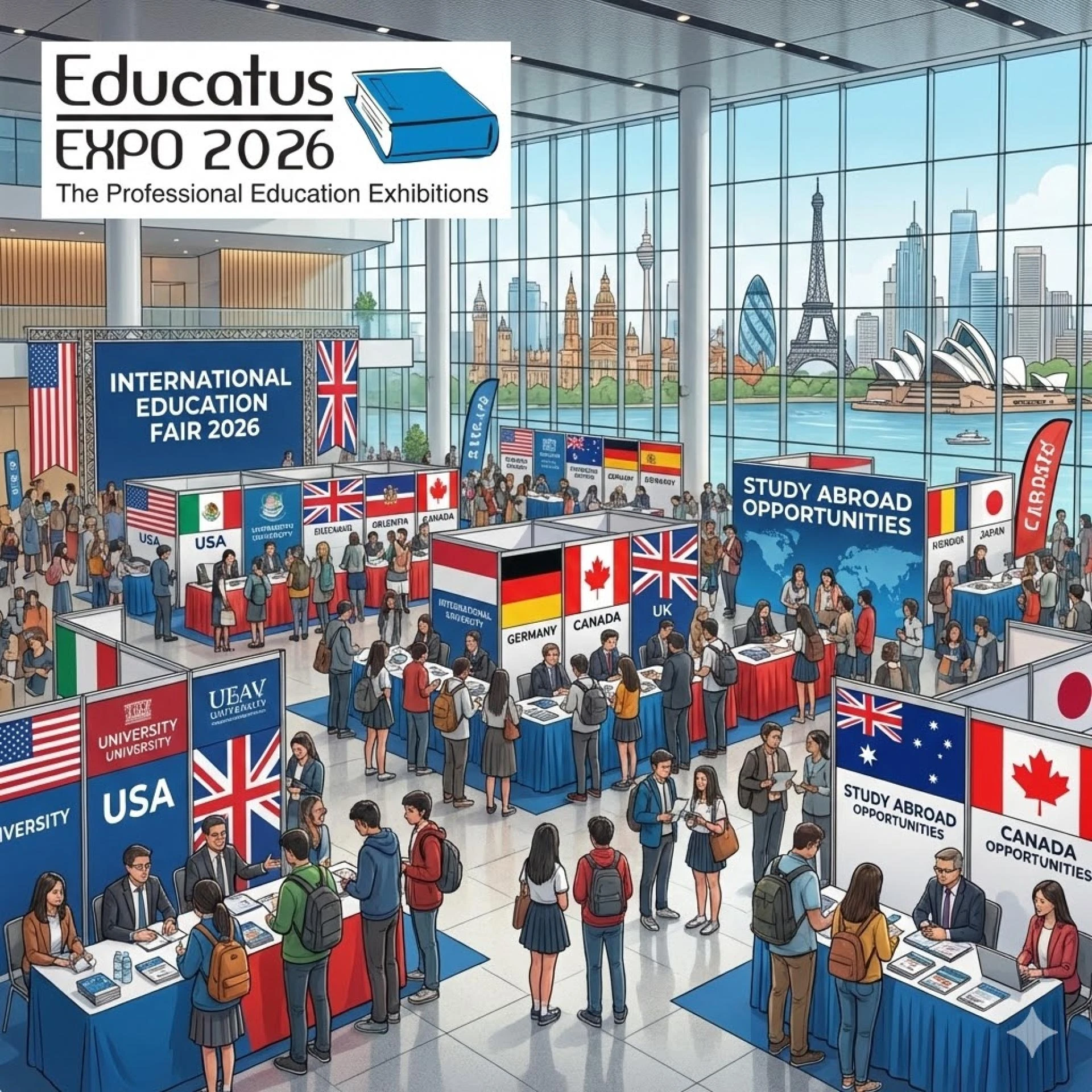

Students today don’t choose their education path on impulse. The majority of them take weeks to compare alternatives, read reports and attempt to comprehend what will indeed work for their future.
Recent discoveries by OECD Education at a Glance 2024 and UNESCO Education Update to 2025 reveal that students are increasingly basing their choices on practical outcomes, such as course relevance, career scope and institutional credibility, rather than mere names or rank. Yet having information does not necessarily imply being able to be clear. Students are more likely to have more questions than answers on online sources. It is in this regard that face to face academic platforms come into play.
An international education fair helps students turn scattered research into clear decisions by connecting them directly with international institutions and expert guidance.
What an International Education Fair Aims to Achieve
An international education fair is designed to bring together global universities, colleges and education representatives under one roof. Instead of relying solely on online research, students can interact directly with official representatives. These interactions help clarify doubts related to admissions, eligibility, tuition fees, scholarships and post study opportunities. More importantly, students can compare institutions across countries quickly, saving both effort and resources.
Such fairs are not only about collecting brochures. They are structured environments where students gain realistic insights into international education systems and expectations. This makes decision making more informed and less influenced by assumptions or hearsay.
How These Fairs Benefit Students at Different Stages
Whether a student is just beginning to consider studying abroad or is already preparing applications, an international education fair offers value at every stage. Early stage students can explore country options and understand academic pathways, while advanced applicants can seek guidance on documentation, timelines and interview preparation. Events such as a world education fair also allow students to compare multiple institutions and destinations in a single setting, making the exploration process more efficient and focused.
Some of the key advantages include -
- Direct access to university representatives for authentic information
- Clarity on course structure, credit systems and academic culture
- Guidance on scholarships, financial planning and living costs
- Counselling support for aligning education choices with career goals
In many cases, students attending such events discover programmes or institutions they had not previously considered, widening their perspective.
Why Counselling and Expert Guidance Matter
The selection of the appropriate study location and course is not only based on ranking and popularity; it must also be informed by a thorough understanding of the student's academic background, interests and future objectives. This is where counselling and expert guidance become especially valuable during education focused events, as they help students move from confusion to clarity.
- Personalised assessment of academic profiles, strengths and career aspirations
- Guidance on suitable countries, universities and courses based on eligibility
- Clear explanation of admission requirements, timelines and documentation
- Support with scholarship options, financial planning and budget expectations
Students usually become more confident with their decisions upon such discussions.
Preparing Students for Global Academic Life
Beyond admissions, an international education fair helps students mentally prepare for life abroad. These practical skills are essential because students’ performance abroad depends not only on classroom learning but also on how well they adapt to a new environment.
Students also get to get an exposure to how the alumni lived their lives, the campus facilities and internship opportunities that provide some real world dimension to their planning. This is a holistic approach in which students will not view international education as a degree but as a life experience.
Long Term Impact on Career and Confidence
Participating in a world education fair will greatly enhance a student's self esteem. Making the institutions speak directly eliminates any doubt and gives the students the strength to shape their future. Clarity gained from a single event usually reduces total decision making time and results in more focused applications.
Furthermore, informed choice will help students be more successful both in school and in their careers by preventing them from expecting what is beyond their reach. This plays a central role in long term career satisfaction and global employability.
Conclusion
The international education fair is a strong intermediary between students and international institutions, helping transform complex choices into systematic ones. These fairs provide direct contact, expert guidance and world exposure to help students move from dreaming to taking action. An international education fair is not an option but a strategic move in the international education market for anyone considering international education.










Sign in to leave a comment.