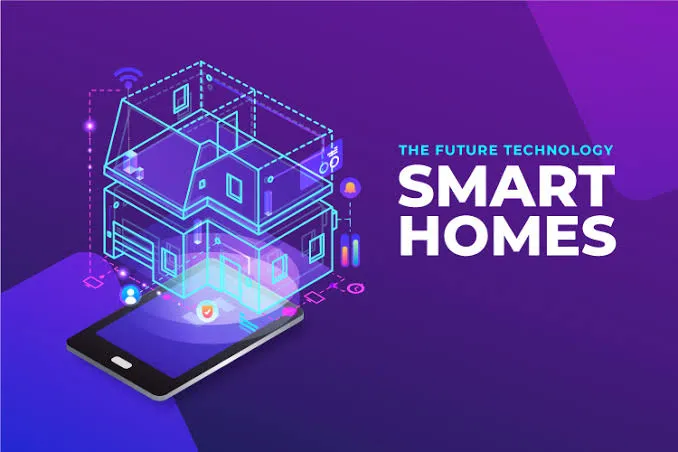

The Internet of Things has created an environment where physical devices can continuously observe their surroundings and generate digital information. Sensors embedded in machines, vehicles, buildings, agricultural equipment, wearable devices, and infrastructure can collect data about temperature, movement, pressure, location, energy consumption, and many other conditions. However, collecting information is only the first stage of an IoT system. The data must also be transmitted, organized, processed, analyzed, and transformed into useful insights. Therefore, effective data collection and processing techniques are essential for building reliable and valuable IoT applications.
IoT data collection begins with sensors and connected devices. Sensors convert physical conditions into digital measurements that can be interpreted by computers or other systems. Different applications require different types of sensors. A smart agriculture system may collect soil moisture and temperature information, while an industrial system may monitor machine vibration, pressure, and energy consumption. The quality and type of sensors directly influence the quality of the data produced by the IoT system.
Data collection does not always need to happen continuously. Some applications require constant monitoring, while others only need measurements at specific intervals. A temperature sensor in a warehouse might collect information every few minutes, whereas a security system may need to detect movement immediately. Choosing an appropriate collection frequency can help balance the need for accurate information with energy consumption, network traffic, and storage requirements.
Wireless communication plays an important role in transferring collected information. IoT devices can use technologies such as Wi-Fi, Bluetooth Low Energy, LoRaWAN, cellular networks, or other communication methods depending on the application's requirements. Short-range technologies may be suitable for smart homes, while long-range technologies can support agricultural or environmental monitoring. The communication technology selected can affect latency, energy consumption, reliability, and network coverage.
One important challenge in IoT data collection is the large volume of information generated by connected devices. A network containing thousands of sensors can produce massive amounts of data over time. Sending every measurement directly to a centralized cloud platform may create unnecessary network traffic and storage requirements. For this reason, organizations need effective methods for filtering and processing information before it reaches the central system.
Edge computing provides one approach to this challenge. Instead of sending all raw information to distant servers, edge devices can process data closer to where it is generated. For example, an industrial gateway could analyze sensor readings locally and transmit only important results to the cloud. This can reduce network traffic and allow systems to respond more quickly to critical events.
Data preprocessing is another important technique. Raw sensor information may contain errors, duplicate measurements, missing values, or unusual readings. Before data can be used for analysis, it may need to be cleaned and organized. Data preprocessing can include removing duplicate records, handling missing information, filtering noise, and converting measurements into consistent formats. These processes improve the reliability of subsequent analysis.
Data aggregation can also reduce unnecessary communication. Instead of sending every individual measurement, an IoT system can calculate summaries such as averages, minimum values, maximum values, or totals. For example, an environmental monitoring system could calculate the average temperature over a specific period and send the result instead of transmitting every individual sensor reading. This approach can save bandwidth and storage while still providing useful information.
Real-time processing is particularly important for applications that require immediate responses. In a smart factory, for example, a sensor may detect an abnormal machine condition that requires rapid intervention. A processing system can analyze the measurement as soon as it arrives and trigger an alert or automated response. Real-time processing can therefore support applications involving safety, industrial automation, security, and monitoring.
Batch processing provides a different approach. Instead of analyzing data immediately, information can be collected over a period and processed together. This method can be useful for applications where immediate responses are not necessary. For example, a company could analyze several weeks of energy consumption data to identify long-term patterns. Batch processing can be efficient for large datasets and complex analytical tasks.
Cloud computing is also an important part of IoT data processing. Cloud platforms provide storage and computing resources that can support large-scale IoT deployments. Organizations can store historical sensor data and use analytics tools to identify trends. Cloud systems can also provide dashboards that allow users to monitor devices remotely. However, relying entirely on cloud processing may introduce latency or increase communication costs, which is why cloud and edge computing are often used together.
Artificial intelligence and machine learning can transform IoT data into more advanced insights. Instead of simply displaying sensor measurements, machine learning algorithms can identify patterns, detect anomalies, and generate predictions. For example, an industrial system could analyze vibration data to estimate whether a machine may require maintenance. An agricultural system could analyze environmental measurements to identify conditions that may affect crop growth.
Data visualization is another important processing technique. Raw datasets can be difficult for users to interpret, particularly when thousands of measurements are involved. Dashboards, charts, maps, and interactive interfaces can present information in a more understandable format. A smart city operator, for example, could use a dashboard to observe traffic conditions, environmental measurements, and infrastructure status in one interface.
Security must also be considered throughout the data collection and processing process. IoT data can contain sensitive information about individuals, businesses, industrial processes, and physical infrastructure. Organizations need to protect information during collection, transmission, storage, and analysis. Encryption, authentication, access controls, and secure device configurations can reduce the risk of unauthorized access or data manipulation.
Efficient IoT data management creates opportunities for entrepreneurship. Businesses can develop platforms that collect information from connected devices and transform it into useful services. Entrepreneurs can create solutions for smart agriculture, industrial monitoring, logistics, healthcare, energy management, and environmental observation. The value of an IoT product often comes not simply from collecting data but from helping customers understand and act on that information.
Educational institutions can help develop the technical skills required for IoT data processing. Telkom University can provide students with opportunities to study sensors, networking, databases, cloud computing, artificial intelligence, and data analytics. IoT projects can combine these subjects and demonstrate how data moves from physical devices to digital applications. This interdisciplinary experience can prepare students for careers involving connected technologies and data-driven systems.
Practical experimentation is especially important when learning about IoT data processing. University laboratories can provide environments where students and researchers connect sensors to gateways, databases, cloud platforms, and analytical tools. They can experiment with different collection frequencies, data filtering techniques, processing architectures, and visualization methods. These experiments help demonstrate the practical trade-offs between accuracy, efficiency, energy consumption, and processing speed.
Scalability remains an important challenge. An IoT solution that works effectively with a small number of devices may encounter difficulties when expanded to thousands or millions of sensors. Data processing architectures must therefore be designed to accommodate growth. Automated data management, distributed processing, edge computing, and cloud infrastructure can help organizations handle larger IoT deployments.
The future of IoT data processing will likely involve increasingly intelligent and decentralized systems. Artificial intelligence can automate more analytical tasks, while edge computing can process information closer to its source. Advanced communication networks can improve the speed and reliability of data transmission. These developments can create IoT systems that not only collect information but also interpret it and respond automatically.
In conclusion, data collection and processing are fundamental components of successful IoT systems. Sensors provide the information needed to understand physical environments, while communication networks transfer that information to processing platforms. Techniques such as preprocessing, aggregation, edge computing, cloud processing, real-time analysis, machine learning, and visualization help transform raw measurements into useful insights. Through entrepreneurship, research, and hands-on experimentation in laboratories, institutions such as Telkom University can contribute to the development of innovative IoT data solutions. As connected devices continue to generate increasing amounts of information, effective data processing will become even more important for turning IoT technology into practical and intelligent applications.






















Sign in to leave a comment.