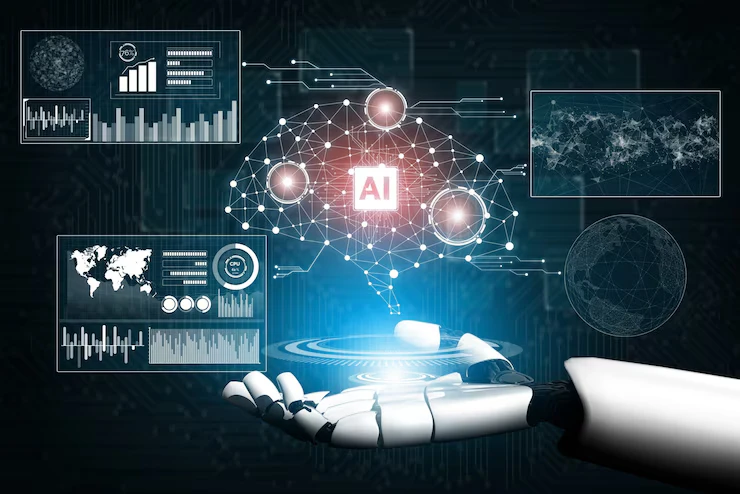

In an era dominated by rapid technological advancement, the question on every marketer’s mind is: Is AI the future of digital marketing jobs? The intersection of artificial intelligence (AI) and digital marketing services is redefining how businesses engage with customers, analyze data, and develop strategies that drive growth. As companies seek greater efficiency and personalization, AI is emerging as a game-changer—but what does this mean for the professionals behind the scenes?
The Evolution of Digital Marketing
Digital marketing has come a long way from simple banner ads and email campaigns. Today’s marketing landscape is complex, data-driven, and highly personalized. The evolution of consumer behavior, mobile usage, and e-commerce has led to the need for smarter tools and faster decision-making.
Enter AI.
AI technologies such as machine learning, natural language processing, and predictive analytics are reshaping the industry. From chatbots that enhance customer service to algorithms that personalize content, AI is increasingly integral to digital marketing services.
How AI is Revolutionizing Digital Marketing
1. Personalized User Experiences
AI allows marketers to create highly targeted campaigns based on user behavior, demographics, and interests. With tools like recommendation engines and dynamic content, brands can deliver personalized messages that resonate deeply with each customer.
2. Predictive Analytics
Predictive analytics powered by AI can forecast consumer behavior and marketing trends. This enables marketers to allocate resources more effectively and make data-driven decisions, ultimately leading to improved ROI.
3. Automated Customer Interactions
Chatbots and virtual assistants are transforming how brands communicate with customers. AI-powered tools can handle routine queries, provide product recommendations, and guide users through the sales funnel—24/7 and at scale.
4. Advanced Data Analysis
AI can process vast amounts of data in real time, offering insights that would take human analysts days or even weeks to uncover. This capability helps marketers understand campaign performance and customer behavior more accurately.
5. Content Creation and Curation
AI can assist in generating high-quality content, from blog posts to social media captions. Tools like GPT-based language models can create drafts, suggest headlines, and even tailor messages based on audience segmentation.
Implications for Digital Marketing Professionals
While AI brings numerous advantages, it also raises concerns about job displacement. However, the reality is more nuanced. Instead of replacing marketers, AI is transforming their roles.
1. Focus on Strategy and Creativity
As AI takes over repetitive and time-consuming tasks, marketers can concentrate on strategic planning, creative storytelling, and brand development. Human intuition and emotional intelligence remain irreplaceable.
2. Demand for New Skill Sets
Professionals in digital marketing services must adapt to stay relevant. Skills in data analysis, AI tool management, and marketing automation are becoming essential. Continuous learning and upskilling are critical.
3. Collaboration with AI
The future of marketing is collaborative—humans and AI working together. Marketers who can effectively harness AI tools to enhance their work will be in high demand.
Role of Software Companies in AI-Driven Marketing
The rise of AI in marketing is closely tied to innovations from software companies. These firms are developing the platforms and tools that make AI accessible to marketers across industries. From CRM systems enhanced by machine learning to AI-driven SEO tools, software companies play a pivotal role in driving digital transformation.
Semantic SEO and AI
Semantic SEO is about understanding and matching the intent behind a user’s search query, rather than focusing solely on keywords. AI significantly enhances this capability by:
- Analyzing user behavior: Understanding the context in which queries are made.
- Improving content relevance: Helping marketers create content that answers specific questions.
- Enhancing voice search: With AI, marketers can optimize content for natural language queries.
By integrating semantic SEO techniques, marketers can improve their search visibility while providing genuine value to their audience.
Challenges and Ethical Considerations
Despite its benefits, the integration of AI in digital marketing raises several challenges:
- Data Privacy: Marketers must ensure compliance with data protection regulations like GDPR and CCPA.
- Bias in Algorithms: AI systems can inadvertently reflect biases present in their training data.
- Transparency: It’s crucial to maintain transparency in how AI tools are used, especially in customer interactions.
Addressing these issues is essential to build trust and uphold the integrity of marketing practices.
Future Outlook: A Hybrid Workforce
The future of digital marketing will likely feature a hybrid workforce, where humans and machines collaborate seamlessly. AI will continue to handle data-heavy, repetitive tasks, while human marketers will bring strategic insight, emotional intelligence, and creative flair.
Education systems and professional training programs must evolve to prepare the next generation of marketers for this reality. Embracing a growth mindset and being open to change will be key.
Final Thoughts
So, is AI the future of digital marketing jobs? The answer is a resounding yes—but not in the way many fear. AI is not here to replace marketers, but to empower them. By leveraging the strengths of both human creativity and machine intelligence, businesses can deliver superior digital marketing services that are more effective, efficient, and engaging.
Professionals who embrace AI as a partner rather than a threat will not only future-proof their careers but also redefine what it means to be a digital marketer in the 21st century.












Sign in to leave a comment.