

August is not when termites swarm in Columbus, but it may be one of the appropriate months to book an inspection anyway. Ohio's eastern subterranean termites take flight between March and June, after a warm rain.
By the time summer heat sets in, those colonies are underground, feeding nonstop while homeowners are focused on cookouts instead of pest control.
When Do Termites Actually Swarm in Columbus?
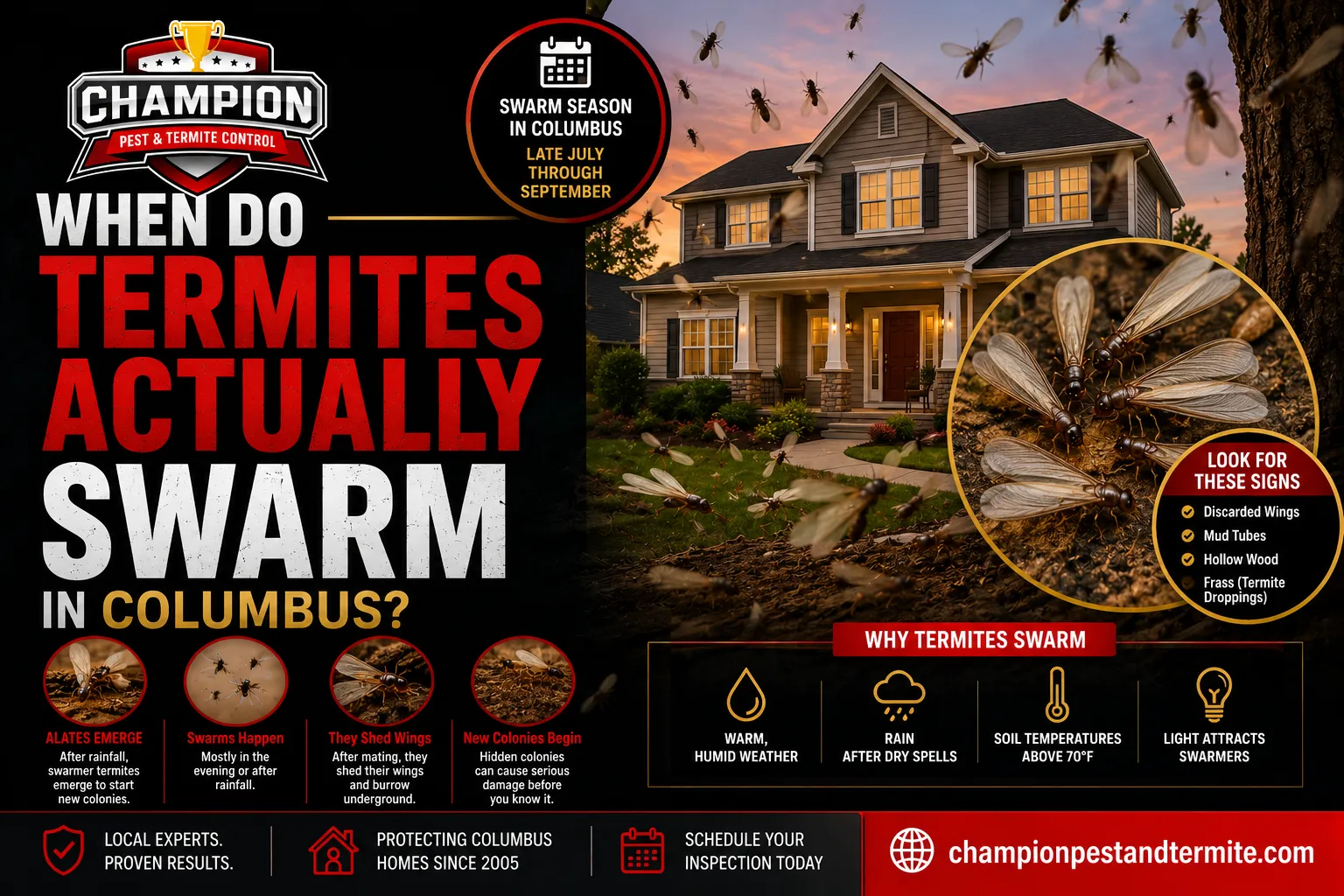
Ohio State University Extension research points to spring and early summer as the active swarm window for eastern subterranean termites, the species responsible for nearly all termite activity in Central Ohio. Winged termites, called alates, emerge on warm afternoons after rainfall and often end up near windows or light fixtures. Knowing how to find termites starts with recognizing this seasonal pattern, since a swarm is usually the first visible sign a colony already exists nearby.
Why August Still Deserves Your Attention

Once the spring swarm passes, the colony keeps working. Warm, moist Ohio soil keeps worker termites feeding through summer, and August is when homeowners tackle yard projects, mulching, deck repairs, and foundation beds that create new wood-to-soil contact. A colony also takes more than five years to grow large enough to cause visible damage, so an inspection by professional exterminators in Columbus, Ohio, now can catch a problem that started with a swarm you never saw.
How to Identify Termite Damage Before It Spreads
Learning how to identify termite damage early can save thousands in repairs. Watch for pencil-width mud tubes along the foundation or crawl space walls, wood that sounds hollow when tapped, discarded wings near windowsills, and doors or floors that suddenly stick. None of these signs are major issues on their own, which is exactly why routine inspections matter more than waiting for visible damage.
Expert Insight:
Termite damage rarely shows up overnight, and that is what makes it expensive. Here is what the data shows about how the risk builds year over year.
| Data Point | Figure |
| Annual termite damage nationwide | About $6.8 billion (National Pest Management Association) |
| Average repair cost per affected home | About $3,000 (Orkin) |
| U.S. homes damaged by termites each year | Roughly 600,000 |
| Time for a colony to cause visible damage | Typically, 5+ years |
| Ohio subterranean termite swarm season | March through June (Ohio State University Extension) |
| Recommended inspection frequency | At least once a year |
Finding Reliable Exterminators in Columbus, Ohio

Not every pest control company treats termite prevention the same way. If you have started searching for “termite pest control near me,” or “pest control services near me” after noticing mud tubes on your Columbus home, look for a provider that inspects before recommending treatment. A pest control service that homeowners can count on should include a written inspection report, not just a verbal estimate.
Protect Your Home Beyond Termites

Termites are not the only seasonal concern in August. Standing water from summer storms can turn a backyard into a mosquito breeding ground within days. Many Columbus homeowners searching for “mosquito control near me” this time of year are dealing with both problems at once, which is why combined pest and termite plans often make more sense than treating each issue separately.
Conclusion
August is not termite swarm season in Columbus, but the colonies that swarmed in spring are still active underground, and the damage they cause builds quietly for years before it becomes obvious. A late-summer inspection is less about catching a swarm and more about catching a problem early, while repairs are still simple and inexpensive.
If you are ready to have a professional take a look, Champion Pest & Termite Control offers customizable pest control in Columbus, from termite plans to as-needed treatment for mosquitoes and other seasonal invaders, built around your home rather than a one-size-fits-all package.
Frequently Asked Questions
How often are you supposed to check for termites in a year?
Most pest control professionals recommend at least one termite inspection per year, even without visible signs. Homes near wood piles, mulch beds, or areas with past moisture issues may benefit from checking twice a year.
Do termites stay active during Ohio summers?
Yes. Swarming ends by early summer, but the colony itself keeps feeding underground through the warmer months, since termites do not hibernate the way, some other pests do.
Does homeowners’ insurance cover termite damage?
Usually not. Most standard homeowners’ insurance policies classify termite damage as a preventable maintenance issue, which is one reason regular inspections are worth the time.



























Sign in to leave a comment.