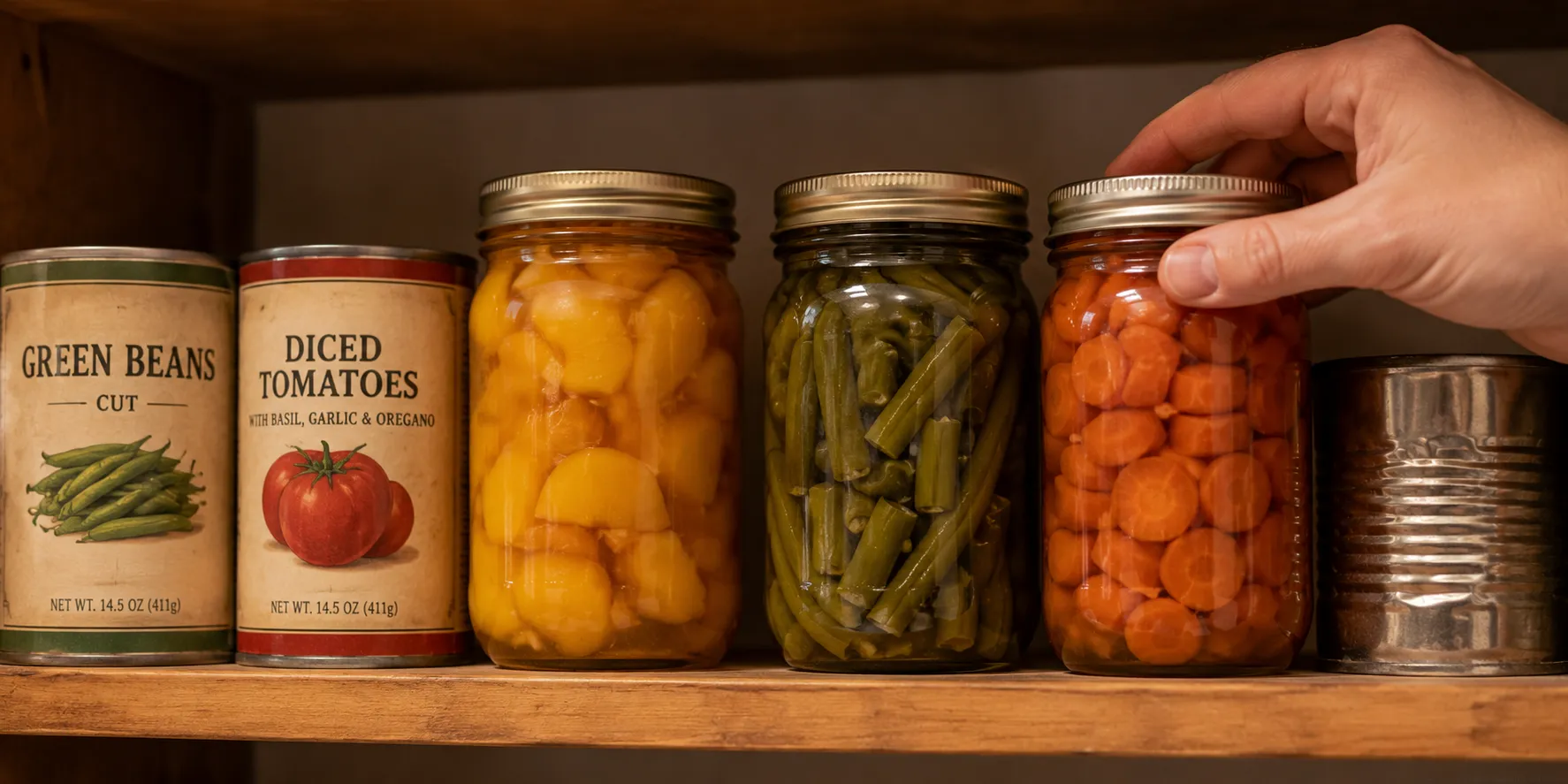

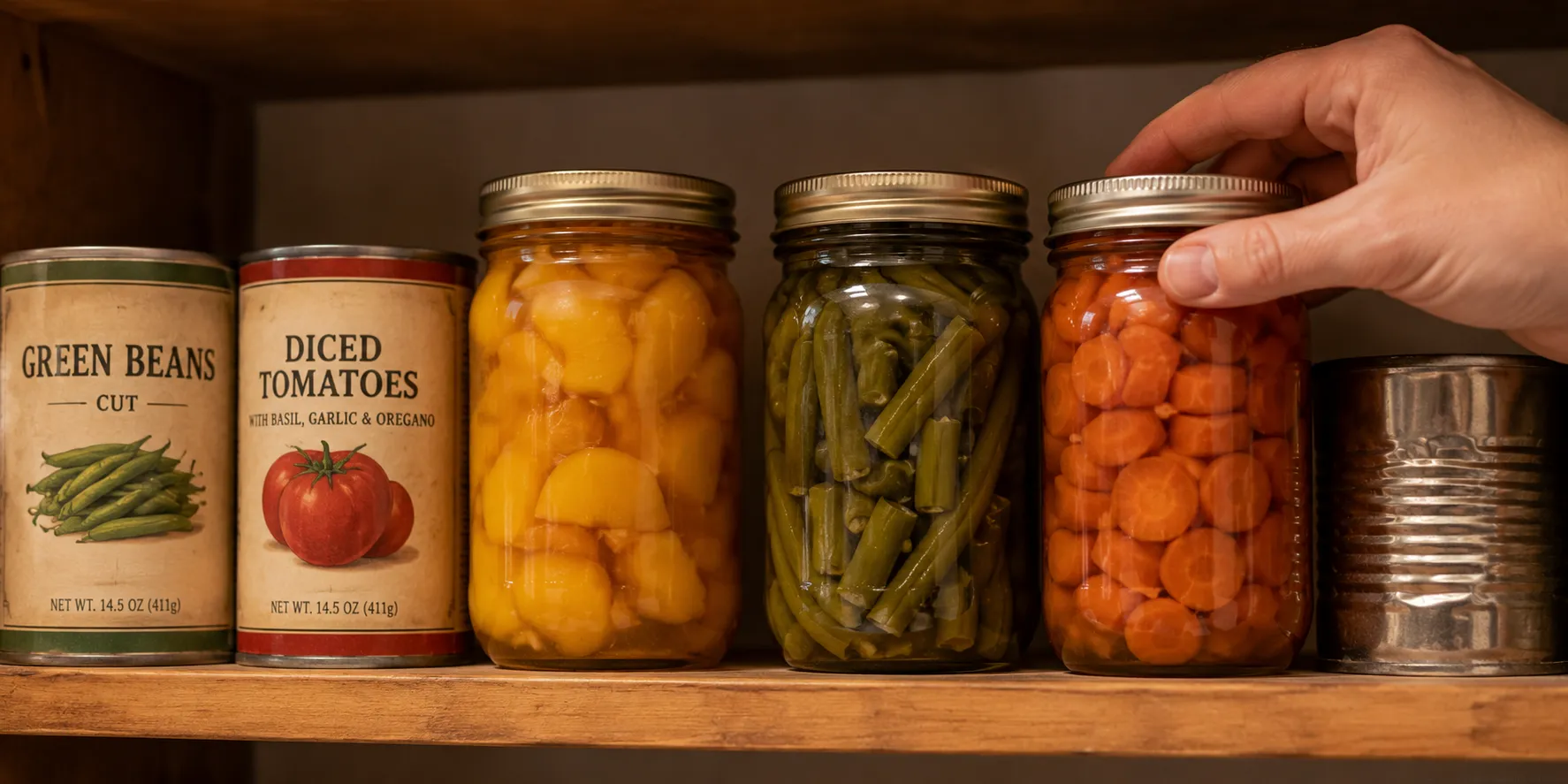
Most households have canned food sitting in a pantry that nobody has looked at closely in months, sometimes years. A dented can here, a forgotten jar from last summer's canning session there, a commercial tin with a best-by date that passed two years ago. The question of whether that food is still safe to eat is one worth answering clearly, because the consequences of getting it wrong range from a wasted meal to a genuine medical emergency.
The short answer is: most canned food stays safe well past its printed date, but there are specific conditions that make a can unsafe regardless of age. Knowing the difference between a cosmetic issue and a real danger is the practical skill that matters here.
How Canning Preserves Food
Commercial and home canning work on the same principle: food is sealed in an airtight container and heated to a temperature high enough to destroy the microorganisms that cause spoilage and illness. The vacuum seal created during cooling prevents new contamination from entering. As long as that seal remains intact and the container is undamaged, the food inside is protected. The USDA Food Safety and Inspection Service confirms that commercially canned food stored in good condition is safe indefinitely, with quality declining over time but safety remaining intact.
The threats to canned food safety are not primarily about time. They are about physical damage to the container, failure of the seal, improper home canning technique, and specific pathogens that can survive standard processing under the wrong conditions.
The Dangers You Actually Need to Know About
Botulism is the reason canned food safety deserves serious attention. Clostridium botulinum is a bacterium that produces one of the most potent toxins known. It thrives in low-acid, anaerobic (oxygen-free) environments, which describes the interior of a sealed can perfectly. Unlike most spoilage organisms, C. botulinum does not always produce visible signs: no obvious mold, no foul smell, no discoloration in many cases. A can of green beans or low-acid tomatoes processed incorrectly can harbor botulinum toxin with no outward warning.
Botulism from commercially canned food is extremely rare due to strict industrial processing controls. Home-canned low-acid vegetables, meats, and fish carry a meaningfully higher risk when proper technique is not followed. The Centers for Disease Control and Prevention reports that home-canned vegetables are the most common source of foodborne botulism outbreaks in the United States.
The practical implication: commercial cans with intact seals and no physical damage are low risk. Home-canned low-acid foods processed without a pressure canner warrant genuine caution.
Physical Signs That a Can Is Unsafe
Inspect every can before opening it. These are the specific warning signs that indicate a can should be discarded without tasting:
- Bulging lids or ends: Pressure inside the can from gas-producing bacteria is a serious red flag. A bulging commercial can should never be opened. A home-canned jar with a raised or flexing lid has lost its seal and should be discarded.
- Spurting liquid on opening: If liquid sprays out when you open a can or jar, bacterial fermentation has been occurring inside. Do not taste the contents.
- Deep dents on seams: A dent along the side seam or top/bottom seam of a commercial can may have compromised the can's integrity, allowing contamination to enter. Side-body dents that do not involve a seam are generally cosmetic and not a safety concern.
- Rust that has penetrated the metal: Surface rust can be wiped off. Rust that has pitted through the can wall is a different matter and should prompt discarding.
- Off smell on opening: Spoiled canned food often produces a sour, rotten, or simply wrong odor when opened. Trust your nose. If something smells off, do not taste it to investigate further.
- Mold inside the jar: Visible mold in a home-canned product means the seal failed at some point. Discard the entire contents without tasting.
- Home-canned lid that flexes or pops: A properly sealed mason jar lid should be concave and firm. If the center flexes up and down when pressed, the seal is gone.
What About Expired Canned Food?
Best-by and use-by dates on commercial canned goods are quality indicators, not safety cutoffs. They reflect the manufacturer's estimate of when the product is at peak flavor and texture, not the point at which the food becomes dangerous. The USDA's position is that commercially canned food with intact seals stored in a cool, dry location remains safe to eat indefinitely, though quality degrades over time.
In practical terms: a can of tomatoes two years past its best-by date that has no dents, no rust, no bulging, and a secure seal is almost certainly safe to eat. The texture may be softer and the flavor may be flatter than a fresh can, but there is no safety issue. High-acid foods like tomatoes and citrus products may show more quality degradation over time than low-acid foods like beans or vegetables in brine.
The exception is home-canned food, which does not carry commercially validated processing data behind it. Most home canners follow reliable guidelines, but without industrial quality controls, the margin for processing error is higher. Home-canned food is generally recommended for use within one to two years, not primarily for safety reasons but because quality declines and the risk of undetected seal failure increases with time.
When to Throw It Out Without Debate
Some situations are clear-cut. Discard any canned food that shows bulging, spurting, deep seam dents, or penetrating rust without further evaluation. Never taste-test a suspect can to decide whether it is safe. Botulinum toxin is active in quantities too small to detect by taste, and even a small amount can cause serious illness. If you are discarding a can you suspect may contain botulinum contamination, seal it in a heavy plastic bag before placing it in the trash, and wash your hands thoroughly after handling it.
Storing Canned Food to Maximize Safety and Shelf Life
Storage conditions directly affect how long canned food stays safe and palatable. The ideal environment is cool (between 50 and 70 degrees F), dry, and dark. Heat accelerates the chemical changes that degrade quality and can stress can seals over time. Humidity promotes rust. According to guidance from the National Center for Home Food Preservation, canned goods stored above 95 degrees F for extended periods can degrade significantly faster, with lid seals on home-canned goods being particularly vulnerable to heat stress.
Keep canned goods off concrete floors (which can transfer moisture and accelerate rust on metal cans) and away from pipes, appliances, or exterior walls that fluctuate in temperature. Rotate stock on a first-in, first-out basis so older cans get used before newer purchases.
The Bottom Line
Canned food is one of the most reliably safe preserved food formats available, commercially or at home. The danger is not primarily age but physical damage, seal failure, and improper processing. Inspect every can before opening, discard anything with a compromised seal or container, never taste-test a suspect product, and store your supply in a cool and dry location. Follow those rules consistently and canned food will serve you well, whether it is a can from last week or one that has been sitting in the back of the pantry for the past three years.

























Sign in to leave a comment.