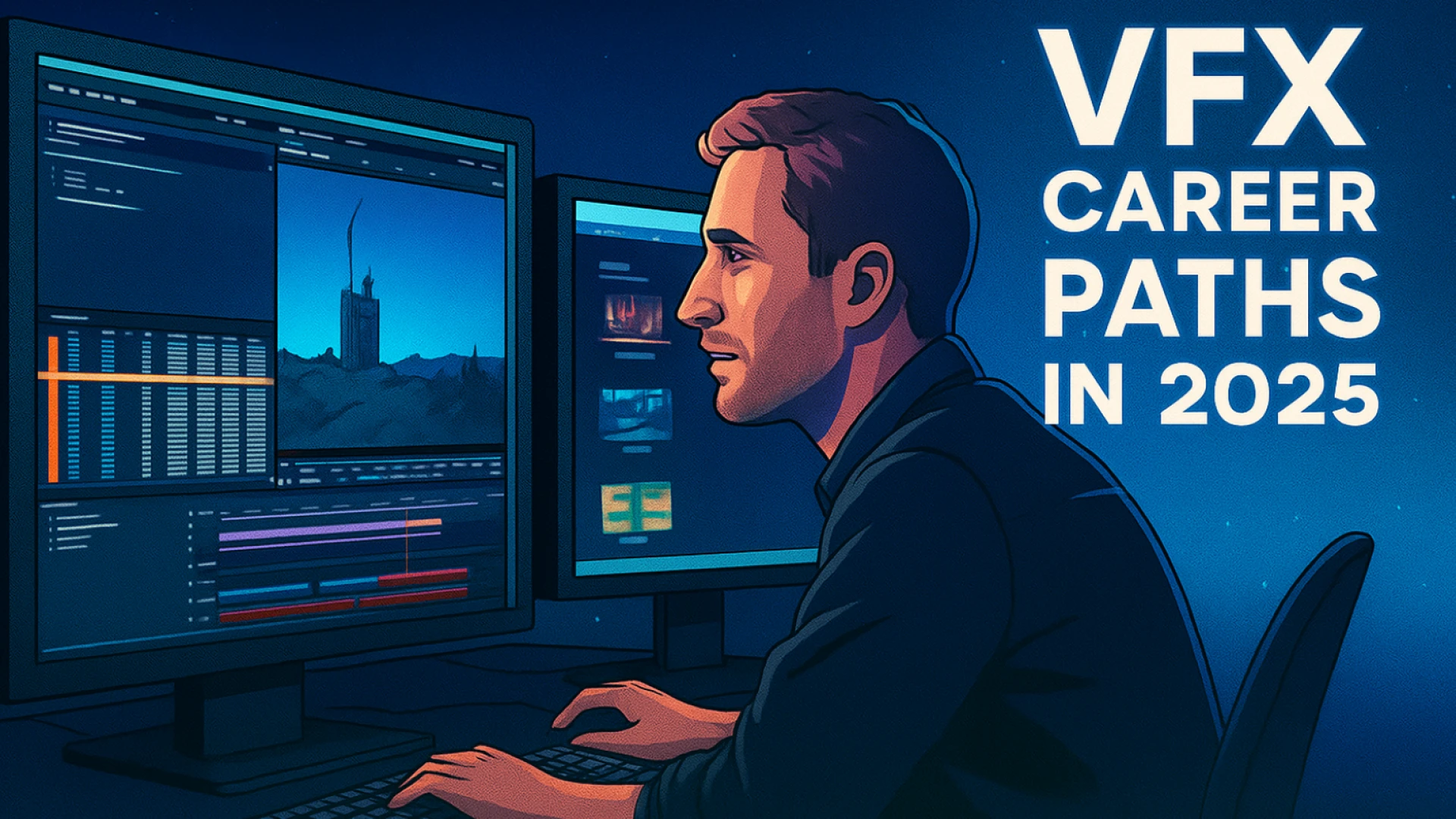

Have you ever watched a blockbuster movie or a jaw-dropping ad and wondered how all those stunning visuals came to life? That’s the magic of VFX (Visual Effects). With OTT platforms, gaming, and advertisements booming, VFX isn’t just about Hollywood spectacles anymore—it’s a career opportunity that’s growing faster than ever.
But here’s the real question: Is VFX a stable, well-paying career in 2025? Many aspiring artists dive in without understanding the realities—long hours, tight deadlines, and fierce competition. In this guide, we’ll give you the honest truth about VFX jobs, salary, and career growth, and show you how choosing the best VFX course in India can change your life.
Why VFX Could Be Your Dream Career
Let’s get one thing straight: VFX isn’t just a “fun job.” It’s a high-skill, highly creative profession where art meets technology. From designing realistic explosions to creating digital worlds, VFX artists literally bring imagination to life.
Why the industry is booming in 2025:
- The global VFX market is expected to reach $28 billion by 2027, thanks to streaming platforms, virtual production, and gaming.
- India is a major hub for VFX outsourcing, with studios in Mumbai, Bangalore, and Hyderabad producing world-class content.
- Careers aren’t limited to movies—you can work in advertising, gaming, AR/VR projects, or even the metaverse.
Key VFX roles you can pursue:
- Compositor: Combines live-action footage with digital elements.
- 3D Modeler: Creates characters, props, and environments.
- FX Artist: Designs explosions, fire, smoke, and water simulations.
- Lighting & Texture Artist: Adds realism and depth to digital creations.
VFX rewards skill and creativity over anything else. If you have a sharp eye for detail and patience for perfection, this can be a highly fulfilling career.
Picking the Right VFX Course: Diploma, Certification & Hands-On Training
Jumping into VFX without proper training is like trying to build a skyscraper with a hammer. Choosing the best VFX course in India is critical to kickstart your career.
What to look for in a VFX course:
- Software expertise: Programs must cover Maya, Houdini, Nuke, and After Effects.
- Hands-on projects: Your portfolio is your golden ticket; the more projects, the better.
- Certification & credibility: A recognized VFX diploma with certification adds weight when applying to studios.
Course duration & fees:
- Diplomas: Typically 6 months to 1 year.
- Advanced courses: Can extend up to 2 years, ideal for deep specialization.
- Fees: Usually range from ₹1 lakh to ₹3 lakh, depending on the institute and course quality.
Pro Tip: Before enrolling, check alumni success stories, portfolio support, and access to software. Real industry exposure matters far more than theory.
Jobs and Salary: What You Can Actually Earn
One of the most common concerns: “Will I make money in VFX?” The honest answer is yes—but it depends heavily on your skills, experience, and niche.
Entry-level salaries in India:
- Junior artists earn ₹15,000–₹35,000 per month.
- Freelancing can supplement income while building experience.
Mid-level and senior roles:
- Experienced artists can earn ₹50,000–₹1,00,000 per month.
- International projects or senior VFX supervisors can earn $40,000–$80,000 per year.
Factors that affect salary:
- Software mastery and certifications.
- Quality of your demo reel and portfolio.
- Studio reputation and project complexity.
Key takeaway: In VFX, your portfolio is your currency. The better your work, the higher the demand—and the pay.
The Future of VFX Careers in 2025
Here’s the exciting part: VFX isn’t slowing down anytime soon. New technologies are changing the game.
- AI and automation: Tools are taking over repetitive tasks, freeing artists for creative problem-solving.
- Virtual production & Metaverse: Entire new industries are emerging that need skilled VFX artists.
- Remote opportunities: Cloud-based software allows global collaboration without moving abroad.
Expert advice: Constantly upgrade your skills, diversify into gaming, AR/VR, or advertising, and maintain a strong online portfolio. Artists who adapt survive—and thrive.
Conclusion
VFX is no longer a niche field—it’s a career of the future for those willing to work hard, learn the right skills, and stay updated. By choosing the best VFX course in India, pursuing a VFX diploma with certification, and building an impressive portfolio, you can secure not just a job, but a long-term, rewarding career.
2025 is a pivotal year for VFX, and if you’re ready to commit, this industry can offer both creative fulfillment and financial stability. Remember: talent opens doors, but skill and persistence keep you in the room.
FAQs
Q1: Is VFX a good career choice in India?
Yes. With the rise of OTT platforms, gaming, and advertising, VFX offers a variety of career paths with growth potential.
Q2: How much do VFX artists earn in India?
Entry-level artists earn ₹15,000–₹35,000/month, while experienced professionals can earn ₹50,000–₹1,00,000 or more.
Q3: How long does a VFX diploma or certification take?
Diplomas typically last 6–12 months, while advanced courses may extend to 2 years for deeper specialization.
Q4: Which skills are essential for VFX careers?
Mastering Maya, Nuke, Houdini, and After Effects, along with creativity, attention to detail, and a strong portfolio.
Q5: Can VFX skills be used for freelancing?
Absolutely. Many artists work remotely on international projects, gaining experience and increasing income.







Sign in to leave a comment.