

When boutique owners think about improving sales, they usually focus on adding new products, planning the next collection, or increasing their advertising budget. While these are all important, there's another problem that often goes unnoticed. Many potential customers leave a boutique before they ever take a serious look at what it has to offer.
This doesn't happen because your products aren't good enough. It happens because something about the experience makes people lose interest too early. Maybe your website feels confusing, your branding isn't clear, or visitors simply don't understand why they should keep browsing. Whatever the reason, those first few moments on your website have a bigger impact than many boutique owners realize.
Businesses that understand this often work with a Boutique marketing agency to improve the entire customer journey, not just the marketing that brings people to the site. Getting visitors is only half the challenge. Keeping them engaged is what leads to consistent growth.
Customers Decide Faster Than You Expect
Online shoppers make quick decisions.
Within seconds, they're asking themselves questions like:
- Does this boutique look professional?
- Can I quickly find what I'm looking for?
- Do these products match my style?
- Does this brand feel trustworthy?
If the answer to any of those questions is unclear, many visitors will leave without exploring further.
Your website doesn't need to impress everyone. It simply needs to reassure the right customers that they're in the right place.
Your Homepage Should Guide, Not Overwhelm
Many boutique homepages try to promote everything at once.
Visitors are greeted with multiple banners, several promotions, pop-ups, featured collections, social media feeds, and dozens of products competing for attention.
Instead of making shopping easier, this often creates confusion.
A better homepage focuses on helping customers understand where to go next. Highlight your newest collection, showcase your best-selling products, and make navigation simple enough that visitors never feel lost.
When customers know what to do next, they're far more likely to continue browsing.
Confusing Navigation Costs Sales
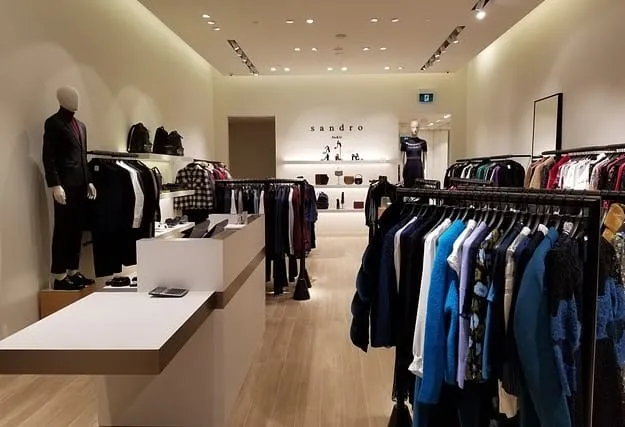
Imagine entering a physical boutique where nothing is organized.
Accessories are mixed with dresses.
Seasonal items are scattered across the store.
There are no signs to help you find anything.
Most shoppers wouldn't stay very long.
The same applies to your online boutique.
Clear categories, useful filters, and logical menus allow customers to explore your products without frustration. Good navigation doesn't just improve the shopping experience. It also increases the number of products customers discover during each visit.
Product Pages Should Build Confidence
Once a customer clicks on a product, your job shifts from attracting attention to answering questions.
Strong product pages should include:
- Multiple high-quality images.
- Accurate sizing information.
- Fabric and material details.
- Care instructions.
- Shipping information.
- Customer reviews whenever possible.
The purpose isn't simply to describe the product. It's to remove every reasonable concern that could prevent someone from buying.
The more confident customers feel, the less likely they are to leave your website to keep comparing other boutiques.
Every Click Should Feel Effortless
Customers shouldn't have to work hard to shop.
If finding products takes too long, filters don't function properly, or pages load slowly, frustration begins to build.
Small inconveniences may seem harmless on their own, but together they create enough friction to encourage visitors to leave.
Review your website regularly from the perspective of a first-time customer. The easier every step feels, the more likely people are to complete their purchase.
Don't Ignore Mobile Shoppers
For many boutiques, mobile devices generate more visitors than desktop computers.
Yet mobile shopping experiences are often overlooked.
Buttons may be difficult to tap.
Images may not display correctly.
Checkout forms may require too much typing.
Testing your boutique on different devices helps ensure that every customer enjoys the same smooth experience regardless of how they shop.
A mobile-friendly website is no longer an advantage. It's an expectation.
Trust Should Be Visible Throughout Your Website
Visitors constantly look for signs that your business is legitimate.
They notice customer reviews.
They check return policies.
They look for secure payment options.
They search for contact information.
If these details are difficult to find, uncertainty begins to replace confidence.
Making trust signals visible throughout your website reassures customers without requiring them to search for answers.
Keep Improving Based on Real Customer Behavior
Your website analytics can reveal valuable insights about where visitors lose interest.
Pay attention to patterns such as:
- Pages with unusually high exit rates.
- Products that receive many views but few purchases.
- Shopping carts that are frequently abandoned.
- Pages where visitors spend very little time.
These insights often reveal opportunities that aren't immediately obvious.
Improving one small part of the customer journey can sometimes have a much greater impact than increasing your advertising budget.
Final Thoughts
Many boutiques assume they need more traffic when sales begin to slow. In reality, the bigger opportunity may be keeping more of the visitors they already have.
Every customer who leaves your website before exploring your products represents a missed opportunity. By simplifying navigation, improving product pages, strengthening trust, and creating a seamless shopping experience, you give visitors more reasons to stay and fewer reasons to leave.
The boutiques that continue growing understand that success doesn't begin when a customer reaches the checkout page. It begins the moment someone lands on the website. When that first impression builds confidence instead of confusion, every product has a better chance of being discovered, appreciated, and ultimately purchased.



























Sign in to leave a comment.