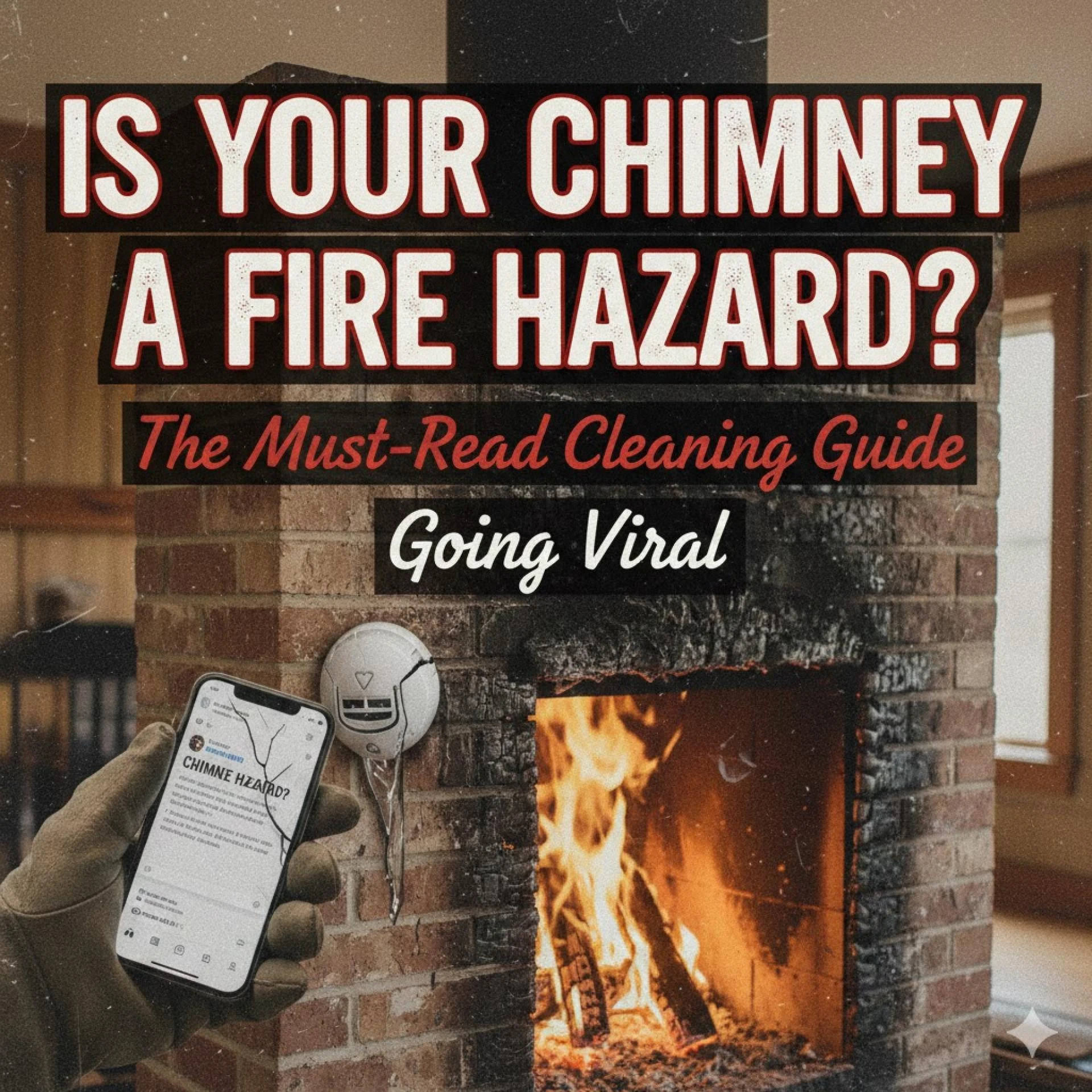

If you have a fireplace, your chimney might be silently becoming one of the biggest fire hazards in your home — and you may not even realize it. Every year, thousands of house fires start inside chimneys that homeowners believe are perfectly safe. The truth is unsettling: a chimney doesn’t have to look dirty or damaged from the outside to be dangerously clogged within.
This must-read chimney cleaning guide is going viral for one reason — it reveals what most homeowners discover only after a close call. If you use your fireplace even occasionally, this guide could protect your home, your finances, and your family.
Let’s uncover the warning signs, hidden dangers, and essential cleaning steps you need to know right now.
Why Chimneys Become Fire Hazards Faster Than You Think
Many homeowners assume chimney fires happen only in old houses or rarely used fireplaces. In reality, chimney fires can occur in any home, even newer ones.
Here’s why:
Every fire you burn produces smoke filled with unburned particles. As this smoke rises, it cools and sticks to the inner walls of the chimney, forming a highly flammable substance called creosote.
Over time, this buildup can ignite — sometimes explosively.
Even a small amount of residue can be enough to start a dangerous fire that spreads beyond the chimney.
The Silent Killer Inside Your Chimney: Creosote
Creosote is the primary reason chimneys become hazardous. It forms in layers and becomes increasingly dangerous over time.
Stage 1: Flaky Residue
This looks like black soot and is relatively easy to remove.
Stage 2: Tar-Like Buildup
Sticky and harder to clean, this layer burns hotter.
Stage 3: Glazed Creosote
Shiny, rock-hard, and extremely flammable — this is the most dangerous stage.
Most homeowners have no idea which stage they’re dealing with because the buildup is hidden inside the flue.
That’s why professional inspections are so important.
Warning Signs Your Chimney May Be Dangerous
Your chimney often gives clues before disaster strikes. Ignoring them is one of the biggest mistakes homeowners make.
Watch for these signs:
- Smoke entering the room
- Strong burnt or campfire odors
- Difficulty starting or maintaining fires
- Black, oily stains around the fireplace
- Falling debris inside the firebox
- Unusual sounds coming from the chimney
- Excess soot buildup
If you notice any of these, your chimney could already be hazardous.
How Often Should You Clean Your Chimney?
Experts recommend cleaning your chimney at least once a year, especially if you use your fireplace regularly.
However, you may need more frequent cleaning if:
- You burn wood daily during winter
- You use unseasoned or damp wood
- You notice heavy smoke production
- You’ve had a chimney fire before
Annual inspections are essential even for rarely used fireplaces because animals, moisture, and debris can still create blockages.
The Risk of Carbon Monoxide From a Dirty Chimney
Fire hazards aren’t the only concern.
A blocked or poorly ventilated chimney can trap carbon monoxide — an invisible, odorless gas that can be deadly.
Symptoms of exposure include:
- Headaches
- Dizziness
- Nausea
- Confusion
- Shortness of breath
Installing carbon monoxide detectors is crucial, but maintaining your chimney is the first line of defense.
Animals and Debris: Hidden Blockages You Didn’t Expect
Chimneys are warm, sheltered spaces — perfect for nesting animals.
Birds, squirrels, raccoons, and even bats can move in without you noticing.
Their nests can:
- Block airflow
- Increase fire risk
- Introduce pests and bacteria
- Cause foul odors
- Damage chimney liners
Leaves and twigs can also accumulate, especially if your chimney lacks a cap.
DIY Cleaning vs. Hiring a Professional
Many homeowners consider cleaning their chimney themselves to save money.
DIY Cleaning Can Work If:
- The buildup is minimal
- The chimney is straight and accessible
- You have the proper tools
Professional Cleaning Is Necessary If:
- Creosote buildup is heavy
- There’s a history of chimney fires
- You suspect structural damage
- The chimney is tall or complex
- Animals or nests are present
Professionals use specialized equipment and cameras to ensure thorough cleaning and safety.
What Happens During a Professional Chimney Cleaning?
A professional cleaning is more comprehensive than most people expect.
Typically, it includes:
- Full inspection of the chimney structure
- Removal of soot and creosote
- Clearing blockages
- Checking for cracks or damage
- Ensuring proper airflow
- Recommendations for repairs
The process is designed to reduce fire risk and improve efficiency.
The True Cost of Ignoring Chimney Maintenance
Skipping chimney cleaning might save money now — but it can lead to devastating expenses later.
Potential costs include:
- Fire damage repairs
- Chimney reconstruction
- Smoke damage restoration
- Mold remediation from water leaks
- Replacement of damaged liners
Routine maintenance is far cheaper than emergency repairs.
How to Reduce Chimney Fire Risk Immediately
If you want to make your home safer right away, start with these steps:
Burn Only Seasoned Hardwood
Dry wood burns cleaner and produces less creosote.
Avoid Burning Trash or Paper
These create excessive smoke and dangerous residues.
Install a Chimney Cap
Prevents animals and debris from entering.
Use Proper Fire-Starting Techniques
Hot fires produce less buildup than slow, smoldering ones.
Schedule Annual Inspections
Professional checks catch problems early.
Small changes in how you use your fireplace can significantly reduce risk.
Why This Chimney Cleaning Guide Is Going Viral
Homeowners everywhere are sharing this information because it addresses a problem many didn’t realize they had.
Fireplaces create comfort, warmth, and ambiance — but they also require responsibility.
The viral message is simple:
A clean chimney is not a luxury. It’s a necessity.
Ignoring maintenance can turn a cozy winter evening into a life-changing emergency.
Conclusion: Don’t Wait Until It’s Too Late
our chimney could be perfectly safe — or it could be a hidden fire hazard waiting for the right conditions. The only way to know for sure is through regular inspection and cleaning. For expert help, visit https://www.ductcleaningportlandpro.com/.
The must-read takeaway is this: chimney maintenance protects your home, your health, and your peace of mind.
If you’ve been putting it off, consider this your sign to act now. Because when it comes to chimney fires, prevention isn’t just better than repair — it’s everything.
A warm, crackling fire should bring comfort, not danger. With proper care, you can enjoy your fireplace safely for years to come.











Sign in to leave a comment.