ITIL Career Benefits
ITIL certification opens doors to roles in service management for IT professionals worldwide. Many pursue ITIL V4 Certification Training to build skills in value systems and practices that employers value highly. Certified individuals often see salary jumps and access to positions like service managers or consultants. Demand grows as companies adopt frameworks for better operations. Organizations across sectors seek ITIL pros to handle service delivery challenges. Certification proves ability to apply principles in real scenarios. Job postings highlight needs in incident response and change control.
Job Opportunities
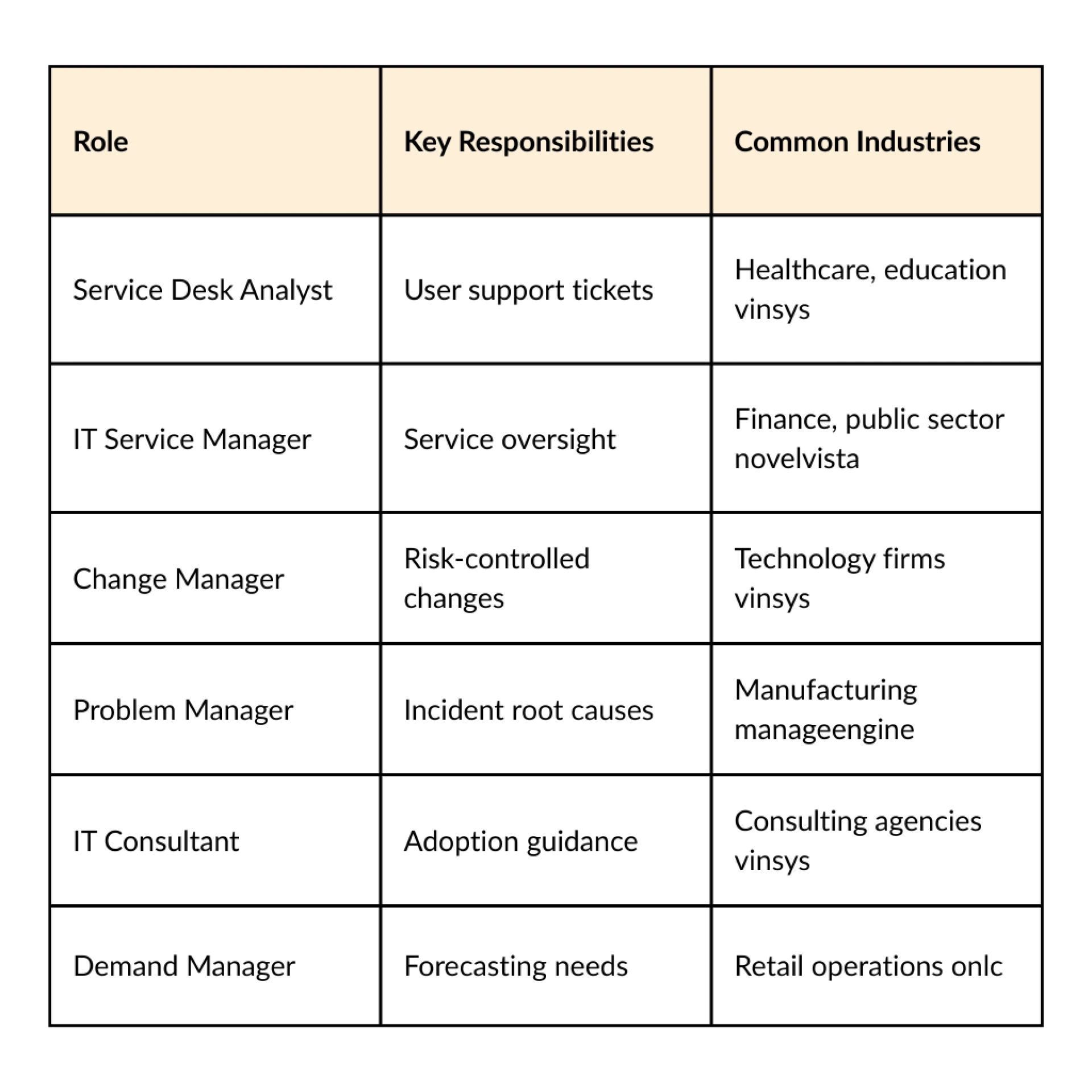
Service desk analysts manage user queries daily. Incident managers restore services fast. Change coordinators oversee modifications safely. Demand managers predict service requirements. IT project managers lead implementations using ITIL methods. Business analysts connect IT teams to business units. Technical deployment specialists handle rollouts. Infrastructure managers maintain backbone systems. Consultants guide framework setups in organizations. Job boards list thousands of openings yearly. Remote work options expand reach. Sectors like banking prioritize for compliance needs.
Career Progression Paths
Foundation acts as starting point for ITIL journeys. Specialist modules follow, such as Create Deliver Support or High Velocity IT. Managing Professional builds leadership for teams.
Practice Manager path dives into all 34 practices. Strategist covers planning and value aspects. Master level merges streams for peak positions. Progression maps to roles with more scope. Employers favor ladder climbers with certifications. Lifetime validity aids switches between jobs.
· Foundation introduces basics for entry.
· Specialists sharpen niche areas.
· Managing Professional suits mid-career.
· Master targets executives.
Networks grow through ITIL groups and events. Speaking at conferences boosts profiles. Blogs share practical insights from experience.
Organizational Contributions
Certified staff align IT services to business aims via value chains. Problem management cuts repeat incidents. Guiding principles shape governance choices. Operations smooth out after framework use. Digital shifts create ongoing ITSM needs. Continual improvement registers track progress. Hiring teams scan for ITIL on resumes first. Retention improves with internal training investments. Teams deliver faster with standardized approaches.
Sector-Specific Demand
Finance applies ITIL to control risks in transactions. Healthcare keeps patient systems running reliably. Government standardizes across agencies. Retail streamlines supply chain IT support. Manufacturing integrates with production controls. Tech startups blend ITIL with agile for growth. Energy firms use for infrastructure stability. Telecom handles high-volume services. Education supports campus networks effectively. Postings stay consistent on platforms. Remote roles open global chances. Evolution in cloud and AI keeps skills relevant.
SterlingNext Program Details
SterlingNext provides live online training including mock exams. Classroom version with hands-on workshops. Coverage matches exam topics like value system and principles. Support extends to exam applications and retakes. Schedules flex for full-time workers. Case studies connect theory to job realities.
· Digital materials for self-review.
· Around-clock help after sessions.
· Tailored programs on request.
· Recordings available anytime.
Instructors bring real-world stories. Mock tests mimic exam pressure. Graduates report quick job applications success.
Practical Skill Uses
ITIL pros map value streams for projects. Principles inform routine choices. Service desk practices speed resolutions. Four dimensions balance organizational views. Certification eases agile method shifts. Training scenarios mirror workplace issues. Interviewers quiz on ITIL topics often. Skills carry over job-to-job smoothly. Confidence grows in handling complex services.
Long-Term Advantages
Certification supports senior management climbs. Communities offer peer advice. Expert status leads to advisory work. Lifetime status enables consulting careers. Higher modules access top salary tiers. Framework updates maintain edge. Track advancement via role timelines. SterlingNext content ties to paths directly. Stories show real shifts in pay and duties. Freelance options emerge for independents. Mentorship roles fill for juniors. Publications cement authority status.
Market Trends
ITIL demand ties to service management growth. Cloud migrations fuel needs. AI integrations require structured oversight. Hybrid work models value remote ITSM pros. Sustainability goals incorporate ITIL practices. Global standards unify multinational teams. Entry barriers stay low with no prerequisites. Basic IT background suffices. Quick certification turnaround aids starts. ITIL certification drives lasting success in service careers. SterlingNext training delivers exam prep and hands-on knowledge. Professionals thrive through framework command.
Training Pathways
SterlingNext ITIL V4 Foundation acts as prep for A+ journey online or classroom. Live sessions include labs on hardware setup and security practice. Mock quizzes target exam domains directly. Classroom options provide device access for physical troubleshooting. Recorded materials allow flexible review. 24x7 support aids certification applications.
· Virtual labs simulate real setups.
· Printed guides reinforce concepts.
· Case studies mirror job scenarios.
· Faculty mentoring builds confidence.
Progression from ITF+ covers terminology to A+ depth seamlessly. Customized schedules fit beginners. Post-training assistance handles exam logistics.
Career Entry Points
Help desk technicians resolve user issues daily. Desktop support specialists maintain workstations. Field service techs handle on-site repairs. Technical support reps field calls on software problems. IT coordinators manage basic inventory. Junior network admins assist with connectivity. Entry salaries average $50,000-$65,000 for A+ holders. Demand spans corporate IT, education, and government. Remote support roles expand options.
Skill Applications
A+ pros diagnose boot failures through methodical steps. Network connectivity issues resolve via ping tests and config checks. Virus removals use safe mode and tools. Printer jams and driver conflicts demand step-by-step fixes. Laptop disassembly requires ESD precautions. Customer interactions follow professional scripts. Virtual machines test configs without risk. Command line tools like ipconfig and nslookup prove essential. Documentation tracks resolutions for teams.
Industry Relevance
Healthcare IT supports patient record systems reliably. Education tech maintains classroom devices. Finance firms prioritize secure endpoints. Retail handles POS terminal uptime. Manufacturing integrates automation controls. Government agencies standardize desktop fleets.
Global firms value A+ for consistent support standards. Cloud shifts create hybrid role needs. Entry credential leads to Network+ or Security+ paths.
Preparation Strategies
Hands-on practice with old PCs builds muscle memory. Online simulators mimic performance questions. Study guides map to domain weights. Flashcards aid memorization of ports and acronyms. Practice exams time responses accurately. Video breakdowns explain sim steps visually. Join forums for shared tips. Schedule tests after 80% mock scores. Review weak domains weekly.
· Disassemble systems safely.
· Memorize cable types.
· Practice remote desktop tools.
· Simulate customer calls.
Advantages
ITF+ course from SterlingNext lays groundwork for A+ success. Interactive elements cover 17% IT concepts to 22% infrastructure domains. Faculty shares field stories. Flexible online fits working schedules. Classroom immersion accelerates learning. Lifetime credential motivates long-term paths. Mock tests match 75-question format of ITF+ leading to A+. Support teams guide voucher purchases. Graduates report smooth transitions.
Progression Opportunities
A+ unlocks CompTIA Network+ for deeper connectivity. Security+ follows for threat focus. Server+ targets enterprise hardware. CySA+ builds analytics skills. PenTest+ explores vulnerabilities. CASP+ suits advanced architects. Stack certifications for specialist roles. Employers fund ladders for retention. Community events network pros.
· ITF+ starts basics.
· A+ enters support.
· Network+ expands scope.
· Security+ adds defense.
Real-World Scenarios
User reports slow PC: check RAM usage, scan malware, defrag drive. No internet: verify cable, reset router, check IP. Blue screen: boot safe mode, run memory diagnostic. Email client fails: reinstall app, check firewall rules. Printer offline: power cycle, update drivers. Overheating laptop: clean vents, repaste CPU. Team shares resolution databases. Patterns emerge for proactive fixes. Documentation standards streamline handoffs.
Market Demand Factors
Remote work surges endpoint management needs. BYOD policies demand secure configs. IoT devices multiply support tickets. Entry-level shortages favor certified applicants. Vendor neutrality fits multi-platform shops. Recertification every three years keeps skills current. Job boards list 50,000+ A+ related postings yearly. Growth projections hit 10% through 2030. Startups seek versatile techs. Enroll Now ITIL V4 foundation certification for solid IT paths. Hands-on mastery drives job readiness.










Sign in to leave a comment.