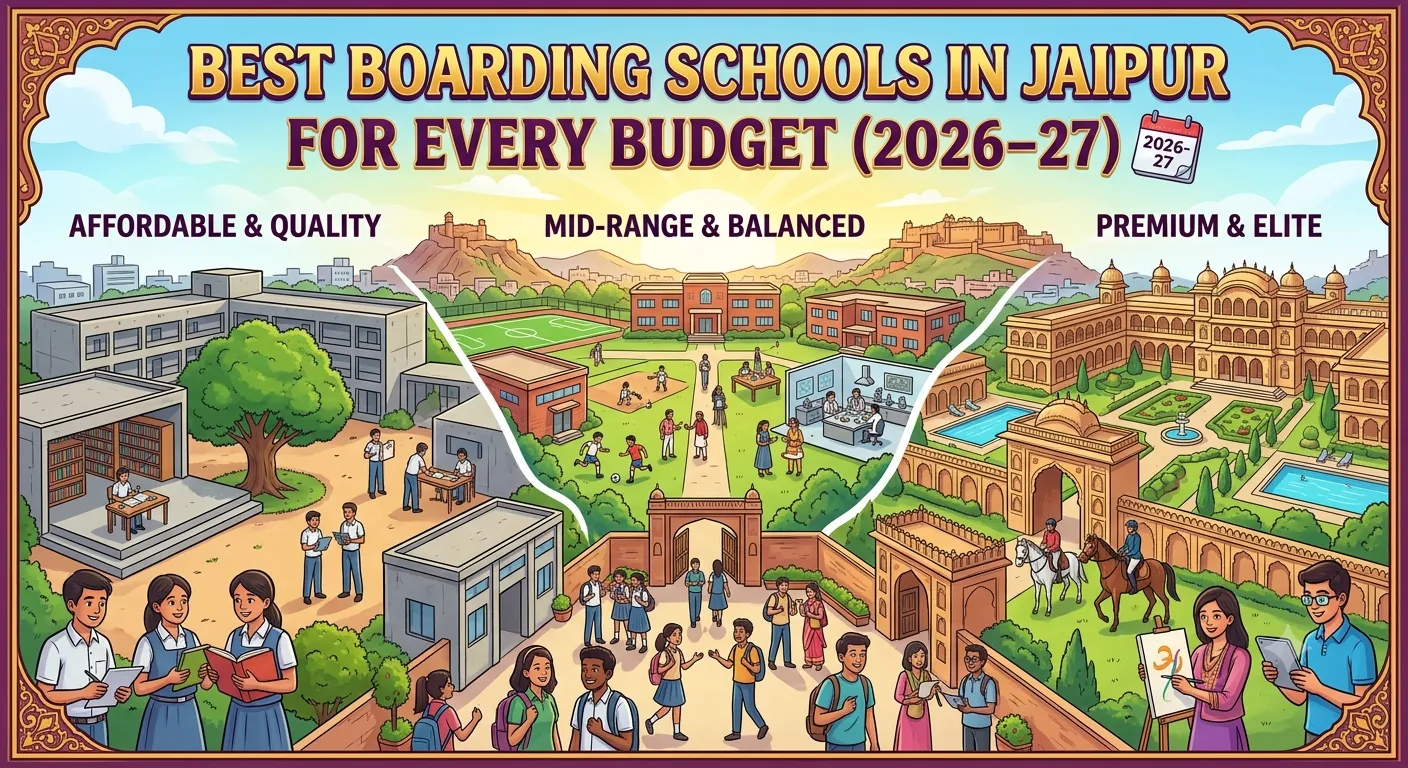

Deciding on the right boarding school in Jaipur for your child is arguably one of the most pivotal decisions a parent will make, influencing not just academic progress but the development of life-altering skills and character traits. Beyond rigorous academic curricula, a good boarding institution cultivates a child's sense of independence, discipline, leadership prowess, self-confidence, and the essential life skills that will serve them throughout adulthood. Jaipur has, in recent times, blossomed into a premier boarding school destination in India, attracting students from across the country with its distinguished institutions, modern infrastructure, experienced educators, and well-managed hostel facilities. For parents eyeing the 2026-27 academic session, navigating the admission maze early on can save you considerable stress and enable you to make a well-informed choice at every juncture-from curriculum selection to document compilation.
Before jumping into the application process, investing quality time in researching various boarding schools, rather than solely relying on advertisement buzz or school ranking charts, is paramount. Each boarding school possesses its unique set of strengths, educational philosophy, teaching methodologies, campus ethos, and residential ambiance. While some schools excel in pure academic rigor, others are equally committed to fostering excellence in sports, performing arts, leadership training, innovation, and overall personality enrichment.
Understanding this distinct profile of each institution empowers families to identify one that resonates perfectly with their child's aptitudes, learning style, and future ambitions.
Comprehensive exploration often involves perusing official school websites, poring over brochures, attending open houses, and engaging in conversations with current parents and alumni to glean authentic insights.
A crucial early step involves pinpointing the most suitable educational curriculum. Jaipur boarding schools typically offer affiliations with CBSE, ICSE, Cambridge (CAIE), and International Baccalaureate (IB). The CBSE framework remains a highly popular choice among parents due to its strong correlation with India's highly competitive entrance exams like JEE, NEET, CUET, and NDA.
The ICSE syllabus, known for its thorough and balanced coverage, emphasizes English proficiency and analytical acumen.
Conversely, Cambridge and IB curricula promote research-based, inquiry-driven learning, creative exploration, and a global outlook, making them ideal for students contemplating higher education abroad. The choice of curriculum should be dictated by the student's inherent academic capabilities and career aspirations, not just prevailing trends.
Ideally, the admission process should be initiated a minimum of several months prior to the commencement of the academic session. Highly sought-after boarding schools across India often have limited residential seats, and the influx of applications can be immense. Initiating the process early grants families the necessary time to conduct comprehensive school comparisons, arrange for campus visits, gather all required documents, complete entrance tests, and attend interviews without undue pressure. Proactive engagement may also increase opportunities for securing scholarships or financial aid opportunities extended by certain institutions, whereas delayed applications may mean losing out on highly desired school seats.
Typically, the admission journey commences with filling out an application form, which may be submitted online or offline, accompanied by the submission of required supporting documents. Common documents include previous years' academic reports, the student's birth certificate, recent passport-sized photographs, the transfer certificate (if applicable), identity and address proofs, a medical fitness certificate, and vaccination records. Depending on the student's age and grade level, additional documents might be requested. Having all these documents organised and ready before the application period opens simplifies the process and prevents last-minute scrambles.
Most reputable boarding schools incorporate entrance examinations into their selection procedures. These assessments are meticulously designed to gauge a student's academic readiness in subjects like English, Mathematics, Science, and logical reasoning. Some institutions also assess aptitude, communication skills, or general awareness, not solely for measuring factual recall, but to ascertain if the student is academically equipped for the demands of the school's curriculum. Parents should encourage children to revise fundamental concepts without creating undue pressure, fostering confidence over rote memorisation.
Following the successful completion of the entrance examination, candidates who meet the preliminary criteria are typically invited for a personal interview. This crucial interaction provides the school's administration an opportunity to assess the student's communication abilities, self-confidence, personal interests, demeanor, and capacity to adapt to a boarding school environment. Often, parents too join their child for these interactions, allowing school authorities to understand family expectations while giving parents a chance to ask pertinent questions about academics, hostel life, campus security, co-curricular activities, counselling support, and parent-teacher communication protocols. Open and transparent communication during interviews cultivates a positive impression.
A thorough comparison of fee structures is another indispensable component of the admission process. Boarding school costs extend well beyond the tuition fees, so parents must obtain a detailed fee breakdown from prospective schools. The annual expenses typically encompass boarding, lodging, meals, uniforms, textbooks, laundry services, medical facilities, sports and extracurricular coaching, transport, examination fees, and a security deposit.
While some schools offer all-inclusive packages, others itemize costs for various services.
Understanding exactly what is included allows for a more accurate comparison and more effective financial planning. Families should also inquire about scholarships, sibling discounts, merit-based awards, and alternative payment options.
Hostel facilities deserve a significant portion of a parent's attention, as a substantial part of the academic year is spent living away from home. A conducive and comfortable residential environment plays a vital role in a child's emotional well-being and overall academic success. Key aspects to evaluate include room accommodation standards, cleanliness, the quality and variety of food served in the mess, available medical support, laundry services, study hours, recreation options, and the level of supervision provided by hostel staff. Top-tier boarding schools generally feature separate hostels for boys and girls, monitored by experienced wardens, equipped with CCTV surveillance, and supported by in-house medical services to ensure child safety.
Parents should not solely focus on academics and should critically assess the school's offerings in terms of holistic personality development. Contemporary boarding schools recognize that education transcends classroom boundaries. Robust programs in sports, music, dance, theater, debates, robotics, coding, entrepreneurship, and community service are integral to developing critical life skills like teamwork, creativity, communication, problem-solving, and resilience, preparing students for the complexities of future academic and professional endeavours. A school that strikes an optimal balance between academics and extracurriculars is likely to produce well-rounded individuals.
Child safety and well-being are unequivocally the paramount concerns for any parent. Families need to understand the school's security infrastructure, including visitor management policies, CCTV monitoring systems, the presence of trained security personnel, access to immediate medical care, fire safety protocols, and supervision provided by hostel staff. In terms of emotional welfare, many leading boarding schools employ professional counsellors to help students navigate issues such as homesickness, academic stress, and personal concerns. Continuous communication between parents, teachers, and residential staff strengthens this support network and ensures that children receive guidance whenever needed.
If at all possible, visiting the shortlisted boarding school campuses before finalising admission provides the most insightful experience. Walking through the classrooms, libraries, laboratories, sports grounds, dormitories, dining halls, and recreational areas offers a tangible feel of the school's environment that cannot be replicated by photographs or descriptions alone. Observing the day-to-day routines, engaging with teachers, and conversing with current students offer a wealth of authentic information about the campus life and academic standards. Campus visits also help children feel more comfortable and familiar with their future surroundings.
For more information, visit us.


























Sign in to leave a comment.