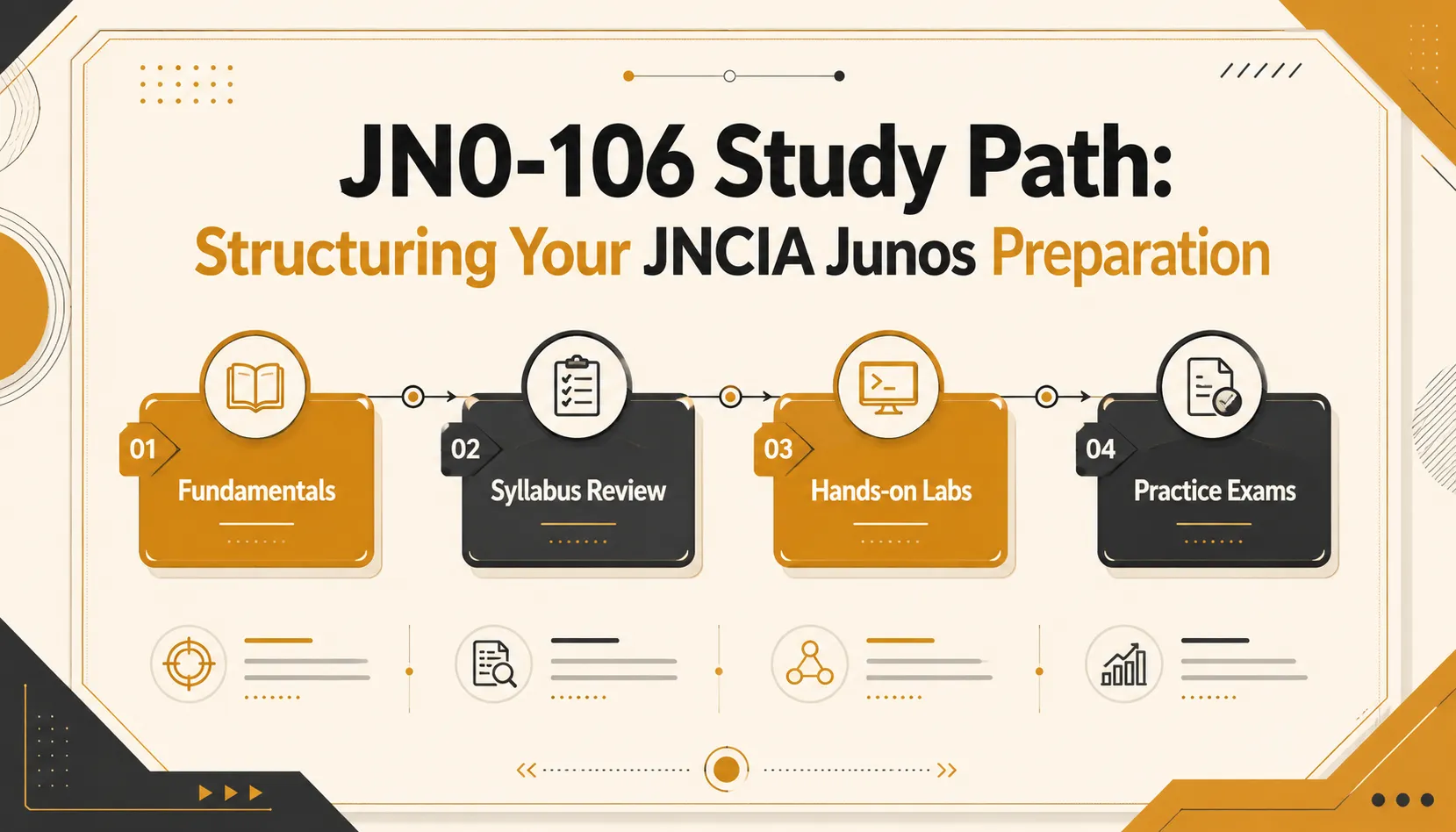

The JNCIA Junos certification, officially known as the HPE Juniper Networking Junos Associate (Exam Code: JN0-106), serves as a foundational credential for networking professionals. This certification validates essential skills in Juniper Networks' Junos operating system, covering everything from networking fundamentals to advanced routing policies. It is specifically designed for individuals aspiring to work with Juniper hardware and software, providing a robust starting point for network administrators, engineers, and support staff. This comprehensive guide will equip you with the knowledge and strategies required to successfully prepare for and pass the JN0-106 exam, outlining exam details, syllabus topics, and effective study methods.
Validating Foundational Junos Skills
The JNCIA Junos certification establishes a crucial baseline for anyone entering the world of Juniper Networks. It confirms a candidate's understanding of core networking principles and their ability to operate the Junos OS. This credential is vital for professionals who manage Juniper devices, ensuring they possess the fundamental expertise to configure, monitor, and troubleshoot network environments effectively. Achieving this certification demonstrates a commitment to mastering a leading network operating system, paving the way for further specialization within the Juniper certification path.
JNCIA Junos Credential Breakdown (JN0-106)
Understanding the specific structure and requirements of the HPE Juniper Networking Junos Associate (JN0-106) exam is the first step towards a successful preparation journey. This foundational exam assesses your knowledge across various critical areas of Juniper networking. Being familiar with these details helps in strategizing your study plan and managing your time efficiently during the actual test.
The JN0-106 exam presents the following structure:
- Exam Name: HPE Juniper Networking Junos Associate
- Exam Code: JN0-106
- Exam Price: $200 USD
- Duration: 90 minutes
- Number of Questions: 65
- Passing Score: Variable (60-70% Approx.)
This format indicates a fast-paced exam where efficient time management and a solid grasp of all topics are paramount for achieving a passing score.
Core Competencies: Junos Associate Syllabus
The HPE Juniper Networking Junos Associate syllabus defines the essential areas of expertise validated by the JN0-106 exam. Each topic category represents a critical component of Junos OS knowledge and practical application, crucial for effective network management. A thorough understanding of these domains is indispensable for comprehensive preparation.
The key areas covered include:
- Networking Fundamentals: This section assesses your understanding of basic networking concepts, including the OSI and TCP/IP models, network topologies, IP addressing (IPv4 and IPv6), and Ethernet.
- Junos OS Fundamentals: Core knowledge of the Junos operating system architecture, its command-line interface (CLI), and basic operational commands.
- User Interfaces: Focuses on interacting with Junos OS through various interfaces, primarily the CLI, including command hierarchy, configuration modes, and user access levels.
- Configuration Basics: Covers fundamental device configuration tasks, such as setting hostnames, user accounts, and basic network interfaces.
- Operational Monitoring and Maintenance: Explores commands and methods for monitoring device status, viewing logs, performing system maintenance, and understanding diagnostic tools.
- Routing Fundamentals: Delves into the principles of IP routing, including static routing, routing tables, and an introduction to dynamic routing protocols like OSPF.
- Routing Policy and Firewall Filters: Examines how to implement routing policies to control route advertisement and selection, and configure firewall filters for network security and traffic management.
Each of these topics builds upon the previous, creating a holistic view of the Junos OS and its operational environment.
Earning JNCIA Junos: Career Advantages
Obtaining the JNCIA Junos certification offers significant advantages for professionals in the networking field. It not only validates technical proficiency but also opens doors to new career opportunities and enhances existing roles. This credential signals to employers that an individual possesses a dependable baseline of Juniper networking skills, making them a valuable asset.
The key benefits include:
- Enhanced Job Prospects: Many organizations rely on Juniper Networks infrastructure, and certified professionals are often preferred for roles in network administration, engineering, and support.
- Skill Validation: The certification provides official recognition of your ability to understand and operate the Junos OS, a critical skill set in modern networking.
- Career Progression: JNCIA Junos is the entry point to the broader Juniper certification path, providing a clear roadmap for advancing your expertise to professional and expert levels.
- Increased Earning Potential: Certified professionals typically command higher salaries due to their specialized knowledge and validated skills.
- Credibility and Confidence: Achieving certification boosts your professional credibility and instills confidence in your abilities, both for yourself and for your employer.

These advantages collectively contribute to a stronger professional profile and a more secure career trajectory in the competitive IT landscape.
Blueprint for JNCIA Junos Preparation
A structured and strategic approach is crucial for mastering the JNCIA Junos certification. Effective preparation goes beyond simply reviewing material; it involves active learning, consistent practice, and a clear understanding of your learning style. Tailoring your study plan to the exam's specific requirements will significantly increase your chances of success.
Consider the following foundational steps:
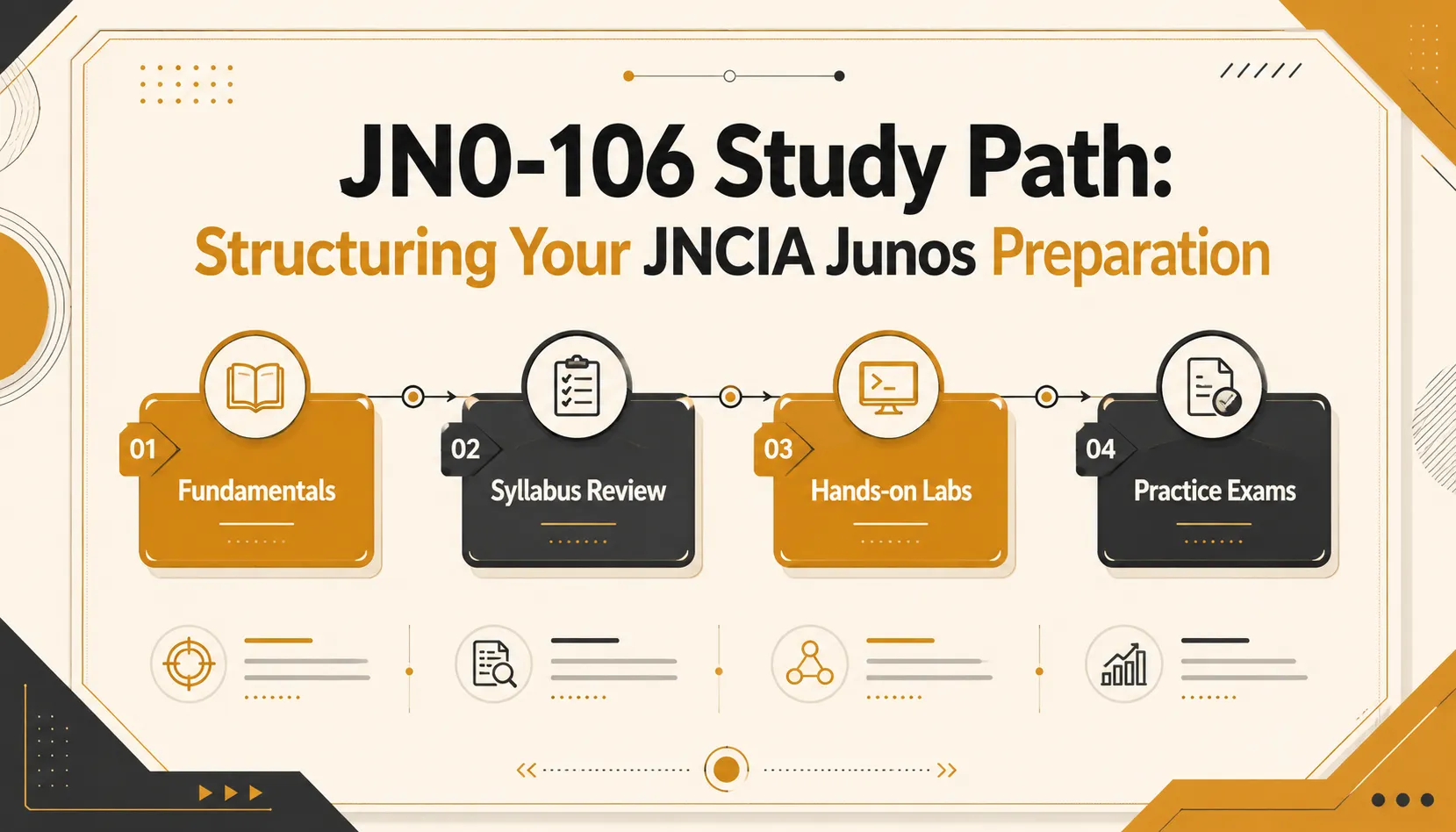
- Review Exam Objectives: Start by thoroughly examining the official JN0-106 exam objectives and syllabus. This ensures you cover all required topics.
- Leverage Official Documentation: Juniper's own technical documentation is an invaluable resource for in-depth understanding of Junos OS features and commands.
- Hands-on Practice: Theory alone is insufficient. Utilize Juniper virtual labs or build a home lab to gain practical experience with Junos OS configuration and troubleshooting.
- Study Guides and Books: Invest in reputable study guides specifically designed for the JNCIA Junos certification.
- Join Study Groups: Collaborating with peers can provide different perspectives, clarify difficult concepts, and offer motivation.
Adopting these initial strategies will establish a solid foundation for your JNCIA Junos journey.
Optimizing Your JN0-106 Study Resources
Selecting the right study resources is paramount for efficient and effective preparation for the JN0-106 exam. A diverse set of tools and materials can reinforce learning, address different learning styles, and provide comprehensive coverage of the Junos Associate syllabus. Focusing on quality over quantity will ensure your study time is productive.
Official Training and Documentation
Juniper Networks provides official training courses that are specifically designed to cover the JN0-106 exam objectives. These courses, often led by experienced instructors, offer structured learning environments and practical labs. Complementing this with Juniper's extensive online documentation and knowledge base is essential for a deeper understanding of Junos OS. The official Juniper learning portal is an excellent starting point for discovering recommended training and educational materials directly from the vendor.
High-Quality Practice Questions
Engaging with high-quality practice questions and JN0-106 sample questions is a critical component of any successful exam preparation. These resources help you familiarize yourself with the exam format, identify areas where you need further study, and build confidence. When choosing practice tests, prioritize those that offer detailed explanations for both correct and incorrect answers to enhance your learning. Consistent practice with these questions helps solidify your understanding and improves your test-taking skills.
Community Forums and Blogs
Engaging with the broader Juniper community through forums, blogs, and online groups can provide valuable insights and support. These platforms allow you to ask questions, learn from others' experiences, and stay updated on networking best practices. Additionally, exploring content from experienced professionals, such as those contributing to WriteupCafe, can offer alternative perspectives and practical tips. You can gain further insights and guidance from an experienced professional on their author profile.
Conquering Exam Day Anxiety for JN0-106
Exam day can be a source of stress, but effective strategies can help manage anxiety and ensure you perform at your best on the JN0-106. Preparation extends beyond studying; it involves mental readiness and practical considerations that can make a significant difference in your performance. Approaching the exam with a calm and focused mindset is key to translating your knowledge into success.
Pre-Exam Checklist
A few days before the exam, confirm your exam appointment, location (if applicable), and required identification documents. Plan your travel to the test center to avoid last-minute rush. Get a good night's sleep the night before, and eat a balanced meal on exam day to maintain energy levels. Avoid cramming at the last minute; a relaxed mind absorbs information better.
During the Exam
Read each question carefully before selecting an answer. If you encounter a difficult question, flag it and move on, returning to it later if time permits. Trust your preparation and avoid overthinking. Maintain a steady pace throughout the exam to ensure you address all questions within the allotted 90 minutes. Remember, the passing score is variable, approximately 60-70%, so every correct answer counts.
Deep Dive into Networking Fundamentals for JNCIA
A strong grasp of networking fundamentals is the bedrock of success for the JNCIA Junos certification. While the exam focuses on Junos OS, it presumes a foundational understanding of how networks operate. This core knowledge allows you to understand the "why" behind Junos configurations and troubleshooting steps, rather than just the "how."
The OSI and TCP/IP Models
The exam often touches upon these fundamental models that describe how networks communicate. Understanding the layers, their functions, and the protocols that operate at each layer (e.g., Ethernet at Layer 2, IP at Layer 3, TCP/UDP at Layer 4) is critical. This conceptual framework is essential for diagnosing network issues and designing robust solutions.
IP Addressing and Subnetting
Proficiency in IPv4 and IPv6 addressing, including subnetting, is non-negotiable. You should be comfortable calculating network and broadcast addresses, determining usable IP ranges, and understanding how subnet masks segment networks. This knowledge directly impacts how you configure interfaces and routing on Junos devices.
Mastering Junos OS Core Concepts
Central to the JNCIA Junos certification is a comprehensive understanding of the Junos operating system itself. Beyond specific commands, the exam assesses your knowledge of its architecture, operational philosophy, and the hierarchical nature of its configuration. This conceptual mastery forms the basis for all practical Junos tasks.
Junos OS Architecture
The Junos OS is built on a modular design, separating the routing engine (RE) from the packet forwarding engine (PFE). Understanding this distinction helps in comprehending how control plane functions (routing protocols, management) interact with data plane functions (packet forwarding). This architecture contributes to Junos's stability and performance.
The Junos CLI Hierarchy
The Junos command-line interface (CLI) is highly structured and hierarchical. Navigating through different modes (operational, configuration, edit) and understanding the command syntax are fundamental skills. This hierarchical design allows for consistent configuration and simplifies complex network setups.
User Interface Proficiency in Junos Environments
Interacting effectively with Junos devices requires a solid grasp of their user interfaces, primarily the CLI. The JNCIA Junos exam evaluates your ability to navigate, issue commands, and interpret output within this environment. Efficient use of the CLI is a cornerstone of daily operations for Juniper administrators.
Navigating the CLI
Familiarity with various operational commands, such as `show` commands for displaying device status, `monitor` for real-time data, and `ping`/`traceroute` for diagnostics, is essential. Understanding command completion, context-sensitive help, and using the `|` (pipe) character for filtering output can significantly speed up your work.
Configuration Modes and Saving Changes
The transition between operational and configuration modes, along with the process of making and committing changes, is a core skill. You must know how to enter configuration mode, make temporary changes, review pending changes (`show | compare`), and permanently apply them using the `commit` command. Understanding how to roll back changes is also vital for network stability.
Configuring Junos Devices: Basic Operations
The ability to perform fundamental configuration tasks on Junos devices is a practical skill validated by the JN0-106 exam. These basic operations lay the groundwork for more complex network setups and ensure a device is properly initialized and accessible within a network. Mastery here is about precision and understanding the impact of each command.
Initial Device Setup
This involves configuring basic parameters like the hostname, root password, and system logging. Ensuring secure access through authentication methods for administrative users is also critical. These initial steps are fundamental to bringing a new Juniper device online and integrating it into an existing network.
Interface Configuration
Understanding how to configure physical and logical interfaces, assign IP addresses, and set interface properties is a core competency. This includes knowledge of different interface types (e.g., ge, fe, lo) and their roles in connectivity. Proper interface configuration is the gateway to network communication.
Monitoring and Maintaining Junos Networks
Effective network management requires ongoing monitoring and maintenance to ensure optimal performance and identify issues proactively. The JNCIA Junos certification covers the essential commands and procedures for observing device health and performing routine administrative tasks. This ensures network stability and resilience.
Operational Monitoring Commands
Junos OS offers a suite of `show` commands to display system status, interface statistics, routing table entries, and log messages. For example, `show system alarms` can identify hardware issues, while `show interfaces` provides real-time traffic statistics. Regular use of these commands helps in quickly assessing the network's state.
System Maintenance Tasks
This includes understanding how to back up and restore configurations, upgrade Junos OS software, and manage system files. Knowledge of file system operations and secure copy protocols (SCP) for transferring files is also important. Routine maintenance prevents potential outages and ensures the network operates on stable software versions.
Implementing Junos Routing Fundamentals
Routing is at the heart of any network, enabling devices to forward traffic between different subnets and networks. The JNCIA Junos exam assesses your understanding of fundamental routing concepts and their implementation within the Junos OS. This forms a critical part of building interconnected and functional networks.
Understanding the Routing Table
The Junos routing table is a central component that stores information about known routes to various destinations. Understanding how the routing table is populated, how route preferences (`preference`) and metrics (`metric`) are used, and how routes are selected is crucial for traffic engineering.
Static Routing Configuration
While dynamic routing protocols are complex, static routing provides a straightforward method for directing traffic to specific destinations. You must be able to configure static routes, including default routes, and understand their use cases, especially in smaller networks or for specific traffic paths. This is a foundational skill before moving to dynamic routing protocols.
Securing Traffic with Routing Policy and Firewall Filters
Network security and traffic control are paramount, and Junos OS offers powerful mechanisms like routing policies and firewall filters to achieve these objectives. The JNCIA Junos exam requires knowledge of how to configure and apply these tools to manage network traffic flow and enhance security posture. This is a key area for maintaining network integrity.
Routing Policy Fundamentals
Routing policies allow administrators to control the flow of routing information, influencing which routes are accepted, rejected, or modified before being installed into the routing table or advertised to other routers. Understanding policy statements, terms, and actions (e.g., `accept`, `reject`, `set`) is essential for effective route manipulation.
Firewall Filter Implementation
Firewall filters are used to control packet flow based on various criteria, such as source/destination IP addresses, ports, and protocols. You should be able to configure simple stateless firewall filters to permit or deny specific traffic. These filters are crucial for protecting network devices and resources from unauthorized access.
Mapping Your Juniper Certification Journey
The JNCIA Junos certification serves as the initial benchmark in a structured certification path offered by Juniper Networks. Understanding this path is crucial for professionals looking to specialize and advance their careers in Juniper technologies. The progression from associate to professional and expert levels builds upon foundational knowledge.
Stepping Stones to Advanced Expertise
After achieving JNCIA Junos, candidates can pursue the JNCIS (Specialist) level certifications in various tracks such as Enterprise Routing and Switching, Service Provider Routing and Switching, or Security. Each JNCIS credential validates deeper knowledge in a specific domain. For instance, the Juniper training portal details these next steps, including the JNCIS-ENT or JNCIS-SP options. This structured progression ensures a systematic development of skills, aligning with industry demands and complex network environments.
JNCIA Junos Prerequisites: Setting the Foundation
While the JNCIA Junos certification is an entry-level credential, it is most effectively pursued by candidates who possess a foundational understanding of certain IT and networking concepts. Although there are no strict formal prerequisites set by Juniper, having prior knowledge significantly smooths the learning curve and boosts comprehension.
General IT Acumen
Candidates should ideally have a basic familiarity with general information technology concepts, including operating systems, command-line interfaces, and the purpose of network devices. This background helps in understanding the context in which Junos OS operates.
Basic Networking Knowledge
A fundamental grasp of networking concepts, such as IP addressing, Ethernet, and the basics of routing, is highly beneficial. While the JNCIA Junos syllabus covers networking fundamentals, having an initial exposure helps in absorbing the more specific Junos-related content faster.
Time Management for JN0-106 Success
Efficient time management is a critical skill, not just for the JN0-106 exam itself, but throughout your entire preparation period. With a broad syllabus and a challenging exam format, optimizing your study schedule ensures comprehensive coverage without burnout. A well-planned approach maximizes learning retention and minimizes stress.
Creating a Study Schedule
Develop a realistic study schedule that allocates dedicated time slots for each syllabus topic. Prioritize areas where your knowledge is weaker. Break down larger topics into smaller, manageable chunks to avoid feeling overwhelmed. Consistency is more important than long, infrequent study sessions.
Balancing Theory and Practice
Allocate sufficient time for both theoretical study and hands-on lab practice. While understanding concepts is vital, applying them in a lab environment solidifies your learning and prepares you for practical, scenario-based questions. Regularly reviewing your progress and adjusting your schedule as needed is also important.
Avoiding Pitfalls in Your JNCIA Junos Prep
The path to JNCIA Junos certification can have common traps that candidates often fall into. Being aware of these potential missteps can help you navigate your preparation more effectively and ensure a smoother, more successful journey. Proactive avoidance of these errors will save time and frustration.
Over-Reliance on Rote Memorization
Simply memorizing commands or concepts without understanding their underlying principles is a common pitfall. The JN0-106 exam often tests your ability to apply knowledge in different scenarios, requiring a deeper comprehension beyond surface-level recall. Focus on understanding *why* commands are used and *how* features function.
Neglecting Hands-on Practice
While theoretical knowledge is essential, neglecting practical lab work can severely hamper your performance. Junos is an operating system designed to be used in real-world networks. Without hands-on experience, you may struggle with configuration syntax, troubleshooting, and applying concepts under pressure.
Leveraging Practice Tests for JN0-106 Mastery
Practice tests are an indispensable tool for achieving mastery of the JN0-106 exam material. They do more than just assess your current knowledge; they refine your test-taking skills, highlight weak areas, and build confidence. Incorporating them strategically into your study plan is a game-changer.
Simulating Exam Conditions
Take practice tests under simulated exam conditions – timed, without interruptions, and using similar question formats. This helps you get accustomed to the pressure of the real exam and improves your time management. Analyze your results thoroughly, not just for the correct answers, but to understand why you chose certain options.
Identifying Knowledge Gaps
Each practice test result should be a diagnostic tool. Pay close attention to the topics where you consistently score low. These areas require additional study and review. Revisit your study materials, official documentation, and lab exercises to strengthen these specific weak points before attempting the exam.
Translating JNCIA Junos to Real-World Roles
The JNCIA Junos certification is not merely a piece of paper; it’s a tangible asset that directly translates into real-world capabilities and responsibilities in various networking roles. Understanding this connection helps you articulate your skills and apply your knowledge effectively in a professional setting. The credential prepares you for immediate contributions to network teams.
Network Administrator
As a Network Administrator, your JNCIA Junos skills enable you to configure, monitor, and maintain Juniper devices, ensuring network uptime and performance. You'll be adept at managing user accounts, configuring interfaces, and implementing basic routing, which are daily tasks in this role.
Network Support Engineer
For a Network Support Engineer, the certification provides the foundational knowledge to diagnose and troubleshoot issues on Juniper platforms. Understanding Junos OS fundamentals and operational commands is critical for identifying root causes and implementing solutions efficiently.
Sustaining Your Juniper Expertise Post-Certification
Earning your JNCIA Junos certification is a significant achievement, but it marks the beginning, not the end, of your learning journey. The networking landscape is constantly evolving, and maintaining your expertise requires continuous effort and engagement. Staying current ensures your skills remain relevant and valuable.
Continuous Learning and Development
Regularly review new Junos OS features and updates. Participate in online forums, webinars, and workshops hosted by Juniper Networks or other industry experts. Consider pursuing higher-level Juniper certifications, such as the JNCIS, to deepen your knowledge in specialized areas like security or service provider routing. This ongoing commitment to learning is key to long-term career success.
Practical Application and Experience
Actively seek opportunities to apply your Junos skills in real-world scenarios. This could involve volunteering for network projects, experimenting in lab environments, or taking on more responsibilities at work that involve Juniper devices. Practical experience reinforces theoretical knowledge and helps you develop problem-solving capabilities essential for complex network challenges.
The JNCIA Junos certification offers a solid entry point into the world of Juniper Networks, providing you with the essential skills to manage Junos OS devices. By thoroughly understanding the exam objectives, utilizing a variety of high-quality resources, engaging in hands-on practice, and strategically planning your study time, you are well-positioned for success. This guide has laid out a clear path, from understanding the exam's nuances to implementing effective study techniques and recognizing the real-world value of your certification.
Embark on your JNCIA Junos journey with confidence. The actionable insights and detailed preparation strategies shared here are designed to help you not just pass, but truly master the foundational aspects of Juniper networking. Start your preparation today and unlock a world of opportunities in network administration and engineering. For more comprehensive insights and to further your professional development, explore additional articles by seasoned networking experts.
Frequently Asked Questions
1. What does the JNCIA Junos certification validate?
The JNCIA Junos certification validates a candidate's foundational understanding of networking principles and their proficiency in the Junos operating system, including configuration, monitoring, and basic troubleshooting of Juniper devices.
2. How long is the JN0-106 exam, and how many questions does it have?
The JN0-106 exam has a duration of 90 minutes and consists of 65 multiple-choice questions, requiring efficient time management and a solid grasp of the syllabus topics.
3. Are there any prerequisites for taking the JNCIA Junos exam?
While there are no formal prerequisites from Juniper Networks, it is highly recommended that candidates have a basic understanding of general IT and networking concepts, such as IP addressing and network topologies, to maximize their learning and chances of success.
4. What career opportunities can the JNCIA Junos certification open?
Earning the JNCIA Junos certification can open doors to roles such as Network Administrator, Network Support Engineer, or Junior Network Engineer, particularly in organizations utilizing Juniper Networks infrastructure. It also serves as a crucial first step in the broader Juniper certification path.
5. What is the best way to prepare for the JNCIA Junos exam?
The most effective preparation combines reviewing official exam objectives and documentation, engaging in hands-on practice with Junos OS in labs, utilizing high-quality study guides, and regularly taking practice tests to assess knowledge and identify areas for improvement.




























Sign in to leave a comment.