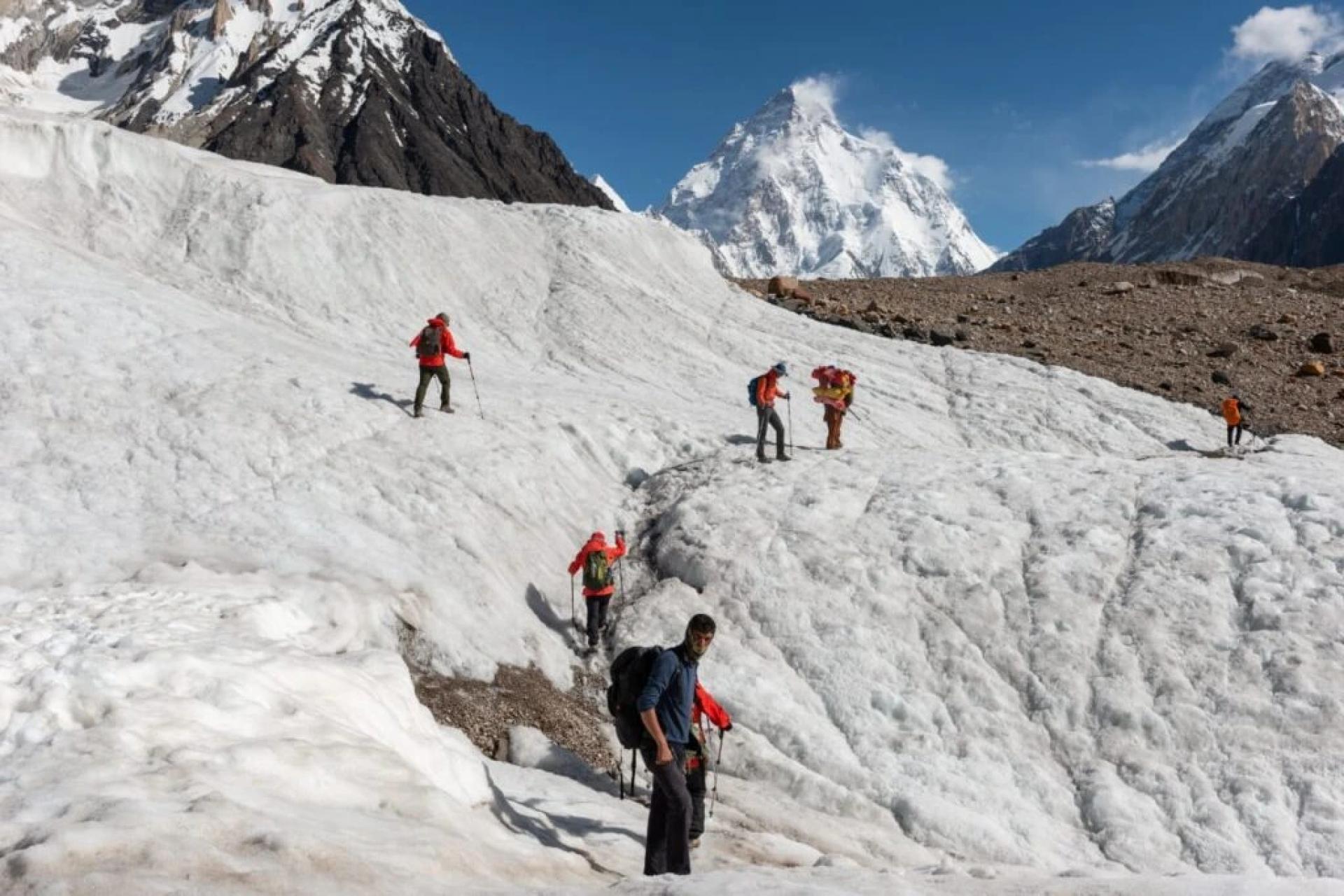

K2 mountain stands at 8,611 meters above sea level. It is the second highest mountain peak on Earth. Only a handful of people have ever stood at its summit.
This guide covers everything you need to know about K2 Pakistan — location, trekking routes, best time to visit, costs, and more.
Where Is K2 Mountain Located?
K2 mountain sits on the Pakistan-China border. It is part of the Karakoram Range, not the Himalayas. Many people confuse K2 with the Himalayan peaks — but the Karakoram is a separate mountain range entirely.
The exact K2 mountain location is in the Gilgit-Baltistan region of Pakistan. More specifically, it falls within the Shigar District of Baltistan. The geographic coordinates are 35°52′57″N latitude and 76°30′48″E longitude.
K2 sits inside Central Karakoram National Park. This is a protected wilderness area. Special permits are required to enter.
What Is K2 Mountain Height?
The K2 mountain height is 8,611 meters (28,251 feet). This makes it the second tallest mountain on Earth. Only Mount Everest in Nepal stands taller at 8,849 meters.
K2 rises more than 3,000 meters above the glacial valleys below it. On its north side, the mountain rises over 3,200 meters in just 3,000 meters of horizontal distance. This makes K2 one of the steepest and most dramatic mountains on the planet.
Why Is K2 Called the Mountain of Mountains?
K2 is often called the "mountain of mountains" for good reason. It is far more difficult to climb than Mount Everest. Over 6,000 people have reached the Everest summit — fewer than 800 have ever stood on top of K2.
The death rate on K2 is significantly higher than on other 8,000-meter peaks. K2 mountain deaths occur mostly due to avalanches, sudden storms, and extreme cold. The mountain's unpredictable weather makes every climb a serious risk.
K2 was also the last 8,000-meter peak to be climbed in winter. That milestone was achieved on January 16, 2021, by a team of 10 Nepalese climbers led by Nirmal Purja.
For a deeper look at the mountain's history and geography, read the ultimate K2 guide here.
Is K2 in the Himalayas?
No. K2 is not in the Himalayas. This is one of the most common misconceptions about the mountain.
K2 is in the Karakoram Range. The Karakoram is a separate mountain system located northwest of the Himalayas. The range runs across Pakistan, China, and India.
The Gilgit-Baltistan region hosts five of the world's 14 eight-thousanders. It also contains more than 50 peaks above 7,000 meters. This region holds the greatest concentration of high-altitude peaks outside the Himalayas.
Who First Climbed K2 Mountain?
K2 mountain was first surveyed in 1856 by British Lieutenant Thomas Montgomerie. He was part of the Great Trigonometrical Survey of India. He labeled it "K2" because it was the second peak identified in the Karakoram Range.
The first successful ascent took place on July 31, 1954. Italian climbers Achille Compagnoni and Lino Lacedelli reached the summit. However, the expedition came with a long-running controversy.
The official Italian account hid the fact that the summit team had left teammates Walter Bonatti and Amir Mehdi stranded at 8,100 meters overnight without shelter. Both men nearly died. The Italian Alpine Club officially acknowledged their contributions only in 2007 — more than 50 years later.
Pakistan achieved its own milestones on K2. Ashraf Amman became the first Pakistani mountaineer to summit K2 in 1977. The first all-Pakistani team reached the summit on July 26, 2014 — exactly 60 years after the first ascent.
What Is the K2 Base Camp Trek?
The K2 Base Camp Trek is one of the most rewarding high-altitude treks in the world. It takes 14 days to complete. The round trip covers approximately 100 kilometers.
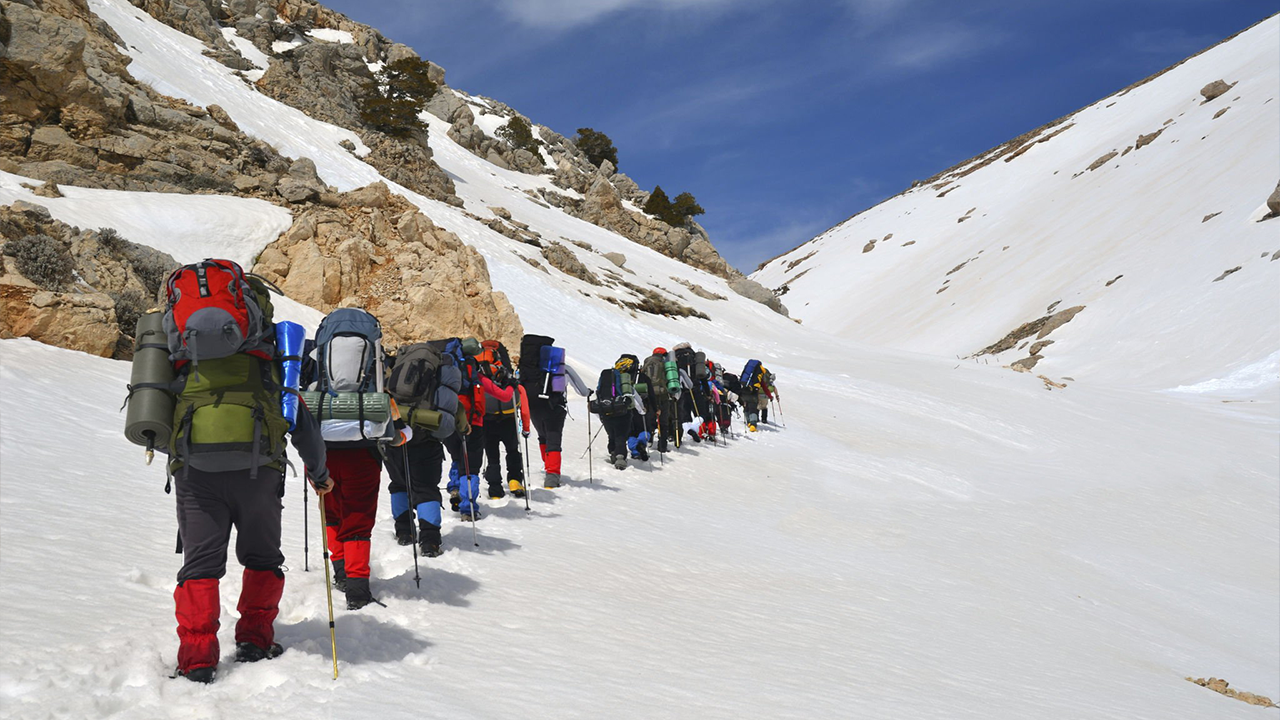
The trek reaches a maximum elevation of 5,150 meters at K2 Base Camp. Trekkers cross the Baltoro Glacier — one of the longest non-polar glaciers on Earth at 63 kilometers. The terrain includes rock, ice, and mixed surfaces throughout.
This trek is not for beginners. It requires moderate to high physical fitness. Previous high-altitude trekking experience is strongly recommended.
Where Does the K2 Trek Start?
The trek starts from Askole village. Askole is the last inhabited settlement before the Karakoram wilderness. Most trekkers reach Askole from Skardu city.
Skardu is the main gateway to the K2 region. You can reach Skardu from Islamabad by domestic flight in 45 to 60 minutes. You can also drive via the Karakoram Highway if you prefer a scenic road journey.
Domestic flights to Skardu are weather-dependent. Book flexible tickets when possible.
What Will You See on the Trek?
The highlight of the trek is a place called Concordia. It sits at the meeting point of the Baltoro and Godwin-Austen glaciers. From here, you see four 8,000-meter peaks in a single view: K2, Broad Peak, Gasherbrum I, and Gasherbrum II.
In total, Concordia gives you a view of seven of the world's 19 highest mountains at once. No other single viewpoint on Earth offers this. This is why the spot is known as one of the most spectacular locations in the world.
The night skies above the Baltoro Glacier are also exceptional. There is virtually no light pollution. Stargazing at this altitude is unlike anything most people have ever experienced.
What Is the Best Time to Visit K2 Pakistan?
The best months to visit K2 Pakistan are July and August. The full trekking season runs from mid-June to the end of September. Summer offers the most stable weather and best visibility.
K2 experiences what meteorologists call the "Karakoram anomaly." Weather patterns here are highly unpredictable. Conditions can shift from calm to dangerous in minutes.
Here is a quick seasonal breakdown:
Summer (July–August): Temperatures range from 10–20°C at lower altitudes. High camps see 0 to -10°C. This is the safest and most popular time to trek.
Pre-season (Late May–June): Variable weather. Some routes may still be blocked by snow. Higher storm probability.
Post-season (September–October): Temperatures drop. Storms increase. Services start to wind down.
Winter (November–March): Extreme cold reaches -20°C at base camp. Heavy snowfall and blizzards are common. Trekking is not suitable during this period.
The Karakoram Range is not affected by the monsoon season. This makes summer the dry season and the safest window for trekking.
What Are the Permits and Costs?
Good news: the K2 Base Camp trek does not require a special trekking permit. It is designated as an open trekking area in Pakistan.
You will need a Pakistani tourist visa. An e-visa is available online. Travel insurance for high-altitude activities is strongly recommended.
Costs depend on the level of service you choose. Budget to mid-range expeditions cover porter services, basic camping gear, and guide fees. Higher-end packages include dining tables, chairs, cook services, and toilet tents.
Keep in mind: there are no lodges or tea houses on this route. This is unlike Nepal's Himalayan treks. All accommodation on the K2 Base Camp trek is in tents.
What Physical Preparation Do You Need?
The K2 Base Camp trek demands a good fitness base. You need strong cardiovascular endurance. Leg strength and balance are equally important for glacier walking.
Start training at least three to four months before your trip. Focus on long hikes with elevation gain. Add cardio sessions like cycling or running three to four times a week.
Altitude sickness is a real risk above 3,000 meters. Acclimatization days are built into the 14-day itinerary. Never rush the ascent.
Is There a K2 Climbing Expedition Option?
Yes. For experienced mountaineers, a full K2 climbing expedition is available. This is one of the most technically demanding climbs in the world. It requires advanced mountaineering skills, high-altitude experience, and specialized equipment.
The climbing season runs parallel to the trekking season. The weather window on K2 is measured in hours, not days. Teams must be ready to move fast when conditions allow.
Is There an Alternative Trek Route?
Yes. The Gondogoro La route is a popular alternative for experienced trekkers. It creates a circular trek that finishes in Hushe village rather than returning the same way.
This route requires technical skills. You need experience with ice axes and crampons. Previous high-altitude trekking is essential before attempting this route.
Why Trek K2 Pakistan Instead of Nepal?
Pakistan receives far fewer trekkers than Nepal. The trails are less crowded. The experience is more authentic.
You get closer interaction with local Balti communities. The wilderness feels more remote and untouched. The sheer concentration of high peaks in this region is unmatched anywhere on Earth.
Fewer than the number of annual Harvard graduates have ever stood at K2 Base Camp. The exclusivity factor here is real.
How Do You Book a K2 Trek?
Skardutrekkers is a local expert team based in Askole. They handle permits, porters, transport, and full camping logistics. Their guides have deep knowledge of the Karakoram terrain and conditions.
Booking with a local operator removes the complexity of planning this remote expedition. You focus on the trek. They handle everything else.
Final Summary
K2 mountain is the world's second highest peak at 8,611 meters. It sits in the Karakoram Range in Pakistan — not the Himalayas. The K2 Base Camp trek takes 14 days and covers 100 kilometers of glacier terrain.
The best time to visit is July and August. No special trekking permit is required. Moderate to high fitness is essential.
Whether you want to trek to base camp or attempt a full climbing expedition, the K2 Pakistan experience is unlike anything else on Earth.






















Sign in to leave a comment.