

Kailash Mansarovar Yatra Tour Packages
Everything You Actually Need to Know Before You Go
Some trips you plan. Some trips plan you. The Kailash Mansarovar Yatra falls firmly in the second category. Ask anyone who has done it and they will tell you the same thing — they did not really choose to go. They just knew, one day, that they had to. That pull is hard to explain to someone who has not felt it. But if you are reading this page right now, you probably already know exactly what we are talking about.
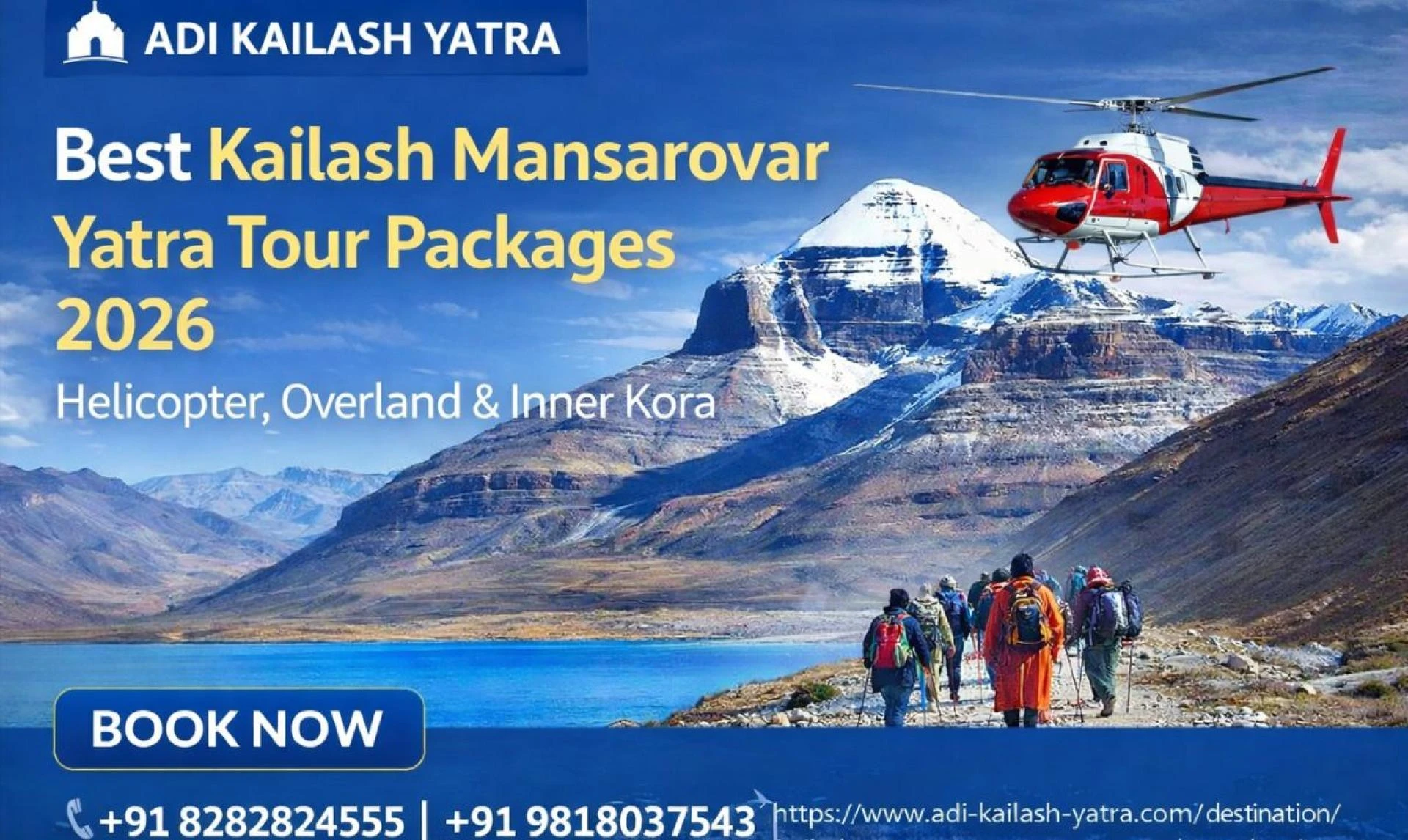
Mount Kailash sits in a remote corner of western Tibet at 6,638 metres. No one has ever climbed it. Not because it is technically impossible, but because no one has ever tried. The mountain is considered so sacred — by Hindus, Buddhists, Jains, and Bon followers alike — that climbing it would be seen as a profound act of disrespect. So instead, hundreds of thousands of pilgrims over the centuries have walked around it. The Parikrama. 52 kilometres. Three days, on average. One of the most demanding and deeply moving walks a human being can take.
Next to Kailash lies Lake Mansarovar — a vast, still, turquoise-blue freshwater lake sitting at 4,590 metres. On a clear morning, the reflection of the mountain on the lake's surface looks almost impossibly perfect. Pilgrims from across India and Nepal travel for days just to take a dip in its freezing waters. They say the cold does not really hit you. That something else takes over. Whether you believe that or not, there is no question that this place does something to people.
Getting there, though, is not simple. The region is remote, the altitude is punishing, the permits are complicated, and the weather does whatever it wants. That is why a good tour package is not just a convenience — it is genuinely what stands between you and a miserable, poorly managed experience. So let us get into it.
What Actually Draws People to Kailash Mansarovar?
The obvious answer is religion. For Hindus, Mount Kailash is the home of Lord Shiva — where he sits in eternal meditation with Goddess Parvati. A single Parikrama, according to ancient belief, washes away the sins of one full lifetime. A hundred and eight Parikramas? Moksha. Liberation from the cycle of birth and rebirth entirely. That is not a small claim. And it is why people who are old, unwell, and physically struggling still make this journey — because the stakes feel that high.
But it is not only about religion. Plenty of people who do not consider themselves particularly religious come back from Kailash utterly changed. There is something about the scale and the silence of that landscape — the empty plateaus, the brutal passes, the sheer size of the sky — that strips away whatever noise you have been carrying in your head. People report sleeping better after the Yatra. Some say long-standing anxieties simply vanished. Others talk about clarity — about decisions they had been putting off for years suddenly becoming obvious.
Buddhists know this mountain as the seat of Demchok and Dorje Phagmo — deities symbolising supreme bliss and emptiness. For Jains, it is Ashtapad, where their first Tirthankara Lord Rishabhdev attained Nirvana. For the Bon people of Tibet, it is the most sacred place on earth, full stop. When you stand at the base of Kailash and look up, it is not hard to understand why every one of these traditions arrived at the same conclusion.
The Different Kailash Mansarovar Yatra Tour Packages — Explained Honestly
There are 15 packages currently available, covering different routes, durations, and travel modes. Here is what you actually need to know about each category:
Helicopter Packages — For Those Short on Time or Physical Stamina
Helicopter packages have changed who can do this pilgrimage. Before them, the Kailash Mansarovar Yatra was effectively off-limits for older pilgrims, those with heart or lung conditions, and anyone who simply could not take three weeks off work. Now, a 5-day helicopter package lets you fly to Simikot or Hilsa, complete the darshan of Mount Kailash, take your dip in Lake Mansarovar, and return home — all without the brutal overland trek.
The Kailash Mansarovar Yatra from Lucknow by Helicopter covers the journey in 9 days at Rs. 2,68,900 per person. The Kathmandu helicopter route takes 11 days at Rs. 2,99,890 — it flies you through Nepal, which adds some spectacular mountain scenery along the way. If you want the absolute quickest option, the 5-Day Kailash Yatra by Helicopter at Rs. 2,58,980 is the most time-compressed version available. And then there is the VIP Package — 5 days, private chartered helicopter, premium stays, fully personalised support, at Rs. 3,45,634. That one is popular with corporate groups and people who simply want zero logistical friction.
Overland Packages — The Traditional Way
If you have the time and the fitness, the overland route is something else entirely. You cross the Tibetan Plateau by road, passing through towns and monasteries that most tourists never see. The landscape changes slowly, dramatically — from green valleys to arid, wind-swept plains to the first distant glimpse of Kailash on the horizon. It earns the destination in a way that flying simply cannot replicate.
The 14-Day Kailash Mansarovar Yatra by Overland at Rs. 2,20,000 is actually the most affordable package on the list. The Yatra via Lhasa at Rs. 2,78,969 adds Tibet's capital city to the itinerary, which means you get to visit the Potala Palace and Jokhang Temple before heading to Kailash. The most ambitious option is the 22-Day route via Nathula Pass in Sikkim — at Rs. 3,67,890, it covers the widest geographic range and gives you the richest overland experience of any package available.
Inner Parikrama & Kora Packages — Not for Everyone, But Extraordinary
The standard Outer Parikrama goes around Mount Kailash at its base. The Inner Parikrama takes you closer — much closer. It is more physically demanding, requires special permissions, and not every pilgrim qualifies for it. But those who complete it describe it as the most intense spiritual experience of their lives. The Kailash Mansarovar Inner Parikrama 2026 package runs 13 days at Rs. 2,45,789. The Kailash Inner Kora ex Simikot is a 16-day package at Rs. 3,87,890 that departs from Simikot in the Humla region of Nepal — one of the most remote jumping-off points on the map.
Specialty Packages — When You Want More Than Just Kailash
A few packages on the list stand out for combining the Yatra with other destinations. The Kailash Yatra via Lhasa with Everest Base Camp is a 14-day package at Rs. 2,87,898 — yes, you read that right, both Kailash and Everest Base Camp in one trip. The Kailash Mansarovar Yatra with Ashtapad Visit at Rs. 2,98,976 is aimed specifically at Jain pilgrims who want to combine the circumambulation of Kailash with a visit to the sacred site of Ashtapad. The 21-Day Mount Kailash and Humla Trekking Tour at Rs. 3,87,987 is for serious trekkers who want to approach Kailash through the wild, barely-touched Humla valley. And the Kailash Mansarovar Aerial Darshan — just 3 days at Rs. 1,07,890 — is the most accessible entry point, offering a blessed aerial view of the mountain for those who cannot manage a longer journey.
What Do These Packages Actually Include?
A well-structured Kailash Mansarovar Yatra package takes care of more than most people realise. Here is what is typically covered across all packages:
- All accommodation — guesthouses, hotels, and tented camps depending on the location and altitude
- Transport throughout — helicopters, jeeps, and buses as required by the route
- All necessary permits — including the Chinese Travel Permit for Tibet, which you cannot arrange on your own
- All meals — vegetarian, freshly cooked, with chefs who understand the dietary needs of pilgrims at altitude
- Experienced guides and Sherpas who know the terrain and can handle emergencies
- Portable oxygen cylinders and first aid kits — non-negotiable at these altitudes
- Group havans and pujas at sacred points along the route
- VIP packages add private helicopter charters, premium hotels, and dedicated personal guides
One thing worth flagging separately: the Chinese visa and Tibet travel permits. These are not something you can sort out alone. The process is controlled tightly by the Chinese government, and the requirements change without much notice. A good tour operator handles this entirely — it is one of the biggest practical reasons to book through a specialist rather than trying to put together the trip independently.
The Moments That Stay With You
Talk to any Kailash Yatra returnee long enough and the same moments keep coming up. Not the logistics — not the flights or the permits. The moments that stay are always the sensory ones.
The first time you see Mount Kailash.
There is a point on the route where the mountain suddenly comes into full view. Pilgrims who have seen it say that no photo does it justice — that something happens in person that the camera simply cannot capture. Some people burst into tears without understanding why. Others go completely silent. A few report feeling genuinely dizzy, as if the ground shifted. You can call that altitude sickness. Or you can call it something else.
The dip in Mansarovar.
The water is cold in a way that takes your breath away. Not just physically — in the older sense of the phrase. Pilgrims describe coming out of the lake feeling scrubbed clean on the inside. Whether that is the power of faith, the shock of ice-cold water at 4,590 metres, or something genuinely beyond explanation — it does not really matter. The experience is the experience.
Dolma Pass — the hardest part of the Parikrama.
At 5,636 metres, Dolma Pass is the highest point of the Kailash Parikrama and the toughest. Pilgrims leave personal belongings here — hair, bits of clothing, photographs of deceased family members — as symbolic offerings. The sense of collective prayer at this pass, with people from dozens of countries all moving in the same direction for the same reason, is hard to put into words.
Sunrise on the mountain.
Wake up before dawn at the Kailash base camp and watch the sky change. The mountain turns shades of amber and pink before settling back into white. The silence at that hour — with nothing around you but open plateau and this enormous peak — stays with people for the rest of their lives.
Practical Things You Should Know Before Booking
The Kailash Mansarovar Yatra is not a trip you can wing. Physical preparation matters enormously. So does mental preparation. And so does choosing the right time to go.
When to go:
The Yatra season runs May through October. May and June are popular for clearer skies and manageable temperatures. September and October are arguably the most beautiful months — the air is crisp, the views are sharp, and the crowds thin out compared to peak summer. July and August can bring rain on the Nepal side of the route, though the Tibetan Plateau stays relatively dry. Outside this window, the passes are snowbound and most routes simply do not operate.
Fitness:
Start preparing at least three months out. Daily walks of 5 to 10 kilometres with a backpack, stair climbing, and breathing exercises will make a noticeable difference. If you are booking a helicopter package, the fitness demands are much lower — but you still need to be medically cleared, especially if you are over 60.
Altitude sickness:
This is the single biggest risk on the Yatra. Symptoms include headaches, nausea, dizziness, and breathlessness — and they can hit fit, experienced trekkers just as hard as first-timers. Take acclimatisation seriously. Do not rush between altitudes. Carry Diamox if your doctor recommends it. And make sure your tour operator provides oxygen support — any operator who does not is cutting a corner you do not want cut.
Documents:
You need a valid passport with at least 6 months validity, a Chinese visa, a Tibet Travel Permit, and several passport-size photographs. Carry multiple photocopies of everything. Your tour operator handles most of the permit paperwork, but the original passport and ID must come from you.
What to pack:
Pack light, but pack warm. Thermal layers, a windproof jacket, waterproof trekking boots, gloves, sunglasses (the UV at altitude is brutal), a sleeping bag rated to -10 degrees, a headlamp, trekking poles, and a small daypack for the Parikrama. Sunscreen with high SPF is not optional — at 4,500+ metres, sunburn happens fast and hard.
Who Is This Yatra Actually For?
The honest answer? Almost anyone — but with the right package for their situation. A 70-year-old grandmother can do the 3-day Aerial Darshan or a helicopter package with some basic medical clearance. A 35-year-old trekker in solid shape can go for the Inner Kora or the Humla route. Families with teenagers can do the standard overland or helicopter packages. Corporate groups have done VIP private helicopter charters. Solo pilgrims join group tours all the time.
Children below 12 are not recommended for this pilgrimage — the altitude is simply too unpredictable for young children. But above 12, with proper preparation and the right package, it is doable. The key is matching the right package to the right person. Not every pilgrim needs the 22-day overland. Not everyone wants to fly in by helicopter. The range of options exists precisely because the Kailash Mansarovar Yatra calls different people in different ways.
Plan Your Kailash Mansarovar Yatra with Adi Kailash Yatra
If you have read this far, you are probably not just casually curious. You are genuinely thinking about going. And if that is the case, you need a team around you that has done this many times over — one that knows the routes, the officials, the weather patterns, the permit systems, and most importantly, the pace at which a pilgrimage like this needs to move.
Adi Kailash Yatra is a Delhi-NCR based pilgrimage specialist that has been organising Kailash Mansarovar tours across every route and every format for years. Their 15 packages cover everything from a 3-day aerial darshan at Rs. 1,07,890 to a 22-day overland expedition at Rs. 3,67,890. Helicopter tours, overland tours, Inner Parikrama packages, combination tours with Everest Base Camp or Ashtapad — they offer the fullest range of Kailash Mansarovar Yatra packages currently available in India.
What makes a real difference with Adi Kailash Yatra is the ground support. Experienced Sherpas who have walked the Parikrama dozens of times. Chefs who cook fresh, vegetarian meals in conditions where most people would struggle to boil water. Tour leaders who know when to push and when to rest. Oxygen cylinders on every trip. Emergency protocols that are actually followed, not just listed on a brochure. That kind of operational care is what separates a pilgrimage that goes well from one that goes wrong.
They also handle the paperwork end-to-end — Chinese visas, Tibet Travel Permits, all border clearances. You show up with your passport and your faith. They handle the rest.
If you want to speak with their team directly, you can reach them at +91 8282824555 or +91 9818037543, or drop them a line at [email protected]. Their office is at Cloud 9 Tower, Vaishali, Ghaziabad, Delhi-NCR. You can browse all 15 packages in detail at www.adi-kailash-yatra.com.
The Kailash Mansarovar Yatra has been calling pilgrims for thousands of years. At some point, that call becomes too loud to ignore. When yours comes — and if you are reading this, it may already have — Adi Kailash Yatra will be ready to help you answer it.
Om Namah Shivaya
www.adi-kailash-yatra.com | +91 8282824555 | [email protected]


Sign in to leave a comment.