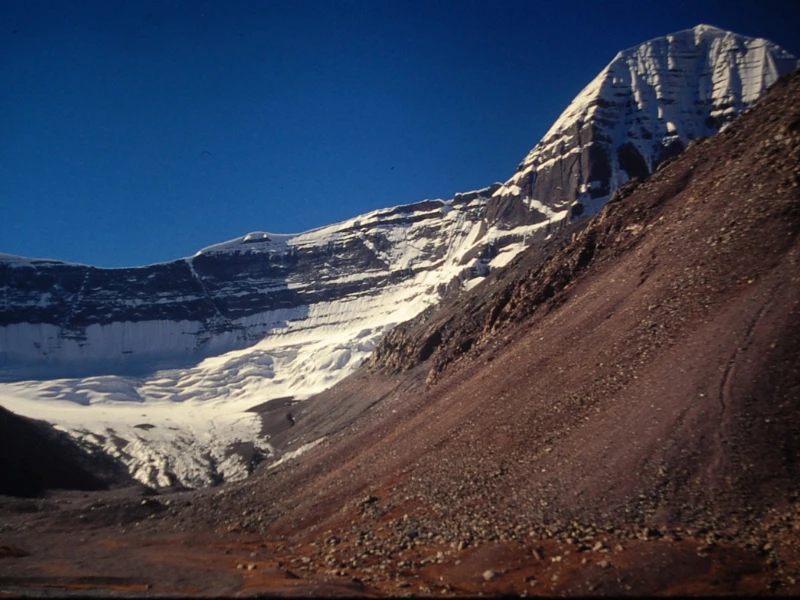

Towering at 8,586 m, Mt. Kanchenjunga is the world’s third-highest peak and a truly majestic, sacred Himalayan icon. It is also known as Kang-chen-dzo-nga, which means “The Five Treasures of the Great Snow” in Sikkim, reflecting its five prominent peaks.
These include:
Kanchenjunga Main (8,586 m)
Yalung Kang (8,505 m)
Kanchenjunga West (8,420 m)
Twin Peaks (both 8,476 m)
The summit of Kanchenjunga was reached only after 50 years of attempts, and it is known for its extreme difficulty. Although the trek is challenging, it is equally rewarding, offering rich biodiversity, remote landscapes, and an untouched Himalayan experience.
If you are an experienced trekker seeking a journey beyond the popularity and crowded trails of traditional treks, the Kanchenjunga Base Camp trek is an outstanding choice.
Kanchenjunga Main lies on the border between Phaktanglung and Sirijanga Rural Municipality in Taplejung District, Nepal, and India. The Kanchenjunga trekking route falls within the Kanchenjunga Conservation Area and is classified as a restricted region. Trekkers must obtain a special permit from the Government of Nepal.
Kanchenjunga has two base camps: North Base Camp and South Base Camp. Many trekkers visit both. Depending on the route, mode of transport, and chosen camps, the trek can take anywhere from 10 to 22 days or more. A shorter itinerary is possible if visiting only the South Base Camp (approximately 10 days), but the full circuit generally takes 20-22 days.
This is not a beginner’s trek. It is suited for experienced trekkers who wish to push their physical and mental limits and explore one of Nepal’s most remote regions. The trek is rich in biodiversity and is home to endangered wildlife, including snow leopards, red pandas, Himalayan black bears, and musk deer.
Why Kanchenjunga?
The Kanchenjunga Base Camp trek is remote, less explored, and not crowded. Unlike Annapurna Base Camp or Mardi Himal, this trail sees very few trekkers due to the demanding terrain, lengthy trekking duration, and permit requirements. As a result, you can enjoy spectacular views in peace, surrounded by untouched nature.
The region offers a rare combination of pristine landscapes, diverse flora and fauna, and authentic cultural immersion. You will walk through forests inhabited by endangered animals, cross high mountain passes, and enjoy nearly private views of the Himalayan giants.
The trek challenges both your physical endurance and mental resilience. It is one of the most extended base camp treks in Nepal, making it a “step above” many popular trails. If you enjoy pushing your boundaries and are seeking a life-changing trekking experience, Kanchenjunga Base Camp will answer that calling.
Things to Know Before Trekking Kanchenjunga
Difficulty
The Kanchenjunga region is remote and less developed. Trails are challenging, steep, and often exposed to the elements. Since this trek usually takes 18-22 days (if visiting both base camps), physical and mental preparedness are essential. Tea houses and rest stops are limited, especially at higher elevations. Due to limited service availability, rugged terrain, and long walking days, prior trekking experience is strongly recommended.
Best Time to Visit
The ideal trekking seasons are:
Spring (March to May)
Offers blooming rhododendrons, clear skies, and vibrant landscapes.
Autumn (September to November)
Stable weather, festive atmosphere in Nepal, and excellent mountain visibility.
Avoid:
Winter (December to February): Harsh, cold, heavy snow, and high altitude risk.
Monsoon (June to August): Frequent rain, landslides, leeches, and poor visibility.
Although trekking is possible during the off-season, conditions are extremely challenging and not advisable for most trekkers.
Permits Required
The Kanchenjunga region is a protected and sensitive area for biodiversity. To conserve the ecosystem, maintain security, and control the number of trekkers, permits are mandatory.
You must obtain:
Kanchenjunga Restricted Area Permit (RAP)
Kanchenjunga Conservation Area Permit (KCAP)
Additionally, due to safety regulations in restricted areas, solo trekking is not allowed. You must trek with at least two or more people plus a licensed local guide (guides and porters are not counted as group members). This trek must be arranged through a licensed local trekking agency.
How to Prepare for the Trek
Physical Preparation
Good physical health is essential. You must have strong stamina and endurance to complete the trek. Begin training at least 3 months prior, focusing on:
- Strength training (legs and core)
- Endurance and cardio (hiking, running, cycling, swimming)
- Practice hikes with a backpack
- Trekking at higher altitudes, if possible
A physical check-up is recommended before the trek. Consult a doctor regarding medication for Acute Mountain Sickness (AMS) and ensure you carry suitable high-altitude gear and warm clothing.
Mental Preparation
This trek will test your resilience. It is long, remote, and isolated, with limited resources. You must be mentally prepared to face unpredictable terrain, weather, and physical fatigue.
Research the trek thoroughly, understand possible challenges, and approach the journey with a positive and growth-oriented mindset. The more mentally prepared you are, the more fulfilling your experience will be.
Itinerary
The itinerary below is designed to help you acclimate to the high altitude as easily as possible.
Day 01: Arrival in Kathmandu (1,300–1,400 m)
You arrive in Kathmandu, the capital of Nepal. Check your gear and purchase any last-minute items, and ensure your permits for the trek are ready.
Lodging: Hotels in Thamel.
For More Details, Click Here























Sign in to leave a comment.