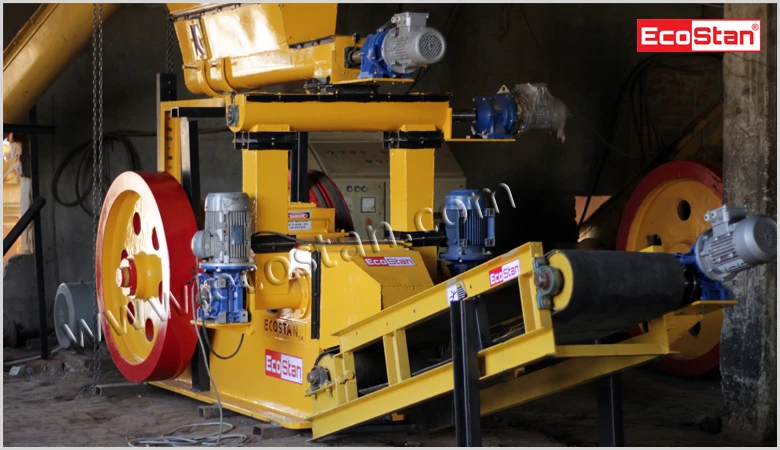

Using a briquette cum pallet machine is very simple, but producing high-quality briquettes is not as simple as you think. Here, we will share some key elements with you to enhance the quality of biomass briquettes. However, there are a lot of factors that will influence the biomass briquette manufacturing procedure, which impact the biomass briquette quality. In general, the internal and external are two types in which they are divided. The raw material type, moisture, etc. are included in the internal type, while the heating temperature, pressure, and size of the raw material, etc. are included in the external type. Let’s move further in this post, and take a look at the key elements that help to improve the quality of biomass briquette.
Pressure on briquettes
The most crucial element in the production of biomass briquettes is pressure. The density of the biofuel briquette will typically increase as the pressure rises. Three steps—soft briquetting, transition briquetting, and stable briquetting, can be used to decompose the entire briquet-making process. When the pressure rises in the first two steps, the low pressure causes the density to increase quickly. However, by the time it reaches the stable briquette process, the density has increased slowly, if at all.
The heating temperature
The density and strength of the briquettes are significantly impacted by the heating temperature. For the same raw material with a specific amount of moisture, the required briquetting pressure will be reduced at high temperatures. Since lignin serves as the internal binder, biomass briquettes are typically made without the need for binders. When the temperature is between 70 and 100 degrees Celsius, the lignin will soften. The stronger the bonding affection, the better the temperature. When the temperature reaches 160 degrees Celsius, the lignin begins to melt and turn into a sort of gel, intensifying the binding effect.
Mold size and briquetting speed matter:
Briquette pressure is greatly influenced by size and shape.
According to studies, smaller briquettes with the same material and pressure would have a larger density and may even be longer.Briquettes with a diameter and length rate of 8 to 10 are ideal for producing high-quality briquettes because they have a higher briquette strength.The briquette and pressure keeping time:
When the pressure is little, it has a significant impact on briquette quality; when it is large, it has less impact. The pressure maintaining time can be disregarded in extremely high-pressure conditions. When the briquette production time is longer than 20 seconds, an additional 10 seconds of pressure maintenance will raise the briquette density by 5%. Generally, if the pressure-keeping period is greater than 40 seconds, the quality of affection can be disregarded.
What kind of raw material are you using?
Choose the best briquette machine for varied raw biomass and different briquette methods. While biomass with a high fiber content is simple to briquette, especially under high pressure, wood waste has low flexibility when briquettes at normal temperatures. Raw biomass high in lignin, such as wood, straw, etc., is suitable for briquette heating systems because the lignin performs better at high temperatures, which greatly increases flexibility.
Final words
By focusing on the above-written key elements, you can produce high-quality biomass briquettes. If you produce high-quality biomass briquettes and sell them, you will be able to grow in the briquetting market. Moreover, if you want to purchase Briquette Machine at the best price, check out ecostan.com, where you can buy it. They not only sell briquette machines, but also other types of briquette-related machines.










Sign in to leave a comment.