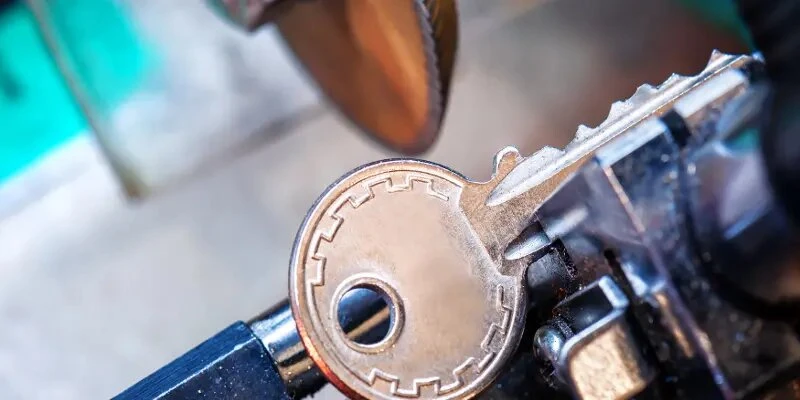

Key making is a craft that dates back centuries, steeped in tradition and passed down through generations. From ancient blacksmiths forging crude keys to modern locksmiths employing cutting-edge technology, the art of key making has evolved while retaining its essence. In this section, we'll delve into the rich history and time-honored traditions that have shaped the kingdom of key makers.
The Legacy of Ancient Keys
Ancient civilizations such as the Egyptians, Greeks, and Romans recognized the importance of securing their possessions and devised primitive locking mechanisms to achieve this goal. "The Legacy of Ancient Keys" evokes the mystique of ancient civilizations, where keys held symbolic and practical significance. From Egyptian tombs to medieval castles, keys unlocked secrets and treasures, leaving a legacy of mystery and intrigue that continues to captivate imaginations today. Early keys were often crafted from bronze or iron, with intricate designs that reflected the craftsmanship of their makers. These ancient keys symbolized power and privilege, serving as tangible expressions of ownership and authority.
The Rise of Locksmith Guilds
During the middle Ages, the art of key making flourished alongside the emergence of guilds—associations of craftsmen dedicated to upholding standards of quality and skill within their respective trades. Locksmith guilds played a crucial role in preserving the secrets of the trade and passing them down from master to apprentice. Through rigorous apprenticeships and apprenticeships, aspiring locksmiths learned the intricacies of key making and honed their craft under the guidance of seasoned mentors. The Industrial Revolution brought about significant changes in the field of key making, as mechanization and mass production revolutionized the manufacturing process. Key making transitioned from a predominantly manual craft to a mechanized industry, with the invention of key-cutting machines and the standardization of key designs. This period marked a watershed moment in the history of key making, democratizing access to secure locks and keys for the masses.
Craftsmanship in the Digital Age
In the digital age, key making has continued to evolve in response to advancements in technology and changing consumer preferences. Computer-aided design (CAD) software and computer numerical control (CNC) machining have enabled key maker to produce keys with unprecedented precision and accuracy. Laser engraving technology has further expanded the possibilities, allowing for intricate designs and personalized key creations. Despite the march of progress, traditional craftsmanship remains at the heart of key making, cherished by aficionados and purists alike. In an age of mass-produced goods and disposable consumer culture, the art of handcrafted keys represents a connection to the past and a celebration of human skill and ingenuity. Key maker who embrace traditional techniques honor the legacy of their forebears while ensuring that the art of key making endures for generations to come.
The Artistry of Key Design
Beyond their utilitarian function, keys possess a unique aesthetic appeal, with designs ranging from elegantly simple to intricately ornate. Key manufacturers often collaborate with designers and artisans to create keys that are not only functional but also visually striking. Whether inspired by historical motifs, cultural symbols, or contemporary trends, these artisanal keys serve as objects d'art that elevate the act of unlocking to an art form.
Key Maker's Workshop
Step into the workshop of a key manufacturer, and you'll find yourself immersed in a realm where precision meets creativity. In this section, we'll take a closer look at the inner workings of a key manufacturer’s workshop, exploring the tools, techniques, and craftsmanship that bring keys to life. A key manufacturer workshop is more than just a space—it's a sanctuary where raw materials are transformed into functional works of art. From the scent of metal shavings to the rhythmic hum of machinery, every aspect of the workshop is carefully curated to foster creativity and productivity. Workbenches are adorned with an array of tools, each serving a specific purpose in the key making process, while shelves are lined with key blanks waiting to be shaped into keys.
Instruments of Precision
At the heart of every key maker's toolkit lies a collection of precision instruments, each essential for shaping and crafting keys with unparalleled accuracy. Key cutting machines, equipped with cutting blades and guides, allow key manufacturers to carve intricate patterns and grooves into key blanks with surgical precision. Calipers and micrometers ensure that each cut is made to exact specifications, while files and grinders provide the finishing touches that give keys their smooth, polished surfaces.
Conclusion
As we reflect on the kingdom of key makers, we are reminded of the enduring legacy of craftsmanship and innovation that defines this ancient profession. From the humble origins of ancient keys to the cutting-edge technologies of the modern era, key making has evolved alongside human civilization, adapting to the needs and aspirations of each successive generation. As we peer into the future, one thing remains certain—the kingdom of key manufacturers will continue to thrive, Key maker locksmith Dubai unlocking new possibilities and preserving the timeless artistry of their craft.






















Sign in to leave a comment.