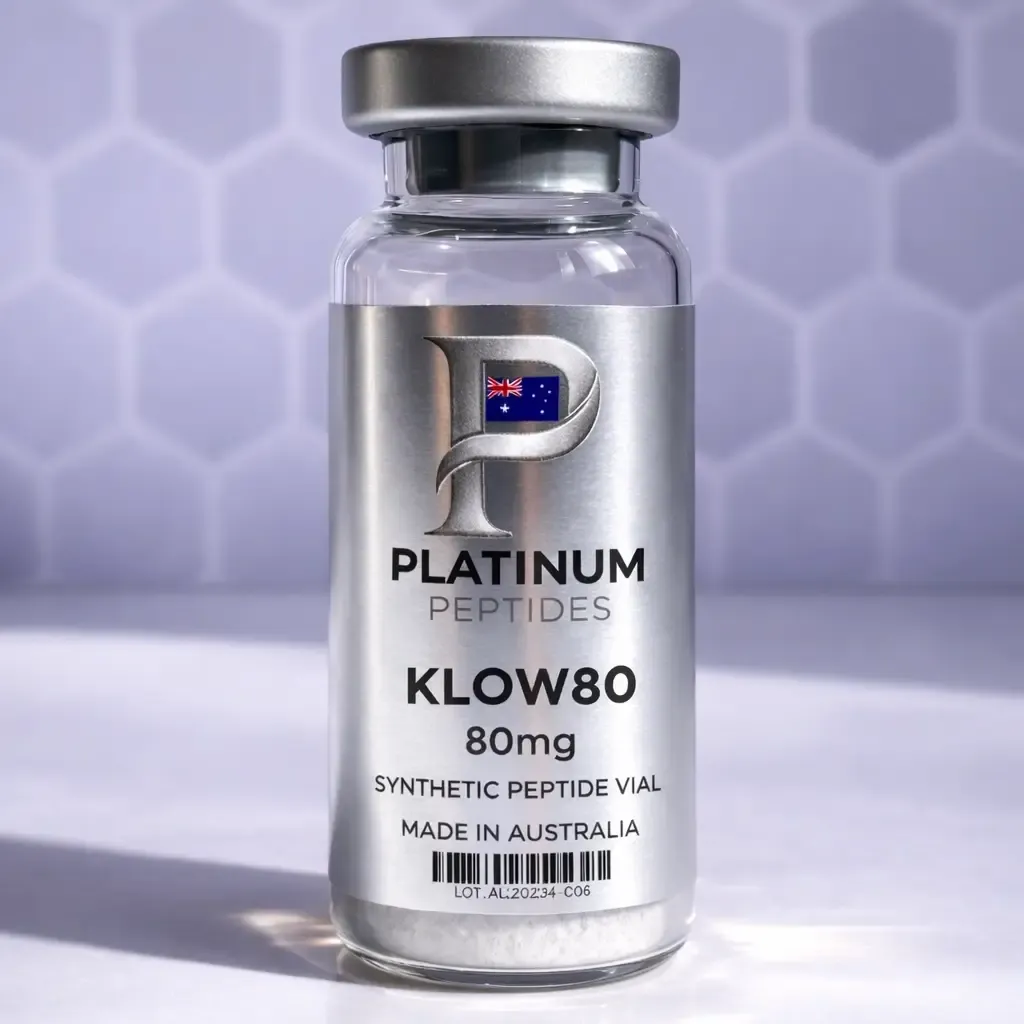

Peptide research continues to expand as scientists investigate how different peptide compounds interact with cellular pathways and biological processes. Combination peptide blends have become an area of interest because they allow researchers to examine multiple signalling pathways within controlled laboratory environments.
The Klow peptide is a research blend that combines four individual peptides: BPC-157, GHK-Cu, TB-500, and KPV. Each component has been studied separately for its relationship with cellular signalling, extracellular matrix pathways, tissue biology, and inflammatory responses. The combination is designed for laboratory research purposes, allowing scientists to explore how different peptide mechanisms may interact within experimental models.
What Is KLOW Peptide?
KLOW is not a single naturally occurring peptide but a multi-compound research formulation containing four different peptide components. These include:
- BPC-157, a peptide investigated in relation to cellular signalling and tissue response pathways.
- GHK-Cu, a copper-binding peptide studied for its interactions with extracellular matrix and collagen-related processes.
- TB-500, a peptide researched for its association with actin cytoskeleton activity.
- KPV, a small peptide sequence examined for its relationship with inflammatory signalling pathways.
According to available product information, KLOW is supplied as a lyophilised powder intended for laboratory research use only.
How KLOW Peptide Is Studied
Researchers examine peptide combinations like KLOW to better understand how multiple biological pathways may function together. Instead of focusing on one signalling mechanism, combination research allows scientists to investigate interactions between different cellular processes.
The Klow peptide has attracted attention because its components represent different areas of peptide research. Scientists may study its individual compounds separately or explore how combined pathways behave in controlled laboratory settings. However, research findings from individual peptides do not automatically confirm the effectiveness or activity of the combined formulation.
Key Components of KLOW Research
BPC-157 Research
BPC-157 is one of the most researched components within the blend. Scientific studies have examined its relationship with cellular communication, vascular pathways, and tissue response mechanisms, primarily through laboratory and animal research models.
Researchers continue to investigate how BPC-157 interacts with biological systems and what potential areas may require further study.
GHK-Cu Research
GHK-Cu is a naturally occurring copper-binding peptide made up of glycine, histidine, and lysine. Research has explored its involvement in extracellular matrix signalling, collagen-related pathways, and cellular repair mechanisms.
Because copper plays an important role in various biological processes, GHK-Cu remains a significant area of interest in peptide and regenerative research.
TB-500 Research
TB-500 is studied for its connection with thymosin beta-4-related pathways and actin cytoskeleton activity. The cytoskeleton plays an important role in cell movement, structure, and communication.
Laboratory investigations continue to examine how TB-500-related mechanisms contribute to scientific understanding of cellular behaviour.
KPV Research
KPV is a short peptide sequence derived from alpha-melanocyte-stimulating hormone (α-MSH). Researchers have examined its relationship with inflammatory signalling and immune-related pathways in experimental environments.
Why Combination Peptide Research Matters
Combining different peptides allows researchers to study multiple biological mechanisms at the same time. Each peptide may interact with different cellular pathways, creating opportunities to examine complex biological responses.
However, combination studies require careful evaluation because interactions between different compounds may vary depending on research conditions, concentration, and experimental design. Current research on peptide blends remains an evolving field, with many applications still under investigation.
Importance of Quality in Research Peptides
Researchers working with peptide materials typically consider several quality factors before selecting products for laboratory studies.
Important considerations include:
- Purity testing results.
- Laboratory documentation.
- Batch consistency.
- Proper storage conditions.
- Clear product specifications.
High-quality research materials support more reliable experiments and help researchers maintain consistency throughout laboratory investigations.
Storage and Handling Considerations
Peptide materials require careful storage and handling to maintain stability. Lyophilised peptide products are generally stored according to manufacturer recommendations, which may include protection from moisture, heat, and unsuitable environmental conditions.
Following appropriate laboratory procedures helps preserve product integrity and supports accurate research outcomes.
Understanding Research Limitations
Although individual peptides within KLOW have been investigated in scientific studies, the combined blend itself requires careful interpretation. Current evidence does not establish therapeutic applications for the combination, and research products are not intended for human consumption or medical treatment.
Regulatory organisations have also highlighted concerns regarding unapproved peptide products marketed outside established medical pathways, emphasising the importance of responsible use and scientific oversight.
The Growth of Peptide Research in Australia
Australia has seen increasing interest in peptide science, particularly among researchers exploring cellular biology, regenerative pathways, and molecular signalling. As scientific understanding continues to develop, access to properly documented laboratory materials remains an important factor.
Researchers interested should prioritise suppliers that provide transparent information, quality documentation, and products clearly intended for approved research purposes.
Conclusion
This represents a multi-component research blend that combines BPC-157, GHK-Cu, TB-500, and KPV to allow scientists to explore multiple cellular pathways within laboratory environments. Each component has its own research background, contributing to continued interest in peptide science. As peptide research continues to evolve, exploring Australian research peptides through responsible scientific practices, quality verification, and proper laboratory standards remains essential for supporting accurate and meaningful research.

























Sign in to leave a comment.