Why Most Trekkers Underestimate Langtang
Every year, thousands of trekkers walk into Langtang National Park, making it one of Nepal’s most visited trekking regions after Everest and Annapurna. On paper, Langtang looks “moderate.” In reality, many trekkers struggle not because the trail is extreme, but because they prepare poorly.
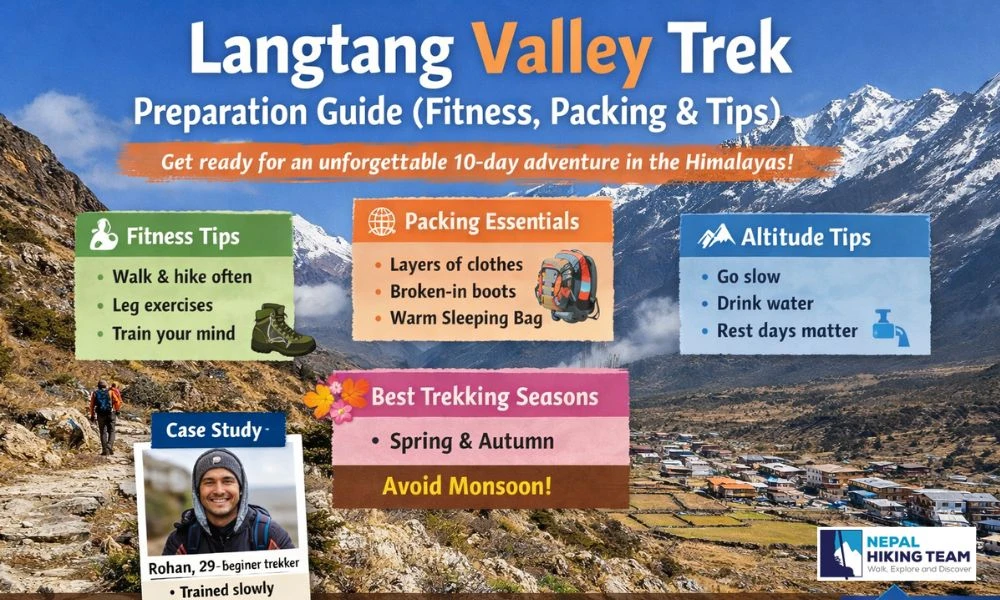
If you’re planning the langtang valley trek 10 days, preparation is the difference between an unforgettable Himalayan journey and a painful uphill battle. We’ve seen both outcomes. This guide breaks down exactly how to get ready for fitness, packing, mindset, and real-world tips that actually work in Nepal.
What Is the Langtang Valley Trek and Why Preparation Matters?
The Langtang Valley Trek is a classic Nepal trekking route north of Kathmandu, close to the Tibetan border. It takes you through forests, Tamang villages, glacial valleys, and up to Kyanjin Gompa (3,870 m), with optional hikes to higher viewpoints.
Sounds simple, right? Here’s where people get it wrong.
Most trekkers assume altitude only becomes an issue above 4,000 meters. That’s not true. We regularly see symptoms start much earlier.
Preparation matters because:
- You gain altitude fast
- Facilities are basic
- Weather changes quickly
- Rescue is slow and expensive
Langtang doesn’t punish you for being slow. It punishes you for being careless.
Who Is the Langtang Valley Trek Best For?
This trek is ideal if you:
- Want a less crowded alternative to Everest
- Have 10–12 days including travel
- Prefer teahouse trekking (no camping)
- Are moderately fit, not a hardcore mountaineer
It’s not ideal if you:
- Hate cold nights
- Expect luxury lodges
- Skip fitness prep and try to “wing it.”
We’ve seen people fail this trek simply because they treated it like a casual hike. Langtang doesn’t forgive laziness.
How Fit Do You Need to Be for Langtang Valley Trek?
Can an Average Person Do the Langtang Valley Trek?
Yes but “average” doesn’t mean unprepared.
Think of it this way:
If you can walk 5–6 hours a day, uphill, carrying a daypack, for 10 days in a row, you’re ready.
Minimum Fitness Benchmarks (Realistic)
| Fitness Area | What You Should Manage |
| Cardio | Walk 10 km in hills without exhaustion |
| Legs | Squats, stairs, downhill control |
| Endurane | Consecutive long walking days |
| Mental | Handle cold, fatigue, simple food |
If you get breathless climbing two flights of stairs, start training now. Langtang will expose that weakness fast.
How to Train for Langtang Valley Trek
How Many Weeks of Training Are Enough?
6–8 weeks is ideal. Less than that, and you’ll suffer.
Weekly Training Breakdown (Beginner-Friendly)
3–4 days cardio
- Brisk walking
- Stair climbing
- Hiking with a backpack
2 days strength
- Squats
- Lunges
- Step-ups
- Core exercises
1 rest day
- Stretching
- Mobility
- Light yoga
Train like you’ll trek: slow, steady, consistent. Speed doesn’t matter. Endurance does.
What Happens If You Don’t Train?
We’ve seen trekkers quit at Lama Hotel not because of altitude, but because their knees gave up. Downhill walking destroys untrained legs. Fitness isn’t optional; it’s injury prevention.
What Should You Pack for the Langtang Valley Trek?
Packing incorrectly is the number one mistake we see.
Core Rule: Pack Light, Pack Smart
If your bag feels heavy in Kathmandu, it will feel unbearable at 3,500 meters.
Essential Packing List (Explained)
Clothing (Layering Is Everything)
| Layer | Why It Matters |
| Base layer | Keeps sweat off your skin |
| Insulation (fleece/down) | Warmth at altitude |
| Outer shell | Wind and rain protection |
Avoid cotton. It stays wet and makes you cold.
Footwear: Don’t Experiment
- Broken-in trekking boots (mandatory)
- Wool or synthetic socks
- Camp shoes or sandals
Blisters ruin trips faster than bad weather. This is non-negotiable.
What Gear Is Often Overpacked?
From experience:
- Too many clothes
- Heavy jeans
- Hard-cover books
- Fancy cameras with no spare batteries
Simple always wins in Langtang.
What About Sleeping Bags?
Most teahouses provide blankets, but they’re not enough—especially in colder months.
Recommended:
- Sleeping bag rated -10°C to -15°C
This one item massively improves sleep quality. Poor sleep makes altitude problems worse.
How Cold Does Langtang Valley Get?
Expect:
- Winter nights: very cold
- Spring and autumn nights: cold but manageable
- Daytime: pleasant, often windy
Cold itself isn’t dangerous. Being unprepared is.
How Do You Prevent Altitude Sickness on Langtang Trek?
Why Langtang Feels Harder Than Expected
The altitude gain from Syabrubesi to Kyanjin Gompa is quick. That’s what surprises people.
Proven Altitude Safety Rules
- Walk slow—slower than you think
- Drink 3–4 liters of water daily
- No alcohol above 2,500 meters
- Add acclimatization hikes
- Listen to headaches and nausea
Medication can help, but pacing helps more.
What Food Should You Eat on the Trek?
What Works Well at Altitude
- Dal Bhat
- Noodles
- Rice and potatoes
- Soups
What Often Fails
- Heavy meat dishes
- Too much cheese
- Alcohol
Your stomach gets lazy at altitude. Simple food always wins.
Why Most Trekkers Choose a Guide for Langtang Valley Trek
Langtang can be done independently, but guides add real value.
Trek With Guide vs Without Guide
| With Guide | Without Guide |
| Safety and navigation | Risk of wrong trails |
| Cultural insight | Surface-level experience |
| Emergency support | On your own |
| Pace control | Easy to overpush |
With recent trekking regulations, guided trekking is now strongly recommended—and often required.
How the Nepal Hiking Team Makes Langtang Easier
Here’s our honest take:
Langtang is more enjoyable when logistics are handled properly.
At Nepal Hiking Team, we focus on:
- Proper acclimatization pacing
- Experienced local guides
- Flexible itineraries
- Real safety protocols not just promises
Bad operators rush itineraries. That’s when people get sick.
Best Time to Do Langtang Valley Trek
Best Seasons (From Experience)
- Spring (Mar–May): Flowers, stable weather
- Autumn (Sep–Nov): Clear views, busy trails
Off-Season Reality
- Winter: Cold but quiet
- Monsoon: Slippery trails, leeches, clouds
If views matter, avoid the monsoon. Period.
Common Mistakes People Make on Langtang Trek
- Underestimating cold
- Overpacking
- Walking too fast
- Ignoring headaches
- Booking the cheapest agency
Cheap treks often cost more later in injuries, evacuation, or regret.
Final Preparation Checklist
Before You Go
- Train 6–8 weeks
- Break in boots
- Book a reliable agency
- Get travel insurance (covering trekking up to 4,000 m)
During Trek
- Walk slow
- Eat enough
- Sleep warm
- Speak up if you feel off
FAQs
Is Langtang Valley Trek safe?
Yes, if you acclimatize and don’t rush.
Can beginners do Langtang?
Yes, with basic fitness training.
How difficult is Langtang compared to Everest?
Easier and shorter, but still physically demanding.
Is 10 days enough?
Yes, for a proper Langtang itinerary.
Conclusion
The Langtang Valley Trek isn’t extreme but it’s honest. It gives back exactly what you put in. If you prepare well, the Langtang Valley trek 10 days becomes one of the most peaceful and culturally rich treks in Nepal.
In our opinion, Langtang is underrated and that’s a good thing. Fewer crowds. Real villages. Quiet mountains.
If you want the trek done right, with safety and comfort handled properly, Nepal Hiking Team is one of the operators that genuinely respects both the mountain and the trekker.

























Sign in to leave a comment.