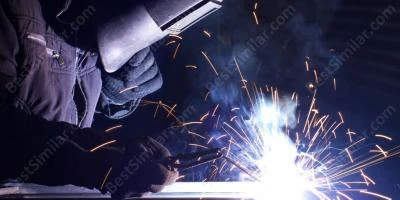

Laser cutting is more often used in the processing of materials including textiles, wood and paper in modern industrial production, as well as sheets, plastics, glass, ceramics and semiconductors. The use of laser cutting in precision machining and micromachining will also expand significantly in the upcoming years. Advanced Signmakers has established itself as an excellent choice for laser cutting in Melbourne.
First, let's look at how laser cutting works.
The material is immediately melted or vaporized when the concentrated laser beam hits the workpiece. The cutting process begins as soon as the laser beam enters the workpiece; moves along the shape and melts the material. Typically, a jet stream is used to remove the melt from the cut, leaving a narrow gap between the cut part and the frame. Narrow seams are almost the same width as a focused laser beam.
GAS CUTTING
Flame cutting is a standard technique used for cutting mild steel. Oxygen is used as the cutting gas. Before blowing into the cut, the oxygen pressure is increased to 6 bar. The reaction between the hot metal and the oxygen there causes it to burn, and the oxidase is the result of a chemical reaction, releasing a large amount of energy (five times the energy of a laser).
FUSION CUTTING
Another common method for cutting metals is fusion cutting, which can also be used to cut other low-melting-point materials like ceramics. The cutting gas is either nitrogen or argon, and air at pressures between 2 and 20 bar is forced through the incision. Argon and nitrogen are inert gases, meaning they do not react with the molten metal in the notch, but simply blow it to the bottom. Air pressure increased to 5-6 bar is sufficient to blow away the molten metal in the section. Since nitrogen is about 80% air, compressed air cutting is essentially fusion cutting
PLASMA CUTTING
With the correct choice of parameters, plasma clouds appear in the section of plasma cutting using plasma welding. Ionized metal vapors and ionized cutting gas form a plasma cloud.
The CO2 laser energy is absorbed by the plasma plume and transferred to the workpiece, allowing for greater energy coupling and faster metal melting and cutting. Therefore, the cutting process is also called high-speed plasma cutting. Plasma cutting can only be used with CO2 laser cutting because the plasma cloud is actually transparent to the solid laser.
Gasification CUTTING
Gas cutting vaporizes the material and reduces the thermal impact on the material around it. By using continuous CO2 laser treatment to vaporize materials with low heat generation and high absorption, the above effects can be achieved, such as thin plastic film and non-melting materials such as wood, paper and foam. The ultra-short pulsed laser allows this technique to be applied to other materials as well. Free electrons in the metal absorb the laser and heat up quickly. The material sublimates immediately because the laser pulse has no effect on the molten particles or plasma and there is no opportunity to transfer heat to the material around it. There is no obvious thermal effect in the material for picosecond pulse ablation and no melting or burr formation.
Fig.3 Gas cutting: The laser causes vaporization and burning of the material. Steam pressure pulls the slag out of the cut
The laser cutting process is affected by many parameters, some of which depend on the specifications of the laser generator and the laser cutting machine, while others differ.
DEGREE OF POLARIZATION
How much of the laser is converted depends on the degree of polarization? In about 90% of cases, polarization is present. This is sufficient for high-quality cutting.
AVERAGE FOCUS
The focal length of the focusing lens can be adjusted to change the diameter of the focus, which in turn affects the width of the cut. Smaller focal diameter means narrower cuts.
FOCUS POSITION
The focus position determines the diameter of the beam, the power density and the shape of the notch on the surface of the workpiece. Rice. 4 Focus position: inside, on the surface and on the rising side of the workpiece.
LASER PERFORMANCE
The power of the laser should correspond to the type of processing as well as the type and thickness of the material. The power level must be sufficient to exceed the processing threshold for the power density of the workpiece.
Giant. 5 A stronger laser allows for cutting thicker material
WORKING MODE
The cutting of conventional metal and plastic contours of millimeter to centimeter thickness is primarily done in continuous mode. Low-frequency pulsed lasers are used to melt holes or obtain precise contours.
CUTTING SPEED
Laser power and cutting speed must match. Cutting too fast or too slow can lead to increased roughness and burr formation.
Fig.6 Cutting speed decreases with increasing sheet thickness
NOZZLE DIAMETER
The shape of the gas flow and air flow from the nozzle is determined by its diameter. The thicker the material, the larger the diameter of the gas jet and the larger the diameter of the nozzle opening.
TECHNICAL SPECIFICATIONS
The required processing parameters are now stored in the control unit of the cutting system. There are data for each material type and thickness. The technological specifications make it easy for non-technical people to use the laser cutting equipment.
CUT QUALITY ASSESSMENT
For example, the standard of burr shape, sagging and graininess can be assessed with the naked eye. Straightness, roughness and notch width should be measured with special instruments
PROSPECTS FOR THE FUTURE
The continued success of laser cutting is beyond the reach of most other methods. This trend continues today. In the future, the use of laser cutting will become more and more promising. Advanced Signmakers, the best SignMaker company in Melbourne.










Sign in to leave a comment.