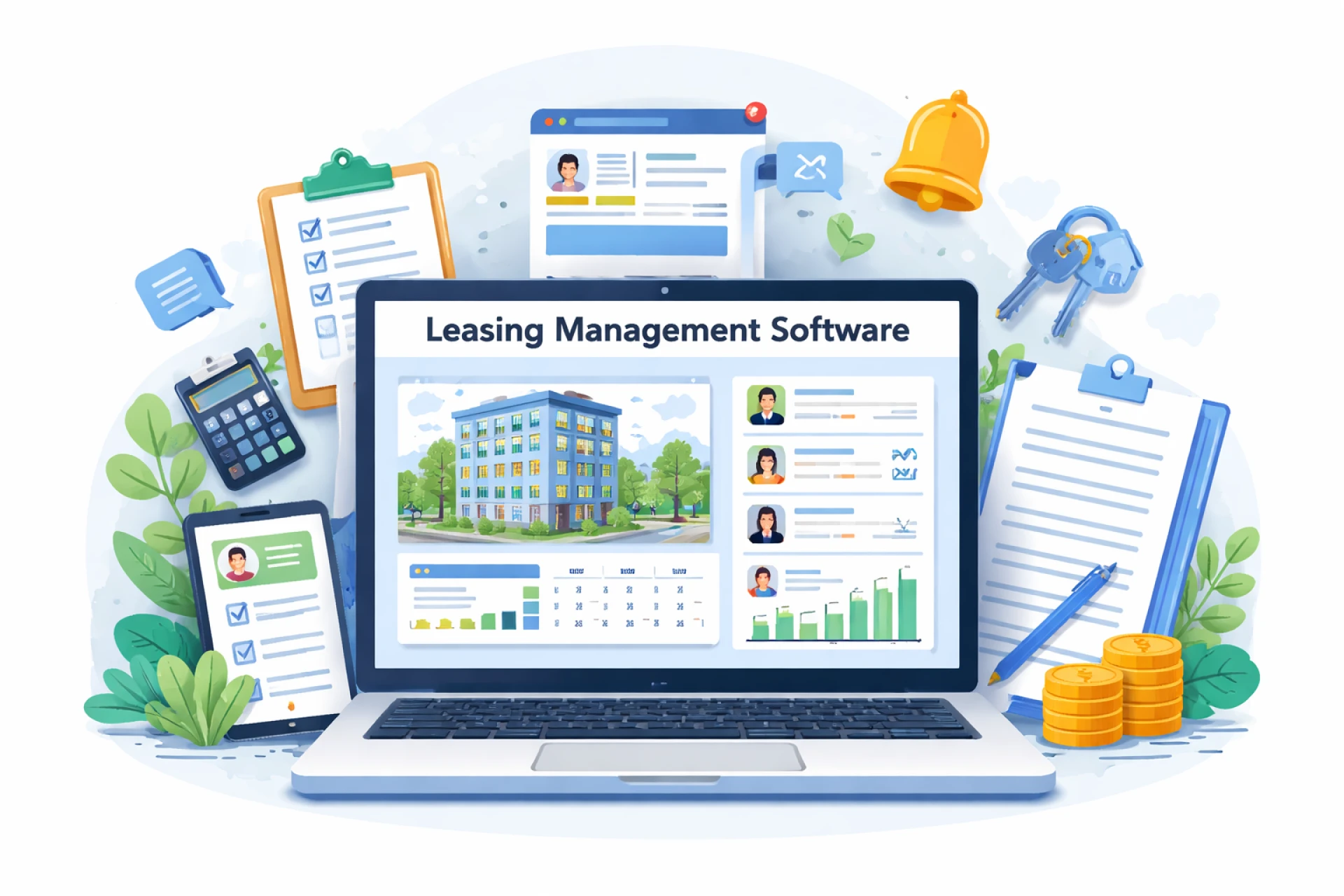
Leasing management software has become a critical system for property managers, landlords, and real estate operators responsible for handling high volumes of leases across residential, commercial, and mixed-use portfolios. As leasing operations grow more complex, manual tracking through spreadsheets, email threads, and paper files creates delays, errors, and compliance risk.
In 2026, leasing management software is no longer just a digital filing system. It is a structured platform that manages the entire leasing lifecycle—from prospect inquiry to lease renewal—while ensuring accuracy, consistency, and visibility. This guide explains what leasing management software is, how it works, and why it plays a central role in modern leasing operations.
What Is Leasing Management Software?
Leasing management software is a centralized platform designed to manage all activities related to leasing properties. It connects prospect data, lease documents, rent schedules, and renewal workflows into one system.
Most leasing management software platforms support:
- Prospect and applicant tracking
- Lease creation and execution
- Rent schedules and escalations
- Lease expiration and renewal tracking
- Document storage and version control
- Reporting and performance metrics
By consolidating leasing data, teams gain a single source of truth for lease-related operations.
Why Leasing Operations Need Dedicated Software
Leasing is a time-sensitive process. Delays, missed follow-ups, or incorrect lease terms can directly impact occupancy and revenue.
Without leasing management software, teams often face:
- Missed lease expirations or renewal opportunities
- Inconsistent lease terms across properties
- Manual data entry errors
- Limited visibility into leasing performance
- Disorganized lease documentation
Leasing management software addresses these issues by enforcing structured workflows and automating repetitive tasks.
Core Capabilities of Leasing Management Software
1. Prospect and Application Management
Leasing management software centralizes prospect and applicant information, making it easier to manage leads and move them through the leasing funnel.
Key capabilities include:
- Prospect inquiry tracking
- Application status monitoring
- Communication history
- Lead source reporting
This ensures no opportunities are lost due to poor follow-up.
2. Lease Creation and Standardization
Creating accurate, compliant leases is critical. Leasing management software standardizes lease templates to ensure consistency.
Typical features include:
- Pre-approved lease templates
- Automated population of lease fields
- Version control for lease documents
- Digital execution workflows
Standardization reduces errors and speeds up lease execution.
3. Rent Schedules and Escalations
Lease terms often include rent increases, step rents, or concessions. Leasing management software tracks these details automatically.
Key benefits include:
- Accurate rent schedules
- Automated escalation tracking
- Alignment between lease terms and billing
- Reduced manual calculations
This ensures rent billing reflects contractual terms.
4. Lease Expiration and Renewal Tracking
Missed renewals can lead to unexpected vacancies or revenue loss. Leasing management software provides visibility into upcoming expirations.
Common features include:
- Lease expiration dashboards
- Automated renewal reminders
- Renewal offer tracking
- Historical lease data
This allows teams to plan renewals proactively.
5. Document Management and Compliance
Leasing management software stores all lease-related documents securely and in one place.
Key capabilities include:
- Centralized document storage
- Role-based access controls
- Audit trails and document history
- Easy retrieval during disputes or audits
Strong document control reduces risk and improves compliance.
Leasing Management Software Across Property Types
Leasing management software is used across various real estate sectors.
Residential Leasing
In residential leasing, software helps manage high application volumes, standardized leases, and frequent renewals.
Commercial Leasing
Commercial leasing involves complex terms, longer lease durations, and escalations. Leasing management software ensures accuracy and consistency.
Mixed-Use and Portfolio Leasing
For mixed-use portfolios, centralized leasing systems provide visibility across asset types and locations.
Cloud-Based Leasing Management Software
Most modern leasing management software is cloud-based, allowing teams to work from anywhere.
Cloud-based platforms offer:
- Remote access for leasing teams
- Automatic updates and security improvements
- Faster onboarding and deployment
- Easier collaboration across departments
Cloud access is especially valuable for distributed leasing teams.
Integration With Property and Accounting Systems
Leasing management software is most effective when integrated with other systems.
Common integrations include:
- Property management software
- Accounting and billing platforms
- CRM tools
- Document management systems
Integrations ensure lease data flows accurately into billing and reporting workflows.
How to Choose the Right Leasing Management Software
Selecting leasing management software requires understanding both current leasing needs and future growth.
Key considerations include:
- Leasing volume and portfolio size
- Lease complexity and customization needs
- Reporting and analytics capabilities
- Integration with existing systems
- Vendor support and implementation process
The right platform should support efficiency without sacrificing accuracy.
The Future of Leasing Management Software
Leasing management software continues to evolve toward:
- Greater automation of leasing workflows
- Real-time visibility into leasing performance
- Improved compliance and document controls
- Unified platforms replacing disconnected tools
As competition for tenants increases, leasing efficiency becomes a strategic advantage.
Final Thoughts
Leasing management software is no longer optional for professional property operations. It provides the structure, visibility, and control required to manage leasing efficiently and accurately.
For property managers and real estate operators, the right leasing management software enables faster lease execution, improved occupancy, and stronger revenue control.



























Sign in to leave a comment.