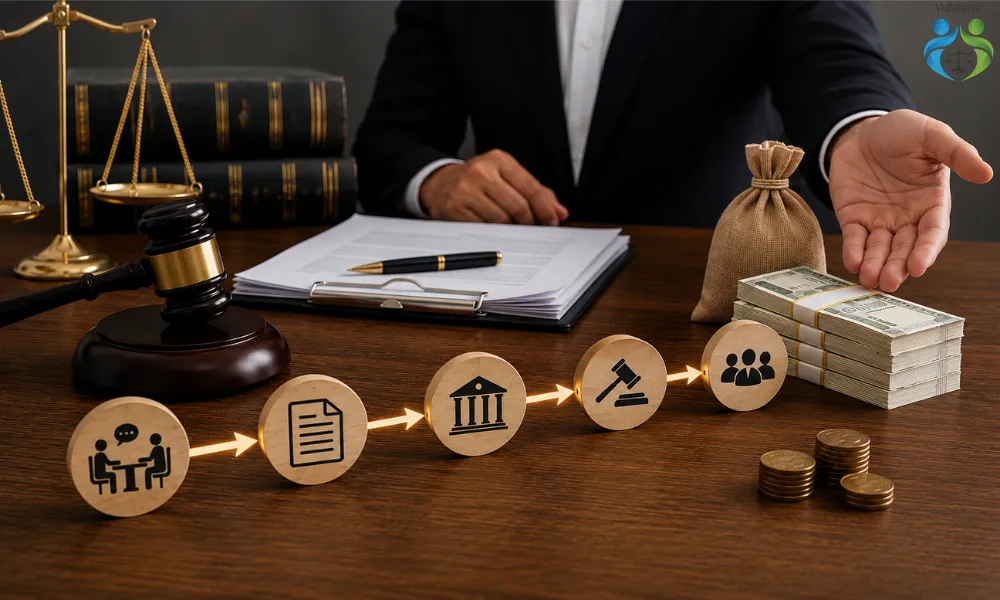

When someone repeatedly avoids repaying borrowed money, unpaid invoices, or outstanding dues, frustration can quickly turn into a financial burden. Many creditors wait too long, hoping the matter will resolve itself, only to find that recovering the amount becomes more difficult with time. The good news is that Indian law provides several legal remedies to recover legitimate debts, provided the claim is supported by proper evidence and pursued within the prescribed time.
What Legal Remedies Are Available to Recover an Unpaid Debt?
The first formal step is usually issuing a legal notice. A well-drafted notice clearly states the outstanding amount, the basis of the claim, and a reasonable deadline for payment. In many cases, this prompts the debtor to negotiate and settle the matter without litigation.
Strong documentation plays a decisive role in any recovery claim. Written agreements, invoices, promissory notes, purchase orders, bank transfer records, emails, WhatsApp conversations, payment acknowledgements, and account statements can collectively establish the existence of the debt. Even where no formal agreement exists, consistent written communication may support the creditor's case.
Before approaching a court, parties often attempt negotiation or mediation. A mutually agreed settlement can save considerable time, legal expenses, and uncertainty. However, any settlement should always be recorded in writing and signed by both parties.
If voluntary payment is not forthcoming, a Civil Recovery Suit may be filed under the Code of Civil Procedure, 1908. Where the claim is based on written contracts, bills of exchange, promissory notes, or similar written instruments, a Summary Suit under Order XXXVII CPC offers a faster remedy because the defendant cannot contest the case without obtaining the court's permission.
Depending on the nature of the transaction, other recovery proceedings may also be available. A practical tip: preserve original documents, digital messages, payment receipts, and bank records from the very beginning. One common mistake creditors make is relying solely on verbal assurances while failing to retain documentary evidence, which often weakens an otherwise genuine claim.
Which Indian Laws Govern Debt Recovery?
Several Indian laws work together to protect legitimate creditors.
The Indian Contract Act, 1872 governs agreements and contractual obligations. If a borrower fails to honour a valid contract, the creditor may seek civil remedies for recovery.
The Code of Civil Procedure, 1908 lays down the procedure for filing civil recovery suits, while Order XXXVII CPC provides an expedited process for claims supported by written contracts and specified financial instruments.
If repayment was promised through a cheque that is dishonoured due to insufficient funds or similar reasons, Section 138 of the Negotiable Instruments Act, 1881 may permit criminal prosecution alongside civil recovery. This differs from a civil suit because cheque dishonour involves statutory penal consequences.
For corporate defaults, the Insolvency and Bankruptcy Code, 2016 (IBC) may become relevant where statutory requirements are fulfilled. However, not every unpaid debt automatically results in insolvency proceedings. Personal debt recovery generally follows civil recovery mechanisms, whereas corporate insolvency is intended to resolve financial distress of eligible companies rather than function as a routine debt collection tool.
Creditors should also remember the Limitation Act, 1963. In many recovery matters, a civil suit should generally be filed within three years from the date the debt became due, although the exact limitation depends on the facts and applicable legal provisions. Waiting too long may result in losing an otherwise enforceable legal remedy.
When Should You Seek Legal Assistance?
Legal advice becomes particularly valuable when negotiations repeatedly fail, payment defaults continue despite reminders, liability is disputed, or the outstanding amount is substantial. Professional guidance is equally important in cases involving cheque dishonour, complex commercial transactions, corporate debt recovery, or situations where insolvency proceedings may arise. Experienced bankruptcy and debt Lawyers can assess the most appropriate legal strategy based on the nature of the debt instead of pursuing remedies that may not legally fit the dispute.
Delaying action rarely improves a recovery claim. Preserving evidence, maintaining complete documentation, and acting within the applicable limitation period significantly strengthen your legal position. Seeking timely legal guidance helps identify the appropriate remedy early, reduces procedural complications, and improves the chances of recovering money through the legal process provided under Indian law.





























Sign in to leave a comment.