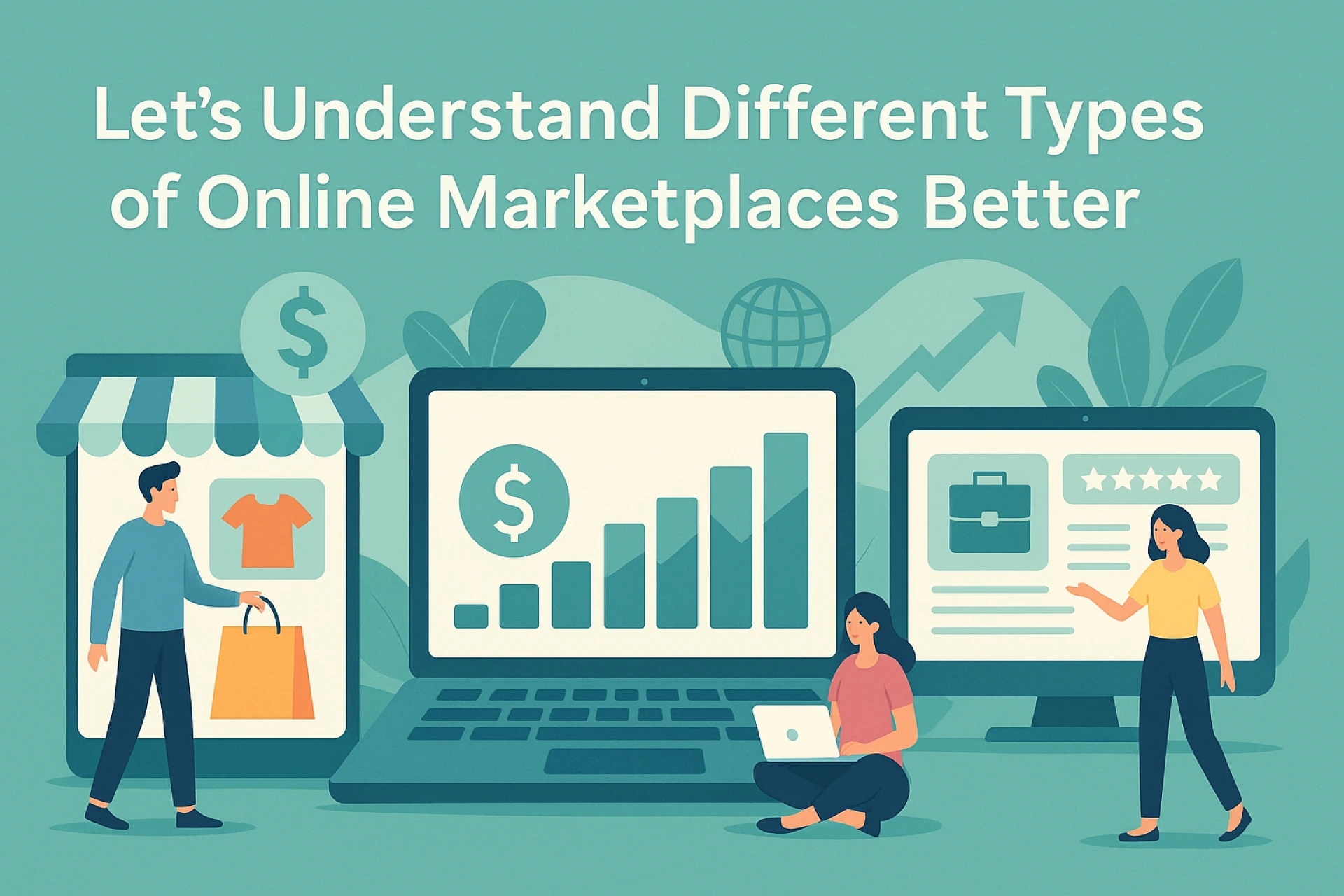

Online shopping is now more prominent and trending than visiting the nearby grocery store or a shopping mall. Online marketplaces have made digital shopping easier and smoother. It involves using various websites and apps to buy, sell, and engage in delivery-related activities. These online marketplaces can be used by anyone who wants to sell something or those looking to purchase inventory online. Different types of digital marketplaces, also known as online marketplaces, exist, and the advent of the COVID-19 pandemic has helped this trend become more prominent. These marketplaces have also become a valuable way to promote products, and there are other features like lower marketing costs, better channels for sellers and easier for consumers to compare prices and invest in better products. This report outlines three distinct types of online marketplaces, along with their details.
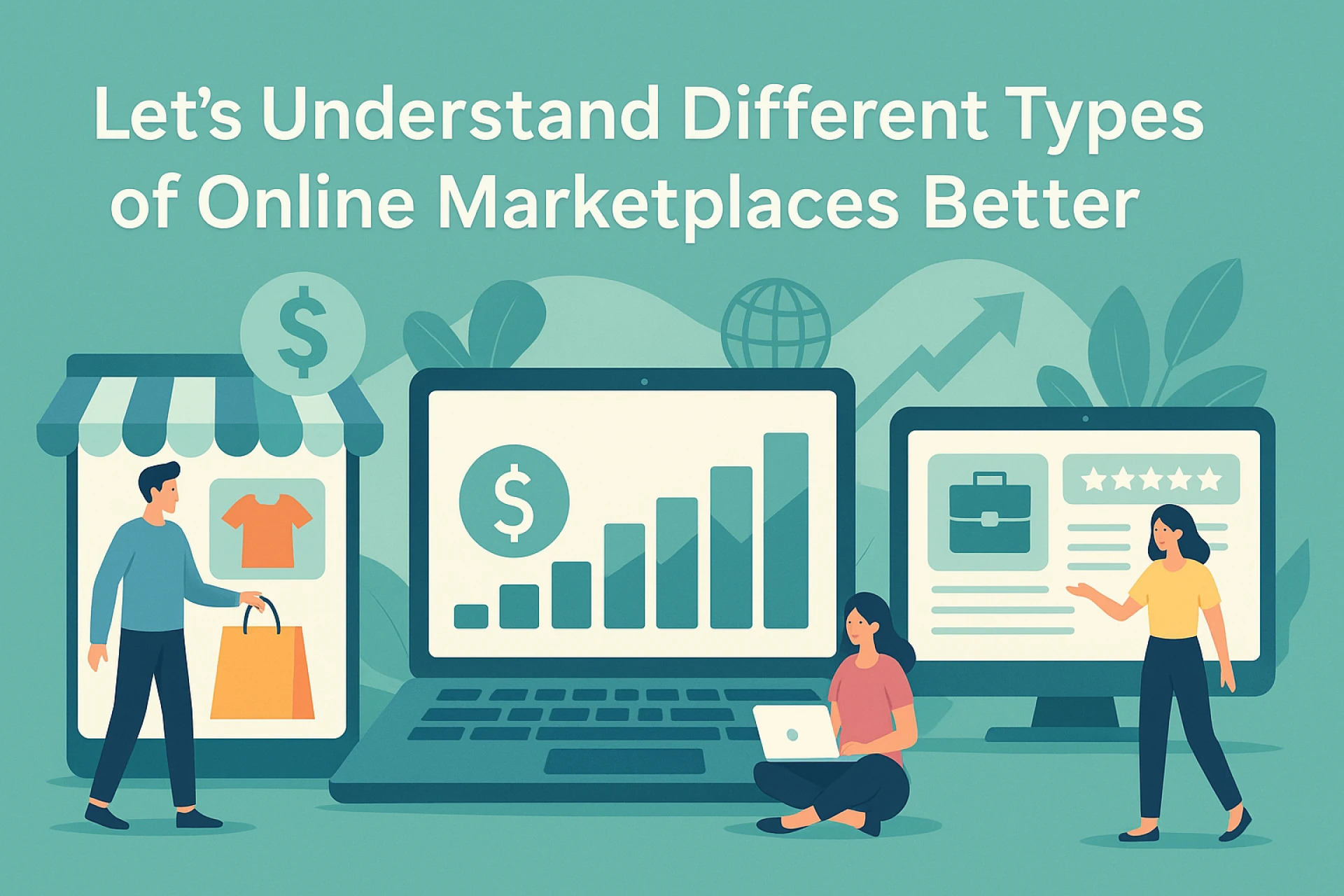
THREE TYPES OF ONLINE MARKETPLACE APPS
B2C ONLINE MARKETPLACE APPS
B2C online marketplace is based on the Business-To-Customer business model and hence given the name 'B2C' online marketplace. This is the most common business model for buying and selling goods and services. In this model, apps or websites are used to connect to customers and buyers to sell their products and increase revenue. The most significant factor of the B2C business model is that it is very cost-efficient and has a considerable reach. No third party is involved to increase the cost of products listed for property sales, car sales, business for sale, or real estate sales. Another key USP is that very few staff members are required to run this model. Numerous examples can be cited, such as Amazon, which is the most downloaded shopping app worldwide.
B2B ONLINE MARKETPLACE APPS
B2B online marketplace apps rely on a Business-to-Business (B2B) deal model and hence, given this name. In this model, the process involves one business operator selling their items and services to another business or businesses. It is a more secure business model compared to b2c as the contact between two companies is about availing products and services. Items are often sold and purchased in bulk, and hence, the cost is surprisingly low, but the revenue is higher. Secured payment options are used, and tax prices can also be included in B2B online marketplace apps. There are several perfect examples of B2B online marketplace apps, and primarily based in China to sell their products and services to other smaller and bigger businesses. The top USP of a B2B online marketplace is that retailers can manage the prices of the items they buy and sell.
C2C ONLINE MARKETPLACE APPS
The C2C business model is unconventional, as it involves one consumer selling their products to another consumer. There is a transaction of goods and services between customers, involving various transactions such as property sales, car sales, businesses for sale, and real estate. These portals charge a fee from sellers to list their items, and in turn, sellers have the opportunity to generate significant revenues quickly. There is an availability of rare items to buy and sell, and these portals make communication between buyers and sellers very easy. Craigslist is a perfect example of the C2C online marketplace business model, as registered users can find a wide range of things like jobs, properties listed for property sales, cars listed for car sales, real estate sales and others.
There are other types of online marketplaces, including vertical online marketplaces, horizontal online marketplaces, and global online marketplaces. A vertical online marketplace enables buyers and sellers to trade products within a single category. On the other hand, horizontal online marketplaces focus on various product categories and enable individuals to buy and sell products listed within those categories. Lastly, there is a global online marketplace, and in this business model, the services are not limited to a particular region.
HOW ONLINE MARKET PLACES ALLOW REVENUE GENERATION TO REGISTERED USERS?
The most influential revenue generation method is the commission model, and it is seen in both B2B and B2C online marketplaces. The process is simple that the website or the app will charge the user for every single transaction, and it is known as a service charge. However, they ensure that neither buyers nor sellers are charged, and in most cases, only sellers are required to pay this commission to digital online marketplaces. Advertising strategy is also used to attract customers, and in return, these companies charge for placing their advertisements on the app or website. There is a 'listing fee' model as well, and it is a very common way for online marketplaces to generate revenue. A pre-determined fee is charged for every product that a seller lists on these marketplaces, and this revenue model is primarily seen in the C2C business approach.
Learn More:
























Sign in to leave a comment.