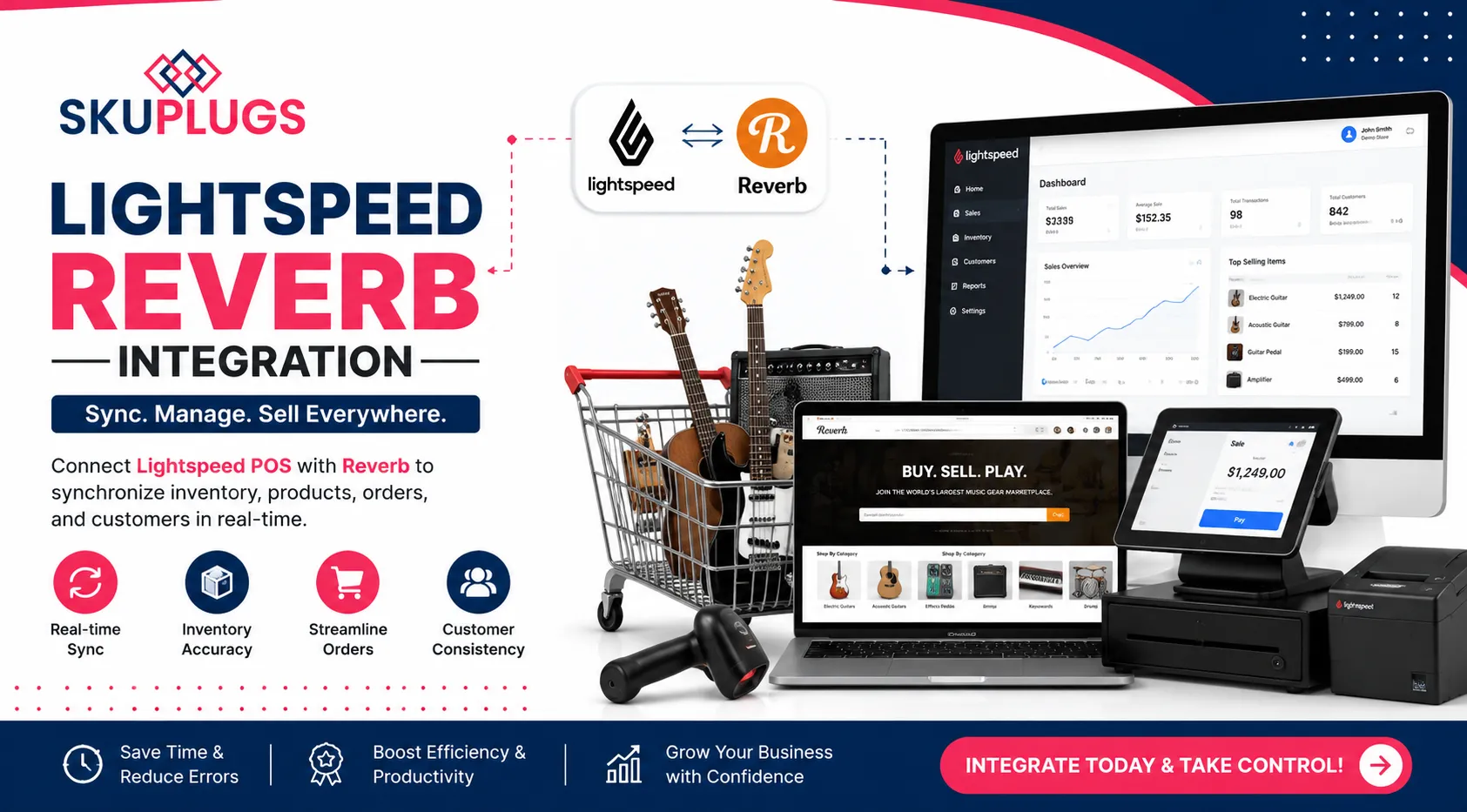

How Can Lightspeed Reverb Integration Help Music Retailers Streamline Multi-Channel Sales?
The music retail industry has changed significantly over the past decade. Customers no longer rely solely on visiting physical stores to purchase guitars, keyboards, audio equipment, or musical accessories. Today, they expect to browse products online, compare prices, and place orders from specialized marketplaces like Reverb while still enjoying the convenience of local retail stores.
For music retailers, selling through multiple channels creates excellent opportunities to increase sales and reach a wider audience. However, it also introduces challenges related to inventory management, product synchronization, and order processing. Managing a Lightspeed POS system separately from a Reverb marketplace store often leads to stock discrepancies, manual updates, and operational inefficiencies.
This is where Lightspeed Reverb Integration becomes an ideal solution. By connecting Lightspeed POS with Reverb through SKUPlugs, music retailers can automate inventory updates, synchronize product information, and streamline order management across both platforms.
In this article, we'll explore how Lightspeed Reverb Integration helps music retailers simplify multi-channel selling, improve inventory accuracy, and grow their businesses with greater confidence.
Understanding Lightspeed Reverb Integration
Lightspeed is a cloud-based retail Point of Sale (POS) system designed to help businesses manage inventory, sales, customers, and daily retail operations.
Reverb is one of the world's leading online marketplaces dedicated to buying and selling musical instruments, recording equipment, DJ gear, and related accessories.
While both platforms are powerful individually, managing them separately often creates several operational challenges, including:
- Manual inventory updates
- Duplicate product management
- Delayed order synchronization
- Inventory mismatches
- Overselling
- Increased administrative workload
Lightspeed Reverb Integration connects both systems, allowing businesses to synchronize inventory, products, and customer orders automatically in real time.
This automation creates a more efficient workflow while reducing manual effort.
Why Multi-Channel Selling Matters for Music Retailers
Selling on multiple platforms allows music retailers to reach a larger customer base.
Benefits include:
- Increased online visibility
- More sales opportunities
- Access to niche music buyers
- Better brand exposure
- Higher revenue potential
However, without automation, managing inventory across multiple platforms becomes increasingly difficult.
Businesses often experience:
Inventory Errors
Stock quantities may differ between Lightspeed and Reverb.
Manual Product Updates
Updating hundreds of products individually consumes valuable time.
Delayed Order Processing
Orders received on Reverb require manual entry into the POS system.
Overselling Risks
Products sold in-store may still appear available on Reverb.
Automation eliminates these challenges while improving business efficiency.
How SKUPlugs Simplifies Lightspeed Reverb Integration
Real-Time Inventory Synchronization
Inventory accuracy is essential for every music retailer.
SKUPlugs automatically synchronizes inventory between Lightspeed and Reverb whenever stock changes occur.
For example:
- A guitar sold through Reverb immediately updates inventory inside Lightspeed.
- An amplifier sold at the retail store instantly reduces available stock on Reverb.
This real-time synchronization ensures inventory remains accurate across all connected sales channels.
Automated Product Synchronization
Managing product information manually across different systems can become overwhelming.
With Lightspeed Integration, businesses can automatically synchronize:
- Product names
- SKUs
- Categories
- Prices
- Product descriptions
- Images
- Product variants
- Inventory quantities
Changes made within Lightspeed are automatically reflected on Reverb.
This saves time while ensuring customers always see accurate product information.
Seamless Order Management
Managing marketplace orders manually often slows business operations.
SKUPlugs automatically transfers Reverb orders into Lightspeed POS.
This allows businesses to:
- Track customer orders centrally
- Process orders faster
- Reduce manual data entry
- Improve fulfillment accuracy
Centralized order management creates a more organized retail workflow.
Easy Setup Process
Many retailers avoid integrations because they believe implementation requires technical expertise.
SKUPlugs provides an easy-to-use platform that allows businesses to Connect Lightspeed to Reverb quickly without complex configurations.
The simple setup process makes automation accessible to businesses of every size.
Centralized Retail Operations
Instead of managing separate systems, businesses can control inventory, products, and orders through connected platforms.
This centralized approach improves operational efficiency and reduces administrative workload.
Key Benefits of Lightspeed Reverb Integration
Accurate Inventory Management
Real-time synchronization ensures inventory remains consistent between Lightspeed and Reverb.
This improves inventory visibility and reduces costly stock discrepancies.
Reduced Overselling
Overselling negatively affects customer satisfaction and business reputation.
SKUPlugs updates inventory automatically after every sale, preventing unavailable products from being sold again.
Increased Operational Efficiency
Automation eliminates repetitive tasks such as manual inventory updates and product synchronization.
Employees can spend more time assisting customers and growing the business.
Faster Order Fulfillment
Automatic order synchronization speeds up processing and shipping.
Retailers can respond to customer orders more efficiently.
Better Customer Experience
Customers benefit from:
- Accurate inventory availability
- Faster shipping
- Reliable product information
- Fewer canceled orders
This creates greater trust and encourages repeat business.
Scalable Business Growth
As inventory and sales volume increase, manual management becomes increasingly difficult.
SKUPlugs helps businesses scale confidently by automating essential retail operations.
Common Challenges Solved by Lightspeed Reverb Sync
Inventory Mismatches
Inventory inconsistencies create confusion for both customers and staff.
Lightspeed Reverb Sync keeps inventory synchronized automatically.
Duplicate Product Updates
Updating products separately across platforms wastes valuable time.
Automation ensures product information remains consistent.
Delayed Inventory Updates
Manual stock updates increase the likelihood of inaccurate inventory.
Real-time synchronization eliminates delays.
Manual Order Processing
Automatic order synchronization reduces workload while improving fulfillment speed.
Industries That Benefit from Lightspeed Reverb Integration
Although Reverb specializes in music products, many businesses benefit from automated synchronization.
Musical Instrument Retailers
Stores selling guitars, drums, keyboards, violins, and orchestral instruments benefit from centralized inventory management.
Professional Audio Equipment Sellers
Retailers offering microphones, mixers, speakers, and recording equipment can simplify inventory management.
DJ Equipment Stores
Businesses selling controllers, turntables, and lighting equipment benefit from automated synchronization.
Music Accessories Retailers
Retailers offering strings, cables, pedals, stands, and cases can improve inventory accuracy.
Vintage and Used Instrument Dealers
Businesses selling unique instruments can maintain accurate product availability across multiple sales channels.
Why Businesses Choose SKUPlugs
Retailers trust SKUPlugs because it delivers reliable automation while simplifying retail operations.
Key advantages include:
Real-Time Inventory Updates
Stock remains synchronized across Lightspeed and Reverb automatically.
Automated Product Synchronization
Product information updates without manual intervention.
Centralized Order Management
Orders automatically flow into Lightspeed for easier processing.
Secure Cloud Connectivity
Reliable synchronization keeps business operations running smoothly.
User-Friendly Setup
Businesses can implement the integration without advanced technical knowledge.
Scalable Infrastructure
SKUPlugs supports growing businesses with expanding product catalogs.
Best Practices for Successful Lightspeed Reverb Integration
Businesses can maximize integration performance by following several best practices.
Maintain Accurate Product Information
Organize SKUs, categories, pricing, and product descriptions carefully.
Conduct Inventory Reviews
Regular inventory audits help maintain synchronization accuracy.
Train Staff
Employees should understand how automated synchronization works.
Monitor Integration Performance
Routine monitoring helps identify potential issues before they impact customer orders.
The Future of Music Retail Automation
The music retail industry continues evolving as more customers prefer shopping online.
Retailers who automate inventory management and order synchronization gain significant competitive advantages.
Consumers expect:
- Accurate stock availability
- Fast order processing
- Reliable shipping
- Consistent product information
Solutions like Lightspeed Reverb Integration help businesses meet these expectations while reducing operational complexity.
As online music retail continues growing, connected systems will become essential for long-term success.
FAQs
1. What is Lightspeed Reverb Integration?
It connects Lightspeed POS and Reverb to synchronize inventory, products, and orders automatically.
2. How does SKUPlugs help connect Lightspeed to Reverb?
SKUPlugs provides automated synchronization between Lightspeed and Reverb through an easy setup process.
3. Does Lightspeed Reverb Sync support real-time inventory updates?
Yes, inventory automatically updates whenever sales occur in either system.
4. Can products be synchronized automatically?
Yes, product names, SKUs, descriptions, prices, and inventory quantities sync automatically.
5. Does the integration transfer Reverb orders into Lightspeed?
Yes, customer orders automatically synchronize with Lightspeed POS.
6. How does the integration reduce overselling?
Real-time inventory updates prevent unavailable products from remaining listed for sale.
7. Is technical knowledge required for implementation?
No, SKUPlugs offers a simple and user-friendly integration process.
8. Which businesses benefit most from Lightspeed Integration?
Music retailers, audio equipment sellers, DJ stores, and musical accessory businesses benefit greatly.
9. Can SKUPlugs support growing music retailers?
Yes, it is designed to scale alongside expanding inventories and increasing sales volumes.
10. Why is real-time synchronization important for music retailers?
It improves inventory accuracy, speeds up order fulfillment, and enhances customer satisfaction.
Conclusion
Managing inventory and customer orders across both physical stores and online marketplaces can quickly become challenging without automation. Music retailers using separate systems often face stock discrepancies, delayed updates, and inefficient workflows that limit business growth.
With Lightspeed Reverb Integration, retailers can automate inventory synchronization, simplify product management, and streamline order processing across every sales channel. This creates a more efficient operation while improving the overall customer experience.
Whether your goal is to implement Lightspeed Integration, establish reliable Reverb Integration, improve Lightspeed Reverb Sync, or efficiently Connect Lightspeed to Reverb, automation is essential for long-term success. SKUPlugs provides a dependable integration solution that helps music retailers simplify multi-channel selling, maintain accurate inventory, and confidently grow their business.



























Sign in to leave a comment.