
There’s a question that shows up in consultation rooms all the time.
Can this be fixed? Most people already know it can.
The real question is simpler. And harder.
Which one is actually right for me?
Liposuction and tummy tucks get grouped together often. Same area. Same goal on paper.
But in reality, they are solving completely different problems.
And choosing wrong does not give you a “slightly worse” result.
It gives you the wrong result entirely.
Why People Confuse the Two
At a glance, both procedures change how your abdomen looks. That’s enough to make them feel interchangeable.
They are not.
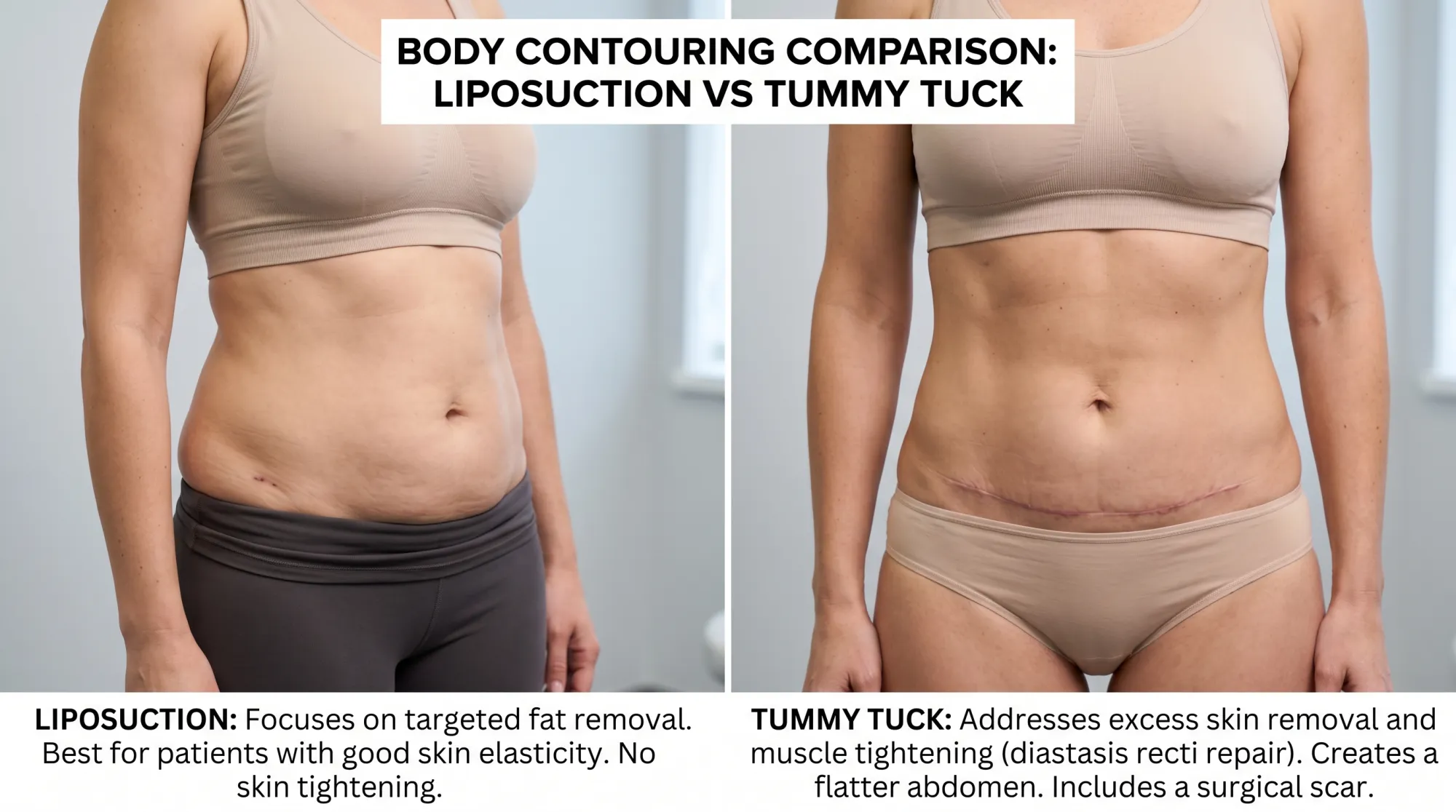
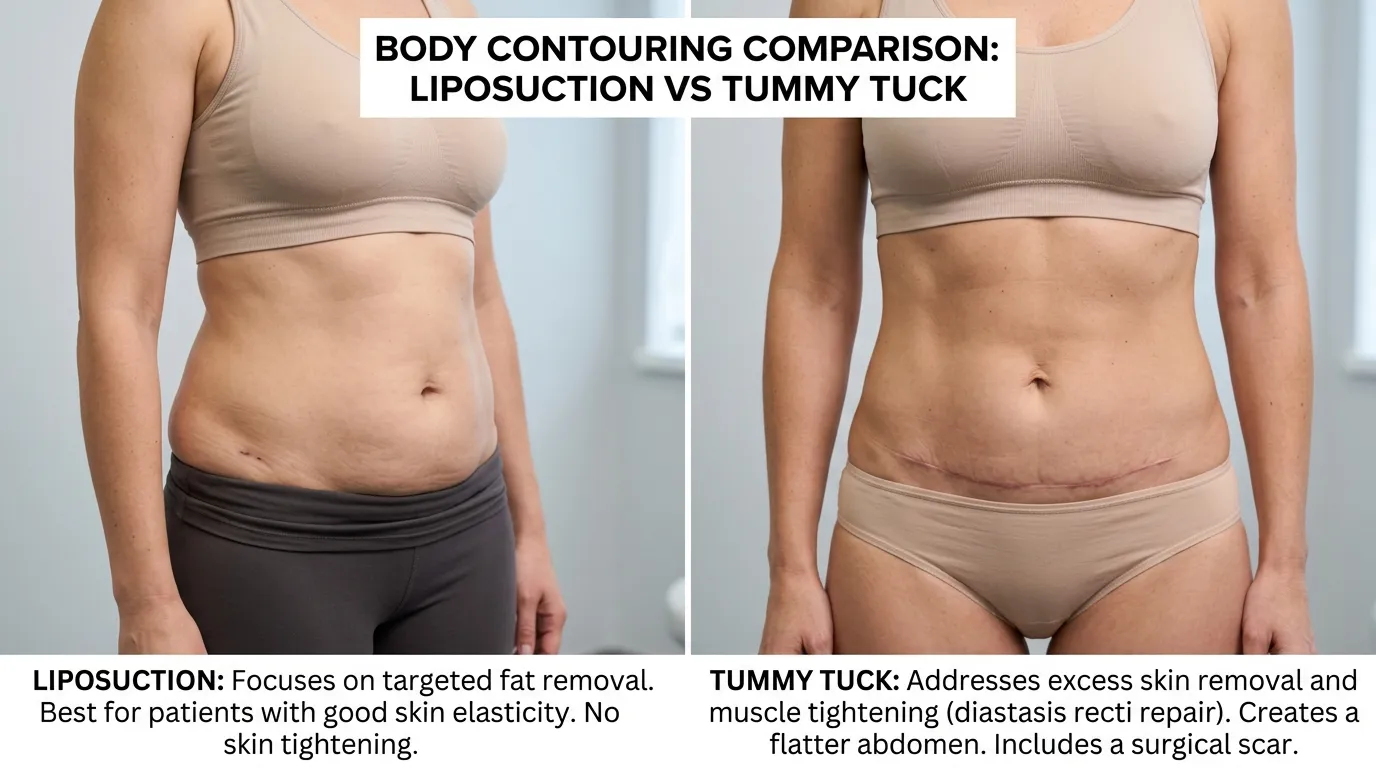
Liposuction deals with fat.
A tummy tuck, or abdominoplasty, deals with skin and muscle. So the decision is not about what you feel like doing. It is about what your body is actually asking for.
What Liposuction Actually Does


Liposuction is popular for a reason. When done on the right person, it works beautifully.
It removes stubborn fat. The kind that stays despite workouts, clean eating, and all the discipline in the world. Lower abdomen. Flanks. Inner thighs. Arms.
These are areas where the body holds on a little tighter than you'd like.
Liposuction goes in and removes those fat cells directly. Simple idea. Precise execution. But here’s where expectations go sideways.
Liposuction does not tighten skin. If the skin has already stretched out, removing the fat underneath won’t magically fix that. In fact, it can make looseness more noticeable.
It also does not fix muscle separation.
If your core feels weaker, or your abdomen bulges in a way that feels structural, liposuction will not change that. That’s not a flaw. That’s just not its job.
What a Tummy Tuck Is Really Doing
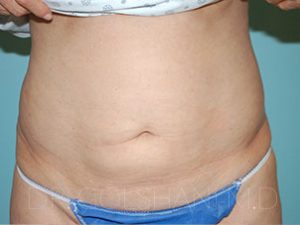
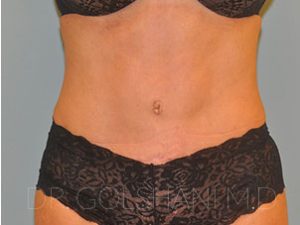
A tummy tuck works on a deeper level. It removes excess skin and brings separated abdominal muscles back together. It reshapes the area in a way that reflects structure, not just surface.
And yes, the belly button gets repositioned so everything still looks natural.
When done right, the result doesn’t scream “surgery.” Like things are sitting where they were always supposed to be. In many cases, liposuction is added during a tummy tuck to refine the shape.
But the reverse does not hold true. Liposuction alone cannot recreate what a tummy tuck achieves when skin and muscle are involved.
Recovery is also a different conversation. This is not a weekend reset. It takes time. It takes care. And it takes patience.
The Only Rule That Actually Matters
If you remember one thing, make it this:
Follow the tissue. Fat problem? Liposuction. Skin and muscle problem? Tummy tuck. That’s it.
A body with firm skin, good elasticity, and localized fat will respond really well to liposuction. The skin settles. The contour sharpens. Everything feels balanced. But if the skin is loose, stretched, or disconnected from what’s underneath, removing fat won’t solve it.
It just reveals the issue more clearly. In that case, a tummy tuck isn’t “extra.” It’s appropriate.
What This Looks Like in Real Life
Let’s make it less theoretical. Someone who works out regularly, maintains weight, but still has that lower belly or side fat that won’t leave?
That’s a liposuction conversation.
Someone who’s had kids, notices softness below the navel, maybe feels their core isn’t what it used to be, and sees skin that doesn’t quite sit right?
That’s a tummy tuck conversation. Someone who has lost a significant amount of weight and is left with excess hanging skin?
That almost always leans toward a tummy tuck, sometimes as part of a larger plan.
No two bodies are identical. But the pattern is consistent.
Before You Even Sit Down With a Surgeon
A little honesty here goes a long way.
Ask yourself:
What bothers me more, the volume or the skin? If I flatten the area with my hands, does that look like the result I want? Has my weight been stable? Am I done having children? Am I ready for the recovery that comes with this?
These are not trick questions. They just help you walk into a consultation with clarity.
And clarity tends to lead to better decisions.
What a Good Surgeon Actually Does
A good surgeon does not just agree with you.
They assess. They look at your skin, your fat distribution, your muscle structure, and how everything works together. Then they tell you what makes sense. Even if it’s not what you expected to hear.
Because the goal here is not to “do something.” It’s to do the right thing. The best results are not the ones that look dramatic. They are the ones that look inevitable.
Like nothing was done. And yet, everything feels better. That’s the difference between moving tissue and shaping a result.
And that difference shows. Every single time.
For a personalized approach and expert guidance, consider consulting Daniel Golshani, MD, a trusted plastic surgeon known for natural-looking results.



























Sign in to leave a comment.