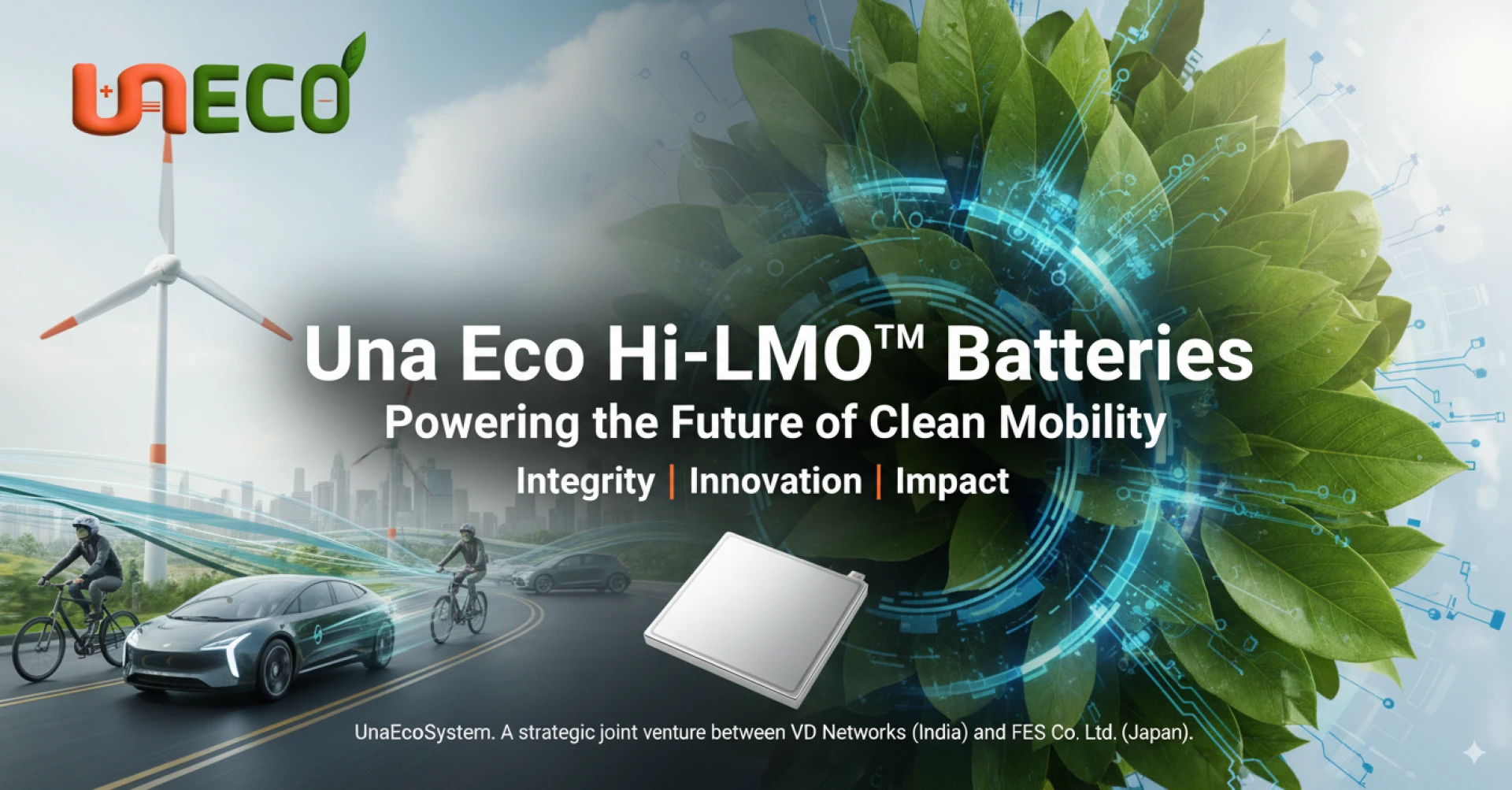

India’s electric vehicle (EV) market is witnessing exponential growth, driven by environmental awareness, government incentives, and advancements in clean technology. According to industry projections, the Indian EV market is expected to grow at a compound annual growth rate (CAGR) of over 26% by 2029. Two-wheelers currently dominate the segment, accounting for over 80% of sales, but passenger vehicle adoption is also on the rise. This surge has created a corresponding boom in battery demand, with lithium-ion batteries leading the charge due to their superior energy density, longer life cycle, and fast-charging capabilities.
Why Lithium-Ion Technology Leads the Transition
Lithium-ion batteries have become the preferred choice for EVs, solar systems, and telecom infrastructure because they offer efficiency, reliability, and scalability. Compared to traditional lead-acid batteries, lithium-ion batteries are lighter, charge faster, and deliver higher performance. The development of advanced chemistries such as Lithium Manganese Oxide (LMO) and Lithium Iron Phosphate (LFP) has further improved battery safety and lifespan — making them ideal for India’s high-temperature climate and heavy-duty applications.
India’s Push for Domestic Manufacturing
While the demand for lithium batteries is soaring, India still imports a significant portion of its lithium cells from countries like China, Japan, and South Korea. To reduce import dependence, the Indian government has introduced several initiatives such as the FAME-II scheme and the Production Linked Incentive (PLI) program to encourage domestic battery manufacturing. These policies aim to develop a self-reliant battery ecosystem — from raw material processing to cell production and recycling.
In this evolving ecosystem, lithium battery manufacturers in India are setting up advanced production facilities and forming joint ventures with global technology leaders. These collaborations focus on localizing manufacturing, enhancing R&D, and adopting automation to meet international standards. For instance, modern battery plants are being established to produce cells for electric vehicles, solar energy storage, and power grid applications — ensuring India’s energy transition is both sustainable and scalable.
Challenges and Opportunities
Despite the growth potential, the lithium battery industry faces challenges such as raw material scarcity, high capital costs, and the need for advanced recycling infrastructure. However, India holds a strategic advantage in manganese reserves and emerging lithium resources, paving the way for future self-sufficiency. The next few years will be pivotal as manufacturers focus on developing indigenous technologies and optimizing production for mass-market EV adoption.
The Road Ahead
As India aims to reduce its fossil fuel consumption by 50% by 2030, the role of lithium battery manufacturers will be central to achieving this vision. Through innovation, collaboration, and sustainable practices, these manufacturers are not just powering electric vehicles — they are fueling the nation’s clean energy future.


























Sign in to leave a comment.