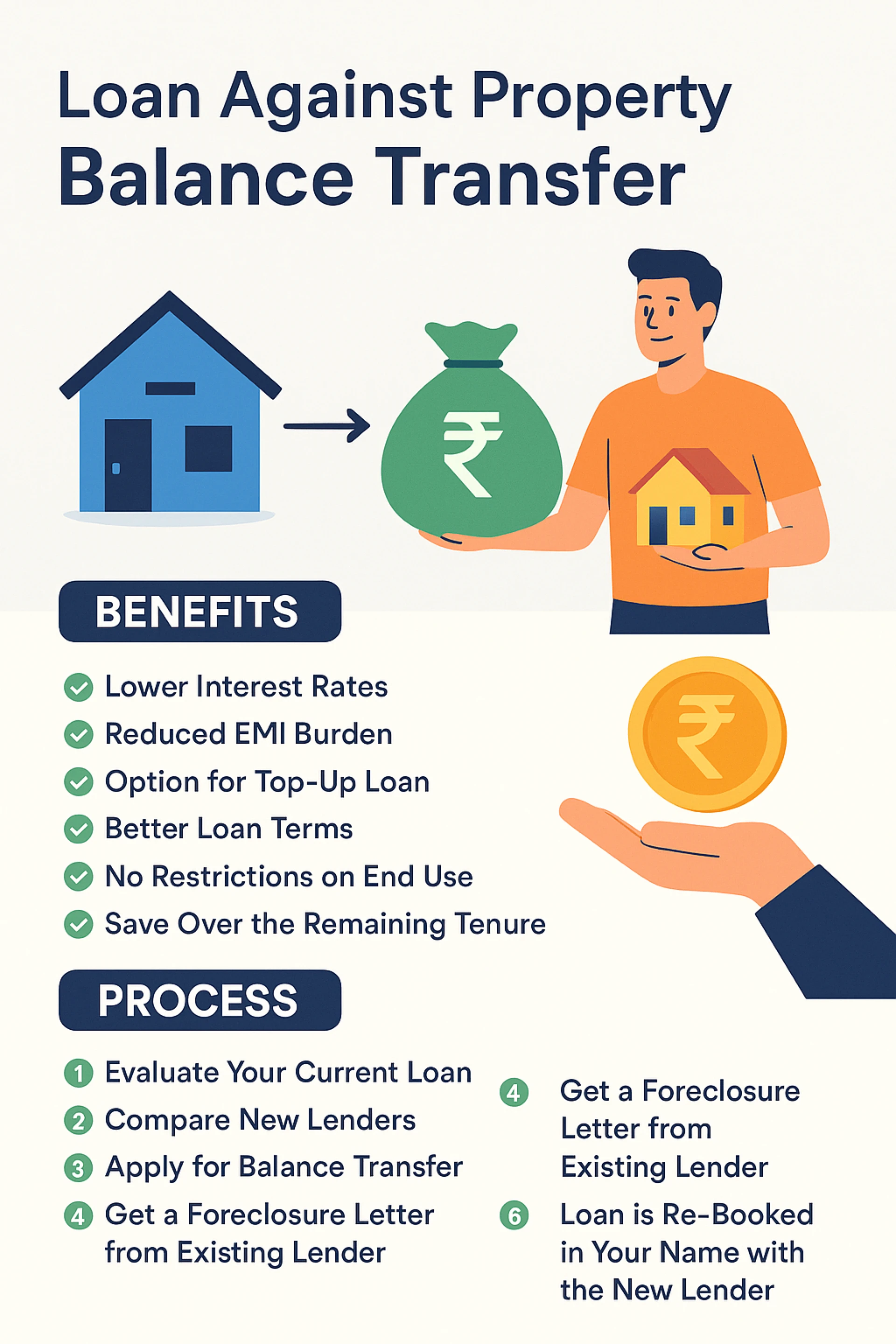

A Loan Against Property (LAP) balance transfer is one of the smartest financial decisions you can make if you feel your current loan is becoming too expensive or difficult to manage. Many borrowers start a loan journey with one lender and later realize that the interest rate, service quality, or repayment flexibility isn’t ideal. That’s when a LAP balance transfer comes into the picture.
Think of it like switching from a costly mobile plan to a better one same number, better benefits. Here, instead of a phone plan, you’re switching your existing LAP from one lender to another for lower interest rates and improved terms.
In this blog, let’s break down the benefits and entire process in a humanized, simple way so you can decide whether a LAP balance transfer is right for you.
What Is a Loan Against Property Balance Transfer?
A LAP balance transfer means moving your existing property loan from your current lender to a new lender who is offering lower interest rates, better customer service, or additional top-up funds.
Your property remains the security only the lender changes.
Benefits of Loan Against Property Balance Transfer
1. Lower Interest Rates
This is the biggest reason borrowers switch lenders.
Even a small drop of 1%–2% in interest rate can save you lakhs over long tenures like 10–15 years.
Lower interest = lower EMIs = better monthly cash flow.
2. Reduced EMI Burden
When interest goes down, your EMI automatically becomes more manageable.
For people running businesses or managing household expenses, this reduction creates financial breathing space.
3. Option for Top-Up Loan
Most lenders allow a top-up loan during the balance transfer.
This is extremely useful if you need funds for:
- Business expansion
- Medical needs
- Renovation
- Education
- Debt consolidation
Since it’s linked to a secured loan, top-up interest is usually much lower than personal loans.
4. Better Loan Terms
Borrowers often switch because their current lender offers:
- Rigid repayment terms
- Slow customer support
- Delayed approvals for services
A new lender may offer:
- Flexible tenure options
- Faster digital processing
- Better overall service
5. No Restrictions on End Use
Just like your original LAP, the transferred loan also has no strict usage limitations.
Use it for any legitimate personal or business need.
6. Save Over the Remaining Tenure
The earlier you transfer, the more money you save.
But even if you're halfway through repayment, a balance transfer can still significantly reduce the overall cost.
Process of Loan Against Property Balance Transfer
The balance transfer process may sound complicated, but it’s actually simple if you break it down.
Step 1: Evaluate Your Current Loan
Start by understanding:
- Current interest rate
- Remaining tenure
- Outstanding principal
- Prepayment or foreclosure charges (if any)
This helps you compare before making the move.
If your rate is 3%–4% higher than current market rates, transferring is usually a great idea.
Step 2: Compare New Lenders
Look for lenders offering:
- Lower ROI
- Minimal processing fees
- Good service quality
- Quick digital processing
- Option for top-up
Most borrowers use financial consultants like KFIS or loan distributors to compare offers easily.
Step 3: Apply for Balance Transfer
Submit an application to the new lender for the balance transfer. You will need to provide:
- KYC documents
- Income proof
- Property papers
- Current loan statement
- Repayment track record
The new lender checks your eligibility and property valuation.
Step 4: Get a Foreclosure Letter from Existing Lender
Once approved, your new lender will ask you to request:
- Foreclosure letter
- Loan account statement
- List of original property documents
Your existing lender will issue these documents and calculate the exact outstanding amount.
Step 5: New Lender Pays Off Old Lender
Your new lender will directly transfer the outstanding amount to your previous lender.
Once the old loan is closed, the original lender releases your property documents to the new one.
Step 6: Loan is Re-Booked in Your Name with the New Lender
Now your loan continues as usual but with:
- Lower EMIs
- Lower interest
- Better terms
- Additional top-up (if taken)
You just start paying EMIs to your new lender.
When Should You Consider a LAP Balance Transfer?
You should definitely consider transferring if:
✔ Your interest rate is higher than the current market average
✔ You need additional funds (top-up)
✔ You want to reduce EMI burden
✔ Your credit score has improved since your first loan
✔ Your lender is offering poor service
✔ You want a longer or shorter tenure
✔ You want to reduce the total loan cost
Even if you're unsure, comparing offers never hurts.
Final Thoughts
A Loan Against Property Balance Transfer can help you save money, lower stress, and improve your financial stability. It’s one of the most effective ways to reduce loan burden without selling your property or compromising your plans.
Whether you're a business owner, salaried professional, or self-employed individual, switching to a better loan can give you more room to grow financially.
If you’re considering a LAP balance transfer, just remember the golden rule:
Lower interest + better terms = a smarter financial decision.
























Sign in to leave a comment.